Tag: family

  • Walking to Nowhere

    My father walked forty-five minutes a day. Whatever the weather, whatever kind of workday he had had, he headed out to do his exercise. Quintuple bypass surgery in the days when your chest was sawed open, scared him into obeying his doctor’s instructions. Walk or wake up one more time with tubes coming out of unexpected parts of your body. 

    He didn’t have walking shoes, special clothes, a pedometer, sunscreen, tunes playing in his ears. Just good leather shoes, a hat, and a watch to keep him honest. He didn’t drive anywhere to change up the scenery. He just walked. For decades.

    After a career of office work that meant little time on my feet and lots on my seat, I’ve joined the crowds walking daily to nowhere. I put some time in on asphalt streets and concrete walkways and some on a simple treadmill. I don’t know if special shoes are any better than his thick soled leather tie models. An athletic tracker on my wrist provides feedback that is nice about my heartbeat and steps. Podcasts fill my mind while I wander about. 

    This is how many people in non-physical jobs today fight weight gain, arthritis, general aches, aging. It’s what we substitute for not using our bodies the way they are meant to be used. We walk around neighborhoods, on lake or park pathways, with our dog, maybe with another person. We feel good about piling up our miles and wearing down our shoes.

    I’m behind for the day and kind of crabby about putting aside writing projects with due dates in order to do my steps. Curse the pandemic, I miss playing with my granddaughter, machines at the gym, sweating through a dance class and swimming. On the other hand, I’m alive and walking my way to vaccine and herd immunity and the opportunities to get back into an active community. Thanks for the lesson on resiliency, Dad.

  • I Killed Her Off

    I Killed Her Off

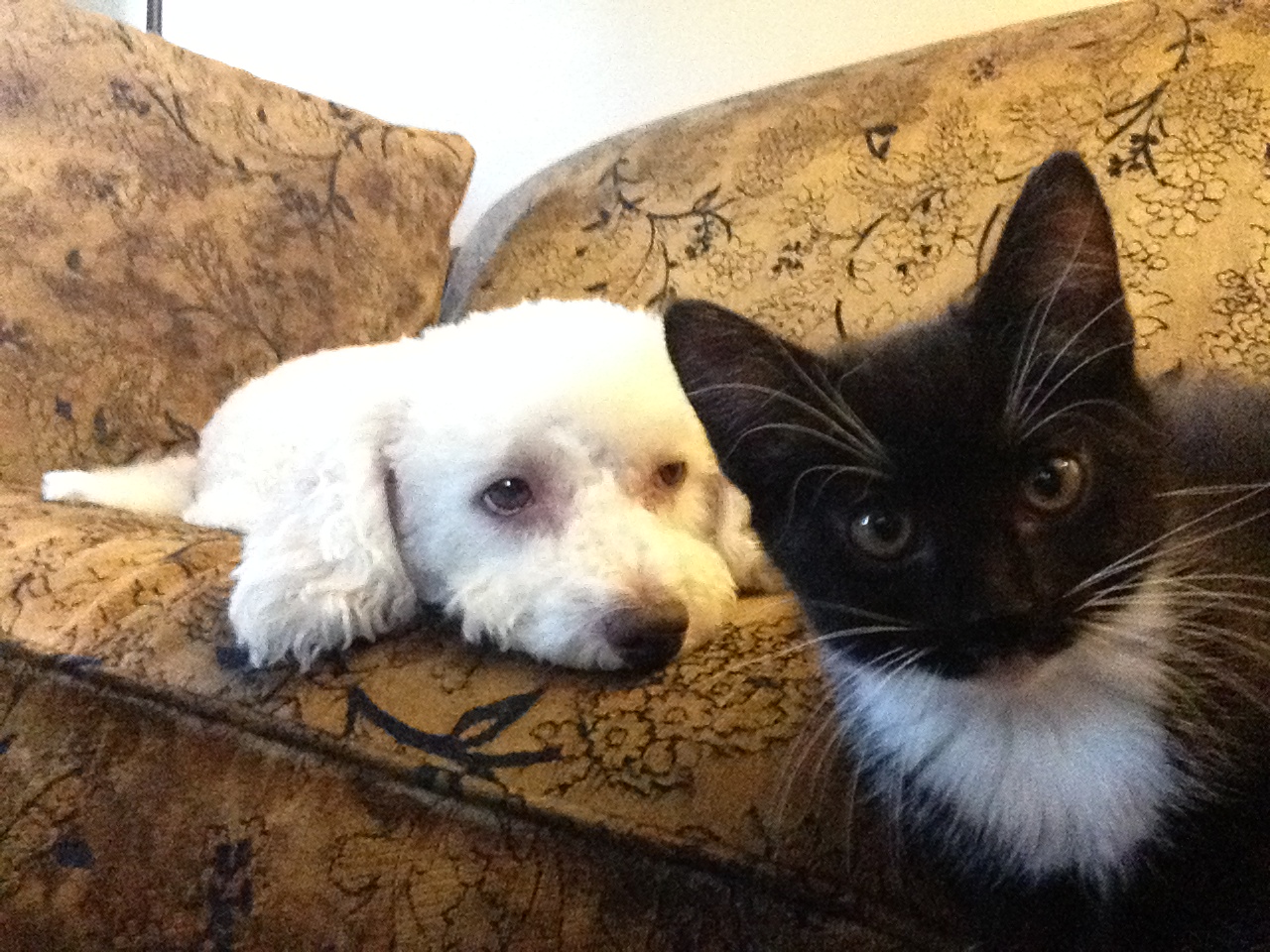
    Rosie and Oreo

    Now that Jody’s home safe and sound, I can tell you that I killed her off. I often do this. Jody went to India for work for a week. For a fleeting moment she died, in my mind. How did that look? How did I feel? How would I tell the kids? Probably go to their school and take them out, I thought. I mean, I did it for the cat.

    I got a call at work from a person in the area who found Oreo, Crystel’s cat, in their back yard. It was a rainy miserable morning. I told her that I’d be right there. After calling Jody, I drove straight to the middle school. Juan showed up in the office first. I took him to a side room. With tears streaming down my face, I told him Oreo had died.

    Perhaps the school thought Oreo was a cherished Aunt or Uncle as I ushered the children solemnly to the car. Juan and Crystel wrapped Oreo tenderly in a blanket, carried her to the car and sat with the cat on their shared lap. We had surmised Oreo got hit by a car and went in the person’s back yard and succumbed to her injuries.

    Jody met us at home. The four us stood in the back yard, pointing to where our other animals were buried: 4 cats, a dog, and a hamster. Crystel chose Oreo’s resting spot. In the drizzling rain we shoveled a hole and had a proper burial. Crystel asked to take the rest of the day off. No, it’s just a cat, I thought. I bought her a Chai tea at Caribou and returned her to school. The school counselor was very supportive. I didn’t have the heart to tell her Oreo was a cat. I let the kids do that.

    I once went to a therapist who told me that my house would never burn down so I didn’t need to worry when I was away on a trip. I had confessed that I found myself sneaking a look around the corner to my house whenever I returned from traveling. I quit seeing her. What she said wasn’t true. A house could burn down. A barn could burn down. I had experienced both traumas as a young child. Don’t tell me it won’t happen.

    Out of curiosity, I did look up to see whether worker’s compensation would apply if Jody died while she was in India. It does.

    Killing Jody off doesn’t have anything to do with how far she travels. When she and the kids traveled to Maplelag, four hours from home, for a Nordic ski weekend, I killed them all off. Just for a moment. In that moment, I had their funerals planned, felt their absence and wondered what I would do with my sudden free time.

    All week while Jody was in India I felt her absence. I noticed how her absence changed Juan, Crystel and me. The house was quieter, we were quieter. Her energy was no longer visceral. Gone were the hundreds of kindnesses she does in a week such as making me breakfast before the kids get up on the weekends. Later in the morning, on request, making Juan pancakes with chocolate chips. Grocery shopping with Crystel. Making me a week full of salads. It was like the three of us were in a holding pattern waiting for her to return to start our engines. Everything stood still. Except when I opened the door to bring the kids their latest takeout.

    Jody most likely doesn’t know how important she is to me, Juan and Crystel. To our household. To the two dogs and two cats that are still living. She is our engine, our heart. What makes our family work as a whole.

    I’m so glad she’s home.

  • Paying It Forward . . . And Back

    Blue weavingThis past October, my 92-year-old mother and my Aunt Corinne, her 88-year-old sister, both needed to be moved. Mom was moving from the house in Ohio where she’d lived for more than 30 years to a seniors’ apartment. After breaking several vertebrae, Aunt Corinne has been in a rehab center for months. It’s unlikely she’ll be able to return to her costly assisted living apartment, so her belongings had to be packed up and put in storage.

    Each move involved some emotional upheaval. And there was the usual packing process—coordinating with the movers, wrapping precious items in bubble wrap, and figuring out what to do with quasi-useful stuff (Is this worth keeping? Will she ever use this again?).

    Since both moves had to happen within a week of each other, my siblings and I divided up the work. I organized Mom’s move from her house while my sister and brothers emptied out Aunt Corinne’s apartment.

    We’re hardly unique. Many middle-aged people are called on to help elders, often while still raising children. We feel the pull of threads woven when we were still children—unaware of how we mattered to our family.

    When my siblings and I were kids, Aunt Corinne and Uncle Bob were fun to visit. He owned a vending machine business, and they always gave my sister, two brothers and me candy, pop, and snacks from the supplies stored in the basement. Although they didn’t have children, they knew what kids liked, and they always remembered our birthdays with nice gifts. Thank goodness they had a poodle to play with, because we quickly grew bored and squirmy when the grownups talked in the living room. Aunt Corinne had a beautiful flower garden but never fussed if the ball or the dog got into it. So when poor health got the best of Aunt Corinne, we stepped in to help.

    Similarly, my husband, his sisters, and brother began helping their uncle manage his affairs this year. He is fiercely independent, never married, generous to a fault, and blind since he was 40. He finally agreed to move into a nursing home after his last fall and hospital stay. At 92, he has Parkinson’s, cancer and a failing memory—too many issues for him to continue going it alone. When my husband was a teen, his uncle gave him a job in the cafeteria he managed. Since they have that history, he was better able to accept my husband’s suggestion that living alone was no longer a good idea.

    From the vantage point of middle age, I can now see how we weave each generation into the sturdy cloth we call family.

    A nephew on my husband’s side of the family recently got married. He’s a chef, so preparing wonderful food for the wedding was his gift to the guests. Unfortunately, at the last minute, some of the people he had counted on to help weren’t able to come. So his parents, grandmother, my husband and I, along with a handful of others, helped him and his fiancée pull together the many details of the wedding. We cooked, washed up, ran errands, and made decorations. The main entrée was a whole pig that needed to roast all night and most of the day. Our sons agreed to monitor the roasting pig during the middle of the night. That way, their cousin was able to grab a few hours of sleep the night before he got married. His parents rested easier, too.

    Through their willingness to help, our sons deepened their relationships with their aunt, uncle, cousin and his bride. John and I reinforced our ties with our nephew and new niece.

    But more than that, our help affirmed how families pay it forward . . . and back. Giving and receiving are the warp and weft that create the enduring fabric of family.