Tag: family

  • Another Crisis

    My family moved from Luxemburg, Wisconsin, population less than 500, to Milwaukee during the summer of 1961. From a grade school with eight grades spread over six classrooms, my brother and I were enrolled in a Catholic elementary school with 150 kids in every grade. We had never seen so many kids. 

    The first year was rough on my mother who no longer had a part-time job, a bowling league, or knew the names of everyone in the parish. She didn’t even know the names of women on our block. By the summer of 1962 life could be testy in our household. My great-grandmother moved back to Luxemburg and took me with her at the start of summer. 

    Our second school year began with more confidence and my mother found a seasonal job. She was happier. Until October 16 when the beginning of the Cuban Missile Crisis moved the world toward danger. People were deeply afraid that Cold War was morphing into actual war with Russia, including missiles falling on the United States. Adults knew about the horror of war. Kids were directed in useless duck and cover drills, crawling under our desks with our hands over our heads.

    My mother wanted to be in our Luxemburg home with its dug-out basement, food cellar and indoor pump. Our Milwaukee ten-year-old ranch offered no place to hide. It was too late to build a bomb shelter. She emptied the clothes closet in a spare room, brought in blankets and pillows, water jugs, crackers, peanut butter and other food plus towels, tissue and a bucket. She listened to the radio constantly. We went to bed fully dressed. October 28, she woke us with orders to get into the closet. Blankets had been placed over window curtains, a rug rolled at the bottom of the door. We listened to news coverage throughout the night. The crisis was averted. Nerves remained raw for years.

    We’re back to practicing some odd form of duck and cover. And it is just as useless. The stakes are high for every citizen and much of the world.

    Square
  • Life with Pets

    Our kids had a golden hamster named Pucky. While he amused them and they cared deeply for him, Pucky also spent part of each day hanging out with me or riding in my shirt pocket. 

    Hamsters’ lifespan is less than three years. About that time Pucky’s fur turned from gold to grey then developed white streaks within a month. After the kids were in bed one night, he began shaking. I wrapped him in a dry washcloth, tucked him near. He passed. There would be future hamsters and gerbils, but they were not as cuddly and left this world curled in a corner of their homes.

    We have always been a dog family, living with five over forty plus years. Our now adult children lean toward cats. Dogs’ personalities unfold over years of sharing home, food, play, work. Our pets age, we age. Like any family member dogs and cats create good memories, and some better forgotten. 

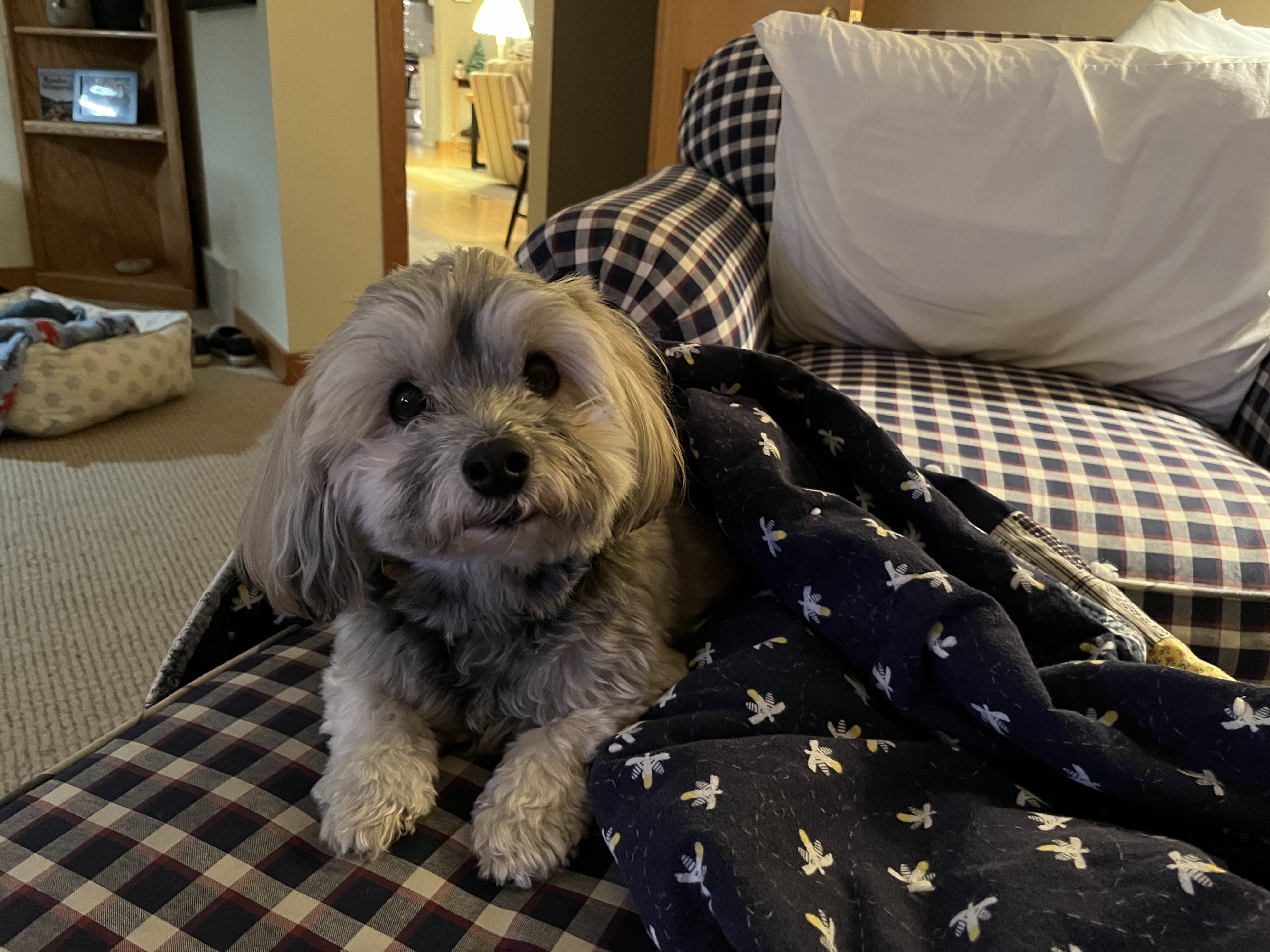
    Now we’re caring for our crazy, fun-loving, gentle Havanese in his final stretch. Just like older people, he’s developed an assortment of health issues– dementia, mild arthritis, high blood pressure. Life is still good, just quieter with more need for reassurance and assistance. We are in the palliative care time. Like Pucky, the hamster, change is more rapid which makes our time together bittersweet. 

    The most difficult part of adopting a dog or cat is the knowledge that their shorter lifespans mean some form of heartbreak down the road. Yet some of us open ourselves over and over to a companion who loves to walk in any weather, play each day, protect the front door, and loves unconditionally. Cats put on a good show, but they’re sweeties in their own aloof way. 

    If only we could move through our palliative care stage comforted by love, a few meds, an extra cookie or two, cuddles, and a few minutes of massage each day. 

  • If You See Something, Say Something

    If You See Something, Say Something

    If you see something, say something. Bags cannot be left unattended. Murmuring of voices. Click of heels, shuffling of shoes, suitcases rolling and being dragged. A baby crying. All areas of the terminal have been designated as smoke free. At the kiosk, I finished inputting the airline confirmation for our flight.

    “Stop it, Crissy,” I hissed. My stomach tensed and knotted. Sounds muffled around me. “Crystel, Stop!” I said louder with more urgency. She had stepped sideways to her own kiosk and was checking herself in. “Crystel, we are under the SAME confirmation!” I glanced at my screen: both of our names were listed. “It might screw us up if you check yourself in!” Veins stood out on my neck.

    She hesitated. Her lips tightened. With chin held high, she turned her back to me.

    Our 4-week Guatemalan trip had scarcely begun. A minute ago, we hugged Jody goodbye. I knew that defiance stance well. Even as a toddler she didn’t like to be told what to do. She insisted on dressing herself, zippering her own jacket, putting on her own shoes. It made for some fanciful ensembles. Beads adorning her hair, mismatched socks. Even her crib couldn’t hold her. After putting Juan in his car seat, I’d dash back to get Crystel who was waiting in her crib. Until the day she met me at the screen door. Grinning from ear to ear, clapping her hands.

    Crystel was an accomplished traveler; she’d spent a year in Hawaii as a national exchange student and had traveled alone to Vietnam and Korea. Yet, I was still the mother. I was holding all our valuables, the passports, global entry passes, credit cards, and cash.

    Sighing, I clicked on our names, printed our boarding passes and bag tags. “Crystel, here.” She jerked her head sharply and wouldn’t meet my gaze. I raised my eyebrows and handed her the documents.

    Crystel had invited me on this trip with a simple, “Why don’t you come?”

    Why not, I thought. Crystel and I have similar personalities. Always up for an adventure, searching for the unfamiliar. Both of us enjoy researching, planning, and arranging travel.

    Xela, Guatemala located in a remote mountain valley in the western highlands, was known for the best place to learn and improve your Spanish. Crystel and I would have a full immersion experience living with a Guatemalan family that didn’t speak English. Five days a week, four hours a day, we would attend Spanish classes and be tutored by our own teacher.

    Crystel walked with purpose towards security. Her long black hair was braided, bouncing against her back. When she was little, I researched how to perfect pigtails. She wasn’t a little girl anymore. She was 21 and I was 65. I inhaled deeply, relaxed my gait.

    As expected, my double knee replacement set off the alarm. I pointed to my knees. A female TSA agent was beckoned. While waiting for the pat down inspection, I scanned the conveyor belt for my backpack and tray of valuables. I held my arms out, spread my legs. I wanted to holler for Crystel to secure my possessions as they emerged from the x-ray machine. I couldn’t yell at her. I couldn’t even see her as she had gone on.

    I started sweating, my shoulders tightened. All I could imagine was all our cash, credits cards, my phone and passport disappearing. Our travel ended before we had even left the airport.

    Minutes later, I gathered my items at the end of the conveyor. Crystel was waiting around the corner out of eyesight. “CrySTEL,” I said sternly. “We know I’m going to be stopped every time at security. We need you to go through first, then secure our stuff. I have everything on the conveyor.”

    Her eyes flickered with recognition. She understood we were in this together. Our success depended on each other. We were bound. In the past hour, Crystel had also established that I was traveling with my equal, my adult daughter.

    Heading toward our concourse I tripped. We both laughed.

    “Are you up for a Chai?” I asked.