Our Trip South

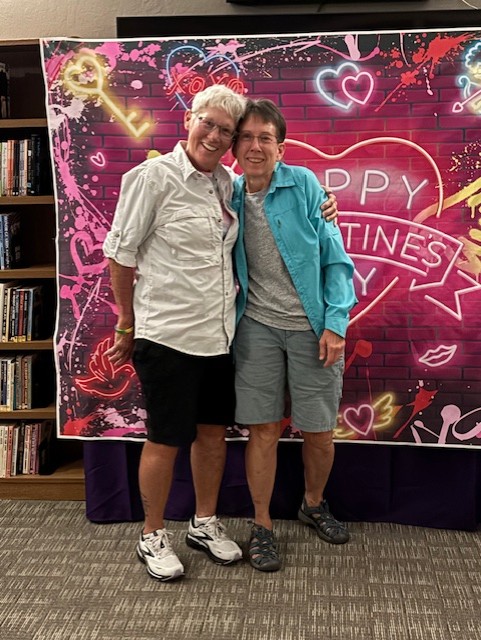
Our ‘before’ leaving Minnesota photo.

“We’re doing this,” we both said. Fist bump.

On September 30, Jody and I backed out of our driveway in our 29 ft. Class A RV. Destination: Zachary Taylor RV Park, Okeechobee Fl., 1,671 miles away. Hurricane Helene had made landfall and Milton was threatening. We were driving towards chaos, towards uncertainty. In 16 days, our 6-month workcamper job started at the RV park.

Would we enjoy living in an RV for six months? Would this lead to full-time RVing? How would Jody and I do living in such close quarters … all the time? Would we enjoy the RV community? Would we be interested in boondocking (camping in a remote location)? Would our two small dogs accept RV life?

Four days after we left home, 215 people were known to have died as the result of Hurricane Helene since it made landfall in Florida. Hurricane Milton would make landfall in 5 days, a possible category 5 hurricane.

Months ago, we made camping reservations at state parks and planned to visit relatives. We limited our travel to 4-5 hours a day and camped for no less than 2 days.

Flexibility and being comfortable with unknowns were our mantras. We continued south, while relatives updated us daily on the weather.

“It’s an adventure. We’re doing this.” Fist bump.

Bennett Springs State Park

Our first destination was Sugar River State Park in Durand, Illinois. We weren’t expecting answers so quickly—darkness, quiet, and remoteness left us feeling vulnerable. 82 campsites with only 3 other campers. Jody and I agreed that boondocking was not for us and we would be happy to return to our sticks and bricks home after six months. Hiking was excellent amongst the woods and prairies where we could let the dogs run off leash. Buddy and Sadie were proving to be good travelers.

It was at our cousin’s home in West Frankfurt, Illinois where we truly felt retired for the first time. Sitting outside next to their pool, visiting for hours, was self-indulgent. Before, our retirement plan seemed to have been volunteering at sporting and music venues to financially contribute to Juan and Crystel’s college education. Heading south brought that to a hard stop. Our paradigm had shifted. This was about us.

Continuing south we camped at Bennett Spring State Park in Lebanon, Missouri. Stocked daily with rainbow trout, the park attracted anglers who lined the shores and stood knee and waist deep in the water casting lures, flies, and spinners. Jody and I remained on land and enjoyed the miles of hiking forests, woodlands, bluffs, sunny glades, and dry stream beds with the dogs.

Gus-Gus. Hattiesburg, MS KOA

War Eagle Creek falls off the top of an Ozark Mountain. The 59-mile flow is never dry, and changes through four seasons. The headwaters form in the hardwoods of the Ozark National Forest and streams through Jody’s sister and brother-in-law’s pastureland before spilling into Beaver Lake, the water supply for Northwest Arkansas cities and towns. Jody, the dogs, and I rode a four-wheeler with her sister driving amongst the grazing bulls, cattle, and calves until we reached a sacred area: bluff shelters on the right that the Native Americans, Osage, Quapaw, and Caddo used for protection against the elements and the creek on the other side. Men, women and children camped here to fish, hunt animals, and collect plant foods. Fire scars remained on the rock shelters from their fires.

Wall Doxey State Park in Mississippi had few campers. A couple was escaping in their camper van from Hurricanes Helene and Milton. Hiding out until it was safe to return to their home in Punto Gorda, Florida. While at the park we were informed that our reservations in Florida– Florida Caverns State Park, Alfia River State Park and Lake Manatee State Park were cancelled due to unsafe conditions. Instead of extending our stay at the state park, we continued south 270 miles to a KOA in Hattiesburg, Mississippi. Inching ever closer to our final destination of Okeechobee, Florida.

At the KOA, Gus-Gus the cat chose me. Gus followed Jody, the dogs and me home after a walk. I took note of his concave belly, told him to wait outside our RV, and got a can of wet dog food. After he ate, I gave him a bowl of dry dog food. Gus joined me in the dog pen, lounging on the dog bed as if he belonged. Buddy and Sadie were accommodating. This may have been because Gus looked like Juan’s cat at home and his name is also Gus-Gus.

Sunset, Perry, Florida KOA

My bond with the cat was making Jody increasingly nervous. She reminded me that there was not space in the RV for a litter box. For the next several days, Gus got to be a cat, laying in the sun, safe, purring when I stroked him, contented that he was being fed and watered. There were several stories making the rounds about Gus. The one I decided to believe was that a lady had brought her cats from her house in Florida, van camped for a few nights – set up a tent and play station for her many cats, and Gus wasn’t ready to return when she was, and she inadvertently left him. It was difficult for me to say goodbye to Gus. I racked my brain for how two people, two dogs, and a cat could survive in a 29 ft. RV and decided that we couldn’t. I said a prayer and left Gus in the care of the living and the spiritual realm.

Zachary Taylor RV Park

There weren’t any cats claiming me in the Perry, Florida KOA, our last stop before Okeechobee. It was the first location that we could see the damage wrought by Helene. Piles of debris were on the roadway. Electrical trucks ferried up and down the highway. The sunset not damaged by the hurricanes was a gorgeous hue of oranges.

Our final l289 miles to Okeechobee were uneventful. Driving into Zachary Taylor RV Park, I honked the horn marking our arrival. I hollered, “The Minnesotans are in the house!”

Let the adventure continue. Fist bump.

Escape To El Paredon

Sunset, El Paredon

“I could live here,” Crystel said. Her arms were spread wide embracing the whole of Guatemala, her birth country.

Standing on the restaurant rooftop, we breathed in deeply the fresh crisp air. It was a noticeable difference from the air quality in Minnesota currently suffocating from Canada’s wildfires.

Mountains, hills, and the conical peak of Volcan Santa Maria stretched across the horizon. Church steeples poked up around the valley. Pigeon’s cooing, roosters crowing, and dogs barking punctuated the afternoon. Mayans in colorful dress walked easily up and down the narrow steep cobblestone streets.

I recognized the little park where we had enjoyed the sun’s rays before entering the restaurant. Flags flowed gently in the breeze above the two cement benches. The park would become our landmark. Left to our Spanish school, right to the restaurant and down the hill to our homestay.

“Me and Mama Jody feel the same way when we are around Lake Atitlan,” I reminded her. On many occasions Jody and I discussed buying property around the lake and looked at homes for sale. Surrounded by mountains, volcanoes, and water, Lake Atitlan was our sanctuary. Cradled by the universe, the heart of the mother, we felt loved, protected and at peace.

Eventually, Crystel and I made our way back to our homestay for dinner at 7 pm. Within days we had established a pattern: breakfast with the family, language school, return for lunch, fitness center, afternoon café for hours of reading and writing, finally head back for dinner and lastly bedtime.

Sidewalks, Xela

Crystel was our de facto leader. I was content to follow her on the uneven and unpredictable sidewalks that were not wide enough for two people to walk side by side. She helped with bank business and researched cafes, restaurants, and excursions. I gave up any semblance of being in charge. On occasion when I did assert myself and speak on her behalf, she let me know that it wasn’t wanted. I was to be her companion on this trip, the friend who had inferior language skills and was inept at GPS. I was comfortable to step aside and allow her caretaking. It was a gift to be her mother, a speck on the wall, and observe her engagement with others, be fully in the moment, and witness her desire to learn.

“It’s right here,” Crystel said. She stopped at a pistachio-colored building front with a tan door.

Entrance to our homestay was through a dimly lit garage. A motorcycle with parts and tires strewn about rested against a cement wall. Broken dusty chairs stacked in a corner. Drywall and crumbled brick swept in a pile. Oil cans, assorted tools, and dog dishes near the rickety steps that climbed to the roof. At times dried dog poo could be spotted. Once I very carefully climbed the stairs to the roof to see if I could escape to a sunlit area to read and write only to be disappointed. Discarded items, unused pot plants, and cement blocks held sheets of tin in place.

“Mama Beth,” Crystel whispered. I opened my door. “What’s that?” she gestured.

Beth and Crystel, El Paredon

I loved it when she visited me, searched me out. We had an easiness about us. Could provide each other company without talking. I sniffed back a sob. On my bed was a piece of sheet rock and plaster dust. “It must of fell from the ceiling or wall.” Sitting with my legs dangling over the bed my back ached from the strain. The mess wasn’t there when we left after lunch for our afternoon workout and café outing.

Crystel wanted to laugh. It is what we have both done to relieve tension. She thought better of it after seeing my face. My eyes were red from crying. My face flushed.

“I just finished talking with Mama Jody. I’m so depressed. The clutter and dirt really get to me.” I pointed to the corner of my room and the top of my console. More plaster dust, more debris.

I brushed off my bed. Crystel climbed in with her book.

“Now, I’m worried about bed bugs and fleas. Any time I see a spot on my pillowcase or bedding, I put a finger by it to see if it will jump.”

At dinnertime, Ms. Amsterdam told Crystel that she would not pet the dog if it were her. “The dog has fleas,” she said. Crystel’s hand sprung from the little white friendly dog. “I have flea bites on my ankles because I let the dog in my room.” Mr. England added that there were bed bugs in the mattresses.

Crystel stiffened. “I like it here,” she said. “The food is good. The family is nice.”

“I agree. The food is simple and wonderful. I never have to spice anything. The portions are just the right size.” I shifted to lean my back against the headboard. “I hear you laughing and using your Spanish. You could have done this trip by yourself. Did you hear Ms. Amsterdam say that another student looked at my room and then left? She said she couldn’t do it.”

What is my purpose in all this? This trip was for her. It was supposed to be about her growth. Her lessons. Not mine. What is the meaning here?

 I sensed that Crystel didn’t want to move from our homestay. She could be imagining how it might be to live with her birth family.

My PTSD was triggered our first night at the homestay. I hadn’t been able to shake it. It took me some time to figure out why I was on heightened alert and couldn’t sleep. It occurred to me that it was about the mess and the chaos that I grew up in. As a teenager, anxiety built inside me until I exploded and got on my hands and knees and scrubbed our kitchen and hallway floors bit by bit. I’d start at my parents’ bedroom, move backwards to my sister’s, then mine, change water and start again in the kitchen area. A table knife in my soapy pail of water was to get what the scratch pad wouldn’t.

Chaos meant no one was in charge. If no one was in charge, I wouldn’t be safe. At any minute things could spiral out of control. If I could just clean the house, I’d be safe. My parents were of no help. I had long become the surrogate parent to my younger siblings.

I breathed deeply. “We are leaving for El Paredon on Friday,” I said. “Maybe a long weekend away will be just what I need to reset.”

 I can do this. It’s not that bad. I don’t want to hurt the family’s feelings by leaving. I don’t want to take money away from them. They counted on us. Crystel is doing great. Fitting right in with this Guatemalan family. I can do this. It’s not so bad.

El Paredon, Surfing

El Paredon, a remote surf beach town on the Pacific Coast of Guatemala with a black sand beach was on Crystel’s must-do list. She had learned how to surf in Hawaii and wanted to visit surfing destinations. Maybe at El Paredon, I’d find my epiphany. Sunrises and sunsets were known to be spectacular. I imagined relaxing on a sunny beach and enjoying the outdoor hotel pool, lounging, healing, and napping. Crisp clean white bed linen and towels. Fluffed up pillows. A TV to scroll in the evenings. A private bathroom with a warm shower. Falling asleep to the sound of the ocean.

Before leaving for our long weekend, I folded the blankets on my bed. Removed my sheets and pillowcases. Set them by the washing machine.


Connection

“I see you, Crystel,” I say. She’s hanging in the apple tree above me. I pause my reading. Decide to snap a photo to send to her. She flits away before I can reach my phone. Of course. She’s elusive like that. Later, I’m sitting in the living room when I hear, “Chip, chip, chip” through the open door. “I hear you, Crystel,” I say. She sometimes follows me when I walk the dogs. Flying from tree to tree as we make our way around the neighborhood.

Crystel is currently a senior at the University of Hawaii at Manoa. “Why am I a male cardinal?” she asks when I tell her that in her absence, she has embodied that symbol.

It’s simple. “Because I can see you. It’s hard to miss a red cardinal perched in our trees, settling on our fence line, or resting on electrical wire,” I tell her. Really, she could have easily been a yellow finch that visits our purple anise hyssop for their dried seeds, or a monarch butterfly that reminds Jody of her mother, or a dragonfly that dips into our pool for a drink.

“There’s Granny,” we all say when we see the colorful monarch. Jody and Crystel were at Granny’s gravesite shortly after she died. They were sitting on the ground facing Granny and reminiscing. A butterfly suddenly swooped towards their faces. There was no mistaking that was Granny.  

For our wedding announcement 22 years ago, Jody and I used the dragonfly and a poem by Scott Russell Sanders: To be centered… means to have a home territory, to be attached in a web of relationships with other people, to value common experience, and to recognize that one’s life rises constantly from inward depths. The dragonfly represented transformation.

The male cardinal transforms my energy connection to Crystel into physical form. A sighting of the brilliant red birds and their distinctive whistle awakens my sight and hearing senses. I smile, laugh. Send her love.

Juan is a constant presence. His car is in the driveway. If I’m up early enough I can hear him leave in the morning for work and ask him how his day went when he comes home. Jody and I bring him keepsakes from our travels. He’s solid, steady, a known entity. I like having him at home. It’s a gift. I prefer he doesn’t become a symbol, though I expect some day he will.

Change is the one thing we can count on.

photo credit audubon

Mama-Sister

“You don’t know anything about me.”

My brother was right. I didn’t. I didn’t have any idea where he had gone. What he did. Who he knew. His incarceration record. Jails. Prison.

The 23-year-old sitting with me and a staff member at the halfway house had called me mom until he was 8 years old. He was the last of my parents’ 12 children. I took care of him the best a teenager could.

“I’m afraid you’re going to die, Johnny,” I said. “That I won’t see you again. I’ll get a phone call saying that you’re dead.” I sobbed.

The fight left him. He softened. Maybe he was remembering the times I tried to locate him when our parents put him away in homes for troubled kids. Homes, plural.

“I wish I could have taken you with me,” I said. “I couldn’t. I had to save myself.”

One time I did find him. He was 13. I called and set a date with the residential facility without my parent’s knowledge. Sitting next to him on the couch, I explained to him and the therapist what it was like in our family. Tried to give Johnny the words for the things he saw. The violence, the sexual abuse. “It’s not you,” I said. “This was what it was like in our home.”

SISTER NO CONTACT was the result of my visit. I wouldn’t see Johnny for years.

My children are 21 going on 22 years old. Maybe that’s why I’ve been thinking of Johnny. Though I think of him all the time. A loss that never leaves. There is always the thought – if I could have just taken him with me. Impossible. I didn’t have any money. I didn’t have a home. I was only 19 years old. I keep replaying it in my head, wanting it to be a movie. Girl saves baby brother. Mama-sister and kid brother leave home, grow up together. Safe. Happy.

My son and daughter are safe. They aren’t worried about where they’re going to rest their heads tonight. Johnny was long gone by their age. It was typical to be kicked out of our house when you graduated high school. Johnny didn’t get that grace. He was gone by 13. He never graduated. Never got his GED. Finally left for Alaska and the fishing boats.

All morning I’ve been looking down the basement stairs towards Juan’s bedroom. Looking for light, movement. Finally, I text: Are U alive down there? Need food? Fresh air? Water? Don’t make me come open your door for a health check.

I relax when he texts: I am alive lol. I have my water bottle. I was about to change and come up for food. Smiley face emoji. I’m invested in a show, worst roommate ever.

Crystel is building her life in Hawaii, knowing she has a home in Minnesota. Our weekly phone calls are as much to keep up with her as they are to support her.

Twenties are for exploration. My time and energy were consumed with living at a halfway house, AA, and therapy. AA raising me. Teaching me values. Honesty. Truth. How to belong to a group. I hung on for dear life and learned everything I could.

All you have to do is grow up and get out. I left the farmstead believing Johnny would survive. I can still feel our last hug. This 19-year-old woman hugging the 8-year-old boy.

He never got free.  Even after our parents’ death.

 He died of a heroin overdose at 29.  His home – a makeshift shelter in The Jungle, a strip of woods in Seattle. He had his brothers and sisters’ contact information on a scrap of paper in his jeans.  

It’s been 24 years since my brother’s death. The movie is about a girl-daughter-sister-mother who lost her brother. Who loved him deeply but couldn’t take him with her. A loss that doesn’t go away. And, even now, when the sister drives by freeway underpasses and scraggly underbrush she scans for places her brother might have called home.

I didn’t know his story, the places he laid his head. I knew his spirit.

A Simple Thank You

“I’m not a kid, anymore”, my son said. Why was I then having to cajole him into writing thank you cards? Isn’t that an adult thing? Jody and I had a gathering of up to fifty people to celebrate – and more importantly – to recognize his graduation from Dunwoody College of Technology. 

Our son didn’t want a basket to be set out for cards. “It looks like I expect something, then,” he said.  

He wore a hooded sweatshirt, graciously accepted the cards given to him, and slid the cards into his hoodie pocket. Later he transferred the cards to his cubby.

My son graduated from Dunwoody with honors. Earlier, I had pointed to his Cum Laude and Outstanding Attendance designation on the commencement program. “You did that,” I said. “Me and Mama Jody never once got you up for school. We never once asked you if you had class work to do. You did that.”

He looked pleased. “I know.”

But, to write a thank you card?

Ever since our son and daughter could hold a crayon, the expectation was to send thank you cards for birthday and holiday gifts. In some ways, it was easy for them. A thank you card is made of two halves. Our son would have one half and our daughter the other. They each would draw a picture displaying their own unique personality. Jody and I would address and mail the cards.

Juan balked at drawing a picture. “I’m not a kid, anymore.”

In retrospect, I probably should have expected his pushback sooner.

My son and daughter are members of the first social generation to have grown up with access to the Internet. They are labeled digital natives. Both consume digital information quickly and comfortably through electronic devices and platforms.

Where does that leave the digital immigrants? The grandparents, aunts and uncles, and family friends who grew up dominated by print before the advent of the Internet.

We would like a thank you card, and we would like our children to send thank you cards.

Is it enough for our children to say thank you in person when handed a card? I’m sure that my son did that. He is sociable, polite and courteous. I’m old-fashioned. I haven’t let go of the idea that the written word is important. Our son did end up sending thank you cards. He did the absolute bare minimum.

Will thank you cards, thank you texts, emails, etc. become antiquated? Will it be all thought, all energy driven? Appreciation transmitted without electronics. Mind to mind. A glow of light. If asked, the children will say that we are already there. It’s us digital immigrants that must catch up.