SAD TIGER, My Coffee Table Book

Sad Tiger by Neige Sinno, sits prominently displayed on my coffee table. It’s not an illustration book of art, travel, or architecture. It’s not a photo book of exotic animals.

Sad Tiger is a powerful memoir that weaves Neige Sinno’s memory of sexual abuse and reflects upon literary works by authors who were abused and authors who wrote about abuse.

It’s the most complete book about abuse that I have read. It’s my story. My all-embracing 4-year-old, 9-year-old, teenager, and adult self-story.

Underlined sentences mark the early pages, but soon it became expeditious for me to place a vertical line in the margins highlighting entire passages. When I had an especially strong reaction to a passage, my vertical line became an elongated bold exclamation mark.  

Emotion would build in me, and I’d write in the margin. There was no order or plan for my discourse. A conversation with myself, my mother, a memory would drive me to write in the top, sides, and bottom margins. Words would be vertical, horizontal or slanted, near the author’s words that elicited the feelings.

I didn’t start out knowing that this book was going to be displayed on my coffee table. I didn’t intend to write or make any notations in the author’s memoir.

It was instinctive, like breathing. On the first paragraph I underlined, “Even if you’ve not experienced it, the traumatic amnesia, the bewilderment, the silence of the victim is something we can all imagine or think we can.”

In the second paragraph, when she wrote about the perpetrator’s assumed experience, I asked, Really that’s what it was like?

Her words rang true.  “… And after it’s over, getting dressed, going back to family life as if nothing had happened. And once the madness has taken hold, doing it again, doing it again and again, for years.”

I was in awe, too, that my family could go on as if nothing had happened. The sexual abuse, the violence, the awful words said quietly, shouted, or screamed. Survival was day by day, moment by moment. Wary and alert, vigilance didn’t stop the abuse. I could never escape but I could steel my body to not feel when it came. Even today, 51 years later, I can easily recall my stomach dropping and my impending sense of dread when I realized that I was trapped in a car in the middle of winter on a remote road. My older brother forced me to the back seat. We were supposed to be going to my beloved Aunt’s house—the reason I agreed that I would ride along. A gunshot sounded. No, I realized, with his weight pushing down on me, it was a tree limb snapping from the extreme cold. I don’t even remember if we made it to my aunt’s or what we did once we arrived.

I hear my brothers’ saying, Why are you still writing about this? (As if we were ever really going to have a conversation about their assaults). I answer, Fuck you. It’s mine to write. You shouldn’t have fucking raped me if you didn’t want me to write about it.

“A person rapes in order to exist,” I underlined. I have long thought that my oldest brothers raped me to have some semblance of power in the family. A response to the chaos of our life with our alcoholic father, our mother, and the on-going bedlam of being farm poor with 11 other siblings. Calamity struck every few years. Our barn burnt down when I was in 3rd grade. A few years later, our house burnt down. It wasn’t if something was going to happen, it was always when. My belief was they raped me because they could.

I pressed pen to paper, Where were you, Mother? How could you not know? I wish someone had saved me! I wish someone cared enough. Was brave enough. Had the courage to confront what was easily seen.

In the end, I saved myself and my three younger sisters. Like the author, I reported the abuse to the police when I was 19. I was afraid that my mother wouldn’t protect them, the same as she didn’t protect me. I would never have forgiven myself if I allowed it to happen to my sisters. I was no longer at home, mothering them, protecting them.

And like Sinno, I am drawn towards books written by survivors. She says:

“Many books are published every year by survivors. Mostly fiction. Whenever I come across one, I always like to flip through it. Some are well written, some not. Either way I read them with the same eye. I am looking for a description of the facts. I want to know exactly what he did, how many times, where, what he said, and so on.” Same, I wrote in the margin.

I came across her book, Sad Tiger, in The New York Times book review section, May 2025. Sinno has said that Sad Tiger was written “out of necessity”, as an act of survival and understanding. Writing it was a way to reclaim her own story – to move from being the “object” of violence to the “subject” who names it.

House of Fire: A Story of Love, Courage, and Transformation is a book that I had to write. The sexual abuse that happened to me isn’t me. It was done to me. It doesn’t define me. With writing House of Fire and telling my story, I brought the truth into the light and claimed my freedom. I cut the cord that bound me to my family and found me.

Keeping quiet about abuse lets abusers win and minimizes your own life. Says, I’m not important. I’m not as important as the abuser. As the pedophile.

Fuck you, I say.

I love my life. There’s a deep peace in sitting on my deck, listening to chimes as leaves whisper and clouds float through the blue sky. I am in the moment, knowing my truth, living my truth, and speaking my truth.

I’m immensely proud of who I am. Who I always was. A fighter with a belief in myself.

I don’t write so that the abuse disappears. It will never disappear. It’s in my bones. My thoughts. My world. My very cells.  

An elongated bold exclamation mark highlights one of the author’s final sentences, “Like so many others I was raped, I was defiled and betrayed at an age when all you have is trust, and yet I grew up to become an adult who has not raped or defiled or betrayed another person in return.”

Same. With my wife, I’ve raised two children to adulthood. Slowly, intentionally, I made my body mine again. For so long my body was numb to pain and my tears stayed locked away. Now they flow easily. That is the work of love.

I have a coffee book that’s all about me, my travels, my journey, and it sits next to mine.


In Honor of Those Who Teach

Marquette University’s development rep wanted to visit (aka ask for a donation). On a hot summer day Samantha Adler and I sat down with iced drinks to chat about education before the pitch. First, we circled topics searching for things we had in common beyond my alma mater and valuing education. We wandered into talking about growing up in small towns.

She grew up in Monticello, Indiana, the same small town as my husband. She had attended Meadowlawn Elementary. I mentioned my mother-in-law spent decades there as a third-grade teacher.

Samantha asked for her name. 

“Mrs. Kraack.”

Her eyes got wide. “Mrs. Kraack! She read to us after she retired.”

“That would be her.”

“She was amazing. She made me want to read.”

There we sat, two strangers across a table, connected by the kind of educator who could make small children want to read.

“I read Winnie the Pooh books to my children, and I do all the voices like Mrs. Kraack. I haven’t thought of her for so long. This is amazing.”

We both had goosebumps while sharing Mrs. Kraack stories. I told her truthfully that this opportunity to talk about my mother-in-law was a wonderful gift. 

Helen Kraack taught at least a thousand elementary school children during her career. She was on her third generation of students in some families. Teaching was not a job for her, but a mission. She worked hard to be sure every third grader leaving her classroom could read, manage their time, know how to be kind to others, and dream of their futures.

How do you measure the success of teachers like Mrs. Kraack? Many tried when she received an Indiana Shining Star for Excellence in Teaching, when she retired, when she passed. Stories about kids who went to college, who became professionals, who held leadership positions, won awards. 

Then there are untold stories about little girls like Samatha who learned to love reading while listening to Mrs. Kraack. A girl who would earn a full scholarship to St. Mary’s College and develop a career making college possible for other kids. A mother who reads Winnie-the-Pooh books to her children. 

Many thanks to all who enter classrooms this school year or teach in other ways. Know that even on your most lackluster days, your influence may brighten a child’s day and well outlive you. There are people who have your backs and wish you all the best. 

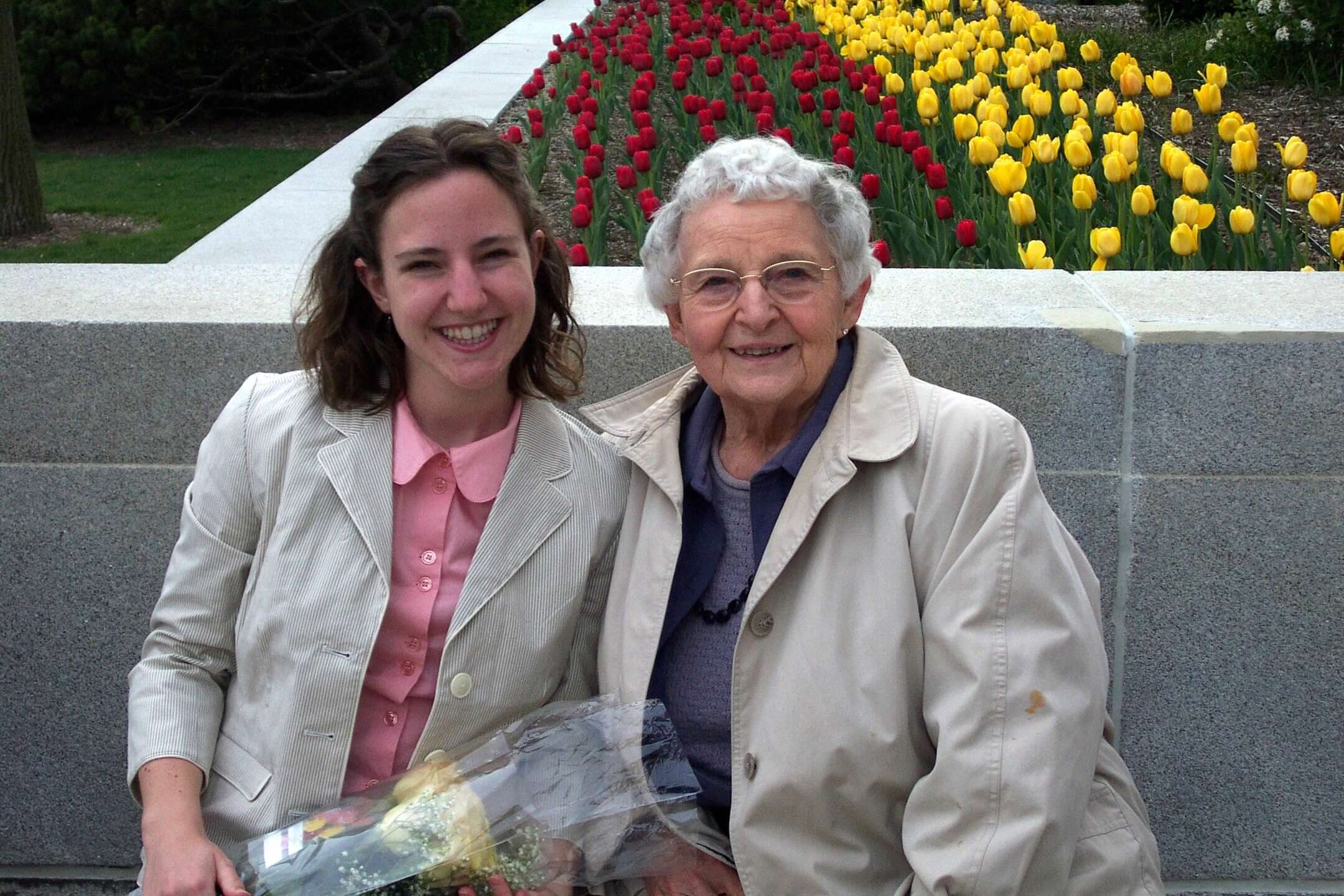
Emily Kraack Chad and Helen Kraack

“Some people care too much. I think it’s called love.”
― A.A. Milne, Winnie-the-Pooh

Anything I’d Recognize?

Writing paid part of my tuition and living expenses in both high school and college. Stringer work, editing school publications, working in media relations, internships, freelancing. I stepped out of journalism school into local newspaper work then the wild world of advertising before settling into corporate communications.

Now, a retiree from the briefcase world, I would love to have some years back from when creative writing took second, third or fourth place behind big obligations. There have been successes, some brilliant like being a part of a regional Emmy award-winning team, Midwest book awards, C-Span Book TV. Maybe there could have been more.

When Joe Tachovsky and I wrote 40 Thieves on Saipan, folks who discovered I was co-writing a World War II history book had many questions. Some would follow me to share personal stories about uncles or grandparents who served in the war. I handed out business cards like a realtor at an active open house.

Response is less enthusiastic about freelance work and falls dramatically into the same interest zone of talking about high school dance competitions in a gathering of day traders when I share that I write contemporary fiction. “Anything I’d recognize” is a standard response or its companion “Would my wife recognize your books?” If lucky, someone asks how you think up your stories and a brief conversation opens. 

It’s probably fair.  Social media, family, sports, travel take a lot of time. Bumping into a writer is kind of like listening to a bar band. If they don’t know how to play your favorite song, you disengage. 

Anonymity isn’t limited to B list writers. Years ago, I stood next to a crowd growing around a hotel counter at a major conference. Voices were rising as news spread that the staff did not recognize Nikki Giovanni when she attempted to check in without a reservation. Giovanni, who died in 2024, was one of the world’s best-known African American poets and someone who spoke out on social issues. But chances are mixed that that reservationist was one of the 50% of Americans who read at least one book a year and even more minute that she was in the 12% who read poetry.

Some days a writer may as well talk with their characters, cause few other people are paying attention. But I wouldn’t stop working just because of that. 

Spiders, Jeans and Apples

Daylight now plays secondary to darkness. Not the awesome state of Dec. 21, but the gradual nibbling away of four minutes a day of sunlight. That doesn’t sound like a big bite of time until added up and you’re twenty-eight minutes behind the game in taking a walk, taking pictures of the last of summer’s flowers or merely reading without a lamp. 

Temperatures are also supposed to be heading to lower numbers. The boys will wear shorts until their friends pull out sweats or long jeans. It’s all relative. In March sixty degrees suggests that a sweater can stay in the car or at home. In October someone will pull out a jacket and hat, maybe even gloves, when leaving for work. Spiders find their way into the house, spinning webs where no one wants to see a creepy critter hanging. The hummingbirds are gone, but the geese increase in number, pooping everywhere and honking at ungodly hours.

Since the pandemic, things have changed. Or maybe it’s my age. Instead of planning a fall and winter wardrobe, I found new black pants, a pair of jeans, a new sweater, and comfortable shoes. A writer’s life is simple without office mates remembering that you’ve worn the same long black turtleneck for a few years. 

Open the windows for cool sleeping. Bake apple crisp or apple pie or apple cake. Celebrate the passing of mosquitos when walking the old dog. If it wasn’t for November 5, this could be the best time of the year.

Saying Goodbye to My Books

In preparation for a someday move, I’ve been parting with my books. Hundreds of them over the past three years. Most have been collecting dust for decades (I bought my house in 1989), while others are recent additions. Some are quick reads I started and finished while drinking a cup of coffee, while others took me more than a year to make my way through.

Many are still on my “to read” list while others have been read and reread, by me and by the family and friends I’ve shared them with. Some were gifts, though most were bought by me at local bookstores or while traveling.

One reason I have so many books is because the upstairs of my house, which once belonged to the owners of a local used bookstore, is a 45- by 15-foot half-story lined with—no surprise—bookshelves, 150 linear feet of them, plus three standalone bookcases.

Although I’ve loved owning my books, some of which date back to my years as a college English major, now that I’m on Medicare and beginning to think of moving, it’s time to let them go.

But parting isn’t easy, in large part because I still treasure the stories they told, the memories they hold and the lessons they taught. There are books about saints that I read while in Catholic grade school, and books about the sea I read while in Florida on family vacations. There are books I used to motivate myself, and others I turned to for solace after the deaths of my parents.

There’s a shelf of books that include autographs from people I admire and heartfelt messages from people who love me. There’s even one shelf dedicated to books written by people I know, and whom you may know as well: Marly Cornell, Kate DiCamillo and Cathy Madison to name a few. Plus, books by Natalie Goldberg, Mary Carroll Moore and others from whom I’ve taken a Loft class or gotten to know because of a writing workshop.        

Just seeing the books brings back a flood of memories of the books themselves—the characters, the settings, the twists and turns of their plots—as well as where I was when I read them: while packed in the car with my parents and four younger sisters on our way to Florida for a family vacation, while taking college English classes, while flying to China, while spending a month on a Panama beach, while sitting bedside during my father’s final hours.

Others such as How to Forgive When You Don’t Know How and Living Proof: Telling Your Story to Make a Difference home in on my desire to be a better person and to advocate for causes I care about.

And, no surprise to anyone who knows me, there are also dozens of self-help books, many of which inspired me to write my own book, What Do You Really Want? How to Set a Goal and Go for It, A Guide for Teens.

While I’ve treasured all my books, I’ve recently begun sending them back out into the world. I’ve donated hundreds to Rain Taxi, a local non-profit that sponsors the annual Twin Cities Book Festival, which includes a book sale. I’ve also put dozens in the Little Free Library down the street.

Still others I’ve passed on to family and friends whom I hope will enjoy them—or learn as much from them—as I have. They range from true crime to travel guides, from books by (and about) artists to how-to books on everything from fishing and stargazing to tying knots and learning Spanish.

And because I now do most of my reading on my phone thanks to the Kindle and audiobooks I borrow from the Hennepin County Library, my shelves are becoming empty.

Thankfully I have one thing that will keep my book memories alive: the annual “books I’ve read” lists. I truly treasure these lists and the many fond memories they prompt of the nearly 2,000 books I’ve read since I started keeping track back in 1982.

As author Italo Calvino has written, “Your house, being the place in which you read, can tell us the position books occupy in your life.” And although there are now far fewer books in my house than there were in the past, I hope you will always be able to see the important place they hold in my life.