Tag: aging

  • Dogs and Aging Families

    When do people become too old to share their homes with a new dog? How do middle-aged dogs and older people find each other?

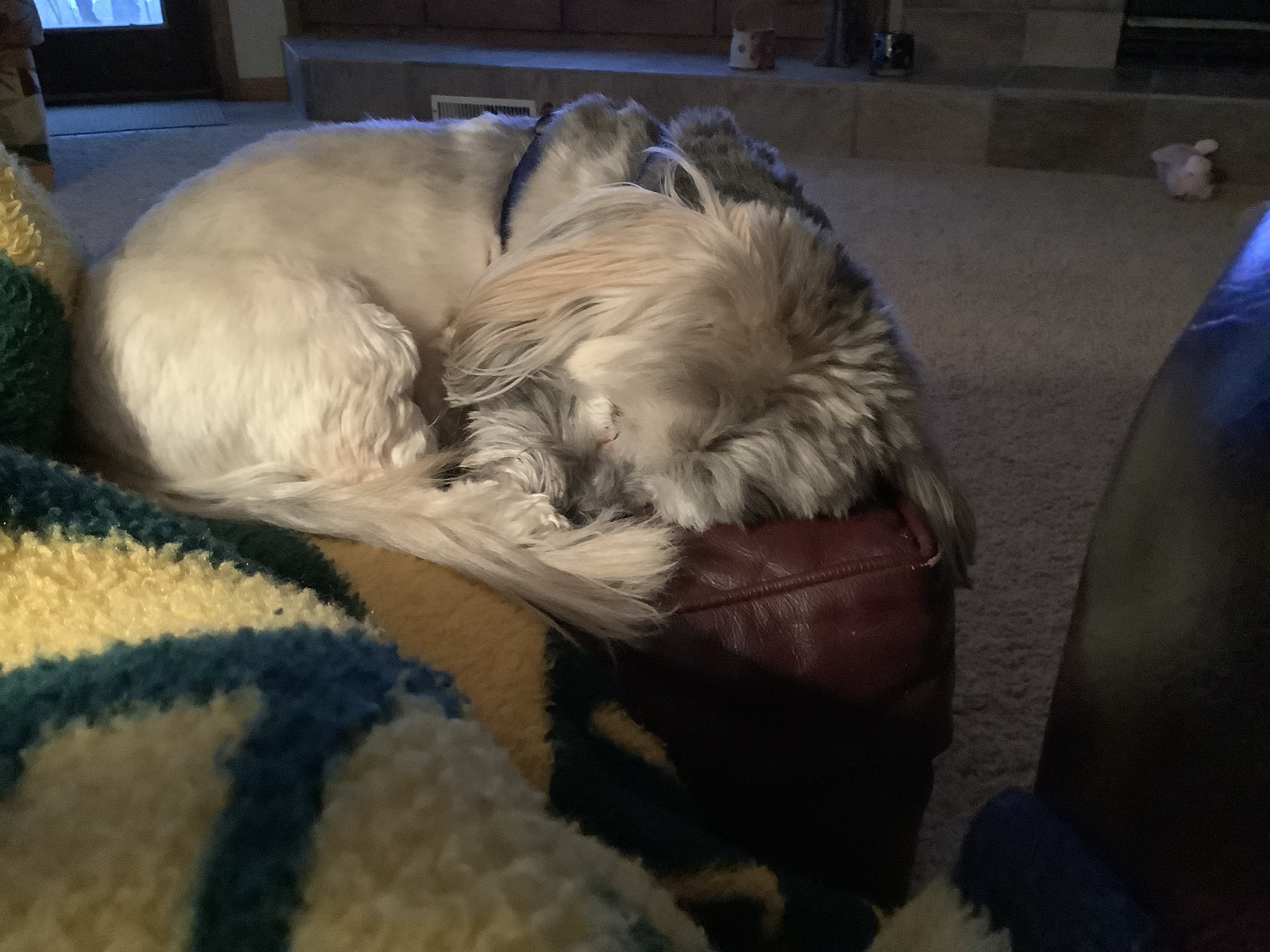
    During his annual vet visit in February 2020, Rocky was found to have a heart murmur. Covid locked down our city before we could take him to a doggie cardiologist. That visit never happened because Rocky continued his happy, boisterous life.

    Walk ahead to 2025 when Rocky hit his senior years. Since dogs pack a lot into lives of ten to fifteen years, their aging process is more compact. More dramatic. Medication helped with high blood pressure and easing anxiety due to dementia. A chiropractor supported with home exercises and massage kept his rear legs working. Playing smaller versions of fetch accommodated diminished vision. The adaptation grows.

    Over years, not months, so will ours. For Rocky we’re able to be solid caregivers.  I am not sure that I will be physically capable of supporting another dog through their final years. But how would we walk away from a beloved future family member because we’re all aging? 

    Cats and some rodent pets are not options because of allergies. We’ve done fish and snails when kids were young. None of them check any boxes of what I value in a companion creature. Spending the rest of our lives without a furry friend is hard to accept. Foster care is kind of like babysitting a neighbor’s child now and then. Can be physically demanding.  Entertaining. Heart-warming. Then the baby or child goes home and there’s no one to talk to at midnight when sleep is elusive.

     Maybe there are dog-share programs or lease a pet centers with humane housing for dogs in transition. 

    Maybe the quiet house will grow on us after Rocky’s life is over. 
  • Spiders, Jeans and Apples

    Daylight now plays secondary to darkness. Not the awesome state of Dec. 21, but the gradual nibbling away of four minutes a day of sunlight. That doesn’t sound like a big bite of time until added up and you’re twenty-eight minutes behind the game in taking a walk, taking pictures of the last of summer’s flowers or merely reading without a lamp. 

    Temperatures are also supposed to be heading to lower numbers. The boys will wear shorts until their friends pull out sweats or long jeans. It’s all relative. In March sixty degrees suggests that a sweater can stay in the car or at home. In October someone will pull out a jacket and hat, maybe even gloves, when leaving for work. Spiders find their way into the house, spinning webs where no one wants to see a creepy critter hanging. The hummingbirds are gone, but the geese increase in number, pooping everywhere and honking at ungodly hours.

    Since the pandemic, things have changed. Or maybe it’s my age. Instead of planning a fall and winter wardrobe, I found new black pants, a pair of jeans, a new sweater, and comfortable shoes. A writer’s life is simple without office mates remembering that you’ve worn the same long black turtleneck for a few years. 

    Open the windows for cool sleeping. Bake apple crisp or apple pie or apple cake. Celebrate the passing of mosquitos when walking the old dog. If it wasn’t for November 5, this could be the best time of the year.

  • Mortal

    Daffodils and forsythia are in bloom here. Egrets and ducks have returned to the pond. We all made it through another winter, a difficult season with plenty of cold, snow, and ice. 

    When I was in my forties, I wrote a short story about a woman whose first serious high school boyfriend was drafted to serve in Vietnam. He would die in battle and be remembered as perpetually nineteen. She went on to college, married, had children. As her son prepares for junior prom, she is reminded of Bernie. On the anniversary of his death, she writes him a letter about what it has been like to age decades beyond her teens.

    Late in 2022, I prepared for serious surgery. The surgeon called me a ‘low risk’ patient and young for my physical age. Tests showed no other options. All was successful, except emotionally I landed in part of the world described in Atul Gawande’s Being Mortal.  He writes that we tend to consider aging a failure, or weakness, rather than a normal process. As we live longer and longer, medical processes becomes part of our experience. Doctors know how to preserve life, but not how to help patients cope with how life continually changes.

    Like most surgery nothing looks different to others, but I know where the scars are and what each means. I know the medications that support carrying me through a normal life expectancy. I am also learning their downsides. I haven’t returned to tap dancing because the studio floor is slippery, and I am still fighting to return to my prior rock-solid balance. Down dog is back on my aspirational list, but for different reasons than undeveloped muscles.

    In the weeks between the first time a doctor said, “maybe six months, certainly not more than a couple of years,” and the night before surgery, I thought about not seeing my granddaughters grow up, about the writing projects that might not be published, about my unwillingness to let life go. When I stopped pushing to be the person folks expect, my fatigue was immense. With surgery on the schedule, I slept a lot, read a lot, thought even more. Because I am used to being productive, I labeled that week practicing recuperation. 

    I have had friends die of cancer without the medical miracle surgery offered me. I am humbled and so respectful of how they faced the eventuality of their passing. 

    This spring I wonder how to make these next many years meaningful. A wise friend told me the body needs at least six months to recover from major surgery then encouraged me to give my emotions the same time. A good plan. I’ll enjoy the daffodils and forsythia, then the tulips and lilacs. The demands of regular life are close enough.

    With love to my brother, Darrell J. Frisque, who passed too young on April 14, 2007.