Category: Women’s Rights

  • Dear Dr. Rajender . . .

    Dear Dr. Shyamala Rajender,

    The University of Minnesota and the Rajender Consent Decree are probably far from your thoughts. Most of the time they are far from mine, too. However, recently I realized that it’s been 40 years since the decree bearing your name helped me.

    I’m writing to thank you.

    Your courage fighting gender discrimination changed my perceptions of the world and set me on a feminist path that informed the rest of my life—how I see myself and thought about my career, how my marriage works, and how I raised my sons.

    Forty years ago, I was a Freshman Composition instructor at the University of Minnesota-Morris, my first professional job. In the spring of 1980, I got in trouble with the all-male senior faculty in the English department, because I wanted to present a noncredit lecture about women’s literature for a Continuing Education series.

    Several of the senior faculty reacted with a policy that stated, “. . . instructors in English should not participate in off-campus events, either formal instruction or informal presentations, which, in effect, call for a person who has been judged expert in the teaching of English literature.” In other words, I wasn’t supposed to talk about literature even though I had an M.A. in English Literature. The policy was odd and confusing. Several of the literature professors at UMM had been tenured with only a Master’s degree. But my credentials—which were the same as what some of them had—were suspect.

    At first, I was more scared than angry (anger came later). The Continuing Education director and the EEOC officer knew I was afraid I’d damage my career by fighting the policy, so they informed the academic dean about my dilemma. The dean and others were aware of your gender bias case against the Chemistry department on the main campus. Consequently, the dean insisted the English department rescind their policy, and I was allowed to give the lecture.

    Later that year, a number of faculty members, including me, received a $2,000 raise as a result of the Rajender Consent Decree. It’s hard to imagine now, but increasing my salary from $12,000 to $14,000 per year was a meaningful raise then. In general, it’s hard to convey to younger people just how crazy the late 1970s and early 1980s were for professional women.

    Your decision to fight the University of Minnesota had a lasting impact on my life.

    At 25, I learned gender discrimination was as real and insidious as the fatherly men in the English department, who didn’t see me as their equal and wanted to limit my opportunities. That experience didn’t drive me away from academia, but like you, I left the academic world several years later.

    Your career was exemplary (first a Ph.D. in Chemistry, later a law degree). Mine was much more ordinary, but I was always aware of the example I set as a woman in the workplace. Your determination to fight gender bias had a far-reaching effect on me and so many other women. I want to acknowledge your heroic contributions.

    Thank you again for your courage.

    Sincerely,

    Ellen Shriner
  • Why March?

    I’m as surprised as anybody that I’ve begun marching in support of causes I care about. I have never been an activist. For years, I was quietly passionate about my politics and causes – emphasis on quietly. I spoke about them among friends, sent letters and checks, but that was it.

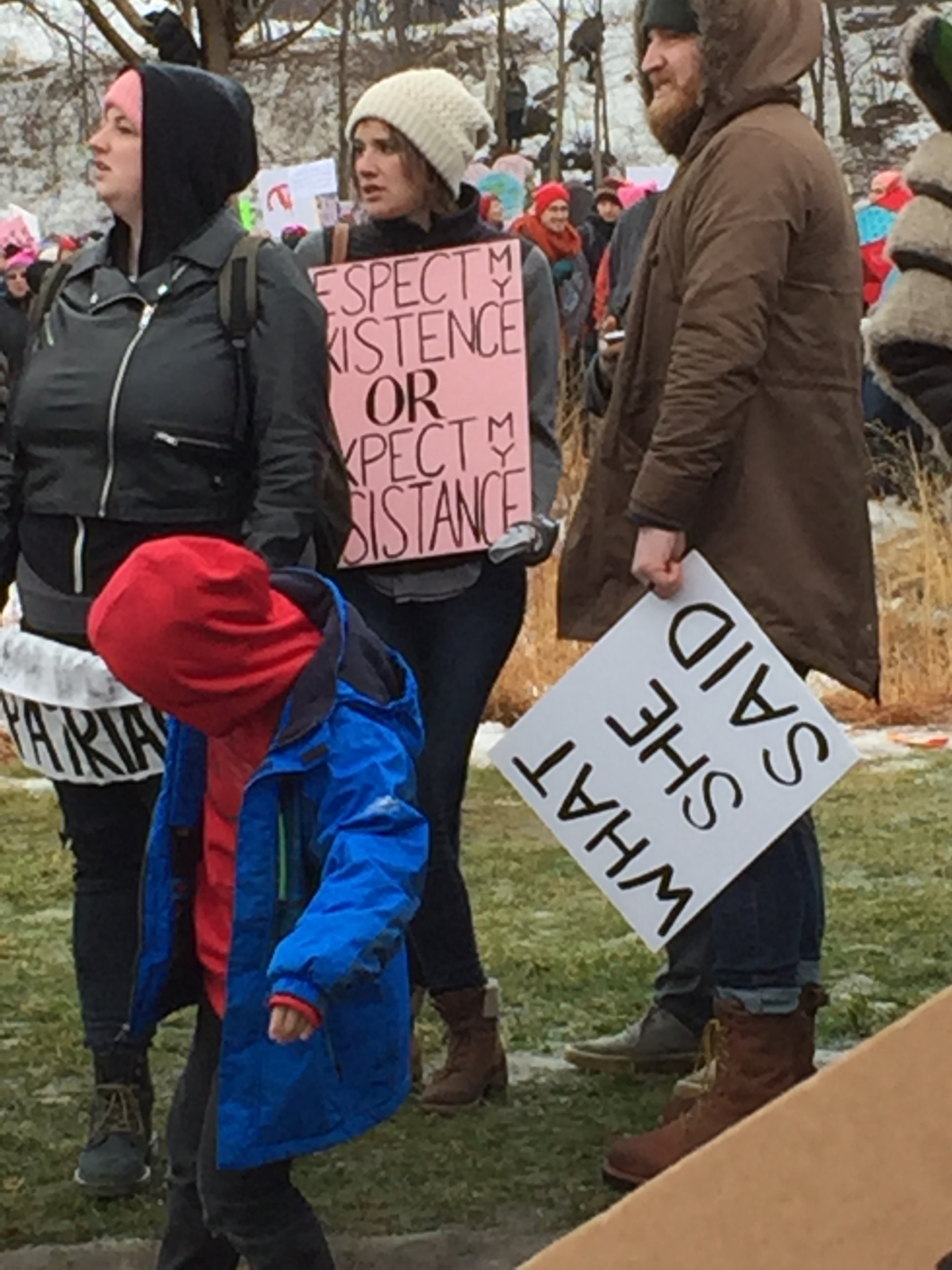
    Signs at Women’s March – MN

    My upbringing discouraged political activism.

    I was 12 in 1967 when race rioting began in Detroit and Toledo, my hometown. My father was a fire chief and reported that rioters were throwing rocks and bottles at firefighters. He was angry and I was scared. Although I didn’t agree with the violence, looting and burning, the civil rights movement made me aware that blacks were often treated unfairly, which might prompt them to anger and rioting. Despite that insight, at 12 years old, I was more worried about my father’s safety than anything else.

    I was 15 on May 4, 1970, when, after days of Vietnam War protests, four students were killed and nine were wounded by National Guardsmen at Kent State University several hours from my home. As a WWII veteran, my father disagreed with the war protests, and at dinner on the evening of the shootings, he denounced the campus lawlessness. My mother staunchly agreed with him. My college-age brother and younger sister didn’t comment. I was in sympathy with the protesters, but kept silent.

    My primary impression of protests and marches was that they could easily turn violent—something I wanted no part of.

    So why at 62, did I join 100,000 like-minded people at the Women’s March in St. Paul in January? And 10,000 people for the March for Science -MN on Earth Day?

    Because I can’t bear to see 40-50 years of progress—on civil rights (race, gender, religion, and country of origin), women’s rights, and environmental protections—disappear.

    This just can’t be my generation’s legacy.

    I know full well that marching by itself doesn’t change anything. It’s just gesture, and that gesture has to be followed up with a sustained effort to create change. I’m prepared to do that, too.

    I believe that seeing the sheer numbers of marchers puts politicians on notice—we are a force to be reckoned with, and they serve us, not the other way around.

    A sea of marchers on at the Women’s March – MN on 1/21/17, including my son who was on crutches


    Earth Day March for Science – St. Paul


    I hope that other people who share my views and values will be heartened and moved to take action too.

    Marching makes me feel less powerless, more hopeful.

  • Naming Rights

    Naming Rights

    The ring I wear on my left hand honors my marriage. My maiden name—the name I’ve had all of my life—honors who I am as an individual.

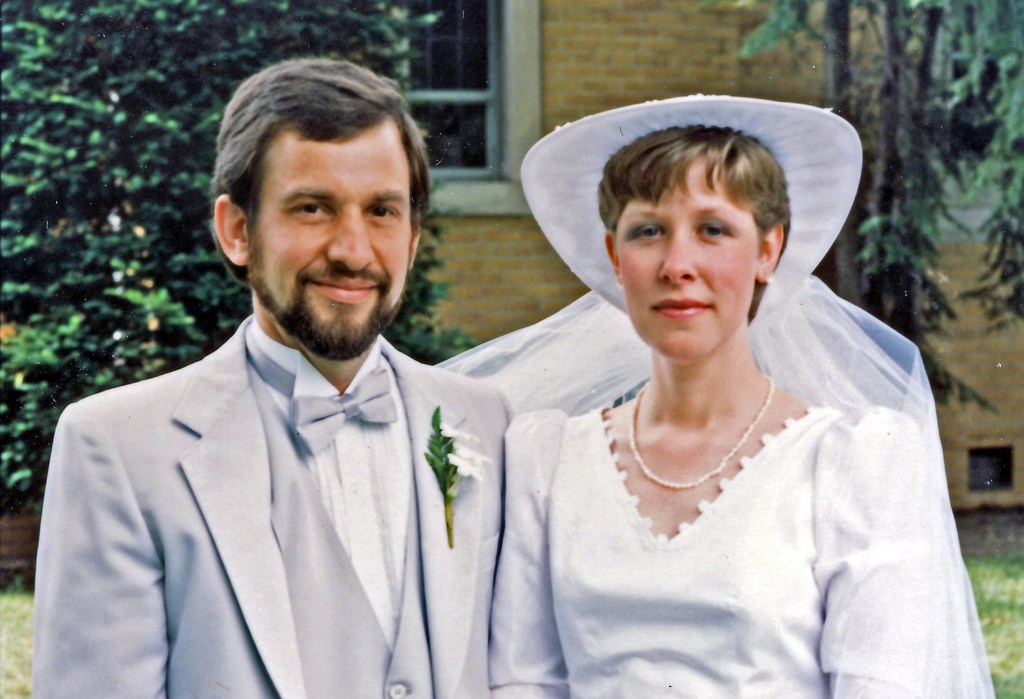
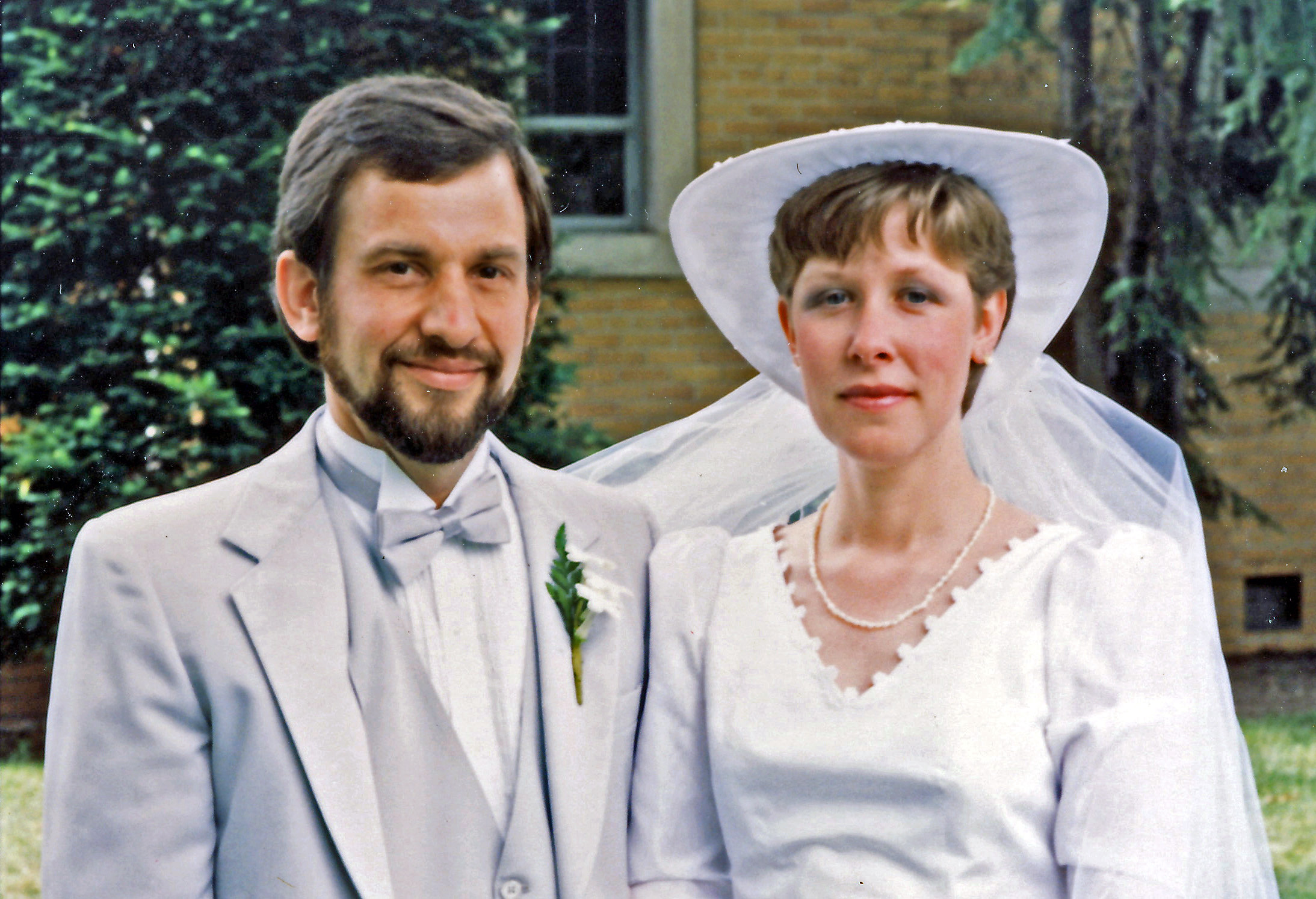
    J&E1985bWhen I married 30 years ago, this was an important and controversial distinction. Like many people, my parents worried that I would offend my in-laws and that our future children would encounter problems because my husband and I have two different last names.

    Nonetheless, we felt strongly about this decision. He’d keep his name and I’d keep mine. For practical reasons, we didn’t choose to hyphenate. Shriner-Sakowski is just too much name!

    Without meaning to, I did offend my in-laws, but they came to accept our decision. Our sons tell me that my different last name hasn’t been an issue for them. Perhaps some of their teachers or coaches assumed that my husband and I were divorced, but divorce is so commonplace that no one commented. I chose not to be offended when people called me Mrs. Sakowski. I knew who they meant and that they were trying to be polite. Often I pre-empted the discussion about names by introducing myself as “Greg’s Mom” or “Mike’s Mom.” That was all the teacher or coach wanted to know—my relationship to the kid in question. These days, I rarely have to explain the name difference.

    So it came as a surprise that using a maiden name has been resurrected as an issue. Recently, a friend recounted a conversation she overheard at a coffee shop. A young couple was talking with their minister about their wedding ceremony and the minister said, “Some ultra feminists don’t even take their husband’s last names.” Huh? I can easily list half a dozen women I know who kept their maiden names. It’s not that radical.

    Equally surprising was my recent experience with two different lawyers (one was settling my aunt’s estate and the other was handling my mother’s estate). Each assumed that I was Ellen Sakowski or Ellen Shriner-Sakowski. With my aunt’s lawyer, I explained several times that my real legal name is Ellen Shriner. Finally, I had to state unequivocally that I had never changed my name, and I wouldn’t be able to cash an inheritance check made out to either of those imaginary women.

    But then I recalled that four young professional women I know who’ve recently married all took their husband’s names. I was surprised and remain curious. Is the gesture that was so important to me when I married irrelevant now? Does it no longer feel necessary to make that distinction? Are women’s independence and equality a given for those young women? I hope so, but I’m skeptical.

    Despite my skepticism, I’m not trying to take anything away from women who choose their husband’s name. As a feminist, I believe women have the right to handle their names however they like: keeping their maiden names, using their maiden name as a middle name, or taking their husband’s name. I would never prescribe what a woman should call herself. Naming is a very personal decision.

    I think of one friend who was glad to shed her father’s name when she married. They had a difficult relationship and taking her husband’s name was a way of distancing herself from her father and asserting her new grown-up identity. Changing her name was a mark of independence.

    Another friend, who survived a childhood fraught with sexual abuse, invented a whole new name to mark the break from her family and her hard-won emotional health.

    What really matters is whether the choice of name is based purely on personal preference rather than perceived societal expectations. As a feminist, I just hope that women today feel much more free to choose the name that pleases them than I felt 30 years ago.