Category: Values

  • Wishing and Hoping

    We know better. Outdoor party plans don’t guarantee sunshine and soft breezes. We can hope for the best, but best be prepared for rain and thunder. We can wish that just this one time, the weather gods will spin the right number so our guests can enjoy walking and talking in the gardens.
    
    Feels like wishing and hoping might be what’s left as what regular people can do about more and more truly large decisions or actions that impact their lives. With masks and vaccinations, many hope to escape sneaky Covid variations.  Powerful men chose to scrape other people from the face of the earth although everyone hoped the threat was just that. Partisan hatred locks decision making amidst the people we elected hoping they might work together. They tie up the executive branch where folks are wishing things would start improving. Then what was once the most solemn of our nation’s institutions spits out a hateful decision on all those who hoped the laws of the land would be upheld or wished for a miracle from the stacked bench.
    
    Sure seems like miracles have followed the Easter Bunny, Tooth Fairy and Santa Claus to fantasy land. Appeals for contributions to protect the environment, protect freedom of speech, protect women’s health, or many other threatened values mostly keep people employed in the gigantic rat race called the great democratic experiment with no guarantee of positive results. 
    
    So many groups stand outside, disenchanted and disenfranchised, hoping for a sunny day in Washington, D.C. when the politicians and policy makers might come out of their buildings, shake off whatever protects them from the stuff normal folks deal with and breathe in some real air. 
    
    I’m wishing they would come live with regular people for a couple of months, sit in a public school classroom for a full day, plan two weeks of meals before grocery shopping on a budget, deal with the endless impersonal bureaucracy everywhere from making a doctor appointment to asking about a bill. That’s just a start. And hope they could walk city streets safely among those tired of disappointment in government and feel the strength and anger of their action. 
    
    Not hoping for daily sunshine and soft breezes or wishing for more than our fair share. Just reminding those who govern that it is at the will of the people who expect some respect for what we hold as truth. 
    
  • The Family Tree

    The Bayside Tavern in Fish Creek, Wisconsin has two buck burgers on Mondays during the off season. There’s a choice in seating– high tops, low tables, tiny booths for two, or stools at the bar. Narrow windows keep the inside dim. It is the place to go before the community Christmas tree is lit across the street, before the high school musical, to watch the Packers or Badgers or Brewers play. Maybe the Bears or Cubs for those brave enough to wear such jerseys. If you are a local, or a seasonal local, they probably know your name.

    My Dad preferred a booth and ordered fried onions on his burger. He had haunts in Door County including the best places for good food. He knew the parents of people important in the community—the Catholic priest, the sheriff, a few bar owners.

    So it was at the Bayside that my cousin Jeff Frisque and I met for lunch, the first time we had ever talked to one another except at family funerals. We connected through Facebook where many of the cousins have friended each other. Taking a risk, Jeff and I moved from responding to postings to trying a direct message.  Jeff’s father and one aunt are the last living siblings.

    In my book, The High Cost of Flowers, the eldest sibling comes to the realization that to have the kind of extended family you want can require effort. And as the elders age, the responsibility passes to the children to do something, or to walk away. My husband and I are the elders of our families. That sounds easier to me than embracing the concept of adult orphans. We value the small circles of those connected to us by birth or marriage. Along with those we love, we have developed new traditions to stay close.

    The Bayside Tavern might become a comfortable setting for weaving together the grandchildren of Michael Frisque. In his prime he spent many hours in bars, but I don’t know if he ever sat at this one. I didn’t know my grandfather well enough to say how he felt about his children and grandchildren. None of that was important in sharing lunch with my cousin Jeff.

    Jeff is known locally for building and restoring exquisite log homes. We share love for Door County. We both showed up with spouses, a sign of how we value our families and would go to great extremes to protect them. We are not members of the same political parties although we may share a few beliefs. I think we are both tender-hearted about the right stuff. We both love or admire each other’s fathers. We walked away with each other’s email addresses and telephone numbers.

    We also both like burgers at the Bayside. Mark that on the family tree.
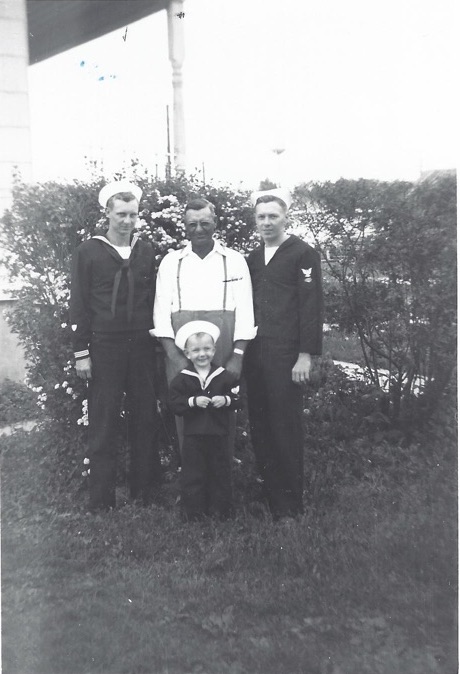
    dad


  • The Real Reward

    I help teach English to adult immigrants. Recently, the teacher I work with asked what kind of gift card I’d prefer as a thank you gift for volunteering. I didn’t want to make a fuss—I know the gift card is well-intentioned—so I chose one. But the truthful answer was that I didn’t want a reward.

    What’s weird is that if I were a volunteer coordinator, I would think it was very important to acknowledge and thank volunteers. Finding a suitable way to please a disparate group would be hard. I would probably land on gift cards, too. I’m not criticizing the gift options or the school’s impulse to thank me.

    I think my discomfort has more to do with how I was raised. My parents set an example with their many volunteer activities—they did far more than I ever do. Their outlook was that you’re supposed to pitch in and help. It’s just what you do.

    Another value that my parents conveyed was that it’s even better if you donate your time or money without any public acknowledgement. For years, they were secret angel donors for the parish grade school and the church choir. If kids didn’t have money for supplies or a field trip, or if the choir needed more funds for a tour, the principal and the choir director knew my parents would cover it. Hardly anybody knew my parents did this. My father mentioned it to me once, and the scope of their contributions only came to light when they died.

    What I had trouble putting into words when asked about the gift card is that volunteering is as much about my needs as it is about theirs. The world at large can be dismissive of people who are 60 and beyond—assuming that we’re clueless, set in our ways, etc., etc. Volunteering is a way of reminding myself that I’m knowledgeable and have something valuable to contribute. I feel seen, useful, and appreciated. That’s what makes volunteering worthwhile.

    I don’t think I deserve a medal (or a gift card) for putting in a few spare hours a week. Corny as it sounds, acknowledgement comes every week in the form of students who make a point to thank me at the end of class. Also gratifying are the students who return after completing the class to share their excitement about landing a better job—one requiring good English skills. Plus, the teacher often asks my opinion about her proposed lesson plans and always thanks me for coming. That’s good. That’s plenty.