Category: Uncategorized

  • Sandwich Party!

    Before surgery I read up on painkillers. Bottom line, I was grateful that options existed and realistic about accepting possible reactions. Jimmy John’s sandwiches were never mentioned in that patient information.

    My first night post-operative I looked around my room, stared into what I thought was a giant security television screen (aka a dark window), pulled together all the visual clues available, and determined that there was a sizeable Jimmy John’s sandwich party happening across the hall. Giant carts of food appeared to be going into a room with people following. I thought I saw, or heard, that the party was in honor of my surgeon. 

    Not eating in the prior thirty hours made a sandwich appealing. I think I’ve only eaten a Jimmy John’s tuna salad special at a corporate lunch meeting. I remember because I was the last person choosing a box. Tuna salad, tuna salad, tuna salad. Three boxes of the same choice. The only decision was if I was hungry enough to eat a Jimmy John’s tuna salad sandwich.

    According to hospital people watching me that night, I decided I needed to freshen up before heading to the party and attempted to get out of bed dragging tubes and lines and monitors. I asked for a clean gown, something less revealing, and my personal bag so I could brush my hair, wash my face, and find my undies. I was ready to socialize. Maybe celebrate that surgery was over, chat about the joy of warm blankets, or share escape plans.

    What’s fascinating is how in a somewhat dark situation, something deep in my mind took stock of what it could observe and found the potential for a few minutes of joy as well as the possibility of grabbing a sandwich, maybe a cold soda, and a little time to chit chat with absolute strangers. I am an introvert, and not fond of fast foot sandwiches on small loaves of bread. In normal times I would need a serious reason to head into a room of strangers, especially if wearing a lousy hospital gown. But that night a party sounded awesome.

    Physicians have known since Plato that there is a direct correlation between the mind, body and health. The psychological and physical are not separate but are vitally linked in healing the body. When the painkillers were not taking care of what my body was experiencing, my simple belief is that my mind accepted responsibility for creating a happier framework. In the absence of other stimuli to distract focus from what was hurting, I planned that party room. I made decisions about whether I was ready to have chips (not), if a diet cola or a lemon-lime soft drink would taste better (lemon-lime), how to blend in with all the people in uniforms or street clothes (unresolved). My problem solving and creativity pulled me through a night that could have been worse. 

    This is the power of human vitality. We can live, grow, develop in many situations, not only on sunny days but also during threatening storms. Be gentle with your expectations if this is not a time to go for the stars. Share a Jimmy John’s with a friend. Enjoy a mini party, if only in your mind. Wear a robe if your gown hangs open in the back.
  • Paying Attention: The Importance of Being Present

    We live in a world full of distractions. From our smartphones to our busy schedules, it’s easy to get caught up in the hustle and bustle of everyday life. But what happens when we’re so preoccupied that we fail to notice what’s right in front of us?

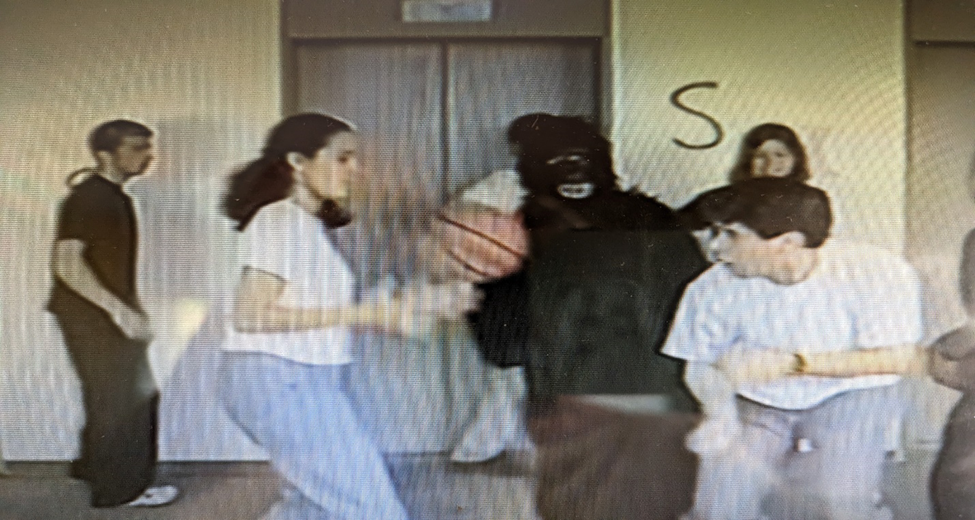
    In this now-famous experiment, a group of participants is asked to pass a basketball to one another while counting the number of times they pass it. In the midst of all the action, a person in a gorilla suit walks through the scene, but only a tiny percentage of participants actually notice. Participants were so focused on their assigned tasks, counting the passes, few noticed the gorilla.

    The experiment serves as a powerful reminder that we can be so focused on completing our solo tasks, formulating an answer, or on our desire to succeed that we fail to take the opportunity to laugh at the gorilla in the room. The gorilla could just as well have been a child smiling at us, an oriole landing outside our office window. There’s a time to focus and a time to look up and enjoy life and each other.

    It’s not just about noticing gorillas, though. Being present and paying attention can have a significant impact on our relationships, our work and our overall well-being. When we’re not fully engaged with the people and things around us, we miss out on opportunities to connect, learn and grow.

    So, how can we cultivate a greater sense of presence and awareness in our lives? Here are a few tips my friends and colleagues have found helpful:

    • Put down your phone. We’ve all heard this one before, but it’s worth repeating. Our phones can be a major source of distraction, pulling us away from the present moment, the book we are reading and the people we are with.
    • Be mindful. Even just a few minutes of mindfulness meditation each day can make a big difference in our ability to stay focused and present.
    • Take breaks. It’s easy to get caught up in the go-go-go of modern life, perhaps even easier now that I’m working less than full-time and have a more erratic schedule. But taking a quick walk around the block or spending a few minutes concentrating on my breath makes it easier to pay attention.
    • Embrace life’s transitions. Life is a series of transitions, and that’s especially true as we age. We go from being a student to working full-time, from being single to having kids and grandkids, from being a parent to becoming an empty-nester, from focusing on our work to enjoying retirement.
    • Prioritize self-care. Taking care of ourselves becomes especially important as we age so we need to dedicate time to nurturing our physical, mental and emotional well-being, whether that’s meeting a friend for dinner, taking a bath or spending time in nature.

    At the end of the day. Paying attention is about more than just noticing gorillas. It’s about being fully present in our lives in the world around us. When we’re able to do that, we open ourselves up to new experiences, deeper connection and a greater sense of fulfillment. And what could be better than that?

  • Mortal

    Daffodils and forsythia are in bloom here. Egrets and ducks have returned to the pond. We all made it through another winter, a difficult season with plenty of cold, snow, and ice. 

    When I was in my forties, I wrote a short story about a woman whose first serious high school boyfriend was drafted to serve in Vietnam. He would die in battle and be remembered as perpetually nineteen. She went on to college, married, had children. As her son prepares for junior prom, she is reminded of Bernie. On the anniversary of his death, she writes him a letter about what it has been like to age decades beyond her teens.

    Late in 2022, I prepared for serious surgery. The surgeon called me a ‘low risk’ patient and young for my physical age. Tests showed no other options. All was successful, except emotionally I landed in part of the world described in Atul Gawande’s Being Mortal.  He writes that we tend to consider aging a failure, or weakness, rather than a normal process. As we live longer and longer, medical processes becomes part of our experience. Doctors know how to preserve life, but not how to help patients cope with how life continually changes.

    Like most surgery nothing looks different to others, but I know where the scars are and what each means. I know the medications that support carrying me through a normal life expectancy. I am also learning their downsides. I haven’t returned to tap dancing because the studio floor is slippery, and I am still fighting to return to my prior rock-solid balance. Down dog is back on my aspirational list, but for different reasons than undeveloped muscles.

    In the weeks between the first time a doctor said, “maybe six months, certainly not more than a couple of years,” and the night before surgery, I thought about not seeing my granddaughters grow up, about the writing projects that might not be published, about my unwillingness to let life go. When I stopped pushing to be the person folks expect, my fatigue was immense. With surgery on the schedule, I slept a lot, read a lot, thought even more. Because I am used to being productive, I labeled that week practicing recuperation. 

    I have had friends die of cancer without the medical miracle surgery offered me. I am humbled and so respectful of how they faced the eventuality of their passing. 

    This spring I wonder how to make these next many years meaningful. A wise friend told me the body needs at least six months to recover from major surgery then encouraged me to give my emotions the same time. A good plan. I’ll enjoy the daffodils and forsythia, then the tulips and lilacs. The demands of regular life are close enough.

    With love to my brother, Darrell J. Frisque, who passed too young on April 14, 2007.