Category: risk

  • Another Crisis

    My family moved from Luxemburg, Wisconsin, population less than 500, to Milwaukee during the summer of 1961. From a grade school with eight grades spread over six classrooms, my brother and I were enrolled in a Catholic elementary school with 150 kids in every grade. We had never seen so many kids. 

    The first year was rough on my mother who no longer had a part-time job, a bowling league, or knew the names of everyone in the parish. She didn’t even know the names of women on our block. By the summer of 1962 life could be testy in our household. My great-grandmother moved back to Luxemburg and took me with her at the start of summer. 

    Our second school year began with more confidence and my mother found a seasonal job. She was happier. Until October 16 when the beginning of the Cuban Missile Crisis moved the world toward danger. People were deeply afraid that Cold War was morphing into actual war with Russia, including missiles falling on the United States. Adults knew about the horror of war. Kids were directed in useless duck and cover drills, crawling under our desks with our hands over our heads.

    My mother wanted to be in our Luxemburg home with its dug-out basement, food cellar and indoor pump. Our Milwaukee ten-year-old ranch offered no place to hide. It was too late to build a bomb shelter. She emptied the clothes closet in a spare room, brought in blankets and pillows, water jugs, crackers, peanut butter and other food plus towels, tissue and a bucket. She listened to the radio constantly. We went to bed fully dressed. October 28, she woke us with orders to get into the closet. Blankets had been placed over window curtains, a rug rolled at the bottom of the door. We listened to news coverage throughout the night. The crisis was averted. Nerves remained raw for years.

    We’re back to practicing some odd form of duck and cover. And it is just as useless. The stakes are high for every citizen and much of the world.
    Square
  • Basics of Love

    The basics of love can be as simple as the thrill of sparkling diamond fireworks appearing seconds after the burst of red and blue or hearing a particularly well-arranged version of a favorite song.

    The word may be more loosely than the emotions. We love a football team, a blue car, our neighbor’s tabby cat, the smooth sauce on a half rack of ribs. There are friends we love. Relatives we love. Family we love. The one most desire, a someone to love. 

    Loving is a gift of humanity as well as a trigger into dissatisfaction, loneliness, despair. Sometimes the search for a place where love can be shared is difficult and it isn’t always successful. It is helpful to identify that when it emanates from another human.

    “Hello in There,” a song by John Prine is the story of an older man who lives in a city with his wife. Their only son was killed in a war. Most days they sit around and watch the world. He encourages people to look at older folks passing by, remember how lonely they might be, and try saying hello. If possible, spread a thin little layer of love to someone in need, even an acknowledging smile to the person next in line. Maybe you prefer to think of that tiny effort as paying it forward. Doesn’t matter. May the love come back to you as well.

  • January 6, 2021

    The day after the invasion of our Capitol our almost seven-year-old granddaughter said to our daughter: “So those people will be arrested, right? And then they will go to jail? Because that is dangerous. They could make the police sick and then who would stop people from stealing and other bad things? And what if Congress gets scared so they can’t make rules anymore?”

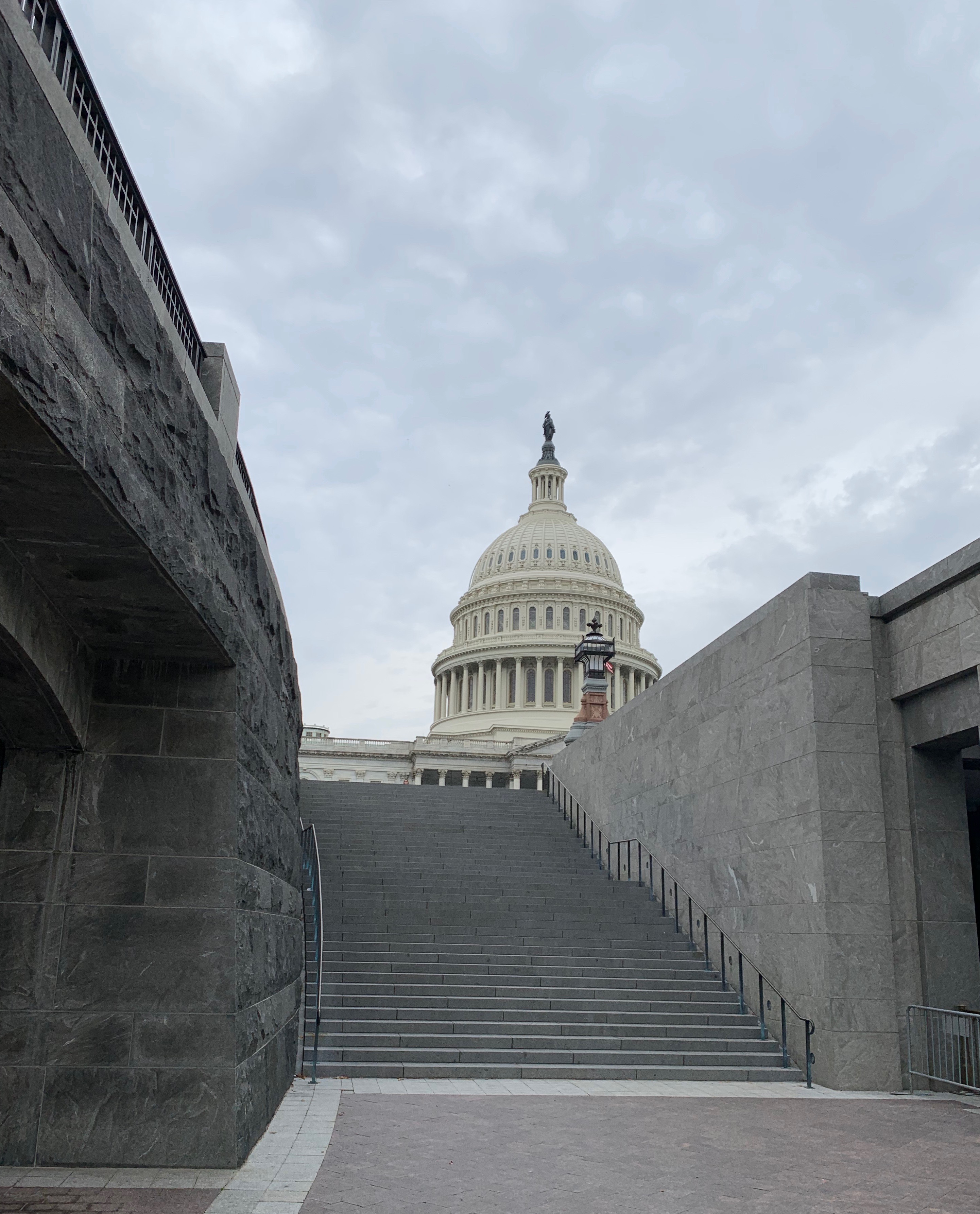
    Washington, D.C. has a magnetic pull. My tradition is to walk to the White House every visit and take pictures. Our daughter lived there when she clerked for the United States Tax Court which meant visiting her and exploring her favorite places. We did the Supreme Court tour one time with her providing insights. In 2019 I spent a day sitting in the House of Representatives and the Senate galleries as well as touring the Capitol with a member of Senator Amy Klobuchar’s staff. Meeting people in the offices of our representative and senator then watching them at work at the Capitol deepened my sense of what the democratic process means.

    I think we waste trips to Washington, DC on grade school kids. Every citizen of voting age should be required at least once to visit the places where our government does it work. To go through security, read placards, sit in those galleries, hear the history of each branch. Let’s make it a compulsory requirement that anyone who votes must demonstrate that they have studied the processes that keep this nation a democracy. Not as a high school student, but at an age years after their formal education is complete. Call it a citizenship refresher.  

    Bless my daughter, and every parent or person responsible for children and young people, as they provide information and assurances during these times. If it has not been difficult to give kids a sense of safety while walking the talk about mask wearing and social distancing, now there is this to explain. And to fix.