Category: renewal

  • Easter Traditions Evolve

    A recent conversation with several friends who are also lapsed Catholics got me thinking about Easter’s significance in my life. Why do I still celebrate it when I no longer attend Mass? 

    Ties to my childhood faith remain, although they have thinned and frayed. I’m at a loss to explain why I still feel that religious tug, but I do. 

    Some of the symbols associated with Easter have an even stronger pull: the natural world coming back to life in spring, daffodil and tulip bulbs blooming after lying dormant for months, and eggs representing new life. The idea of yearly rebirth and renewal resonates with me.

    Maintaining an Easter tradition also matters to me, because it ties my small family to past generations.

    Even though much of Easter’s religious meaning has faded for me, I feel a connection to my heritage and to the natural world. This Sunday my family will gather, eat a more elaborate meal than usual, and I’ll add a bouquet of spring flowers to the table. I won’t wear special Easter clothes

    but our grandchildren might—mostly because it’s fun for their mothers to buy cute outfits. My granddaughters are too young to understand the idea of gathering pretty dyed eggs, so they’ll get small toys, and only the adults will get candy eggs.

    Our celebration is not all past generations would have done, but it’s right for me.
  • Cultivating Hope

    Lately, I have been struggling to feel optimistic. The Ukraine invasion is heavy on my mind. In the big world, there are many other pressing problems (you know the list). Yet I want to be hopeful. In fact, I kind of insist on it. 

    I have been heartened by the astonishing global reaction to the Russian invasion. 

    I also remind myself that historically, when cataclysmic events have changed the world order, sometimes positive change happens too. It may be that having been through something terrible, people vow, “Never again,” as the Greatest Generation did after WWII. Their commitment to preventing more world wars held for decades, not perfectly, but mostly. Taking the long view gives me hope.

    I strive for perspective and balance. I remind myself my own life is fine. But sometimes I backslide into overwhelm: How can we find lasting peace, address the climate crisis, shore up our democracy, and so much more? It all feels insoluble. What can one person do? 

    What I finally come to is, what other choice do we have? We have to keep trying to change and improve the world. And that means hoping.

    Howard Zinn, in “The Optimism of Uncertainty” expresses what I believe better than I can—

    To be hopeful in bad times is based on the fact that human history is a history not only of cruelty, but also of compassion, sacrifice, courage, kindness. If we see only the worst, it destroys our capacity to do something. 

    If we remember those times and places—and there are so many—where people have behaved magnificently, this gives us the energy to act, and at least the possibility of sending this spinning top of a world in a different direction. 

    And if we do act, in however small a way, we don’t have to wait for some grand utopian future. To live now as we think human beings should live, in defiance of all that is bad around us, is itself a marvelous victory.

  • Immortalized

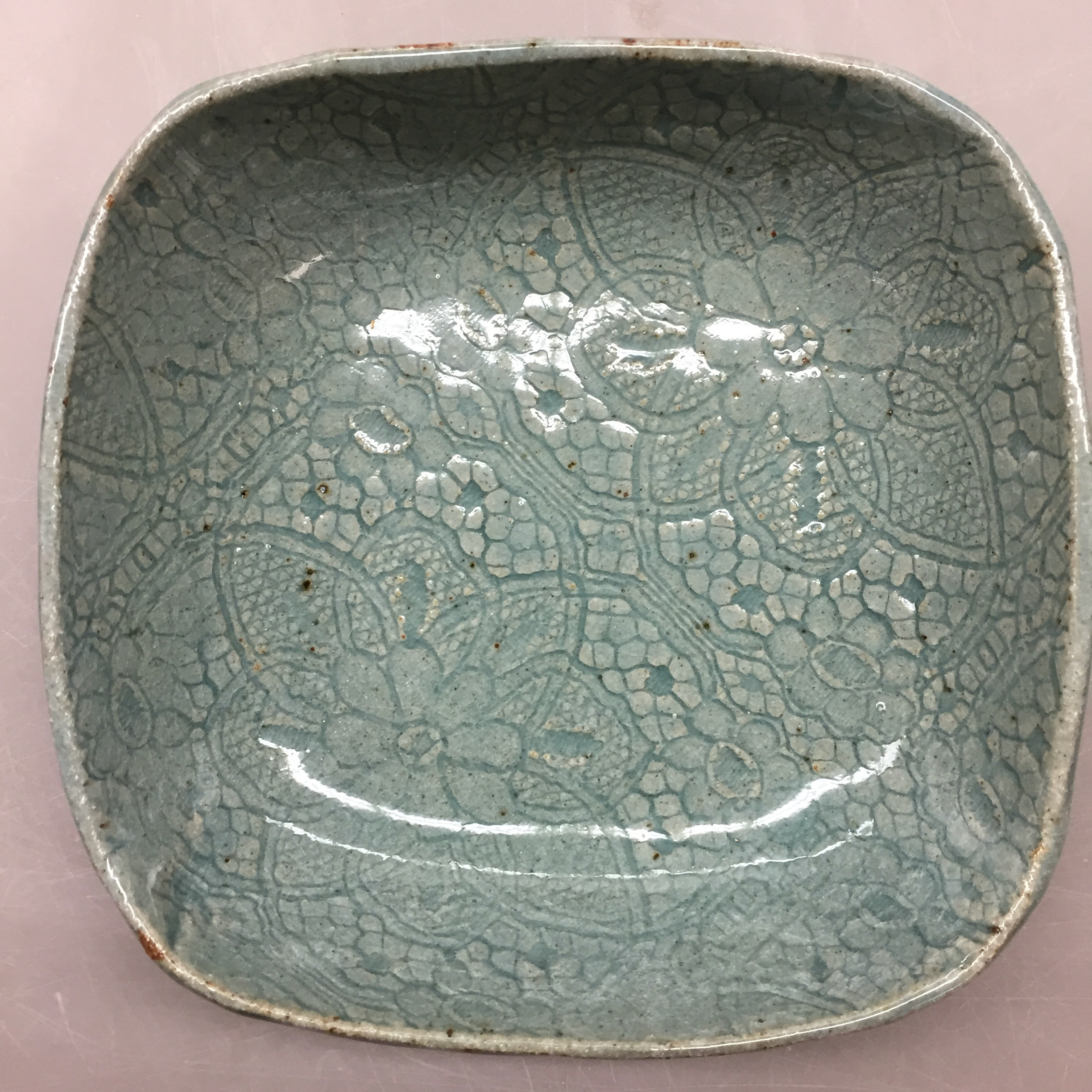
    I don’t know the women who crocheted this lace doily and antimacassar, but I think I understand something about them.

    A century ago, maybe she saw a doily pattern with a wheat motif in a magazine and made it on a lark—the same impulse that has led me to make a quilted pin cushion, add a mosaic to a small box, decorate a shirt with reverse embroidery, and so many other projects. I was curious about the process and making stuff is fun. Most of the time I’m only trying to please myself, so it doesn’t matter if my creative ventures are one-and-done. 

    Whoever made the antimacassar might have been more invested. Perhaps she spent weeks one winter, creating the elaborate design, a piece she’d be proud of. She could have spread a towel across the back of a chair to keep off her husband’s macassar hair oil when he leaned back for a snooze. Instead, she made something pretty. I understand the impulse—if you’re going to see it every day, why not have something pleasing? Maybe detailed crochet was her art form, like pottery and quilting are mine. 

    When I told a friend about a minor project to machine embroider some muslin towels, she said, “You’re so creative.” I balked, “There are so many people who are wildly creative and talented. I’m a dabbler.” She insisted, “Say yes. And thank you.” My friend is right about me, but sometimes it’s hard to own this urge. Easy to downplay or dismiss creativity that’s expressed everyday things. 

    I squint into the future and imagine someone picking up a quilt or ceramic bowl I’ve made. She or he might find a different purpose for it—cut the quilt into placemats, hammer the bowl into bits for a mosaic, or some other project I can’t even imagine. If my things get repurposed, I won’t feel disrespected at all. They were fun to make. They pleased me. They don’t have to last or be cherished like museum pieces. Maybe like me, this future creator will wonder about the person who originated it.

    In the pottery studio, when I spread the doily and antimacassar onto clay and transfer the lacy patterns with a rolling pin, I’ll admire the craftsmanship, patience, and skill needed to make them. Those women and their work will be acknowledged and celebrated in mine. Immortalized.

    A dish I made with another doily