Category: pets

  • Dogs and Aging Families

    When do people become too old to share their homes with a new dog? How do middle-aged dogs and older people find each other?

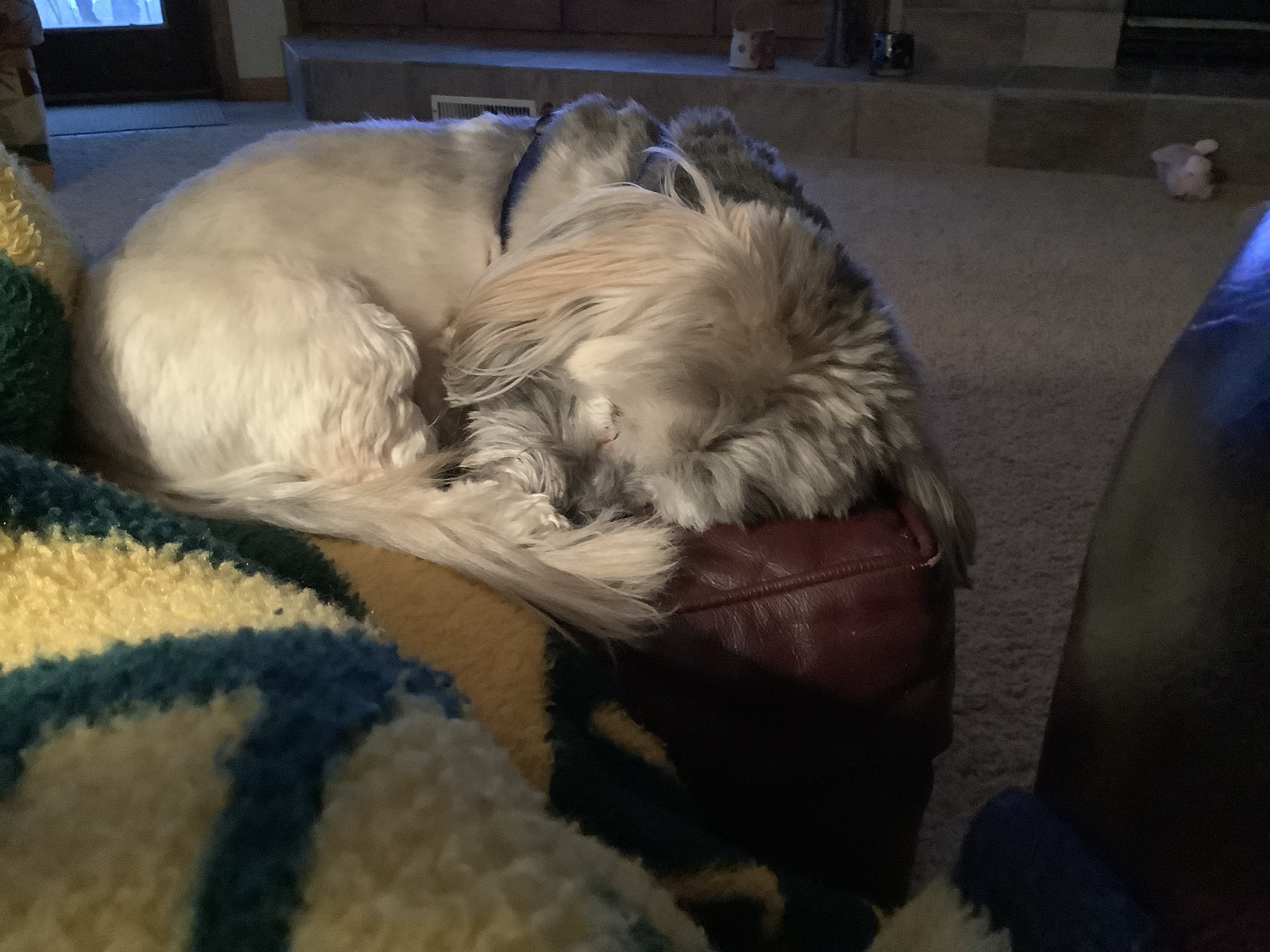
    During his annual vet visit in February 2020, Rocky was found to have a heart murmur. Covid locked down our city before we could take him to a doggie cardiologist. That visit never happened because Rocky continued his happy, boisterous life.

    Walk ahead to 2025 when Rocky hit his senior years. Since dogs pack a lot into lives of ten to fifteen years, their aging process is more compact. More dramatic. Medication helped with high blood pressure and easing anxiety due to dementia. A chiropractor supported with home exercises and massage kept his rear legs working. Playing smaller versions of fetch accommodated diminished vision. The adaptation grows.

    Over years, not months, so will ours. For Rocky we’re able to be solid caregivers.  I am not sure that I will be physically capable of supporting another dog through their final years. But how would we walk away from a beloved future family member because we’re all aging? 

    Cats and some rodent pets are not options because of allergies. We’ve done fish and snails when kids were young. None of them check any boxes of what I value in a companion creature. Spending the rest of our lives without a furry friend is hard to accept. Foster care is kind of like babysitting a neighbor’s child now and then. Can be physically demanding.  Entertaining. Heart-warming. Then the baby or child goes home and there’s no one to talk to at midnight when sleep is elusive.

     Maybe there are dog-share programs or lease a pet centers with humane housing for dogs in transition. 

    Maybe the quiet house will grow on us after Rocky’s life is over. 
  • Let’s Talk Turkey

    Spending last week with a ten-year-old and a three-year-old, daytime conversations focused on important topics like glitter glue, building Lego structures with or without directions, how many cookies equal too many, and the dangerous wild turkeys wandering nearby.

    One night we strapped on headlamps to walk in the meadow, away from houses, turned off the lights to look at a sky ablaze with stars. The granddaughters, bright eyes plastered upward, were thrilled until remembering it was December and cold.

    Star gazing in the meadow is the kind of memory shared in social media posts, but we talked about the wild turkeys longer. Burning off energy with the younger child, her father saw many turkeys roosting in trees along our driveway. Since a neighbor told me that the turkey brood pecking through our neighborhood slept in our trees at night, I had been reading about them. Mostly about self-protection. Our smallish dog has been rushed more than once by a mom turkey protecting her poult. When he made it to the house before me, she turned attention my way. Nothing stopped her approach. We’ve been captive in our house as turkeys peck through the garden.

    Mom turkeys can sit on their eggs for a month and have not one hatch. About 20% of eggs will hatch with only 25% of those surviving their first months. Clearly not cute, poults, or baby turkeys if you prefer, are fragile and a snack for many predators. Turkey poults require loafing and roosting sites. Got to like a youngster that requires loafing territory, or fancy word for shelter, during their food search. 

    Turkeys spend their day on ground pecking for edibles and their nights roosting in trees. Our garden and grassy areas provide easy shopping for mom turkeys. We are annoyances in their family protection effort. Woodlands provide some shelter while the poults are too young to fly up to the roosting zone.

    Thanks to tended gardens, grass and woods, our local turkey population expands. Mom and the recent four poults joined a multi-generational wintering flock of about two dozen spending each night. They prefer multi-story stands with mature trees. I’ve read that up to a hundred turkeys might roost near each other. 

    This potential does not thrill me. Even our current community leave enough excrement on the driveway or in easement near the trees. As a popular toddler book says, everybody poops. In the human neighborhood, poop is not cute. The turkeys don’t care.

  • Wet Feet and Warm Heart

    To people living in the lake-effect snow areas, Tuesday night’s seven and three-quarters inches of white stuff that landed in Door County is insignificant. Except the weather professionals predicted a dusting. Opening the door at six in the morning to send an old, thirteen-inch-tall dog with arthritis in his hind quarters required intervention by an owner still in cotton knit pajamas and slippers.

    The flip side of this story is that one of the most intensely awesome sunrises distracted attention from noting the snow depth. Bare tree branches etched black lines against nature’s red, orange, yellow, saffron into beauty that could not be painted, photographed, described. Walking along the back windows of the house behind the small dog, my eyes never slipped below the horizon. 

    Sunrise colors seem shorter as the solstice approaches. By the time boots were located and a snow-covered dog rescued, the sky had turned a warm pink then faded into regular daylight. Winter weather arrived surprising me with the gifts of sunrise, snow in the trees, wet pants and bare feet discovering small cold puddles where the furry one shook.

    In a time of deep emotions ranging from the continued happy surprises of family to dread of the immediate political future, from satisfaction in completing a complex writing project to sadness about a relative’s illness, it is easy to not notice what is simple and beautiful. Life’s gifts and losses cannot be tabulated. A stranger’s smile might change an icky morning into a better day. 

    May your holidays bring calm, happiness, and the beauty of a winter’s day even when your feet are cold or wet.