Category: Pandemic

  • Unmasking

    In May, I stopped wearing my KN95 mask. The last time I’d worn masks in earnest was in April at the airport, in museums, and on public transportation in Amsterdam. I was definitely a minority, but I didn’t mind. My goal was to avoid COVID while we vacationed in Europe. For three years I wore or carried a mask with me. Now discontinuing masks feels odd. COVID was a harsh teacher and the early days of the pandemic are still vivid.
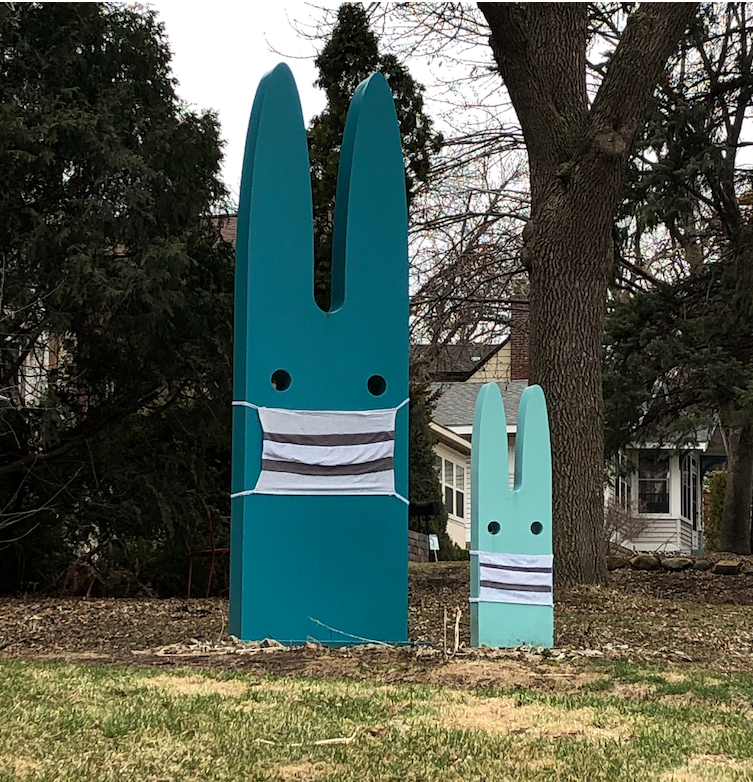
    Like everyone else, I’d heard healthcare and other frontline workers didn’t have enough PPE. Even cloth masks would help. The whole mask-making enterprise felt ludicrous and desperate. I struggled to understand: the government had no coherent plan for a pandemic? We were on our own for protection? The world seemed out of control. Anything could happen.

    A Facebook friend, who’s a physician and quilter, posted a mask pattern and later I found another design online. I had lots of quilt fabric remnants and was willing to sew masks if it would help.

    When Abbott Northwestern Hospital put out a call for homemade masks, I sewed floral fabrics women might like and abstract patterns men wouldn’t mind. I flannel-lined a few for softness before I realized they would be hot.

    On a dark wintery day, the streets and hospital parking lot were eerie and empty when I delivered the masks. I texted the contact and rolled down the passenger window as instructed. A hospital employee took the bagful and thanked me profusely.

    My sister (a respiratory therapist in a respiratory pandemic) asked for some. My homemade masks were a talisman that made her feel loved. At first, she wore a cloth mask over her one and only N95. She was expected to store the N95 in a brown paper bag so she could re-use it. Later she gave the extra cloth masks to her Ohio hospital’s Housekeeping staff, who didn’t have any protection.

    I sent some to my son and future daughter-in-law, a medical resident who treated COVID patients in a Bay area ICU. She had an N95, but she could wear cloth masks away from work.

    My sister suggested I give some to younger relatives who worked at a psychiatric hospital in Illinois. Although the local hospital and my sister had appreciated the homemade masks, I felt self-conscious about sending them. I worried the masks would be cringeworthy (Crazy Aunt Ellen made us these useless masks and she expects us to wear them?) but my relatives were gracious—they understood the sentiment.

    Masking began with a jolt of fear, but unmasking happened gradually. I’d grown accustomed to eating out. My interactions in stores, clinics, and the pottery studio were even more distanced. The CDC’s decision to call off the emergency didn’t really figure into my thoughts. I’d concluded my risk was manageable although COVID is still out there. One day I’ll get it, but I probably won’t be seriously ill and die. Long COVID concerns me, but three years after the pandemic began, that fear no longer haunts my days. 

    A KN95 mask is in my purse, but I think I’ll be OK without it. 

  • Anxiety: It Often Gets the Best of Me

    I was an anxious kid, an even more anxious teen. So much so that the nuns at my Catholic school let me skip mass each morning because of how often I threw up or fainted. Even in college, I did so now and again. And while it’s been decades since, anxiety once again has become a near-constant companion, in large part due to COVID.

    And I’m not the only one who is anxious.

    The World Health Organization (WHO) reported that anxiety increased by 25% across the globe in the first year of the pandemic. And this fall, a panel of medical experts recommended for the first time that doctors screen all patients under the age of 65 for anxiety which, involves asking questions about symptoms: How often do you feel nervous, anxious or on edge? Do you have trouble concentrating? Does worry present you from falling or staying asleep?

    I’m not sure why I and all the rest of us age 65 and older aren’t covered by the WHO’s recommendation, but I do believe we ought to be. After all, it’s not like anxiety goes away with age. In fact, I and many of my friends and colleagues who are 65+ report an increase in anxiety, in part because we no longer have the self-esteem and support system that came with our jobs. Health issues are also a factor.

    Some of us also report an increase in hang-xiety, which is anxiety some people experience after drinking alcohol. I certainly did shortly after the start of the pandemic when I found myself indulging far too often in a second or even third cocktail, which research shows can decrease dopamine, a neurotransmitter that plays an important role in keeping anxiety under control.

    It’s one reason why I reluctantly gave up drinking this year. It’s also why I’m doing other things as well:  

    Journaling

    Setting reasonable goals

    Striving for progress, not perfection

    Asking for help and support

    Trying eye movement desensitization and reprocessing (EMDR) therapy

    I’m also admitting that I’m struggling. Doing so has been tough for me but it’s getting easier thanks to the love and support of family, friends and my fellow writers/Word Sisters.

  • Happy January Birthdays

    January, a month of fewest births and most deaths, is where we stand fighting the latest variant of Covid. How wearying to be still writing about this unwelcome virus. But like glitter left from wrapping paper or cards, it won’t be dusted, swept, vacuumed, washed, or wished away. Lots of people have stories about trying to rid the nasty stuff from clothes or rugs or skin, but no one really knows the secret to beat the stuff. Wear a mask, wash your hands, stay inside, but the hated Covid, like unwanted glitter, stays in the air. 

    Our family has a tradition of January births, even among in-laws. The older generation of January birthday holders has mostly passed, many on December dates, but there are four of us who are happy to celebrate. Birthday cake is a nice treat after holiday chocolates and cookies. Maybe there’ll be one more chance to get that sweater or book that wasn’t under the Christmas tree. Even better, everything is discounted and can be bought for yourself with little guilt. Even if there can’t be a party, there are safe ways to gather family or friends. If all fails, Zoom offers forty free minutes to talk with your relatives in sunny Florida. 

    “In the Bleak Mid-Winter” by Christina Rossetti and Gustav Holst often runs through my mind at this time of year.  Rossetti’s beautiful words describe winter: “Icy wind may moan, earth stood hard as iron, water like stone…” and that often experienced January weather of “Snow on snow on snow.” As soft and gentle as January is icy and lonely, versions by Sarah McLachlan and James Taylor and others fill my blue light time when it is neither day nor night. You have to sing through to the end of the song for its encouragement that “as empty as I am (of gifts for the Baby Jesus), I must give my heart.” 

    That is a magic message. If our basic physical needs are met, then we can push through January, holding each other tight inside our hearts until free once more to meet personally during spring’s warmer days. Until then call a friend, send a note, take a walk. We’ve figured this out and know how to make the weeks pass. In honor of the friends and family who are no longer with us to celebrate these January birthdays, I will treasure mine.