Category: nostalgia

  • Bunny in a Basket

    Weather wizards are implying a decent Easter weekend. Warm enough for plastic eggs to be hidden outside amid rapidly growing daffodils while avoiding winter piles of rabbit turds.

    My husband remembers Easter egg hunting as a wonderful annual event in Indiana. Every single year while our kids were growing up he was disappointed by rain, or slush, or plain old snow and would tell them about how the Easter Bunny hid eggs and treats outside when he was a child. The stories returned when a grandchild appeared. And we watched her search for plastic eggs and her basket in snow last year. This year will be different.

    Now there is a reality check-my husband’s brother and sister don’t have that same Easter memory. They remember wearing winter coats to church on Easter a number of years, other years when sleet froze the daffodils, and maybe one or two years that all came together in the way he holds as the “every year” family happening. One time we took our children to Indiana for Easter and an outdoor egg hunt. Part of the drive included iced over car windows and slipping on icy roads from Indianapolis to his hometown. Not even living bunnies were out that morning.

    My father’s parents had a tradition (I was told) of giving us live critters for Easter—little chicks or bunnies or a kitten. There are pictures of me as a toddler with a skeptical face as a real, live bunny sits in a pretty basket next to me. Being rural and practical, my grandparents insisted my parents take these critters home to become future egg bearers or dinner. I never heard what happed to the kitten, but I assumed it went elsewhere because my mother hated cats. And the bunny? It’s fate was settled after biting me on the finger and chin. Again, that is what I was told, and knowing the players I believe it to be true.

    One year my mother and father fully celebrated the end of the Easter Vigil with friends. That night they did hide our eggs outside. My mother planted them next to the back porch and set the chocolate bunnies next to the row of colored shells to protect future egg trees. These were not plastic eggs or plastic wrapped bunnies. She was too sick to supervise the morning hunt. My dad did what he could to pull some fun into setting dirty eggs and messed up chocolate bunnies in our baskets. After church, we headed to our grandparents for clean jellybeans and the annual disagreement about taking home live chicks. 

    Eventually we moved to a city. My parents changed friends. Easter became safe fun followed by Mass where we squirmed about in new church clothes. Two states south my future husband, a time or two, searched outside for eggs and other surprises appropriately hidden.

    May your holiday be peaceful. Peace for our country is all I want in my basket. Save the bunny.

  • Artifacts

    I’m at an odd intersection. The familiar objects from my childhood look like history to the rest of the world.

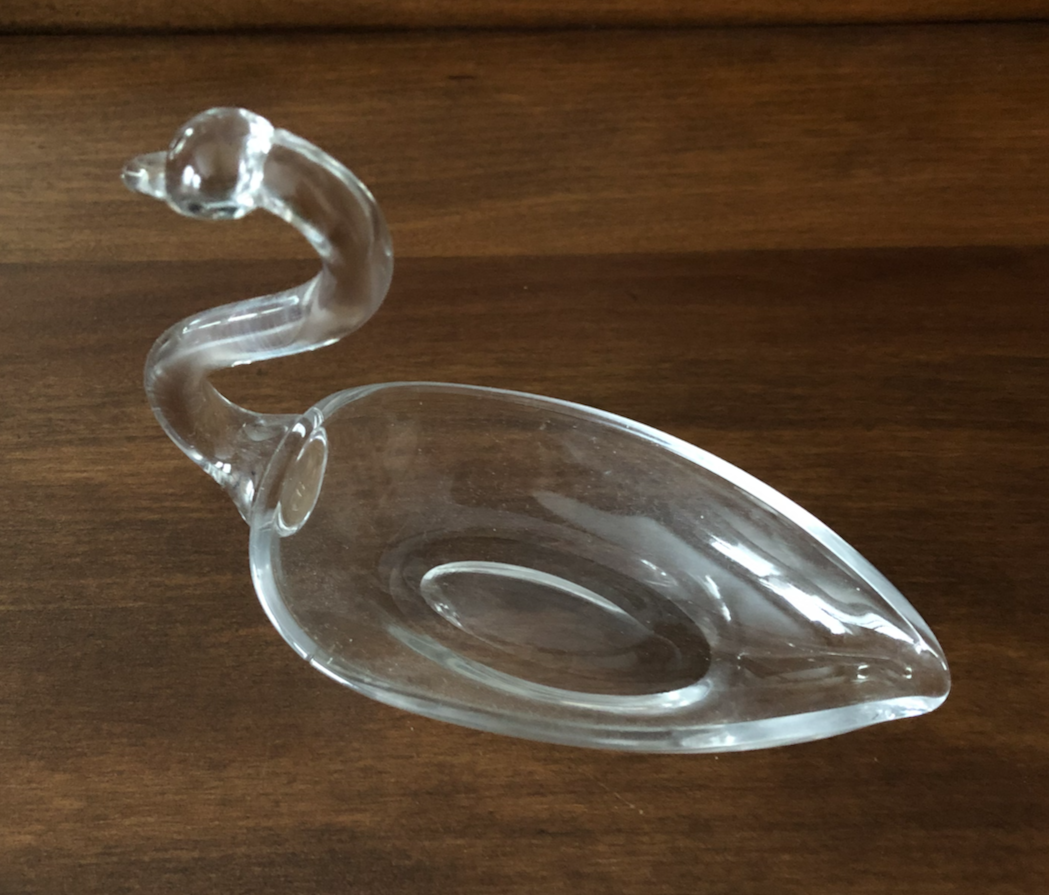
    In the Before times when I casually shopped, I’d spot artifacts from my childhood at antique stores. Huh?!? Toys like Barbies and transistor radios, kitchen items like Pyrex bowl sets and milk glass spice jars, decorations like ashtrays and the glass swan currently on my buffet are . . . old enough to be collectible. Antiques. 

    More startling was the realization that the purpose of those childhood objects will soon be obscure. Who fills decorative jars with spices anymore? When I was growing up, most homes had several ashtrays. Now they’re rare. 

    I value antiques from my grandmothers like Depression glass decanters, silver trays, cut glass salt cellars, aprons, and dresser scarves (what I prefer to think of as ‘true’ antiques). Their quaintness and the memories they call up appeal to me, but I rarely use them because they are so high maintenance. If I want younger family members to appreciate those antiques, I’d have to explain their purpose and tell stories about people they’ve never met. 

    Bringing the objects and the people who used them to life is hard, but here goes.

    Last week I made a pecan pie from scratch using my grandmother’s old wooden rolling pin. Although I never made pie with her, she was the one who liked to bake, so I feel that connection when I use it. I floured an old embroidered linen towel and rolled out the crust on it, which brought to mind one of my grandmother Mimmie’s housekeeping tips.

    She was from an era when women were expected to embroider towels, pillowcases, and dresser scarves (pretty cloths that covered up a lot of a dresser top to protect the wood—a lot of energy went into protecting furniture in her day). She or one of her sisters embroidered the towel which also had to be starched and ironed so it would look nice while hanging in the kitchen. 

    As a girl, I wondered how I was supposed to use such a fancy towel. Mimmie showed me her secret: dry your hands on the part that doesn’t show—the part that hangs closest to the wall on the towel rack. That way the pretty ironed front would stay nice for a few days. No surprise that I use terrycloth towels in my kitchen!

    Beyond the ‘antiques’ in my life is the realization that my lived experiences are also the stuff of history, but that’s a story for a different day! 

    What’s the oldest thing in your house? Does anyone besides you know what to do with it or why it matters?

  • Pure Nostalgia and a Weird Convergence

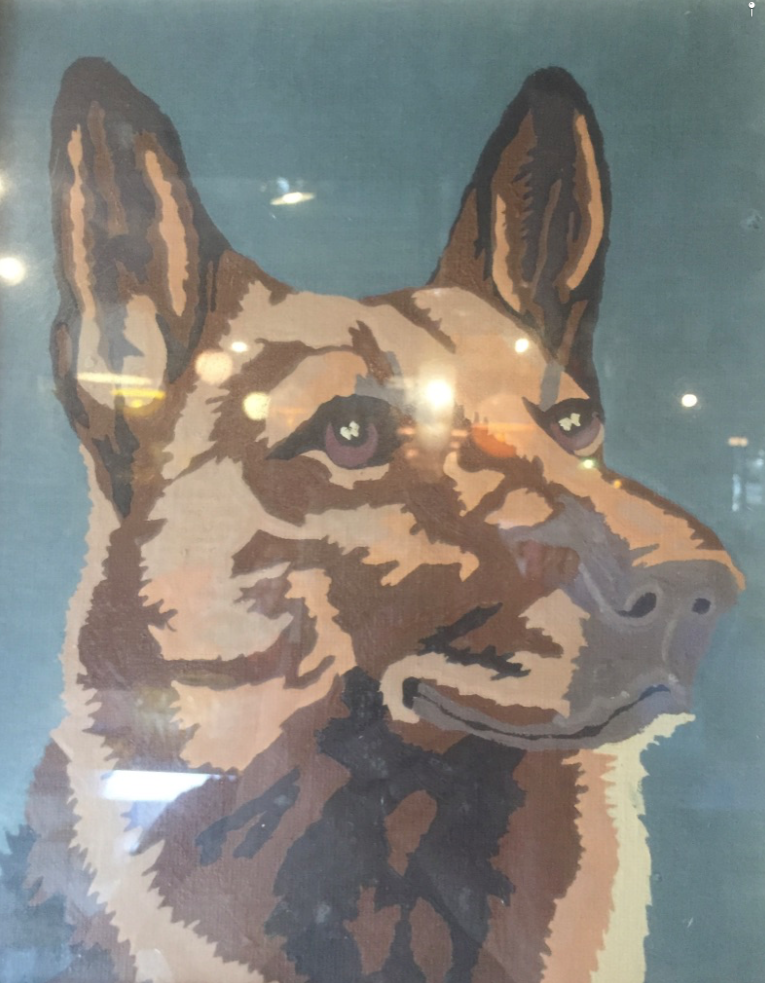
    Seeing the paint-by-number ‘artworks’ decorating Hot Plate, a neighborhood breakfast place, plunged me into nostalgia.

    At 10, nothing was better than making art that looked ‘real’ or perhaps I should say, ‘recognizable.’ Horses fascinated me and I labored at drawing them, using my horse statue for reference. One birthday, I received a paint-by-numbers kit for a horse portrait. Dip the cheap brush into the dime-sized plastic pots of paint, dab it in the blue-outlined shapes and voilà—my horse looked like the one shown on the box! Success!

    A weird convergence.

    Until my husband read the historical note in Hot Plate’s gallery, I’d never known that the Craft Master Corp., which made the paint-by-number kits, was headquartered in Toledo, my hometown. At first I thought, “That figures,” then I reminded myself that Toledo is also home to the Toledo Museum of Art, at the other end of the art world spectrum.

    While crunching home fries and laughing at the paintings of questionable landscapes, sad clowns, and plucky dogs, I marveled at the paint-by-numbers concept. Someone had to curate images, analyze and isolate the placement of highlights and shadows, and choose the appropriate colors. Today, that function can easily be done in a graphics program, but in the 1960s that wasn’t the case.

    The appeal of paint-by-number kits (popular in the 1950s and 1960s) and Bob Ross’ PBS show, “The Joy of Painting”(mid-1980s to mid-1990s, now immortalized on YouTube and in popular culture) is the idea that ordinary people with little or no artistic training can have an outlet for their creative impulses and paint something they’ll be pleased with.

    On the paint-by-numbers box was the slogan, “Every man a Rembrandt!” We l l l, not exactly. But for my 10-year-old self, there was a real pleasure in making a painting that turned out.