Category: mentoring

  • Beware of the Queen Bee

    In her Wall Street Journal article, “The Tyranny of the Queen Bees” Peggy Drexler reports that a 2011 American Management Association survey of 1,000 working women found that 95% of them believed another woman at some point in their careers undermined them. Drexler cites a number of other surveys in which women bosses were bullies, and most of the time their targets were other women.

    The Queen Bees’ favorite tactics are making snide remarks about another woman’s appearance, holding subordinates to unreasonably high standards, gossiping about them, and generally acting like high school mean girls. Various sources in the article theorize that Queen Bees bully because they are insecure and view up-and-coming women as threats.

    Screen shot 2013-03-27 at 10.24.04 PM

    My first reaction was dismay. As a baby boom woman, I have vivid memories of the days when men often disrespected women in the workplace and discriminated against us. How could a woman who’d lived through workplace bias treat another woman so poorly? I expect middle-aged women to know and act better. And I HATE IT when women act out negative stereotypes (catty, bitchy, etc.) Not only is their bad behavior galling, but it also makes it harder for the rest of us to succeed.

    But after some reflection, I realized that while I believe Queen Bees exist, and I’ve known people who have been hurt by them, I know far more women who are supportive of other women and willingly mentor younger women.

    One friend was a senior leader at a Fortune 500 and she was an active part of a corporate women’s mentoring group. Another friend, a successful business owner, is very generous with her time and advice. In addition to mentoring professional women, she volunteers with organizations that reach out to younger women. My middle-aged coworkers and I are very willing to mentor.

    Screen shot 2013-03-27 at 10.22.57 PM

    What’s interesting is that the youngest women in the department (recent grads) seek out several of us for mentoring, while the women who have a little bit experience are fiercely independent and prefer to go their own way. Sometimes I have watched in horror as some of them do things the hardest way possible. But they don’t want advice, so I don’t antagonize them by offering any.

    While I believe Queen Bees exist and can wreak havoc, I think generous, supportive women outnumber them. The dynamics of women in the workplace are as varied and complex as women are themselves.

    What’s your experience as a mentor or mentee?  Have you ever dealt with a Queen Bee?
  • WHO IS THE MAYOR?

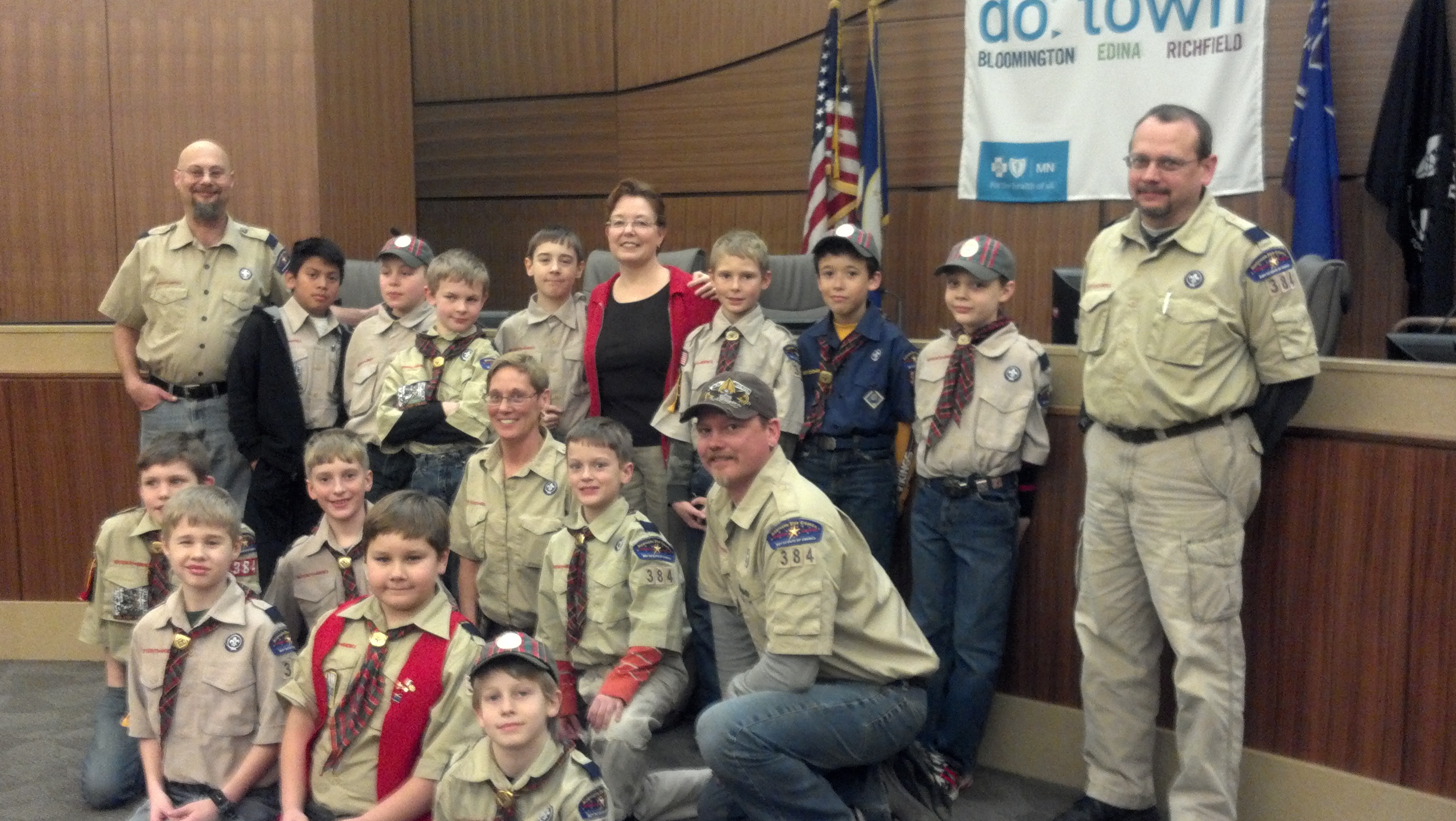
    January 18, 2013 140She’s the lady in the red sweater, and you, the den leader, are hoping, hoping that the Cub Scout sitting next to her, won’t turn his head and let out his humongous sneeze that you have been watching build for the past minute as he inhaled, inhaled again, and yet again. After he turns his head away from her, at least you hope he did, because at the very last moment you just couldn’t bear to look andJanuary 18, 2013 097 dropped your eyes, he exploded, after which you bring your eyes up to see the same Scout staring at the Mayor’s hair and you hope, really hope, that he doesn’t reach out and touch her head or her sweater or her arm or her hand, and you know he might do any of these or all of these. He likes to TOUCH, and he really looks like he’s going to do something even though at the moment he is busy palming his nose with both hands, and all you can think of is that he is a flu carrier and he is about to hand it to the Mayor.

    Who is the Mayor?

    She’s the one with the cheery personality who asks your 13 Cub Scouts the question, “Well, what do you think a mayor does?” which really, really makes you wish that you had remembered to discuss communicating with respect when a Scout responds with, January 18, 2013 102“She runs the city blabbly blab blab.”

    Who is the Mayor?

    She’s the one who is very articulate, but when she asks the Scouts what makes a good citizen, you want to take the jaws of life and extricate the memory chip from all the small electronics in the room. The meeting with the Mayor will only last for half an hour, but still that is too long for the parent who can’t look up from his smart phone for the entire time and the sibling of a Scout who has her face so close to her Nintendo DS screen that you are sure that she is suffering from partial blindness. I bet they can’t tell you that the Mayor’s sweater is a vibrant red, sharper than any cardinal that you have seen this winter.

    Who is the Mayor?

    She’s the one who uses her special badge to let the Scouts see the council chambers and sit in the overstuffed chairs that wheel around even though they immediately grab January 18, 2013 105for the skinny microphones that snake upwards. The first thing the Scouts learn is that the microphones are on and you are sure that they January 18, 2013 110are going to snap them in two as they yank them toward themselves. After you, the den leader, reign in chaos by yelling that ALL hands must IMMEDIATELY go into their own lap, only then do you dare take a breath.

    Who is the Mayor?

    January 18, 2013 201She is why you ask all the Scouts to remove their non-scouting headwear for the group picture. And you hope that the Scout who has his scouting cap tilted liked a gang member will straighten it for the picture in case it goes viral.

    Ultimately, Richfield Mayor, Debbie Goettel, is the gracious woman who communicates citizenship to your Cub Scouts. You hope they will remember at least one thing that she says, even if the thing theyJanuary 18, 2013 203 remember is that she is the one who organized the awesome one-hour tour with the fire department.

  • Because you never know . . .

    The seventh graders filed into the conference room where me and the other hospital employees waited to meet them. For the past six weeks, we have been corresponding via email as part of a mentoring program established by a nearby public school. Most of the emails focused on answering a standard set of questions about working life.

    Only five mentees made it to the pizza lunch—several were out sick, one forgot his permission slip, and two of the boys lost their nerve—in other words, a typical seventh grade experience. The five brave girls in attendance ranged from a small girl who hadn’t gotten her growth yet to a tall girl with a womanly figure. Hard to believe they are both 12-year-olds.

    I was disappointed that my mentee was out sick, but I was also a little relieved that I wouldn’t have to engage in an awkward interrogation—what often passes for conversation between adults and kids who don’t know each other very well.

    Seeing the students took me back to seventh grade when I was part of two programs—a verse choir and a binary math class. I can no longer recall why I was part of verse choir—did I choose it? Or was I selected because I loved English class?

    In verse choir, we memorized and performed several poems as a group. My favorite—Edgar Allen Poe’s “The Bells”—was our winning entry in a verse choir contest. Imagine a dozen voices chanting lines like these from Poe’s lengthy poem—

    Keeping, time, time, time

    In a sort of Runic rhyme

    To the tintinnabulation that so musically wells

    From the bells, bells, bells, bells,

    Bells, bells, bells.

    From the jingling and the tinkling of the bells.

    We loved it and so did the judges.

    The same young spirited nun who organized verse choir started an advanced math class that was held after school. I was never a math wizard, but in seventh grade, I did well enough to be invited. We learned about the binary number system (don’t ask me to use it now!) In 1967, computers and programming languages like COBOL were in their infancy. Perhaps Sister David thought she was preparing us for our future, or maybe she wanted to treat us to fun math—I don’t know. I was semi-clueless about the point of the programs in the same way as the seventh graders visiting the hospital were.

    Being part of these programs made me feel special and broadened my sense of possibilities. Today, I understand Sr. David’s investment in us and I am grateful she saw potential in me.

    That’s why I agreed to participate in the mentoring program—because you never know when you might spark something in someone else.