Category: Journals

  • The Fierce Urge to Tell Our Stories

    Anne Frank was a vivacious teenager and a keen observer of human nature. She wrote well and her diary often includes deft characterizations of schoolmates, family, and the other people in hiding with her family. When I recently reread her famous diary in preparation for visiting her family’s hiding place in Amsterdam, I was impressed by her lively mind.
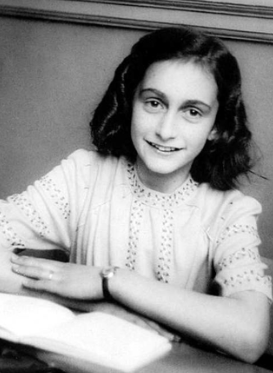
    Initially, she wrote to sort out her feelings—the same impulse that has prompted me to keep a journal off and on since I was a teenager. Putting my feelings into words helps me understand them. Airing out something on the page calms me and enables me to move on. 

    At first, Anne Frank meant her diary to be private. When she was 15, she heard a radio broadcast about a Dutch official who wanted to collect war stories and experiences, so she edited her diary in hopes it might be published one day. Unlike Anne Frank, I don’t want my journals shared with others. They’re histories of cranky confusion, and without context, they would likely distress family or friends once I’m gone and can’t explain.

    After her family went into hiding, her diary also served as a record of how they lived—what their space looked like, what their meals were, and what their daily schedule was. As the war intensified, she recorded bombing raids and news updates.

    Shortly after I finished the Anne Frank book, my sister asked me to refresh her memory about our great great grandmother—Katherine O’Tanney Feeley who emigrated from Ireland in the late 1800’s. To answer, I searched handwritten notes from my mother and father—a story here, a date and detail there. Some of the notes are sketchy and incomplete, but I decided I would make sense of them in a Word document so others in my family will have a record.
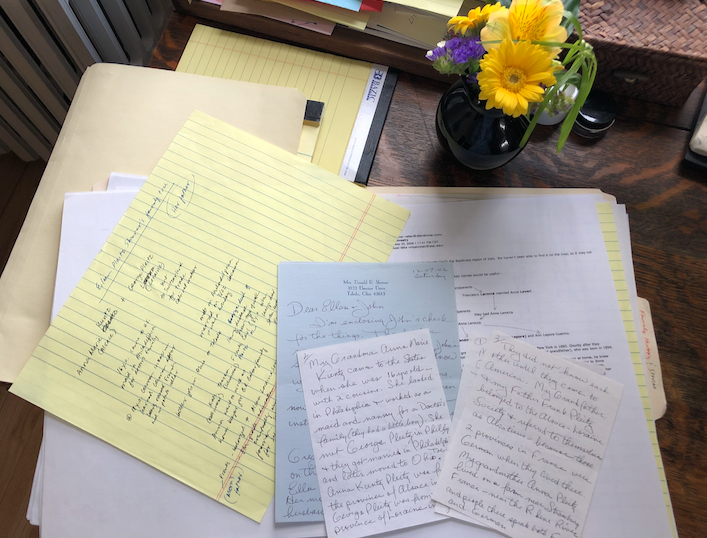
    Anne Frank’s story has touched millions all over the world in the decades since she wrote it. I have no such expectation for the family record I’m assembling. All I have are snippets of stories, not much to go on. Perhaps a few family members will have a mild interest. Hearing about people you never knew (even if they’re related to you) can be boring. 

    I’m fascinated by the urge to write journals and record family histories. Beyond that is the widespread wish to share the content of our days on social media or like I’m doing with this blog. People across all eras and cultures have felt this fierce need to tell our stories and understand who we are and who we came from. Sometimes we’re saying, “Here’s what happened.” Other times the wish to share is a way of saying, “I’m here. I matter.”

    Anne Frank could not have imagined how much her story would matter or how many readers would be touched by her words.

    Although my intentions and hopes for my writing differ from Anne Frank’s, I feel a kinship with that young woman born almost a century ago. 

  • Keeping Track

    I come from people who keep track of everything: groceries to get, bills to pay, upcoming events, the day’s experiences, and past events.

    As a young woman, my mom kept a diary that noted what mattered in her days: starting a novena and that a guy she was dating was kind of full of himself (they were happily married for 67 years anyhow). WE’RE AT WAR! she wrote in December 1941. Later in life, she recorded the weather daily on small pads of paper she kept next to the sofa. At her funeral, my cousins told me my uncle (her brother) had also kept meticulous notes—some about his garden, others about the weather. We marveled at the shared habit.

    When my mother-in-law recently moved, at least 20 years’ worth of journals turned up. I was aware of her habit because she often asked how to spell something we’d served for dinner. Cioppino or ratatouille. She enjoyed keeping notes about what we ate and did during visits.

    I’ve gotten an extra measure of documenting genes. Off and on since high school, I’ve kept personal journals in which I work out confusing feelings. I also make entries in a gratitude journal to remind myself of what’s good and right in my world despite the pandemic and trying political times. I document garden plans—what’s planted where and ideas for next year’s garden. I have lists of books I want to read along with books I’ve already read and what I thought of them. When dieting, I keep track of my exercise and meals.

    I’m not alone in those habits, but for me, it doesn’t stop there. I have a ridiculous number of notes in my phone app. Supposedly 194 of them, but that can’t be right! Poems I like, blog ideas, writing tips, ideas for pottery projects, a list of lawn chemicals that won’t harm birds and pollinators, the steps for starting the snow blower. The notes go on and on!

    My reasons can be practical. I want to remember something or find it quickly, and my phone is always with me. I tell myself I’m being efficient and orderly . . . but maybe ‘obsessive’ would be more accurate! Other times, keeping track is an emotional impulse. My personal and gratitude journals help me maintain equilibrium.

    The habit of keeping track intrigues me. I think there’s something universal, something beyond the practicality of grocery lists, receipts, and calendars. The same impulse that leads people to document their lives on Instagram or Facebook, keeps me writing extensive notes and ongoing journals. It’s what caused my relatives to make daily diary entries.

    As far as I know, my mom didn’t consult her weather notes after the fact. My uncle might have looked up which kind of tomatoes did well. I don’t know if my mother-in-law refers to her notes to remind herself of a previous year’s Christmas dinner. I suspect she doesn’t.

    I believe the impulse to keep track is a way of saying, “I was here. My life matters. To me.”

    What do you keep track of?