Category: iPhones

  • Time to Rewire My Brain

    Now that hands-free cell phone use is the law for Minnesota drivers, I was faced with a choice: A) buy a new car with built-in Bluetooth technology or B) retrofit the one I have. I have no quarrel with the intent of the new law, but my mind boggles at how awkward the retrofitting is.

    I have an old car.

    My 2011 RAV4 is a prehistoric gem with only 75,000 miles on it. Definitely pre-Bluetooth technology. Until now that wasn’t an issue, because I seldom used my cell phone while driving. When I made or received calls, I connected my phone to my old-fashioned earbuds (the kind with wires) and stuck the buds in my ears. Simple hands-free calling. Decent quality sound. Yay!
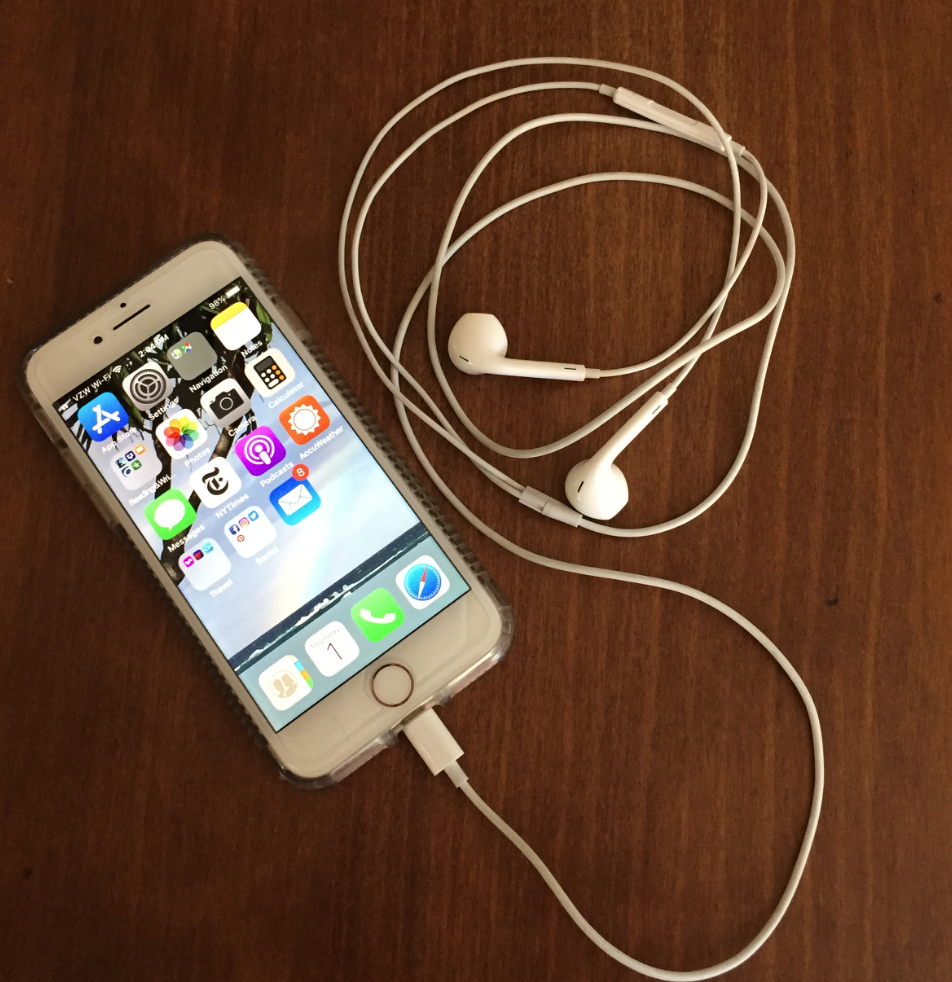
    Now that’s unlawful, so I had to get a phone holder. The several articles I consulted pointed out that attaching a holder to a vent is hard in a RAV4. Besides, I don’t want to block the AC during Minnesota summers or the heat during Minnesota winters.

    My best bet was a holder that attaches to the CD slot. Mmmmk. I don’t play CDs anymore. I listen to the radio, not even Sirius. Or I use the oldest iPod you’ve ever seen for music and podcasts. The Smithsonian museum probably has one in their ancient technology display. Originally, I was saving all that memory on my phone for photos, not music.

    That’s only half of it. I also needed a Bluetooth speakerphone thingy to clip onto the visor.

    I have an old brain.

    Retrofitting the car was step one. My brain needs rewiring, too. In the olden days, cell phones were for talking, iPods were for music, and Garmin was for directions. I do realize that my iPhone 8 can do all of that—in one delightful device—but I have an unreasonable and balky reaction to being bossed around by devices even when they’re trying to help me. Until now, I hadn’t taken advantage of all that seamless wonderfulness.

    Now, if I want to call while driving, I’ll need to tell Siri (Dang! I never use Siri, so I’ll have to learn that.) How long before Siri mistakes, “Call Margo S.,” for “Call Martha Stewart,” who I’m pretty sure doesn’t want to talk to me.

    For music, I’ll have to reach under the cell phone holder to press radio buttons or convince my elderly iPod to talk to the Bluetooth speakerphone. (Oh wait, my beloved iPod doesn’t have Bluetooth capability, so it and the speakerphone aren’t friends. Sigh.)

    It’s 2019. Time to rewire my brain and how I approach calls, music, and directions. I bought the devices and they work–sort of–but they certainly aren’t simpler.

    Maybe I just should have bought a new, fully-equipped car!

  • Opposing Thumbs

    In 1975, as I sat in Miss Bloom’s typing class, I never thought that one day I’d be typing primarily with my thumbs. I’m sure Miss Bloom, ancient even then, couldn’t have imagined a keyboard so tiny that even the end of her thumb would be too large to hit just one key.

    I picture myself in her class, feet planted firmly on the floor, my skirt pulled down over my knees, fingers curled over the keys of the IBM Selectric in front of me. Four rows of eight desks neatly lined the room. The only sounds were the soft squish of Miss Bloom’s orthopedic shoes on the linoleum floor as she paced up and down the rows checking our posture, and the hum of the newly purchased typewriters in front of us. (What a marvel those electric typewriters were. How much easier than the 1928 Smith Corona I used at home.)

    What were my lonely thumbs doing then? They were relegated to the space bar, waiting for the opportunity to create a void between words. Only my right thumb ever got any business, the left thumb dangled uselessly while all of the other digits pounded away at 65 words per minute.

    No wonder that now my thumbs have trouble finding the letters when I answer e-mails or send my daughter a text message from my iPhone. They’re not conditioned for this kind of work. Now they’re front and center, the rulers of the written word while my fingers curl around the back of my handheld device, providing support, but little else.

    Occasionally my right index finger can’t stand the pressure and it says to its friends on my left hand “Take over. I’m going in!” as it darts from behind the screen to hunt and peck for the letters, thinking itself faster than my clumsy thumbs.

    But even this is unsatisfying, because my right index finger doesn’t know the keyboard any better than my thumbs. The only familiar keys are y, u, h, j, n and m. And what can you spell with only those letters? Eventually, my index finger gives up and returns to its friends behind the screen, letting the thumbs take over because they at least can work together, doubling the speed of my messaging.

    Gone are the days of 65-75 words per minute. My thumbs are lucky if they can get in 20. So they’re less creative. A reply that once might have been “I’d love to join you on Saturday evening. A trip to the theatre sounds like fun,” becomes “K” or more likely a thumbs up emoji, but rarely anything longer. It’s just too slow, too cumbersome, too demoralizing to spend so much time pecking for the keys and constantly backspacing to correct mistakes.

    I’d like to say my thumbs are happy, that they’re glad for the opportunity to carry the torch after all these years. But I don’t think they are. I think they miss the days of working in tandem with my fingers, resting lightly on the space bar while the fingers searched for just the right sequence of letters. I think they’re lonely out there in front by themselves. Who knows? I could ask them, but they’d probably just reply, “IDK, may b. U D cide.”


    Guest blogger and WordSister Jill W. Smith is a Twin Cities’ writer. Her work has appeared in the anthologies Here in the Middle: Stories of Love, Loss, and Connection from the Ones Sandwiched in Between; A Cup of Comfort for Parents of Children with Autism; and Siblings: Our First Macrocosms, in the online journal Mothers Always Write, and occasionally on her blog, The Autism Fractal, which she co-authors with her oldest daughter.

  • Disconnected and Discombobulated

    I scoffed when I read about college students becoming anxious when separated from digital technology—email, Facebook, and other social media. Or rather, I believed they became anxious, but thought smugly, Glad I’m not hooked like they are.

    Except that now I am.

    Recently, I was camping at a state campground that didn’t have cell signal. At all. Although we were only about 30 miles from Rochester, Minnesota, we were in the land that time and technology forgot. At first I was delighted. No New York Times news flashes or Facebook posts reminding me of depressing political news. I wasn’t expecting any urgent emails.

    Being disconnected felt a bit odd, but I knew my friends would understand if I didn’t respond to their texts or emails promptly.

    Not having instant access to the weather app was OK. I didn’t really need to know exactly how cold it would get at night. 55 degrees or 50 degrees—what’s the difference? Either way, we’d have a fire and then burrow into our sleeping bags at bedtime.

    But what if my 90-year-old mother-in-law had a health issue? Would my sons be able to track us down? If one of our sons got seriously ill, how would they contact us? Since they’re in their 20’s, that’s usually not a big concern, but one of them had had a significant health problem a few weeks ago, so the possibility seemed more real.

    You see where all this was going—good ole free floating anxiety racheted up by lack of connectivity. Wow.

    Several times I had to tell myself to knock it off. Everyone was fine. Despite knowing that, I still tried to fire up my phone when we visited the park office. No signal.

    For years I’ve had the constant chatter: texts, email, and commentary from Facebook, Twitter, and blogs, so it took a while to get used to the sound of my own thoughts. Or no thoughts whatsoever.

    At first I had to concentrate on being in the moment. Resist the urge to curate my experiences. Just live them. I noticed the lavender and white phlox blooming in the meadow we were hiking through, heard the wind in the trees and the creek murmuring behind our campsite, and squinted at the zillions of stars you can see out in the country.

    I hate admitting that being disconnected made me anxious. But instant access has become too gratifying. The more I’ve gotten used to it, the more I want it. When I hear the ding of a new email or text hitting my phone, I’ve got to know who it’s from. It’s obsessive. As reinforcing as treats would be to Pavlov’s dogs.

    Who's the text from? 15 emails?! OMG!
    Who’s the text from? 15 emails?! OMG!

    Technology is supposed to be a helpful tool, subservient to me, not my master. I don’t want to feel so controlled by it.

    How did I get to be at the beck and call of this device? I let the lure of instant access get to me.

    So I’ve decided to try disconnecting intentionally one day a week, as an experiment.

    On those days, I’ll use my phone for calls, but otherwise avoid checking emails, weather apps, maps, Facebook, Snapchat, and the New York Times news feed. Fasting from email, apps, and social media will be hard—after all, the first thing I did after we packed up and drove away was check email. 56 of them had piled up in three days. Most of them weren’t that important, which reinforces my decision to go offline periodically.

    It’s so easy to be caught up in the bizzyness of the internet and social media. I want to rediscover what else I can do with my time.