Category: inspiration

  • Sharing the Load

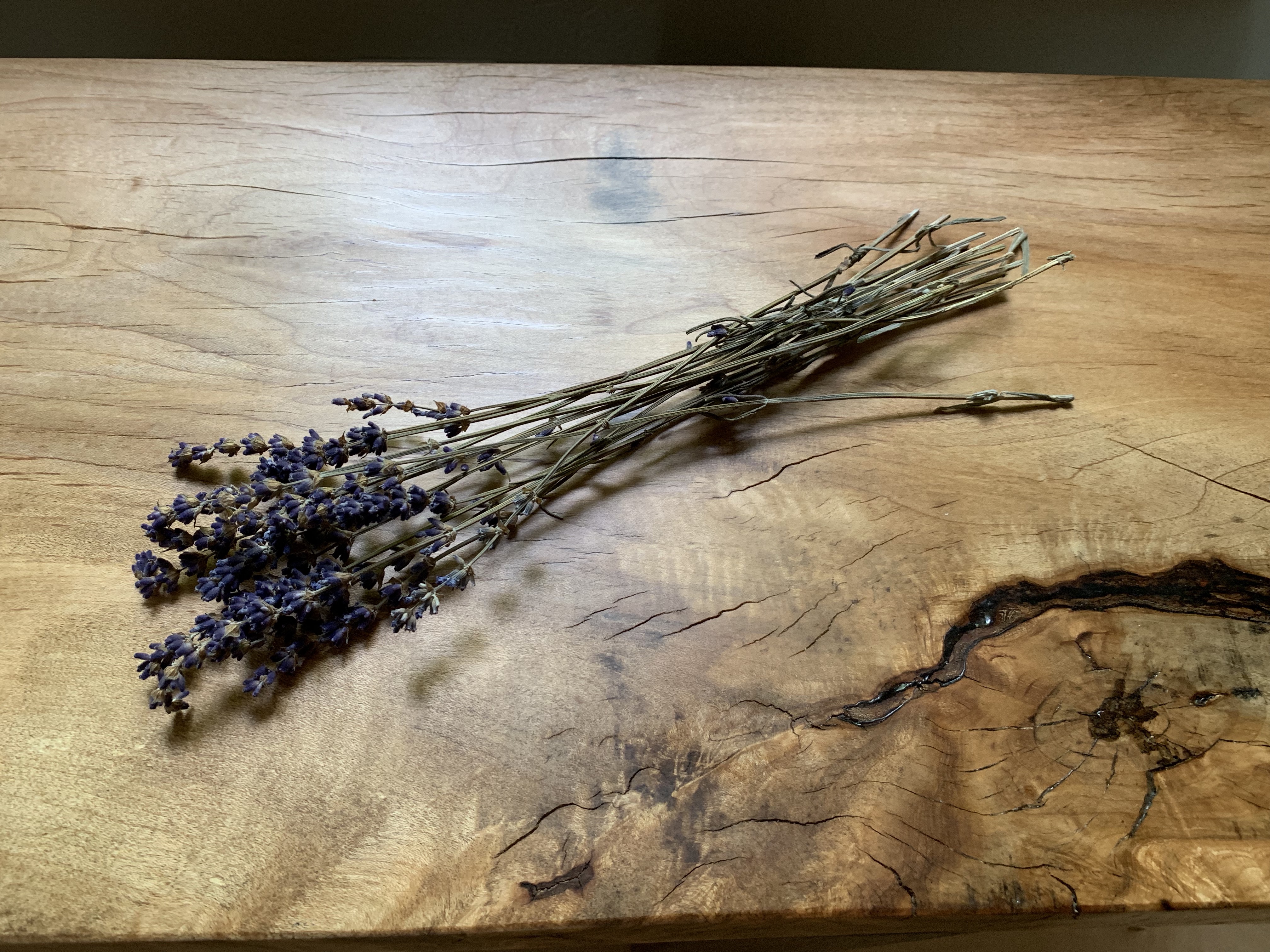
    Canadian wildfires more than a thousand miles away filled Wisconsin’s northern skies with haze. Following another warm summer day slightly diminished by the loss of blue heavens and the company of pesky mosquitos, helping a neighbor harvest their lavender field made a small part of the world all okay. At eight in the evening, thanks to Canadian smoke particulates, the July sun appeared a gentle gold surrounded by a flaming ring. With humidity and heat lifting, the air felt just right to stay outside

    She knelt next to the plants, cutting the flowered sprigs with a curved knife. I gathered handfuls, wound the end with a rubber band, then handed each to her husband to trim and load for moving. Their collies laid between the rows, noses resting on paws. A hawk screeched above as it circled the field. We talked about nothing much scattered with deeply important stuff.

    We have other jobs that claimed the day, but like all plants lavender has a time to be harvested. They had already completed hours in the field and hung hundreds of bouquets in the barn to partially dry. In a few days the lavender would fill a roadside cart for customers. Sharing the work, an hour went by quickly. Mosquitos called an end to our time.

    Some kind of magic happens when friends share the work of their days. Weeding each other’s gardens, making a meal, washing dishes together, sanding another’s wood project, painting a room, harvesting lavender. Formality slips away. The need to create conversation slips into comfortable talk. We move in each other’s space naturally, slipping into the dance steps of our real lives without practice. That’s where memories are made.
    po5suB6RT2ueQjZaTMEn4Q

  • Resolved: Nothing

    Resolutions past and present

    This year I didn’t make any New Year’s resolutions. That’s odd, because they have always appealed to me. I cherish the idea of fresh starts, and I have an abiding belief in a person’s ability to change. And it’s not as if I’ve magically become a better person who doesn’t need to improve!

    But I’m moving away from this familiar yearly cycle—Wanting to change –>making resolutions –> attacking my goals for a while –> losing energy and focus –> feeling bad –> re-resolving to incorporate the changes.

    For example, year after year I have vowed to exercise regularly and to devote more time to writing. I’d start off full of zeal—this is the year! But establishing habits is a daily battle. Oops, I ran out of time. Something came up. Better luck tomorrow. Eventually, my enthusiasm would flag. Hmm. Maybe the fact that I had to renew those intentions yearly was a hint that my approach wasn’t working!

    Early last year, I stumbled across a better way to incorporate new habits into my life. The insight came about as a side effect of writing out my weekly calendar. Instead of taking a work-before-pleasure approach, I began identifying blocks of time when I could do the things that matter most to me: writing, volunteering, exercising, connecting with friends and family, and pursuing other creative outlets (e.g., pottery, sewing, trying a new recipe). After I’ve made time for my priorities, I fit in necessary evils like cleaning, laundry, appointments, and shopping.

    Writing a detailed calendar may sound fussy and restrictive, but for me, it’s energizing. It’s about scheduling fun. Fulfillment. I’m making time for what I like to do and what I think is important. And that’s a good thing. I rarely do everything I set out to do, but I get around to most of it. Consequently, I have fewer regrets about how I spend my time and less need for the same old resolutions spurred by what I wish I’d done.

    I still plan to lose two pounds of cookies and do strength training more consistently. And I will. I still want to be kinder, more patient, less critical, and more grateful. I’ll work on that, too. But this year, I’m saying goodbye to the yearly cycle of regrets and resolutions.

  • In Praise of Being Ordinary

    Not such a special snowflake!

    If anyone had ever asked me if I wanted to grow up to be ordinary, I would have said, “No, of course not!” Being “usual, of no exceptional ability, degree or quality; average,” doesn’t sound that great. Just like everyone else, I hoped to be extraordinary: “unique, one of a kind, without equal, unparalleled, unusual.” Who wouldn’t want to be that?

    Ordinariness depends on your perspective. Up close, I’m a distinct person with dark blonde hair, fair skin, and a space between my teeth. I have a yearning to write well and a tendency to be intense that’s occasionally tempered by my sense of humor.

    Step back one pace, and I am a middle-aged mom who writes memoir, essays, and blogs. My shape is trim, I dress in moderately attractive (but unoriginal) clothes, and I wear quirky jewelry . . . like a lot of middle-aged women.

    Step back further, and I’m part of the well-educated middle class, a woman with a long marriage, and two grown children.

    At each remove, I become more ordinary, more faceless, and more similar to others in my category. Some people may think that my similarities to others define me. Everything I’ve done someone else in the world has already done and probably better.

    Time sands off the rough edges of individuality. Almost no one stays extraordinary if viewed through the filter of centuries or as one of the billions of people across the globe. Even Jesus had counterparts in other prophets and saviors like Moses, Buddha, and Mohammed.

    Admitting that I’m ordinary does NOT mean that I have desperately low self-esteem. Most days, my self-esteem is fine.

    No, it’s more that I’m rethinking what it means to be ordinary. I don’t believe being ‘ordinary’ should mean that I’m vaguely inferior, although today the word has that connotation. Being unique (one of a kind) is not the opposite of being ordinary.

    I’m a distinct individual, but a part of a collection. I’m not a category unto myself. No one is. I have a lot of company, other travelers in the pursuit of a life I’m happy with. My version—marriage, family, and work that’s meaningful to me—is a life people have chosen for centuries, a life that’s very similar to other people’s lives. Ordinary people have dreams and hope to have a lasting impact—just like millions of other people. Having aspirations and accomplishments doesn’t make a person unique.

    Being ordinary should be celebrated. Certainly ‘ordinary’ is what someone who’s seriously ill or from a dysfunctional family longs for. For them, ‘ordinary’ is a blessing, just out of reach.

    Which brings me back to where I started. By owning my ordinariness, I’m not embracing complacency. Instead, I’m recognizing that most people have aspirations and accomplishments—in other words, striving is ordinary.

    Being ordinary is fine with me.