Category: Identity

  • In Praise of Older Women

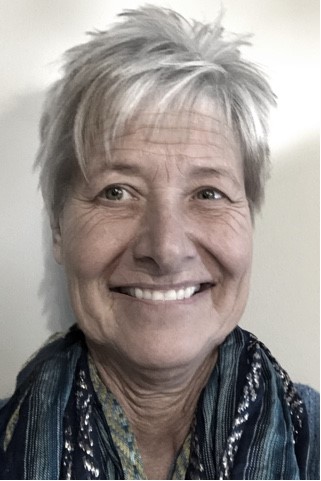
    Most days I’m fine with donning my invisibility cloak (the uniform of people 60 years and older) and going about my days. I’m content to fly under the radar, doing what I love. However, recently I’ve been reminded that too often the world doesn’t see older women and when it does, it’s with a lot of inaccurate assumptions—supposedly we aren’t good with computers or cell phones, we’re frail, we’re clueless about financial matters and the workplace, and so forth.

    Except those caricatures don’t resemble any of the women I know.

    I’m 68 and have friends ranging from 60-78. A quick review of approximately twenty women I know turned up a more realistic and positive profile—

    • Several friends are still working although most have retired from paid work.
    • Some volunteer as nonprofit board members (helping run the world for free). 
    • Many of my acquaintances volunteer in other ways—at a blood bank, rescuing abandoned dogs, tutoring, at homeless shelters, doing environmental projects, and more.
    • The women I know do some or all of these activities: biking, camping, kayaking, hiking, yoga, pickle ball, walking, lifting weights, and swimming.
    • Some of my friends are childless. Others are mothers and inspired grandmothers. Although they enjoy grandmothering, it’s just one aspect of their lives.
    • Most of us have traveled extensively. Some are probably planning their next adventure right now.
    • We are smart, capable people who know how to get stuff done. 
    • Several have published books and many have published shorter work.
    • We enjoy learning new things—maybe tap dancing, a craft like rosemaling, a Coursera class on the psychology of purchase behavior—whatever.
    • We know the pros and cons of long-term care insurance, how to time starting Social Security, how to roll over IRAs, write living wills, etc.
    • We are fun-loving but not carefree. We have plenty to worry about, but try not to let it swamp us.
    • Most of us read several newspapers online and are well-informed about political issues.
    • We are philosophical about aches and pains, but doing our best to hold the line and stay healthy.
    • We are sympathetic, kind, and good listeners. We have lots of loving advice for each other, but we try to resist dispensing unasked for advice to younger people. Mixed results, there!
    • We have good senses of humor, but get tired of being underestimated and don’t suffer fools gladly.

    There isn’t a helpless, clueless woman in the bunch.While these women are all wonderful, they aren’t rare exceptions. They’re typical. I wish more people saw us for who we really are—strong, smart, capable, and fun.

  • Your Future Self Will Thank You


    Back in 2014, I attended a lecture at the University of Minnesota’s Center for Spirituality and Healing. The speaker was Kelly McGonigal, an author and health psychologist who teaches The Science of Willpower, a popular Stanford University course.

    According to McConigal, one of our biggest mistakes when making decisions is not picturing our future selves and how the decisions we make today will impact us in the years ahead.

    That’s one reason why so many people put off doing things that could make a big difference in the decades to come: eating well, exercising regularly, maintaining friendships, saving for retirement and other actions that research has shown makes a big difference to quality of life as we age.

    One way to set up your future self for success is by getting in touch with your hopes and dreams. I’ve been keeping a bucket list of mine for decades.

    But because that list has gotten unwieldly—in large part because it now serves as a catch-all for everything from climbing Mount Kilimanjaro to taste-testing brandy Manhattans to building a cabin with my partner Steve to visiting the world’s most beautiful libraries—I also now keep an index card on which I’ve written just 10 things I want to accomplish in the next 10 years.

    Even if I cross only one item off my index card every year for the next 10 years I’ll have a few accomplishments my future self will be able to look back on with pride as well as some experiences she can recall fondly.

    Manifesting Me

    Some years, I’ve called my future self into focus by giving her a name that had to do with one of my goals. One year, she was Author Artist. Shortly after, I signed a contract for my first book and become a real-life author.

    I’m not the only one who uses names to bring the future into focus. On a recent episode of the Meditative Story podcast, music producer Larry Jackson shared a story about his work with Jennifer Hudson. On the day of their recording session, she arrived with two Pomeranians. One was named Oscar. The other Grammy. Admitting his cluelessness, Jackson asked her why she’d chosen those particular names.

    Hudson’s response: “Well, I won an Oscar already and now we about to win a Grammy, ain’t we?” They did, and perhaps having two four-legged reminders of her future self-played a role in making that dream come true.

    There are also other ways to call our future selves into focus. Journaling and dream boards are two common methods, but one of my favorites is by projecting yourself into the future.

    One of my friend’s friends did that recently. She’s always dreamed of working for Spanx. So, one day, when in Atlanta for business, she spent an hour sitting in the Spanx lobby, picturing what it would be like one day if her future self really did work there.

    Ready, set … age

    Another tool that’s helped me get in touch with my future self is AgingBooth, a free face-aging app that lets you fast-forward your looks. Seeing what I might look like in 2050…when I’m 92…has helped me realize how much I’m looking forward to becoming my future self.

    Will she be kinder? Still able to play 18 holes of golf. Eager to discover new authors? Finally rid of her bad habits.

    What about you? How do you bring your future self into focus?

    Me in 2020, at age 62
    Me in 2050, at 92
  • In Praise of Being Ordinary

    Not such a special snowflake!

    If anyone had ever asked me if I wanted to grow up to be ordinary, I would have said, “No, of course not!” Being “usual, of no exceptional ability, degree or quality; average,” doesn’t sound that great. Just like everyone else, I hoped to be extraordinary: “unique, one of a kind, without equal, unparalleled, unusual.” Who wouldn’t want to be that?

    Ordinariness depends on your perspective. Up close, I’m a distinct person with dark blonde hair, fair skin, and a space between my teeth. I have a yearning to write well and a tendency to be intense that’s occasionally tempered by my sense of humor.

    Step back one pace, and I am a middle-aged mom who writes memoir, essays, and blogs. My shape is trim, I dress in moderately attractive (but unoriginal) clothes, and I wear quirky jewelry . . . like a lot of middle-aged women.

    Step back further, and I’m part of the well-educated middle class, a woman with a long marriage, and two grown children.

    At each remove, I become more ordinary, more faceless, and more similar to others in my category. Some people may think that my similarities to others define me. Everything I’ve done someone else in the world has already done and probably better.

    Time sands off the rough edges of individuality. Almost no one stays extraordinary if viewed through the filter of centuries or as one of the billions of people across the globe. Even Jesus had counterparts in other prophets and saviors like Moses, Buddha, and Mohammed.

    Admitting that I’m ordinary does NOT mean that I have desperately low self-esteem. Most days, my self-esteem is fine.

    No, it’s more that I’m rethinking what it means to be ordinary. I don’t believe being ‘ordinary’ should mean that I’m vaguely inferior, although today the word has that connotation. Being unique (one of a kind) is not the opposite of being ordinary.

    I’m a distinct individual, but a part of a collection. I’m not a category unto myself. No one is. I have a lot of company, other travelers in the pursuit of a life I’m happy with. My version—marriage, family, and work that’s meaningful to me—is a life people have chosen for centuries, a life that’s very similar to other people’s lives. Ordinary people have dreams and hope to have a lasting impact—just like millions of other people. Having aspirations and accomplishments doesn’t make a person unique.

    Being ordinary should be celebrated. Certainly ‘ordinary’ is what someone who’s seriously ill or from a dysfunctional family longs for. For them, ‘ordinary’ is a blessing, just out of reach.

    Which brings me back to where I started. By owning my ordinariness, I’m not embracing complacency. Instead, I’m recognizing that most people have aspirations and accomplishments—in other words, striving is ordinary.

    Being ordinary is fine with me.