Category: House upkeep

  • When it Comes to Downsizing, Fire is Not the Answer

    Have you read “How to Get Rid of Stuff: The Survey Says…”?

    Published on Next Avenue, the article features an interview with David J. Ekerdt, author of Downsizing: Confronting Our Possessions in Later Life.

    Although I’m too busy confronting my own mountain of stuff to read Ekerdt’s book, the article brought me face-to-face with my own struggle to take control of my possessions.

    One line in particular stood out to me. It referred to the “magical thinking” approach to downsizing, which can be summed up as wishing a fire would “take care of” all one’s possessions.

    I’ve been guilty of such thinking. In fact, more than a decade ago, I fantasized about this exact thing with my friend Maery Rose.

    Last week my fantasy almost came true.

    That’s when I came home from a socially distanced visit with my aunt Caroline to a smoke-filled bedroom.  

    It started because of my hair.

    I haven’t had it cut or colored since the pandemic began, and it’s been driving me crazy. I wanted to give it a bit of TLC from all angles, so I plugged in a curling iron in my bedroom, where I could adjust the mirrored bifold doors of my closet to get a 360-degree view of my hair.

    Though I didn’t love what I saw, a figured a few quick curls just before walking out the door would get me to “good enough.”

    But in the middle of making those curls, I got distracted by a call and forgot to turn the curling iron off. What’s worse, while I was gone, it slipped from the radiator onto my bed, where I had a pile of clothes I’d been debating about whether to keep or giveaway.

    By the time I returned home, the curling iron had burned through the clothes, as well as a treasured handmade afghan, my down comforter and my sheets. Even my mattress was beginning to burn.

    I’m lucky I came home when I did. The damage could have been much worse. And while I certainly hope I never accidentally set another thing on fire, there’s one positive that came out of that day: I’m finally, after years of talking about doing so, letting go of those things that don’t fit my future self.

    In fact, in the week since the fire, I’ve donated two carloads of boxes and filled my dining room with dozens more.

    And thanks to this tweet by Angela Giles Klocke, I’m able to see some humor in the fact that the universe had to light a fire in my bed in order for me to finally take downsizing seriously.
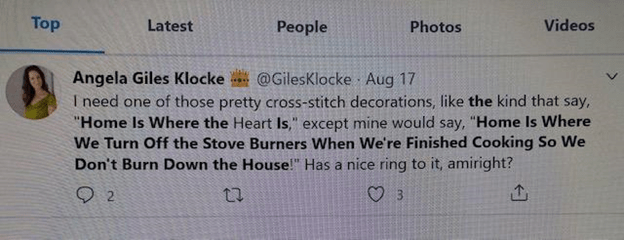
    Inspired by Angela, I’m now cross-stitching my own aphorism: “Home Is Where We Unplug Curling Irons So We Don’t Burn Down the House!”

    Angela is right, it does have a nice ring to it, one I hope will keep both my home and hers fire-free from now on.

  • The F#!%ing First Times

    One in a series of Dear You greeting cards created by Jacque Fletcher of Heartwood Healing.

    As anyone who knows me will tell you, I’m a huge fan of podcasts, having listened to every episode of everything from “Fresh Air” and “The Brian Lehrer Show” to “Ear Hustle” and “The Happiness Lab.” And while I know very little about Brené Brown other than her “power of vulnerability” TED Talk, her new podcast—“Unlocking Us”—caught my ear.

    In the inaugural episode, she talks about coming face to face with what she refers to as the FFTs: the “F#!%ing First Times.”

    She describes the FFTs as those awkward and sometimes incredibly uncomfortable feelings that arise whenever we try something new. Her FFTs included recording the first episode of her new podcast, getting bangs for the first time since the 90s and learning to ride her Peloton bike (for the first three months she left her shoes clipped into the bike because she didn’t know how to get on and off the bike with them on her feet).

    But, as she’s been telling her followers for years, the only way to get to the other side of being uncomfortable is to push right through.

    That’s what I’m trying to do. But gosh, is it hard.

    Ready, set … re-set

    I’d expected to be on the road most of the first half of the year, but the coronavirus cut my travel plans short. So instead, I’m at home, staring at a long list of home improvement projects I’ve been putting off for years—everything from clearing clutter to replacing windows, from landscaping to building a new garage.

    The good news is that I’m finally attacking that list. The bad news is that nearly all the projects on the list are FFTs for me, some made even harder to get started on because of large price tags and conflicting opinions.

    Take my garage, for instance. One contractor says the existing slab is fine, while another says it must be replaced. One advises keeping the same footprint, while another recommends building larger. One says my 200-year-old backyard oak tree isn’t a problem, another that it needs to be trimmed right away.

    Then, their estimates arrived … and my eyes glazed over. There was no easy way to compare apples to apples, and even if there was, I have no idea what shape roof to choose or how many lights to have installed or …

    What if I make a mistake? Choose the wrong builder, or worse, the wrong dimensions so that the truck I’m planning to buy down the road doesn’t fit.

    So, the project has come to a standstill, which is exactly what Brown says happens when we get overwhelmed by vulnerability and stop trying.

    Embrace the suck

    While I will eventually choose a contractor (a friend who has built two cabins is coming over next week to help me evaluate the estimates I’ve received), Brown says we all too often shut down in the face of uncertainty.

    I certainly have been guilty of that.

    But I’ve also seen the benefits of embracing what Brown refers to as “the suck.” The suck is the yuck we have to get through in order to get what we desire.

    She says that when we don’t embrace the suck, things start to shut down inside of us. And while I’m now in my 60s and beginning to contemplate retirement, I have no plans of shutting down.

    Instead, I’m reminding myself that I have what it takes to get through the FFTs. After all, when I think about it, I’ve done it before. I did it when I launched my own marketing and employee communications agency, when I wrote my first book and when I bought an island beach house.

    And while all of those things were terrifying stretches at the time, I not only survived them, I emerged from them stronger and more confident. Sure, I experienced the FFTs (and I even f#!%ed up a few times along the way), but I’m proud of all I’ve accomplished and know I’ll feel the same way once one the garage is done.

    My key takeaways

    Whether you, like me, are considering a home-improvement project or a self-improvement one (I have a long list of those as well), here are three tips to help you s-t-r-e-t-c-h out of your comfort zone and get comfortable with the FFTs:

    • Engage your imagination. Research shows that our brains don’t differentiate between imagining doing something and actually doing it, so amp up your confidence by visualizing exactly what you’d like to experience. For me, it’s pulling into a light-filled garage and realizing my vehicles fit perfectly.
    • Lower your expectations. When you first try something new, chances are you won’t be very good at it. That seems obvious, right? But it’s amazing how many of us let the fact that we’re “all thumbs” or “have two left feet” get in the way of trying new things.
    • Ask for help. Don’t carry the ball all by yourself. Instead, let other people help you get where you want to go by expanding your network to include people who are both younger and older, as well as those who have had different life and career experiences.
  • Downsizing is a Seismic Shift

    Downsizing is a Seismic Shift

    The move looked like upheaval, but changes had reverberated through our lives for several years before my husband and I sold our house. Our sons no longer needed us daily, so we had stepped back into an advisory role. We focused more on fun, less on careers. The shift—from raising children and working full-time—was as natural and inevitable as tectonic plates moving.

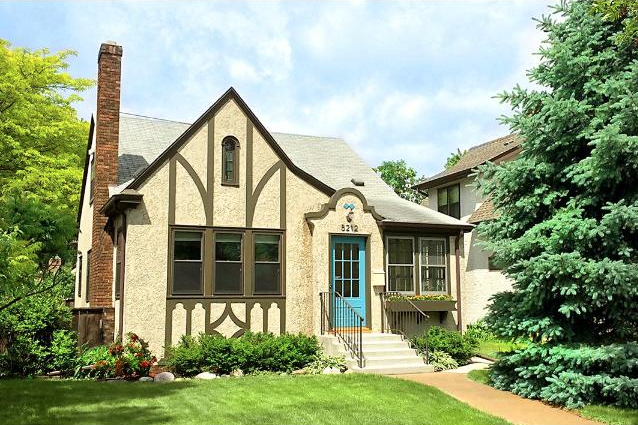
    Our old house
    Our old house

    We dreamed of a new life. The vision was a little vague—we wanted to live in the Twin Cities instead of the suburbs, in a neighborhood where we could walk to shops and restaurants, in a house with more character, less yardwork.

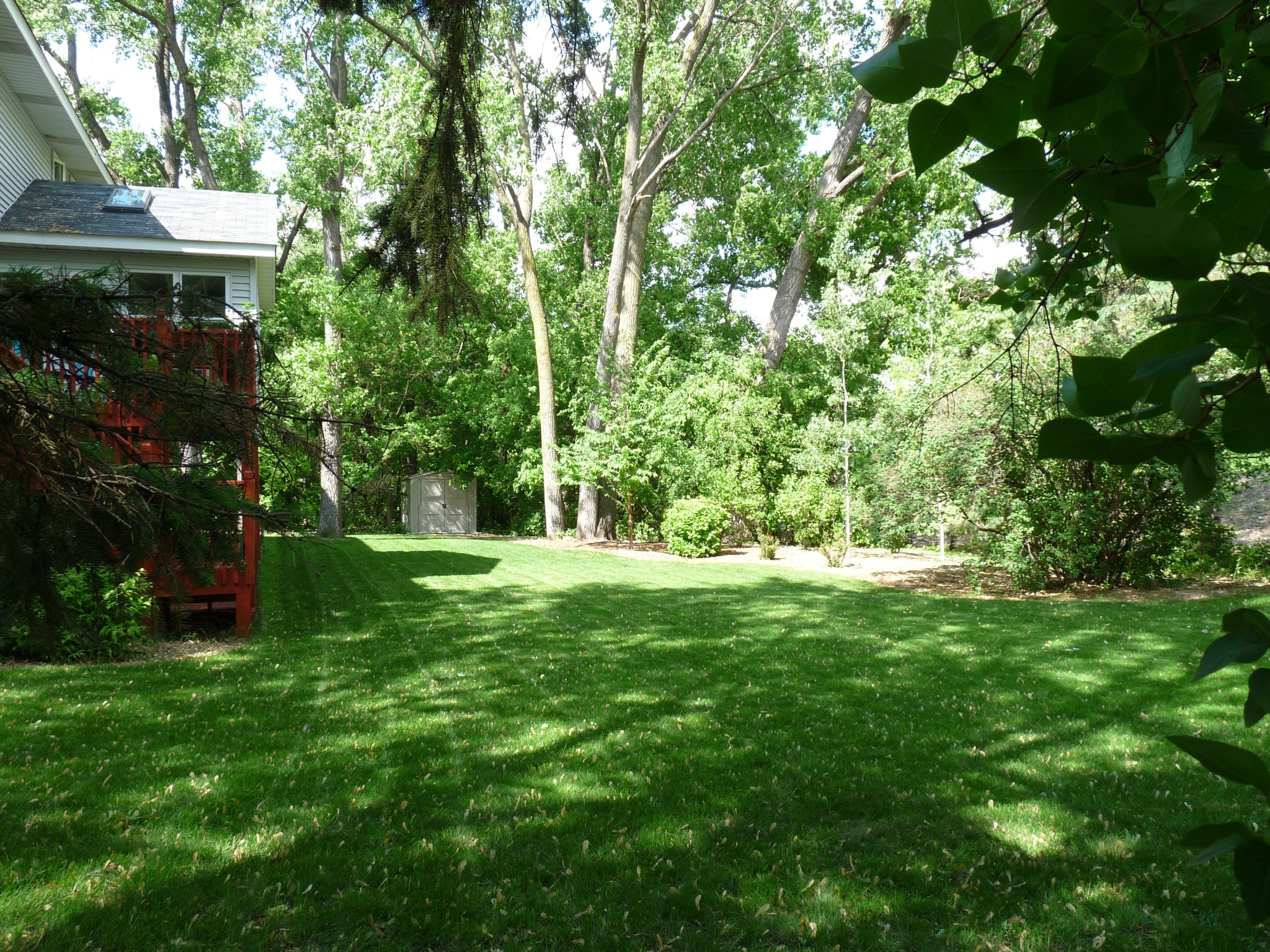
    our old backyard
    Our old backyard

    What we chose is a 90-year-old, story-and-a-half house with a postage stamp-sized yard to replace our 40-year-old, three-story walkout with a generous yard.

    Our new house
    Our new house

    New yard
    New yard

    But the change is deeper and broader than square feet and location. We chose a life that offered new possibilities. We are counting on ourselves to invent the life that goes with it.

    Although I’m pleased with the new home we chose, occasionally I feel disoriented. Everything that was familiar has changed. How much room we need. How much activity we want. How much noise we can stand. How to stay connected to people who no longer live nearby. How to be good citizens in a city of activists.

    Sometimes I feel like I’m on good behavior here. I pick up clutter and put away dishes obsessively—which goes against my messy nature—but I’m trying to learn new ways. I think carefully about what we bring into this house since we have so much less space. We gave away many of the fine things we’d accumulated during the past 25 years. Once we’d unpacked we needed to give away even more. But really, how much stuff do we need? And why? The habit of coveting is hard to break, though.

    Walking around in my nightgown with the blinds down is odd, but our windows face the neighbors’ windows and I value my privacy. I’ve had to get used to locking the doors with a key. All the time.

    But eating breakfast in the glow of the little lamp on the buffet is cozy even if the blinds are drawn. My gardens are so small that caring for them is fun now instead of drudgery. I like walking to neighborhood coffee shops and hiking alongside the creek. The energy and variety of the city appeals to me. Most days, I drive toward my new home without lapsing into autopilot and heading south of the river.

    The bedrock our lives—raising children and working full-time—has given way. The foundations of our new life are couplehood, part-time work, and fun.

    We’re still figuring out what our new life should consist of. So we rearrange the elements we want to keep (good meals, time with friends and family), discard ideas and activities that no longer fit (PTO and soccer practice), and relish the new possibilities (guitar practice and art history classes for my husband). For me, the choices are yet to be determined. I’m making it up as I go along.