Category: history

  • “Why, in my day . . .”

    Growing up, I recall elders recounting tales about life before some innovation. Today, the advent of artificial intelligence (AI) is a hinge moment like so many technological advances I’ve experienced in the last 40 years. I look back on past breakthroughs with wonder and nostalgia. I’m trying to come to terms with current developments.

    1984 – Desktop Computers

    I roll my eyes when young volunteer coordinators enquire if I’m comfortable with computers. In 1984, my boss handed me boxes for an Apple IIe desktop computer and an amber monitor (orange type on a black screen) and told me to set them up so I could write marketing and training materials. 

    1989 – Internet

    Today, that old setup is quaint and humorous—a one-color monitor, 5¼ inch diskettes, a computer that didn’t connect to the Internet . . . because the World Wide Web wasn’t mainstream until 1989-90.

    When the Internet became commonplace, we used painfully slow telephone dial-up modems with their crackling static and rubber band sound. Modems meant I no longer had to courier work product files to my customers on diskettes, which had shrunk to 3½ inches. 

    1994 – 2001 – Search Engines and Websites

    In the mid-1990s, search engines like Yahoo, AOL, and Netscape came on the scene and Search Engine Optimization (SEO) helped people, products, and businesses get found. Google started in 1998. It’s hard to imagine a time before Google, when research meant visiting a brick and mortar library to use printed resources that might be checked out to someone else.

    As websites grew common, having one for my business became important. A friend and I designed and rolled out mine in 2001. Several versions followed until I retired it several years ago.

    1996 – Cell Phones 

    For me, the next technological cliff came around 1996 or 1997 when small cell phones arrived. They made calls. That’s it. If you had the patience to tap number buttons repeatedly, you could eke out texts. No camera. No Internet. No email. No music. No maps. Next, I owned a different dumb phone that opened to a qwerty keyboard. Around 2005, I acquired a fancier flip phone with a camera. Woohoo! Before long my 35mm digital camera was obsolete.

    2007 – Smartphones

    The world shifted dramatically again when the iPhone was introduced in 2007—the best of the available smartphones. Cell phones had enabled me to keep up on client calls and emails seamlessly when I was away from my home office—in other words, an early version of remote work. Staying connected with family became immensely simpler too.

    2007 – 2008 – Facebook & Twitter

    The advent of social media—Facebook and Twitter along with their many step-children—has transformed the world. How we discover, understand, and consume news. How we see ourselves and connect with or demonize others. There’s no denying social media’s far-reaching impact. Despite my mixed feelings about Facebook, it’s where a number of readers find our blogs. 

    Now – Artificial Intelligence

    Evidence of artificial intelligence is everywhere—Siri and Alexa, helpful spelling prompts in texts and emails, blank-eyed, AI-drawn models in ads, and who knows how many AI functions we are unaware of. 

    AI makes me uneasy. But I don’t want to be a Luddite, so I’ve told myself I really ought to dig in, try to understand its scope, possibilities, and implications . . . insofar as any non-AI developer can. I’ve begun experimenting with ChatGPT as a research tool (think of all the data it accesses), but it’s never going to be writing my blogs! Count on 100% Ellen, all the time.

    Five years from now, when the next technological wonder launches, who knows what we’ll be saying?
  • The Fierce Urge to Tell Our Stories

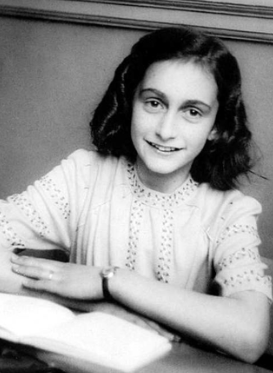
    Anne Frank was a vivacious teenager and a keen observer of human nature. She wrote well and her diary often includes deft characterizations of schoolmates, family, and the other people in hiding with her family. When I recently reread her famous diary in preparation for visiting her family’s hiding place in Amsterdam, I was impressed by her lively mind.

    Initially, she wrote to sort out her feelings—the same impulse that has prompted me to keep a journal off and on since I was a teenager. Putting my feelings into words helps me understand them. Airing out something on the page calms me and enables me to move on. 

    At first, Anne Frank meant her diary to be private. When she was 15, she heard a radio broadcast about a Dutch official who wanted to collect war stories and experiences, so she edited her diary in hopes it might be published one day. Unlike Anne Frank, I don’t want my journals shared with others. They’re histories of cranky confusion, and without context, they would likely distress family or friends once I’m gone and can’t explain.

    After her family went into hiding, her diary also served as a record of how they lived—what their space looked like, what their meals were, and what their daily schedule was. As the war intensified, she recorded bombing raids and news updates.

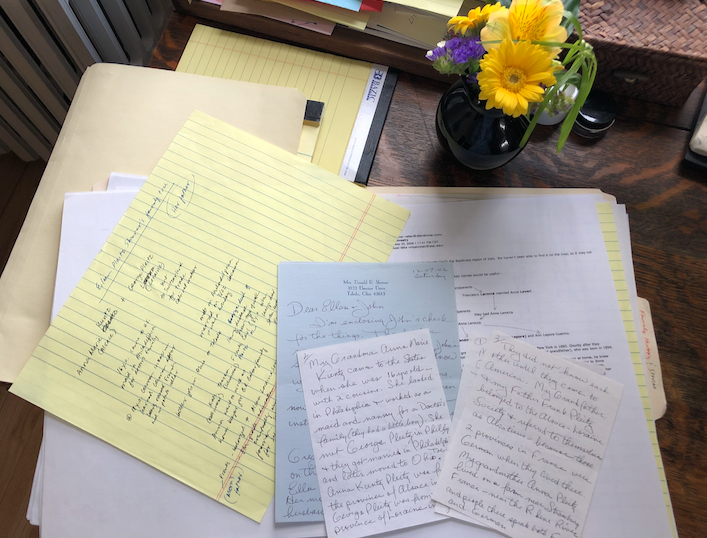
    Shortly after I finished the Anne Frank book, my sister asked me to refresh her memory about our great great grandmother—Katherine O’Tanney Feeley who emigrated from Ireland in the late 1800’s. To answer, I searched handwritten notes from my mother and father—a story here, a date and detail there. Some of the notes are sketchy and incomplete, but I decided I would make sense of them in a Word document so others in my family will have a record.

    Anne Frank’s story has touched millions all over the world in the decades since she wrote it. I have no such expectation for the family record I’m assembling. All I have are snippets of stories, not much to go on. Perhaps a few family members will have a mild interest. Hearing about people you never knew (even if they’re related to you) can be boring. 

    I’m fascinated by the urge to write journals and record family histories. Beyond that is the widespread wish to share the content of our days on social media or like I’m doing with this blog. People across all eras and cultures have felt this fierce need to tell our stories and understand who we are and who we came from. Sometimes we’re saying, “Here’s what happened.” Other times the wish to share is a way of saying, “I’m here. I matter.”

    Anne Frank could not have imagined how much her story would matter or how many readers would be touched by her words.

    Although my intentions and hopes for my writing differ from Anne Frank’s, I feel a kinship with that young woman born almost a century ago. 

  • Artifacts

    I’m at an odd intersection. The familiar objects from my childhood look like history to the rest of the world.

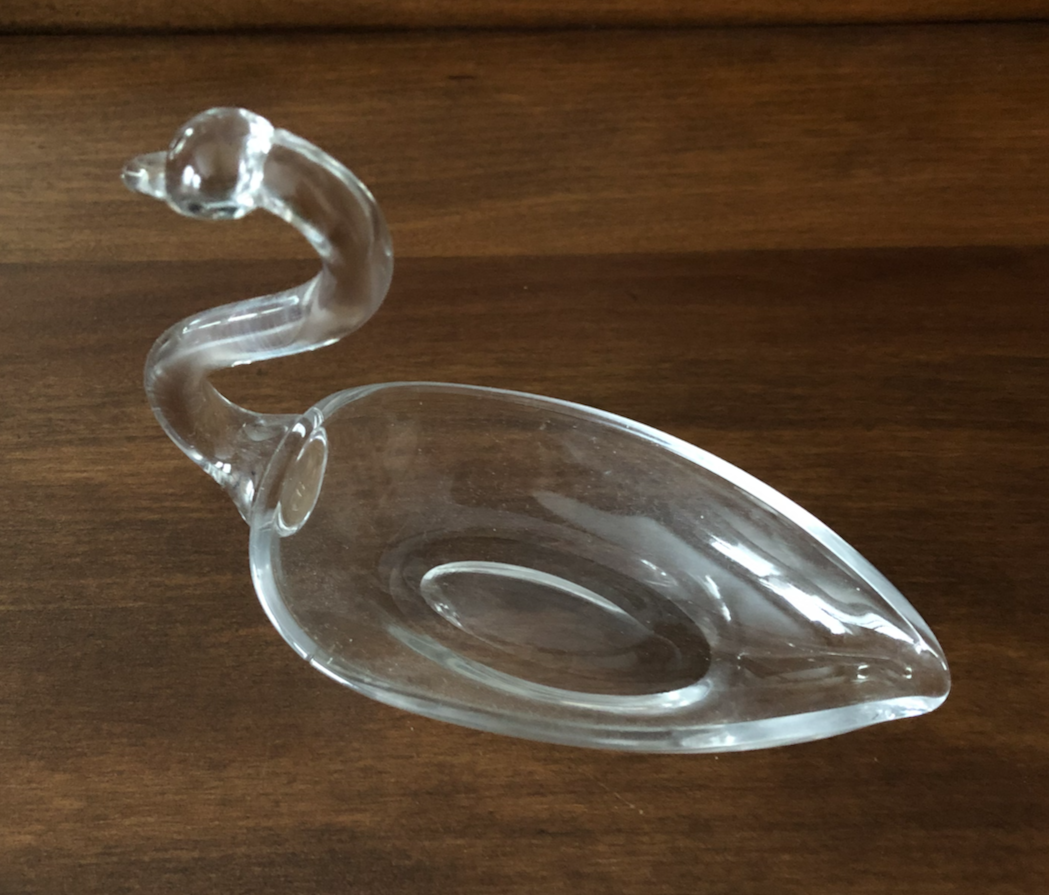
    In the Before times when I casually shopped, I’d spot artifacts from my childhood at antique stores. Huh?!? Toys like Barbies and transistor radios, kitchen items like Pyrex bowl sets and milk glass spice jars, decorations like ashtrays and the glass swan currently on my buffet are . . . old enough to be collectible. Antiques. 

    More startling was the realization that the purpose of those childhood objects will soon be obscure. Who fills decorative jars with spices anymore? When I was growing up, most homes had several ashtrays. Now they’re rare. 

    I value antiques from my grandmothers like Depression glass decanters, silver trays, cut glass salt cellars, aprons, and dresser scarves (what I prefer to think of as ‘true’ antiques). Their quaintness and the memories they call up appeal to me, but I rarely use them because they are so high maintenance. If I want younger family members to appreciate those antiques, I’d have to explain their purpose and tell stories about people they’ve never met. 

    Bringing the objects and the people who used them to life is hard, but here goes.

    Last week I made a pecan pie from scratch using my grandmother’s old wooden rolling pin. Although I never made pie with her, she was the one who liked to bake, so I feel that connection when I use it. I floured an old embroidered linen towel and rolled out the crust on it, which brought to mind one of my grandmother Mimmie’s housekeeping tips.

    She was from an era when women were expected to embroider towels, pillowcases, and dresser scarves (pretty cloths that covered up a lot of a dresser top to protect the wood—a lot of energy went into protecting furniture in her day). She or one of her sisters embroidered the towel which also had to be starched and ironed so it would look nice while hanging in the kitchen. 

    As a girl, I wondered how I was supposed to use such a fancy towel. Mimmie showed me her secret: dry your hands on the part that doesn’t show—the part that hangs closest to the wall on the towel rack. That way the pretty ironed front would stay nice for a few days. No surprise that I use terrycloth towels in my kitchen!

    Beyond the ‘antiques’ in my life is the realization that my lived experiences are also the stuff of history, but that’s a story for a different day! 

    What’s the oldest thing in your house? Does anyone besides you know what to do with it or why it matters?