Category: Heroes

  • In Praise of Older Women

    Most days I’m fine with donning my invisibility cloak (the uniform of people 60 years and older) and going about my days. I’m content to fly under the radar, doing what I love. However, recently I’ve been reminded that too often the world doesn’t see older women and when it does, it’s with a lot of inaccurate assumptions—supposedly we aren’t good with computers or cell phones, we’re frail, we’re clueless about financial matters and the workplace, and so forth.

    Except those caricatures don’t resemble any of the women I know.

    I’m 68 and have friends ranging from 60-78. A quick review of approximately twenty women I know turned up a more realistic and positive profile—

    • Several friends are still working although most have retired from paid work.
    • Some volunteer as nonprofit board members (helping run the world for free). 
    • Many of my acquaintances volunteer in other ways—at a blood bank, rescuing abandoned dogs, tutoring, at homeless shelters, doing environmental projects, and more.
    • The women I know do some or all of these activities: biking, camping, kayaking, hiking, yoga, pickle ball, walking, lifting weights, and swimming.
    • Some of my friends are childless. Others are mothers and inspired grandmothers. Although they enjoy grandmothering, it’s just one aspect of their lives.
    • Most of us have traveled extensively. Some are probably planning their next adventure right now.
    • We are smart, capable people who know how to get stuff done. 
    • Several have published books and many have published shorter work.
    • We enjoy learning new things—maybe tap dancing, a craft like rosemaling, a Coursera class on the psychology of purchase behavior—whatever.
    • We know the pros and cons of long-term care insurance, how to time starting Social Security, how to roll over IRAs, write living wills, etc.
    • We are fun-loving but not carefree. We have plenty to worry about, but try not to let it swamp us.
    • Most of us read several newspapers online and are well-informed about political issues.
    • We are philosophical about aches and pains, but doing our best to hold the line and stay healthy.
    • We are sympathetic, kind, and good listeners. We have lots of loving advice for each other, but we try to resist dispensing unasked for advice to younger people. Mixed results, there!
    • We have good senses of humor, but get tired of being underestimated and don’t suffer fools gladly.

    There isn’t a helpless, clueless woman in the bunch.While these women are all wonderful, they aren’t rare exceptions. They’re typical. I wish more people saw us for who we really are—strong, smart, capable, and fun.
  • In Memory

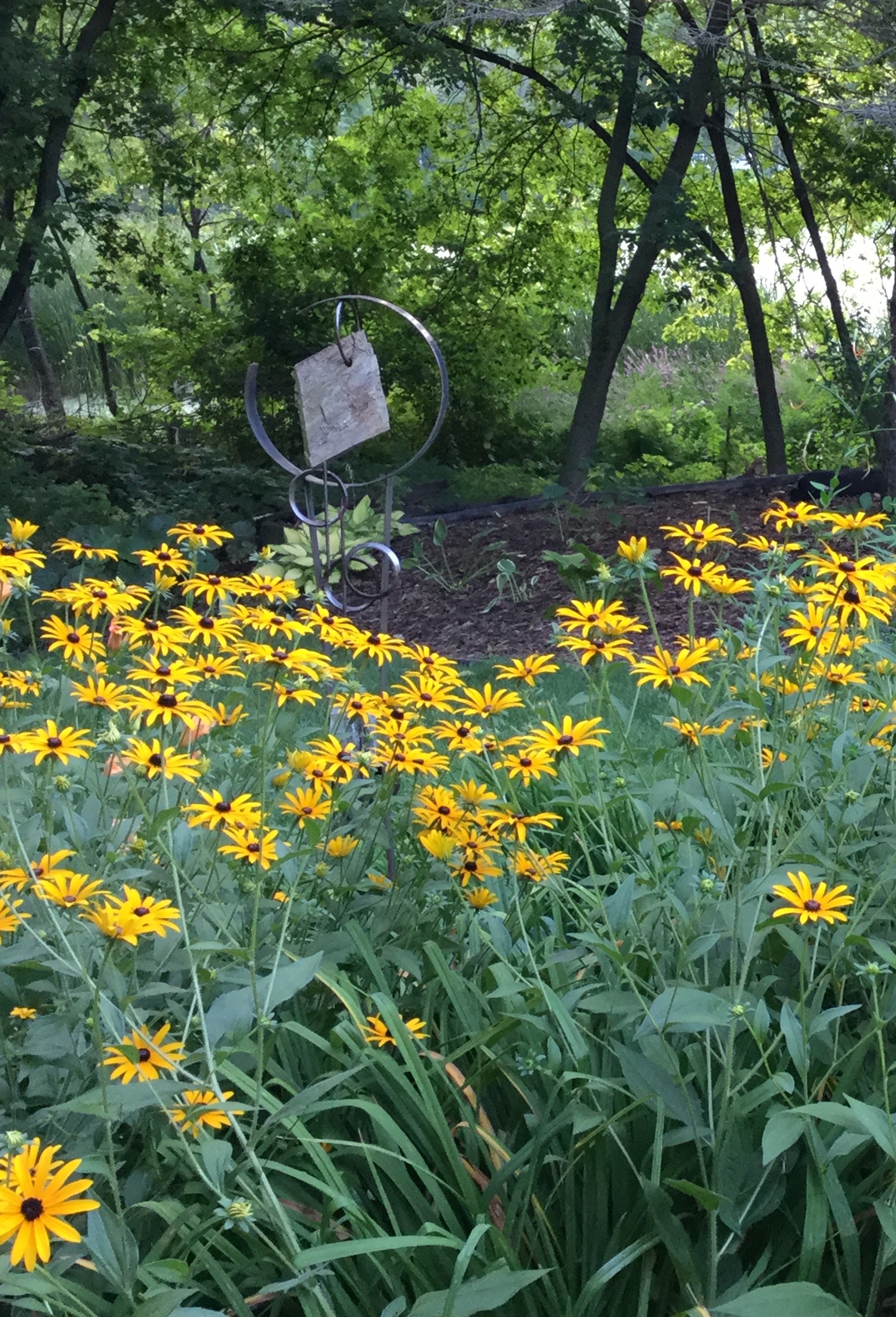
    Door County, WI: Sunsets are earlier. Black-eyed Susan dominates gardens as hydrangea fade. Squirrels fearlessly dart across sidewalks, decks and paths to grab early acorns. Field mice and chipmunks are in the same race for food stores.

    Trees are beginning to change. Yellowing leaves increase in numbers each day. Kids still run on beaches and play wherever a swing set is not closed. Young people gather with cases of beer, many without masks. More cautious folks crowd outdoor dining places. Multi-generational families wander about as if it were August 1, not September 1. COVID has changed the normal rhythms of summer while Mother Nature delivers heat and humidity where houses didn’t need air conditioning ten years earlier. Lake Michigan pushes beyond its all-time high water mark, devouring docks and houses’ front yards.

    When it already feels as if the stars are out of synch, COVID has taken the fathers of three friends or relatives. Three members of the Greatest Generation, living in three different states, in congregate facilities for three very different reasons. Friends and family called them Jim, Dom, and Marlin. They had eleven adult children among them plus almost four dozen grandchildren or great-grandchildren. Two were veterans and one farmed his entire life. Family photos show them joking with great, tall grandsons, sitting with the newest grandbaby resting on an arm, in wheelchairs by Christmas trees. These were men who loved and were loved.

    Thanks to COVID, they died comforted by staff members as their families were mostly kept away. In the heat of August, sons and daughters mourned the once strong fathers who built businesses, walked fields, fixed tractors, painted houses, taught them to throw a ball, sang next to them in church, made the final journey of life without endangering family.

    The Greatest Generation is disappearing as COVID ignites within our communities. They fought for our country’s freedom, raised families, built the cars and houses and machines of the 20th century USA, fed the world. In turn COVID has left us unable to protect them, not even gather for proper farewells.

    As summer sneaks away, as our elderly pass in the settings meant to keep them safe, as our days of small social gatherings and playing games outdoors with our grandchildren are numbered, COVID is like the spreading black-eyed Susan which left unchecked threatens to obliterate the beauty of other blooms.

    In honor of James Armstrong, Dominic St. Peter, and Marlin Hunt. With sympathy to their families and to all who have lost loved ones to this pandemic. Friends, please help friends stay healthy and strong.

    Black-eyed Susan

  • Dear Dr. Rajender . . .

    Dear Dr. Shyamala Rajender,

    The University of Minnesota and the Rajender Consent Decree are probably far from your thoughts. Most of the time they are far from mine, too. However, recently I realized that it’s been 40 years since the decree bearing your name helped me.

    I’m writing to thank you.

    Your courage fighting gender discrimination changed my perceptions of the world and set me on a feminist path that informed the rest of my life—how I see myself and thought about my career, how my marriage works, and how I raised my sons.

    Forty years ago, I was a Freshman Composition instructor at the University of Minnesota-Morris, my first professional job. In the spring of 1980, I got in trouble with the all-male senior faculty in the English department, because I wanted to present a noncredit lecture about women’s literature for a Continuing Education series.

    Several of the senior faculty reacted with a policy that stated, “. . . instructors in English should not participate in off-campus events, either formal instruction or informal presentations, which, in effect, call for a person who has been judged expert in the teaching of English literature.” In other words, I wasn’t supposed to talk about literature even though I had an M.A. in English Literature. The policy was odd and confusing. Several of the literature professors at UMM had been tenured with only a Master’s degree. But my credentials—which were the same as what some of them had—were suspect.

    At first, I was more scared than angry (anger came later). The Continuing Education director and the EEOC officer knew I was afraid I’d damage my career by fighting the policy, so they informed the academic dean about my dilemma. The dean and others were aware of your gender bias case against the Chemistry department on the main campus. Consequently, the dean insisted the English department rescind their policy, and I was allowed to give the lecture.

    Later that year, a number of faculty members, including me, received a $2,000 raise as a result of the Rajender Consent Decree. It’s hard to imagine now, but increasing my salary from $12,000 to $14,000 per year was a meaningful raise then. In general, it’s hard to convey to younger people just how crazy the late 1970s and early 1980s were for professional women.

    Your decision to fight the University of Minnesota had a lasting impact on my life.

    At 25, I learned gender discrimination was as real and insidious as the fatherly men in the English department, who didn’t see me as their equal and wanted to limit my opportunities. That experience didn’t drive me away from academia, but like you, I left the academic world several years later.

    Your career was exemplary (first a Ph.D. in Chemistry, later a law degree). Mine was much more ordinary, but I was always aware of the example I set as a woman in the workplace. Your determination to fight gender bias had a far-reaching effect on me and so many other women. I want to acknowledge your heroic contributions.

    Thank you again for your courage.

    Sincerely,

    Ellen Shriner