Category: Guatemala

  • Surprises in San Marcos la Laguna

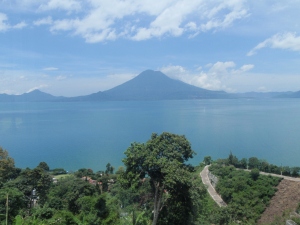
    Every morning I took a photo from our patio of what the novelist, Aldous Huxley, described as, “…really too much of a good thing.” Lake Atitlan takes its name from the Mayan word, “atitlan,” which translates to, “the place where the rainbow gets it’s colors.”

    Volcano and lake, height and depth, pointed and vast, cradled me for five nights and six days. I felt taken care of regardless of what was or what would be. 2,895.3 miles from Minnesota, my family and I were home. Jody, Antonio, and Crystel were perceptibly at peace as well.

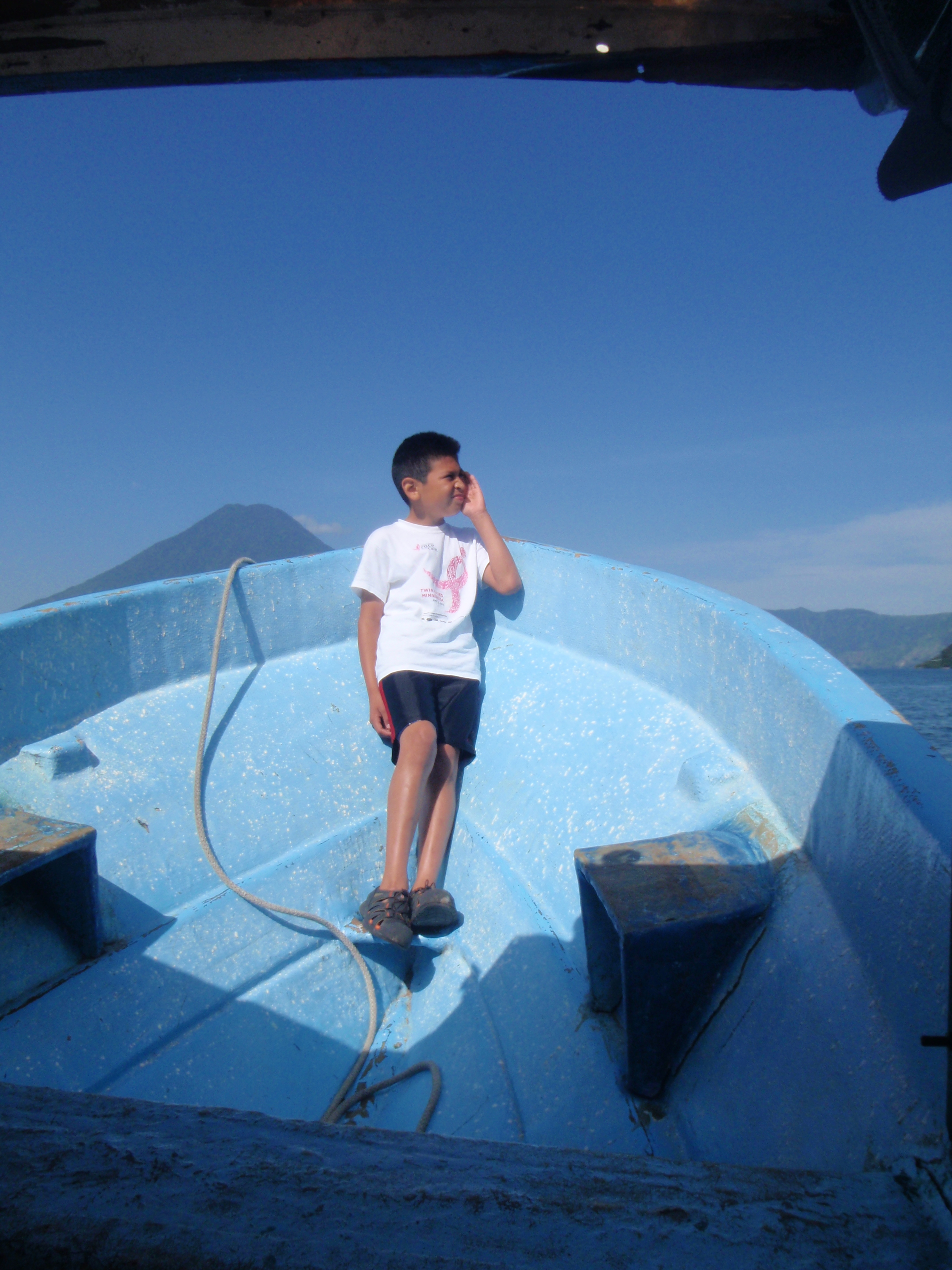
    Antonio and Elizabeth waiting for launch

    Across the lake from our suite at Los Elementos, Volcano Toliman rose up with Volcano Atitlan behind it.  Owners, Lee Beal and his wife, Elaine, reinvented their lives in Guatemala. They have been full-time residents of Santa Cruz la Laguna on Lake Atitlan for the past five years. They came to Guatemala looking for a simpler and more fulfilling life and found it on Lake Atitlan. They originally started working with a local nonprofit Amigo de Santa Cruz. Lee now serves on the board of directors. As he and others learned more about the people of Santa Cruz, they realized there was a need for jobs. The CECAP vocational training center run by Amigos helps fulfill that need.

    Dock at San Marcos–homemade signs telling us where to go

    Lee’s background as an entrepreneur in the horticultural field gave him the experience and basis to introduce a new cash crop to the area. He has developed a Vetiver Grass program, which is a good fit with the agricultural culture of the local people. This is a multi-year program that will not yield profits for 3-5 years, but will make an impact in the long-term. Lee and Elaine wanted to expand on the idea of creating new jobs, and from this idea grew Los Elementos Day Spa and Los Elementos Adventure Center.

    Classes available on San Marcos

    Elaine has trained over a dozen local women to do manicures and pedicures and has trained three women as massage therapists. Each of these training programs offers the women employment opportunities that would not have been available to them otherwise.

    Lee developed a series of tours, hikes, kayak excursions, rock climbing, and cultural sharing opportunities through Los Elementos Adventure Center. He has been employing two local guides trained through INGUAT on some of the tours and have been training a dozen local youth to develop the skill sets needed to be a guide.

    Medicinal and curative garden

    Accompanying us to San Marcos la Laguna was Zach, a 14-year-old adventure “guide in training” who was staying with Lee and Elaine. Zach’s personal story is similar to Antonio and Crystel’s. He was born in and adopted from Guatemala, he met his birth family for the first time last year, and he returned to Lake Atitlan and Los Elementos as an intern. It was our good fortune that Zach would be our guide for much of our stay. Antonio and Crystel had someone ‘just like them’ to hang with.

    Lee had arranged our day for us. We were picked up at his dock and ferried twenty minutes to San Marcos. The waters were calm on Lake Atitlan as they usually are in the morning. They don’t kick up until noon. This surprising turn-around is known as the Xocomil winds.
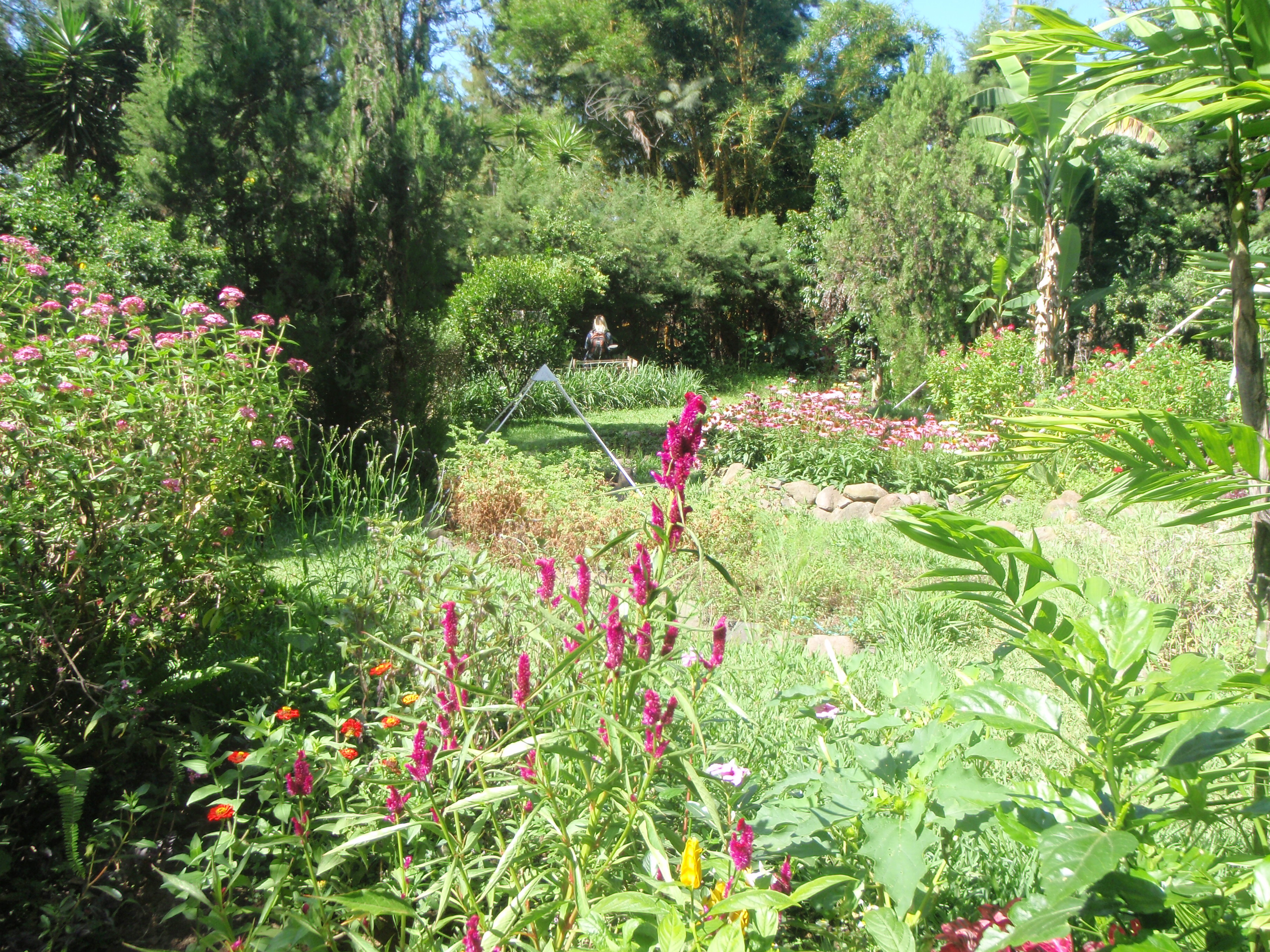
    Medicinal and curative garden

    Stepping onto the shores of San Marcos is walking into New Age. Signs greeted us touting Astral Traveling, Metaphysics, Kabbalah, Tarot reading, Reiki and more. The village has several meditation, yoga, and massage centers. Walking up the foot path to the main center, Lee pointed out medicinal and curative plants and elaborated on their use and origin. Banana, coffee, and avocado trees blended with the landscape.

    Mayan calendar

    Next to the walkway was a wall with beautiful colorful paintings including a Mayan calendar.

    We came to a wall on our right made of plastic bottles. Project Pura Vida or what I call the bottle project finally made sense to me. The evening before in their home, Elaine had shown me how she was putting plastic trash in a bottle. She had a stick she used to compress the waste. But it was the moment that I saw the wall in San Marcos that I understood what she was doing.
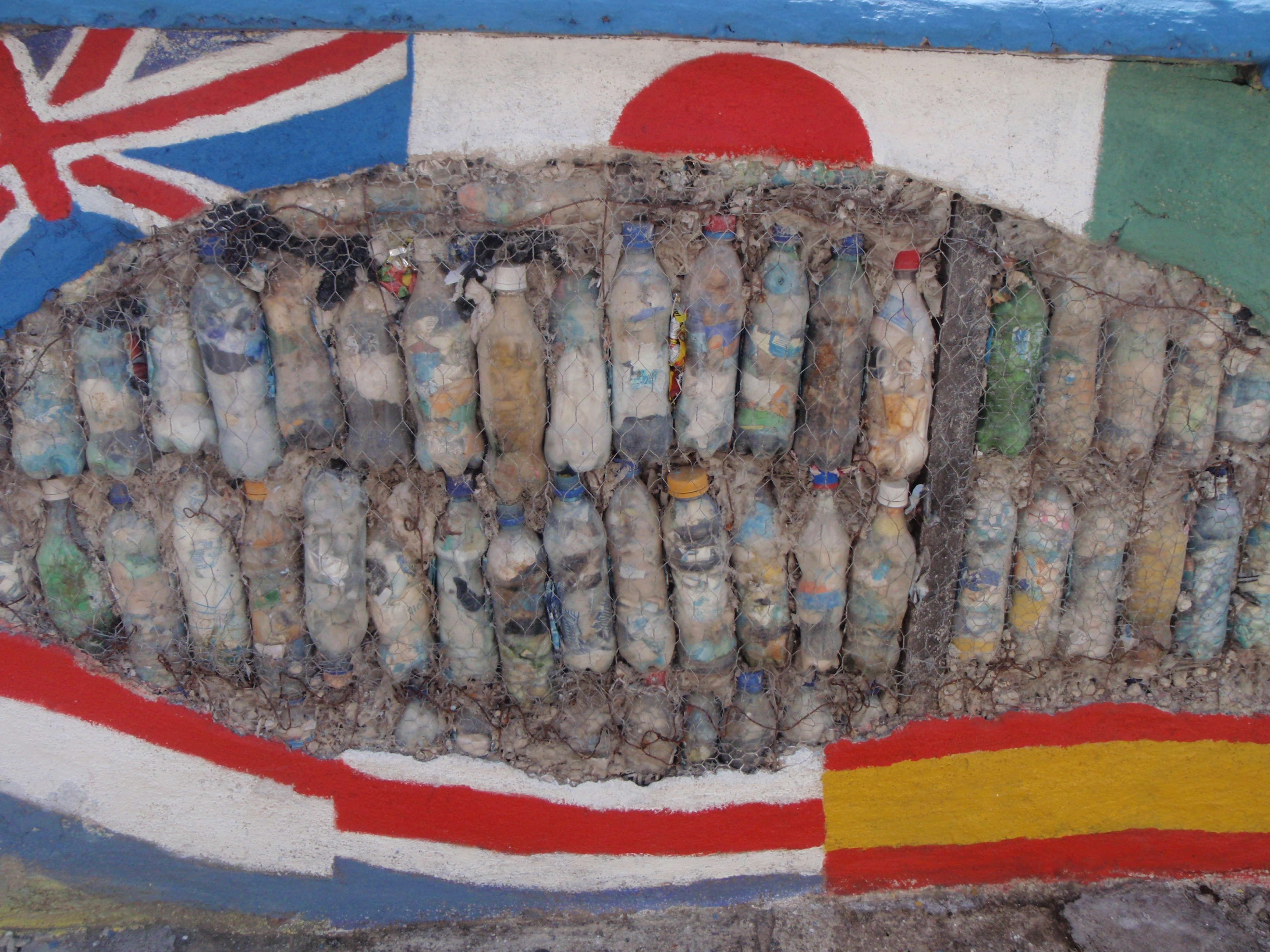
    The bottle project – Pura Vida

    The bottle of trash would be joined with other bottles and become a wall for a home. In more technical terms, the construction technique consists of stacking thousands of bottles between a shelter’s wooden supports, holding them in place with chicken wire, then applying concrete to create what looks like a typical concrete wall.

    Close-up of construction

    The walls are cheaper than those built with cement blocks, which is the material typically used in low-cost construction in Guatemala. The plastic core also makes the walls more flexible—and thus less dangerous—than block walls in the event of an earthquake.

    Pura Vida began in January 2004 as a pilot project in San Marcos to solve the local problems of garbage.

    Walking towards path that will lead us to cliff jumping

    One of Lake Atitlan’s greatest attractions is the cliffs of San Marcos. Our group headed towards a dirt path that led up the side of the mountain when a very large sack fell out of the sky and hit me on my head. After I straightened up and shook off the shock, Lee explained that the locals unloading a truck were looking at me and not where they were throwing. I have often told people I need to be hit on the head to get the message, so it was kind of funny in a spiritual sort of way. Still, I missed the esoteric message that was divined for me.

    Zach, preparing to jump

    The sack incident was not on anyone’s mind a short while later when we were standing on a diving platform three stories above the cool waters of Lake Atitlan. We quickly determined that Zach should be first to jump. 

    Sometimes all it takes is one. If that first person can make it safely through an adventure, then we figure it will be okay for the rest of us. I wasn’t any stranger to cliff jumping, having jumped and dived off the cliff at Spring Valley dam in Wisconsin when I was a teenager. Still, it was frightening. My heart went up, my body went down and that feeling didn’t dissipate on any of my next jumps. The kids kept telling me to do a pencil dive. I screamed and waved my arms crazily instead. Lee pointed out a tree that hung out over the water to Antonio. Without hesitation, just like at home, Antonio scampered up the trunk, inched out on a limb, and swung off into the water. He did this over and over and over.
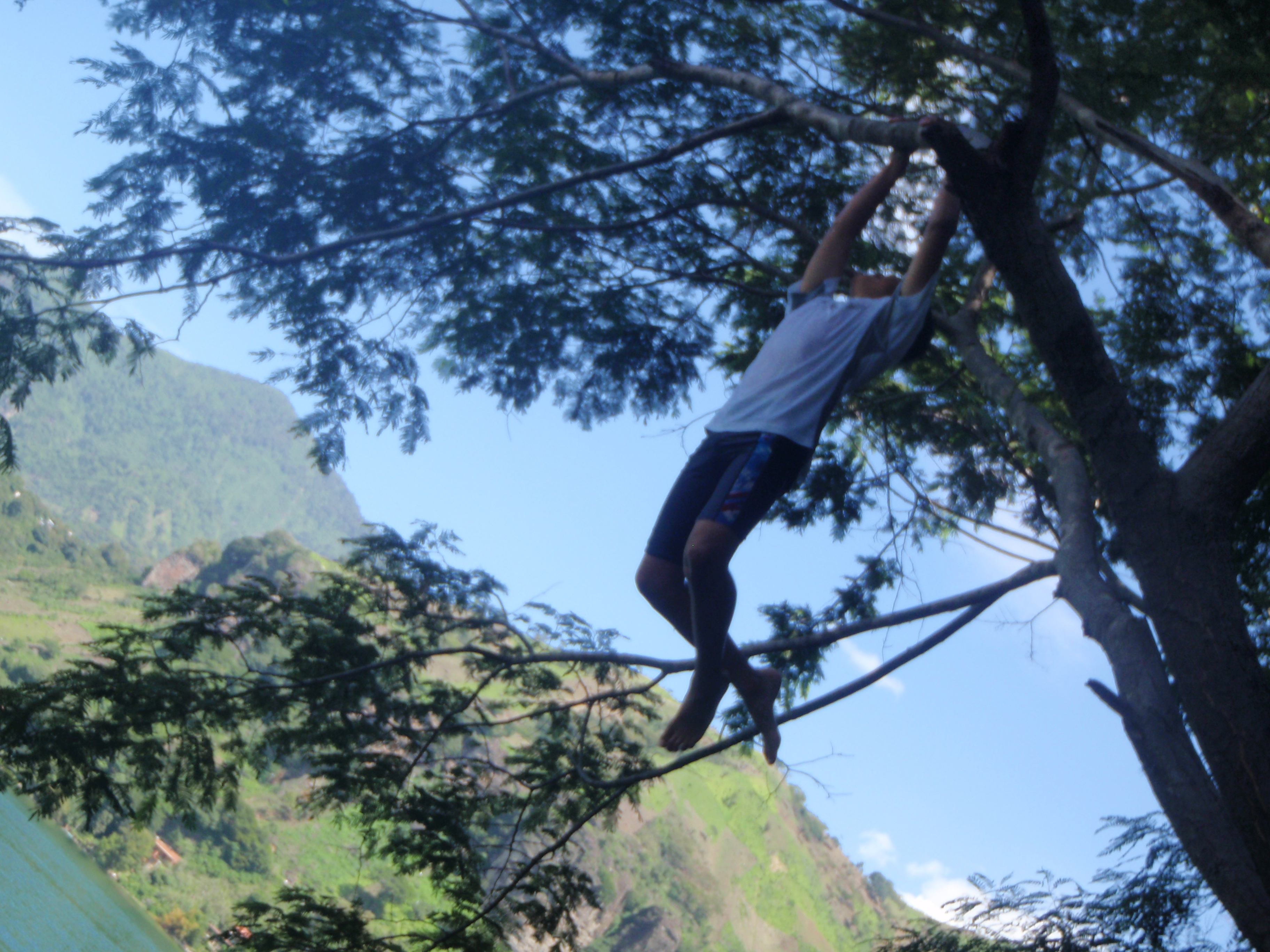
    Elizabeth not doing a pencil dive

    Later, I asked Antonio and Crystel which was scarier, meeting their birth moms, or jumping three stories off of a cliff. In unison, they said, meeting their birth moms. The bar was set. Their world had opened up. From the moment they met their greatest fear, they leaped beyond their nine years.
  • What A Day We Had with the Indigenous Mayans of Lake Atitlan

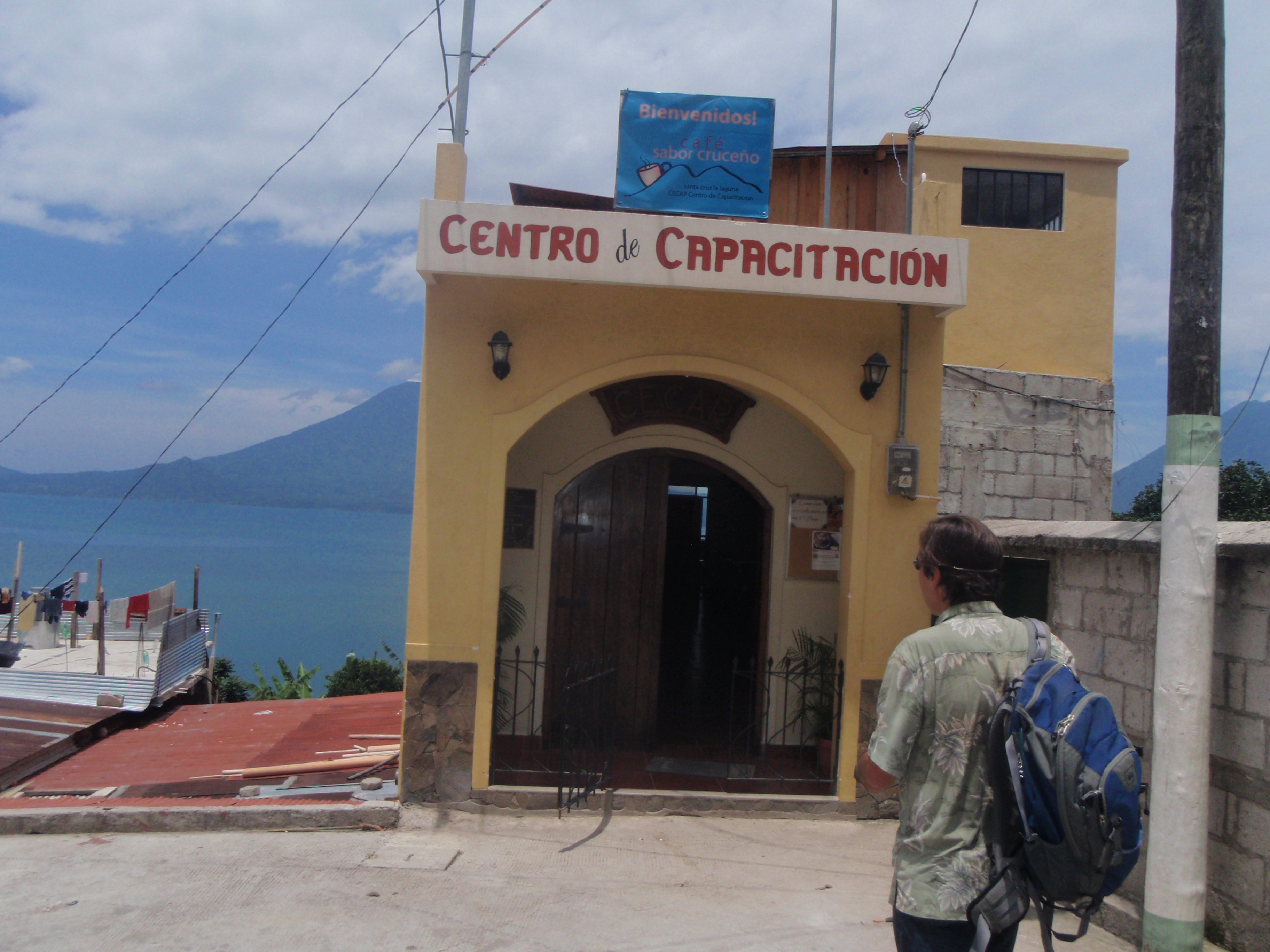
    CECAP Training Center and Cafe Sabor Cruzeno

    I walked into Cafe Sabor Cruzeno in Santa Cruz la Laguna, Lake Atitlan with trepidation. Not because it was recently opened. Not because it wasn’t yet rated on Trip Advisor or that it was a student-run café. And not because it was part of an NGO, Non-Government Organization.

    Café Sabor Cruzeno was the result of the CECAP (Centro de Capacitacion) Culinary Arts program of Amigos de Santa Cruz foundation. The goal of the program is to train young people for successful employment in the restaurant and tourist business.

    No, it was because I had my doubts that the culinary arts program would be successful with Antonio. I had a suitcase of dried pasta betting on it. Some people might pack extra clothes and shoes to match each outfit. I was more concerned that we have a food supply tucked away. When we traveled to Guatemala in 2010 I had forgotten to pack Crystel’s swimsuit. She ended up swimming in her Hello Kitty pajamas. But, I didn’t forget emergency rations for my son.

    View from Café Sabor Cruzeno

    Antonio is a healthy ten-year-old. He will eat a salad. Just don’t make a pyramid out of the raw vegetables. Instead, imagine a horizontal sundial and align the fixings uniformly around his plate. No dressing wanted or required. When Antonio and Crystel were in highchairs Jody and I would put food on each tray and what one toddler didn’t eat the other would. Being low maintenance, Crystel’s sundial can be any shape: cylindrical, conical, or vertical with a dab of ranch dressing. She’s satisfied with a ham sandwich. Antonio came to us waving a chicken leg in the air. He has never eaten a sandwich in his life. But give him a Sweet Hawaiian bun in one hand and a slice of salami in the other and he will happily eat them separately.

    Our table waiting for us

    We cater to Antonio and Crystel because we can, though sometimes I remind him that he was born in Guatemala.  Tamales made of corn and filled with beans are eaten with nearly every meal.

    Lee Beal, our guide, originally from Texas, has lived around the world over the years, with Colorado being his home base. His wife, Elaine, and he have been full-time residents of Santa Cruz for the past 5 years. The couple came to Guatemala looking for a simpler and more fulfilling life and found it on Lake Atitlan. Lee originally started working with Amigos de Santa Cruz foundation and now serves on the board of directors. As he learned more about the people of Santa Cruz he realized there was a need for jobs creation. A part of this is now being fulfilled through the CECAP vocational training center.

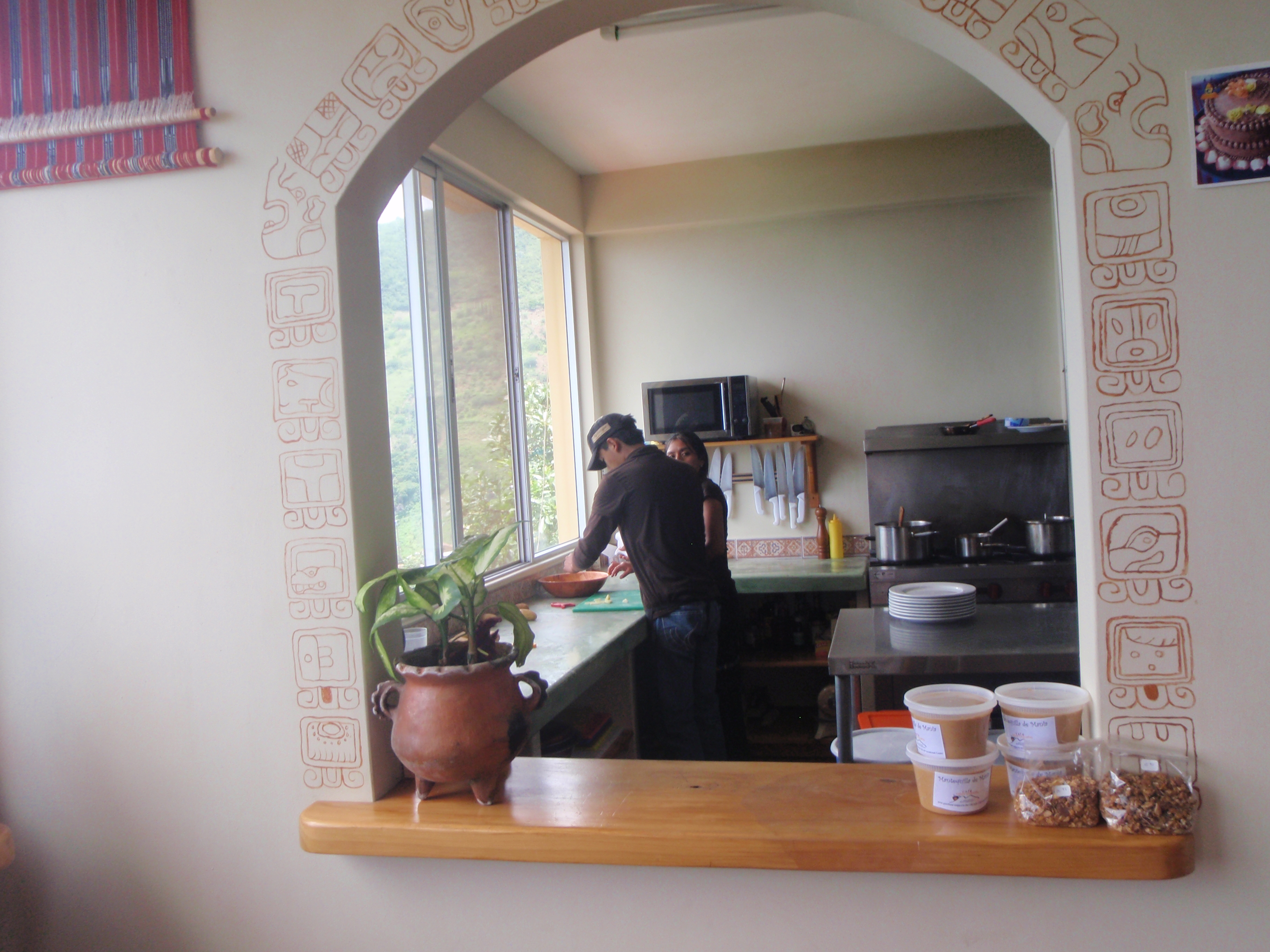
    The kitchen

    Walking into the restaurant, I was surprised how open, clean and fresh it was. I felt as if we were on top of a mountain and we were. Two graduates of the culinary arts program were busy in the kitchen completing our authentic Guatemalan meal. They would also be serving us.

    I don’t out Antonio unless I have too. Usually I just take him aside and remind him that we have food at home and simply be polite and say, “No thank you” if he doesn’t like what’s served. No funny noises or grotesque looks necessary.

    After snapping a picture of our seating area, I took a deep breath and sat down. We had our choice of freshly made cold tea, several sauces, mashed potatoes, and a mixture of glazed vegetables and chicken with pulique sauce. At first glance, there wasn’t anything that I thought Antonio would try. Pulique is a common dish of the Guatemalan highlands. It is often served at holidays, anniversaries, and yearly fairs. Alex, our Guatemalan guide, explained how special it was that our chef had made the pulique for us. (Lee has been employing local guides trained through INGUAT. His goal is to create well-paying jobs that fit with the Mayan culture.)

    Antonio with Alex paying our bill

    The pulique sauce was mild, gentle, and creamy. I watched Antonio as he scraped a bit of it off his chicken.He tried a bite, finished his chicken, and asked for more.

    Antonio had proven that CECAP’s culinary arts program was headed for success.

    The café is located in the vocational center which houses carpentry, welding, computer education, sewing and weaving. The training center was buzzing with students sewing on Singer sewing machines and students welding on the rooftop.

    What makes CECAP unique is that it has always been a community-driven vision and not a government project. Amigos is helping CECAP become self-sufficient.

    Singer sewing machines. Girls and boys sewing.

    Touring the vocational education center, watching students sew and weld, and dining at the café were some of the many highlights of our trip. We were getting a glimpse into the future of Santa Cruz la Laguna. Santa Cruz is one of the 45 poorest townships in all of Guatemala with illiteracy and malnutrition among the highest in the country. Amigos believes that education is the key to breaking the cycle of poverty for the indigenous people of Guatemala. Their primary focus has been on education both at the primary and secondary level. We were fortunate to see it at work.

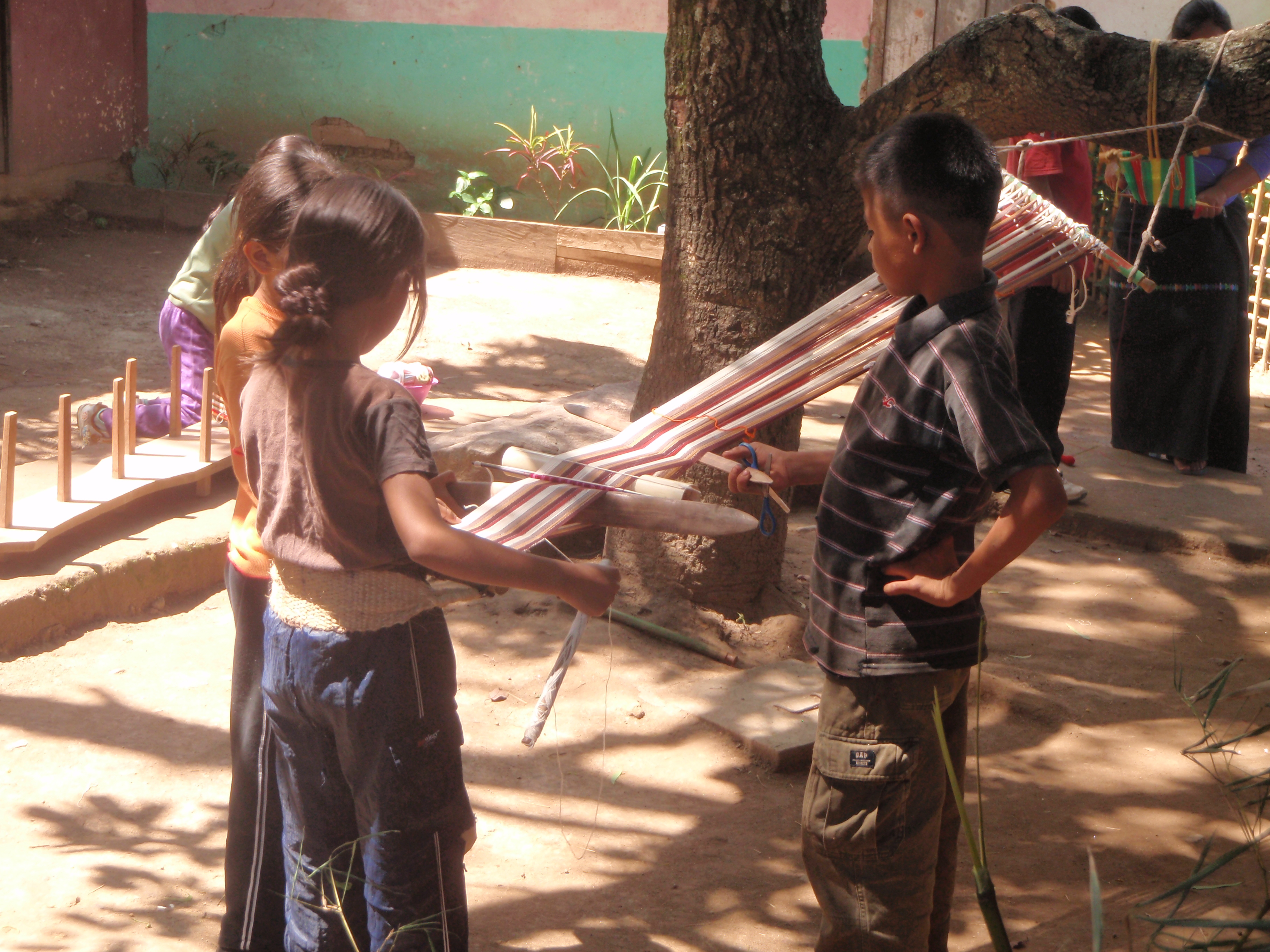
    Before we left Minnesota, Crystel had told us that she wanted to learn how to weave while in Guatemala. Lee contacted a local Guatemalan and set up a time for us to meet with her in her home. Both Antonio and Crystel quickly became engaged in learning to weave. They returned to her home several afternoons to complete their projects.

    While Antonio and Crystel were weaving, Lee took Jody and me on a tour of the town church and also to Casa Milagro. Casa Milagro (since 1992) is an NGO that supports widows and children. Thilda Zorn, founder and manager of the project, focuses on providing an environment for creativity, joy, and freedom. Jody and I purchased handicrafts that the children had made.

    Casa Milagro – children learning to weave

    By the time Jody and I returned to our children, Antonio had left with Alex and Zach to play soccer in the village square, and Crystel was making fast friends with the girl of the house.

    Antonio rushed in breathless and excited. He was poking fun at Alex and Zach, “Those kids were smaller than me,” he laughed. “We lost 10-7. It cost us 3 quetzales (50 cents).” Apparently, there was a side bet and the local children came away the winners. “Alex, they blew right by you,” Antonio added. “And, Zach he couldn’t stop anything.”

    Antonio and Crystel learning to weave

    Antonio and Crystel were being changed. And, it had nothing to do with their parents and everything to do with their parents. We had brought them here – to their birth country to have an opportunity to connect with other Guatemalans.

    The boy who wouldn’t look at the kids in the square the first night was now facing off with them in a soccer match and for a short time he had two older Guatemalans, Alex and Zach, that could brother him.


    Antonio’s bud’s – Zach and Alex
    Crystel’s new friend

    This very fine day would finish in a hot tub and swimming pool in the next village, El Jaibalito. A ten-minute launch from Los Elementos.

  • Guatemala, Our Best Vacation Ever!

    Our front yard at Los Elementos Adventure Center

    By Elizabeth

    It’s amazing our best vacation ever would be in a third world country deemed dangerous for travel by the U.S. State Department. Even my best friend was questioning my risk assessment capability when I told him that I was going to Guatemala AND taking my partner and two nine-year-olds AND calling it a vacation. I myself found it a strange thought to be spending ten days in the same country where the Peace Corps announced that they would stop sending new volunteers due to the increasing violence in the country.

    So what was I, a white woman, with her partner and two nine-year-olds doing in Guatemala? Simply, having the best vacation of our lives.

    My next several posts will be about our trip. I hope to capture the feel of the Mayan culture in Guatemala. How truly immersed in our experiences we were. How full our days were. How peaceful and at ease we were and how I slept with the doors open each night without fear of intruders.

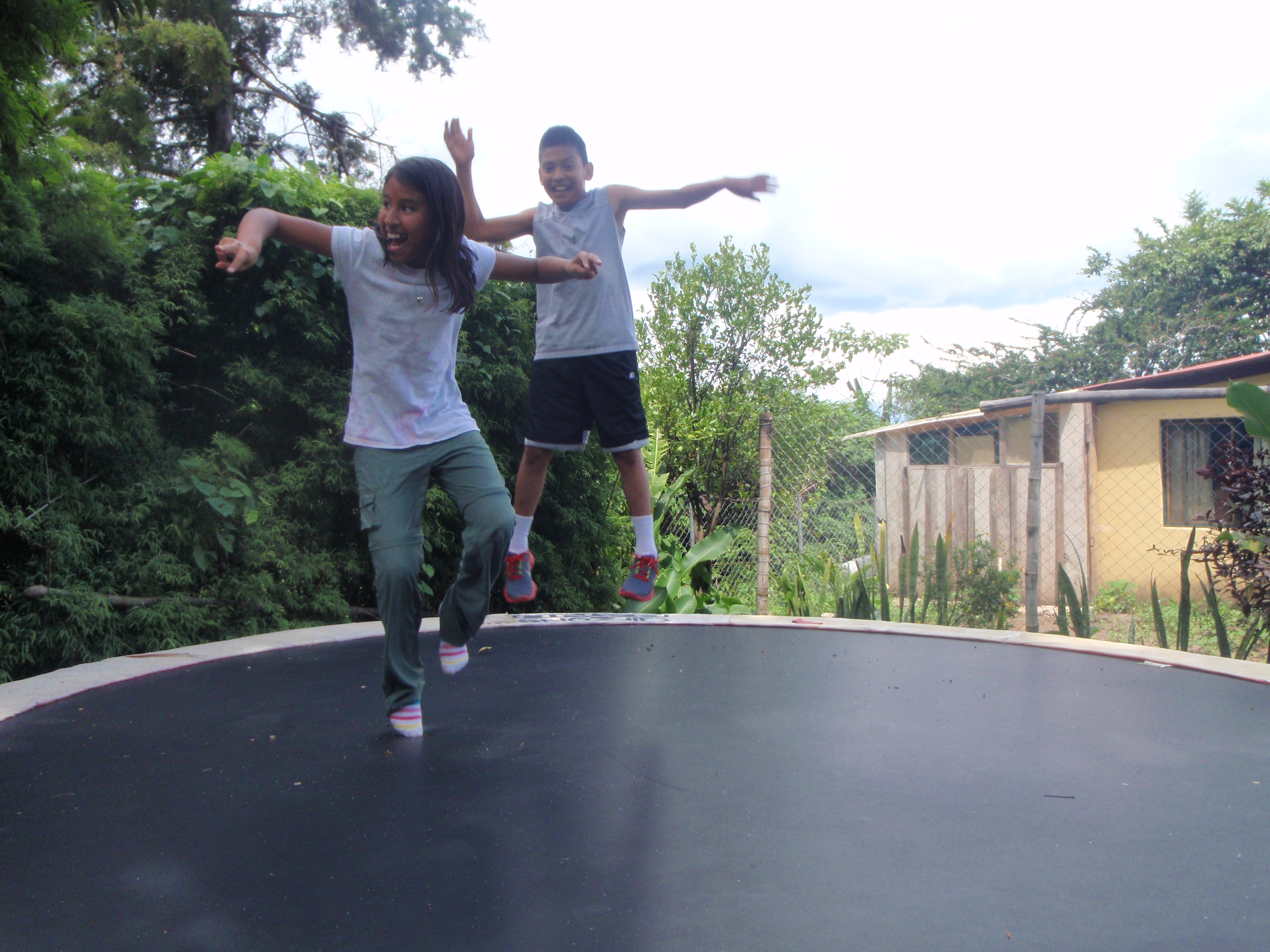
    Antonio and Crystel loved the trampoline

    This would be our second trip to Guatemala. Our first trip in 2010 was to see the country and Antonio and Crystel’s birth villages. Following our trip, Antonio and Crystel said they would like to meet their birth moms. That story and their recent meeting is described in my forthcoming memoir HOUSE OF FIRE: From the Ashes, A Family, a memoir of healing and redemption.

    Making our acquaintance with the locals

    I made our travel arrangements with one primary goal: to get as close to the Guatemalans living in villages as possible. Since Antonio and Crystel were born in Guatemala, I wanted to show them what their life might have been like if they had grown up there. Seeing it in a picture book doesn’t equate to learning to weave from a Guatemalan woman in a casa and playing soccer in the village square.

    Lake Atitilan is famous for its natural beauty and the colorful Mayan villages near it. Santa Cruz la Laguna is a traditional Mayan village located on the steep mountainside of the lake. The village can only accessed by boat or footpath. A single winding road connects the dock to the village. A common gathering place in the village is the sports court, used for basketball and soccer by the children of the village.

    This location was the perfect destination for our family because Santa Cruz la Laguna also has two nonprofits, Amigos de Santa Cruz and Mayan Medical Aid that focus on the local indigenous people. Santa Cruz ranks at the bottom in terms of literacy rate: 73.4% of the population is currently illiterate. One of the missions of Amigos de Santa Cruz is to help improve the lives of the people through support for education.  Amigos officially opened a trade school in 2010. The school features a computer lab, craftsman workshop, and culinary area. Santa Cruz also ranks # 1 in infant and maternal mortality. Until the intervention of Mayan Medical Aid, health services, were practically non-existent.

    A new friend

    Lee Beal, a U.S. citizen living in Santa Cruz, serves on the board of directors of Amigos de Santa Cruz and is also involved with Mayan Medical Aid. I contacted him via email to inform him of my interest in visiting the projects.

    Kayak Guatemala  and Lake Atitilan Travel Guide showcases the many varied tours that Lee Beal provides. Hmmm, I thought, horseback riding, cliff jumping, ziplining — exactly what our family needs after meeting the birthmoms. Time for celebrating, letting go and having fun! What most piqued my interest is that his services are advertised as being family-friendly and safe for women travelers.

    We came to stay at Lee Beal’s Los Elementos Adventure Center, because by the time we were leaving the States, I was totally confused about where we were staying and what hotel was the best for my family. Lee mentioned that they had a guest suite available that was connected to their private home. When he added that it also came with a kitchen, Jody and I were sold. We don’t classify Antonio as a picky eater– we only cook what he eats. And that means familiar foods that don’t touch each other. Packed inside our suitcase was dry elbow macaroni and wide egg noodles. Staples for unknown times.

    Los Elementos Adventure Center became our home for the next five nights and six days.

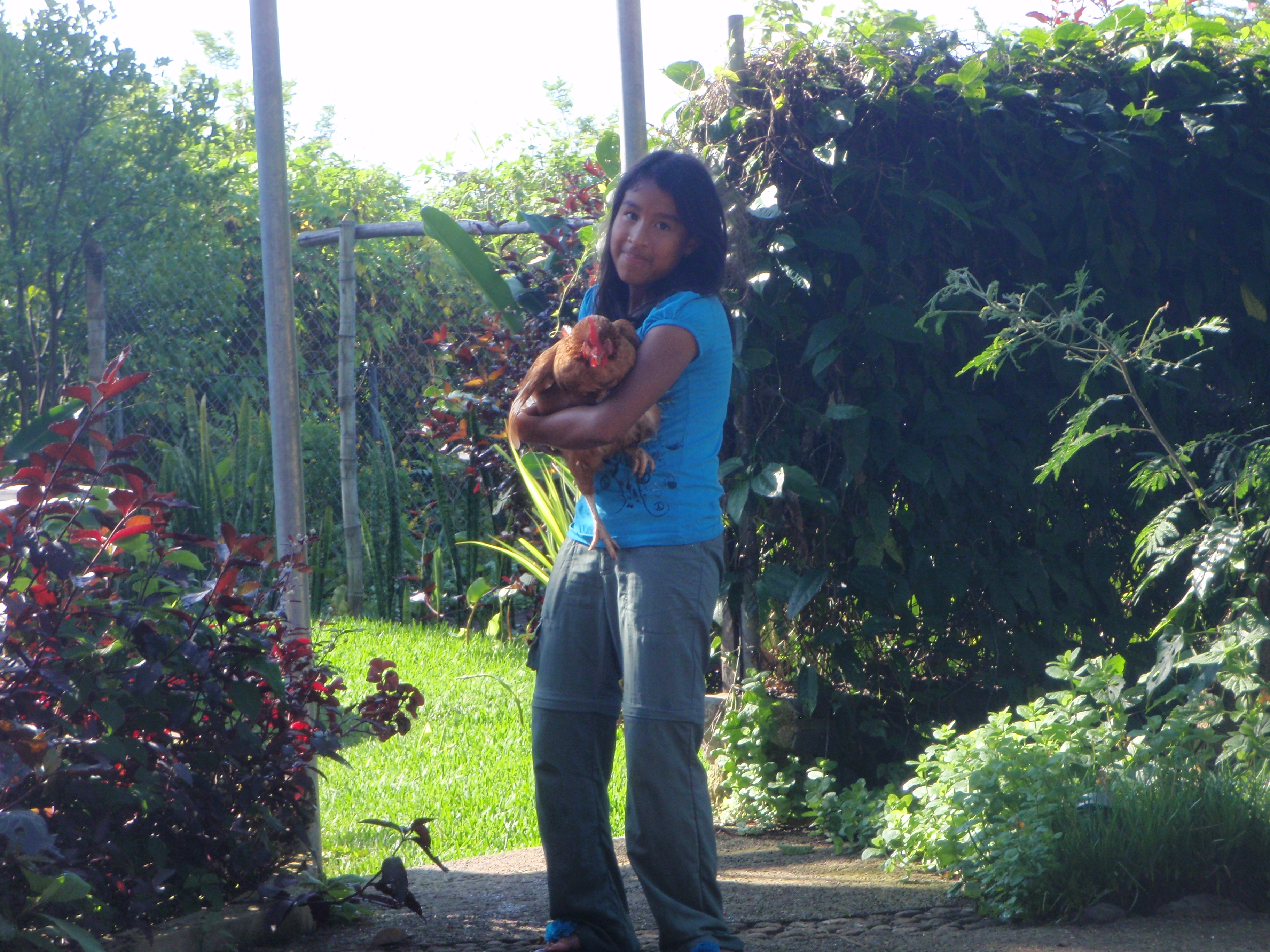
    Another friend and fresh eggs every morning

    Lee’s personal touch was transmitted in his emails and became cemented when he said that he would meet us at the supermarket once we got to Panachel, help us grocery shop, bank, and then board the launch for his home.

    The first thing the kids ran to after getting off the boat was the trampoline in the garden. All of their excess energy flipped and flung away. They only stopped to pet the chickens that ran loose and make their acquaintance with the three dogs. Soon after they were holding the dogs on their laps.

    View from the village

    After meeting Elaine and informing her that having a massage from Los Elementos Day Spa was on our itinerary we started our hike to the village square. Antonio lagged behind grumbling. It was too hot. The hill was too steep. The top too far away.Once at the square, he sullenly sat by himself and wouldn’t join us in watching the children playing soccer.

    But the next day all that would begin to change.

    In large part, this was due to Lee Beal using English-speaking Guatemalan guides, who not only guided us throughout our stay, but who also related to our nine-year-olds on a very personal level.

    Samuel, a 21-year-old indigenous local guide kayaked with us on Lake Atitilan and rode a horse on San Pedro La Laguna. We looked to him for advice during our lunch, when we bartered with a Guatemalan woman from San Antonio la Laguna who was selling her weavings. Encouraged by Samuel, we ate Guatemalan foods and drinks that we would never have dared without his assurances that they were safe for a gringos’ intestinal tract.

    Alex, also a local guide from a nearby village, hiked with us to waterfalls, played soccer with Antonio in the village square with the local children, assisted with weaving, and swam with us at El Jaibolito.

    Staying with the Beal’s was Zach, an adopted 14-year-old Guatemalan who is also from the United States and interning with Los Elementos as a guide. He was Antonio and Crystel’s constant companion. It was Zach who first jumped off the cliff followed by Antonio and Crystel. It was Zach who first put on his zipline hardware at Atitilan Nature Reserve to zing through the trees.

    As the children’s mother, I could see that it made a difference to Antonio and Crystel that Samuel, Alex, and Zach were Guatemalan. They weren’t Hispanic. They weren’t Latin American. They weren’t from a different country. They were Guatemalan. Antonio and Crystel are Guatemalan. Their brown arms are the same skin tone. Their hair has the same coarseness. Their faces have the same Mayan features.

    Through our Guatemalan guides, the village came to us and Antonio and Crystel began to gain a sense of who they are.

    Next post: hiking, nonprofits, weaving.