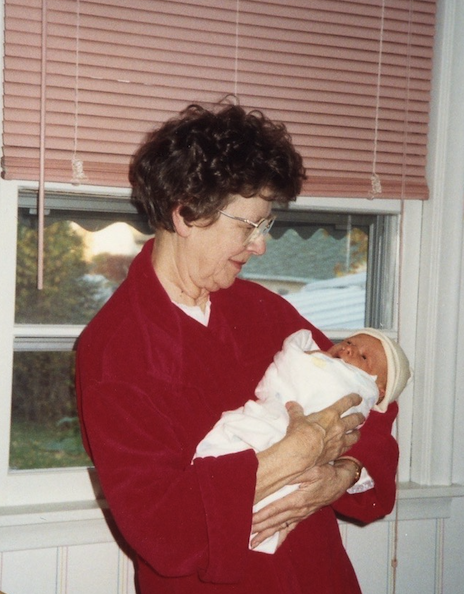
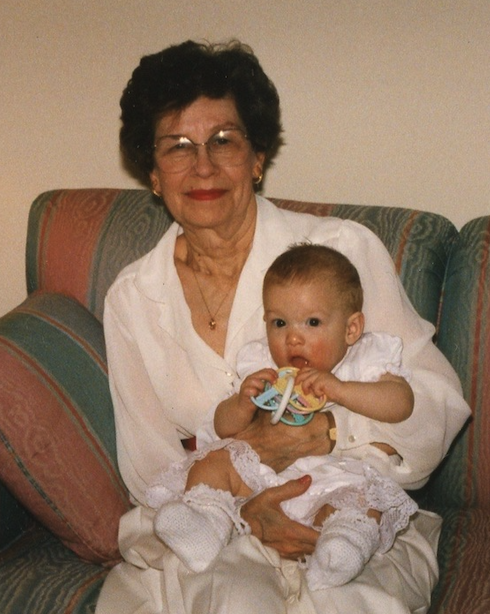
To Louis and Octavia

An enthusiastic three-year-old ran craft materials to the kitchen table. She had a project in mind, a puzzle to build out of tongue depressors. 

I was not enthusiastic about the project which, as many projects, would lead to painting which might lead to painting herself. In fact, I was tired and working hard to be gentle as she taped sticks together. When a washcloth became necessary, I got it damp at the sink, looking at her head bent over a row of painted wooden sticks. 

The oak table where she worked on a protected area was made in 1902 when Louis Cravillion married Octavia Orde, my paternal great grandparents. How I miss my Grandma Tavy. My grandmother died following childbirth, so Octavia cared for her grandson. As a woman of the age, I am now, she cared for me. I sat on one of these chairs while she braided my hair, ate meals she cooked, or colored. My mother worked in town.

After my great-grandfather died, we had moved in with her. My parents remodeled the kitchen and dining area storing this oak table for a new Formica and metal model. Eventually an apartment was finished upstairs so she would have her own place. The table returned. Eating breakfast in my designated chair, it was possible to watch everyone come to the new post office across Main Street. Patterns were cut to make clothes, cookie dough rolled out, homework completed.

After her death, the table was refinished and set up as my parent’s game table. As they downsized, it came to be mine. Our children ate and did homework and projects on a glass surface that protected the oak. Today’s artist is one of their children. 

Stories of six generations of my family have been exchanged here. Men have returned from wars to a first home meal, baptisms and weddings celebrated, hard decisions made, children loved. Great grandma’s quiet and calm presence participated in half of its history. I see her hands now show in mine; her brown eyes look back from our mirrors. I can only hope I carry some of her wisdom to those who sit at this table, her blood mixed in their veins. I am not so tired.

Thinking of Mom

Sun pours in our bedroom, a converted attic. When I make the bed, I pull the sheet and quilt back together and snap them like Mom used to do. They settle into place with a tiny poofing sigh. The golden wood floor is warm as I circle the bed and fluff the pillows.

Coming in from the car, my sack of groceries is heavy. I shift hands to lock the garage door, shift again to unlock the back door. I ponder dinner possibilities and think of Mom facing this daily challenge. Although she was a good cook, plenty of times she wasn’t inspired either.

Some nights, I gather up our crumb-laden tablecloth after dinner to shake out on the back step like Mom used to do. Nobody does this anymore. Not tablecloths. Or shaking out crumbs. But I like it. Before dinner I clear the dining room table of clutter and set the table the way she always did—forks, knives, spoons, and napkins. We often put away the spoons unused but it pleases me to do it her way.

Minutes after we sit down, I hop up to blow my nose and dab my eye. Whenever I start to eat, they run just like hers did. Some neurological blip we share.

In the evening, my husband reads the news on the sofa and I read in my chair. We comment on the day’s events, share something about our sons and their families or tomorrow’s plans. Ordinary things, but we’re so content and companionable. I think of Mom and Dad doing the same.

Mom was 67 and already a grandmother to my brother and sister-in-law’s three, when our oldest son was born. When our youngest son was born she was 70. Even though we lived four states apart, we talked often, so she was familiar with our sons’ personalities and milestones. 

Mom with our oldest

I think of the way she got down on the floor to play with them. I do the same with my 10-month-old granddaughter, who crawls over me to get a toy or bounces in time to the music I play for her. When a diaper change upsets my 8-week-old granddaughter, I lean in close and say, “It’s OK little one. You’ll be alright,” in a low quiet voice, the same way Mom soothed our youngest.

Mom with our youngest

Mom comes to mind often and I wonder how she felt going about her days. At 70, was she achy in the mornings like I often am? Was she happy and looking forward with pleasure to most of her days? Was she carefree? Nah, my life is good but not carefree—hers wouldn’t have been either. 

How often did the specter of aging shadow her? She had to be aware that one day her health would decline, friends and family would grow ill and die, and she would probably outlive Dad. Could she keep all that in the background? Did she think—like I do—that “I’m still healthy and capable. These are the good years”?

Mom died 10 years ago on Election Day, the only time I didn’t vote. Instead, I got in the car to begin the long drive to Ohio for her funeral. It wasn’t a presidential election, but I felt bad about missing the vote. Mom and Dad were part of the Greatest Generation. They were fierce believers in democracy. Dad fought and Mom sacrificed during WWII so democracy could thrive throughout the world. Please support democracy with your vote.

Reflections from My Great Grandmother’s Rocker

Some nights sleep is elusive and I’m up earlier than expected—an experience I share with many people my age. At 6:15, I sit in my great grandmother’s rocker reading a book about baby care, since I will be a first-time grandmother in a month or so.

I try to imagine Anna Kuntz Pleitz and wonder what she was thinking when my grandmother, Helen Wagner Pleitz was pregnant with my mother, Eileen Pleitz Shriner in 1921. I wonder how Anna would view my self-assigned reading.

Anna lived with her son Frank and daughter-in-law Helen and would have been on hand when they were having children. I speculate that her knowledge of babies and mothering was held in high regard. Anna would have known the secrets of nursing and how to soothe a fussy baby. Like I do. In her day there may have been magazine articles and books about the ‘modern’ methods, but I don’t envision her reading them. She and Helen would have been confident of her skills. 

Or maybe not. Throughout the 20th century and into this one, each new generation has had their own take on parenting and baby care. So I volunteered to read the Mayo Guide to Your Baby’s First Years along with the What to Expect website to learn what’s new in the 30+ years since I had newborns. I want to be familiar with what my daughter-in-law and son are learning. 

My mother said my great great uncle, whose name I don’t know, made this beautiful platform rocker and matching footstool for his sister Anna. Making furniture was his trade. Anna’s husband George also made furniture, so perhaps it could be his handiwork. It is in the Eastlake style, so its design and decorations are simpler than ornate Victorian furniture. I don’t know if Anna brought it from Alsace (on the border of France and Germany) when she emigrated from France or if it was made in the U.S. 

It’s a ladies rocker, which means its frame is smaller and lower. It’s very comfortable and fits me perfectly. More than 100 years later, the rocker doesn’t even squeak. A couple of years ago, I had it reupholstered and replaced the antique-looking gold striped fabric my parents had chosen with an off-white tweed with threads of red and gold and blue. I wanted the rocker to be used and not be a museum piece.

I silently rock and think of Anna, Helen, and my mother sending their love and wisdom.