Graduation 2024

The School for Adults teachers coaxed me to attend the Honors Program and General Education Diploma (GED) Graduation because I’m a volunteer tutor. I was somewhat reluctant since graduation usually means long speeches, uncomfortable seating, and potential boredom, but I’m glad I showed up. The pride of the students being honored touched me. 

I followed the crowds of American-born and Spanish-speaking students and their families as they streamed in. All were dressed up—women in dresses and heels, men in fashionable clothes. In other families, the women wore special hijabs—dark colors embroidered with gold threads or embellished with gold sparkles along the cuffs. Everyone’s children wore their finery. 

The place looked and sounded like a party—music played, a long table was laden with cupcakes and other sweets, and round tables were covered with pastel tablecloths ready for families to gather after the ceremony. I found a place at the back of the hall next to another tutor, a retired engineer from India who helps students with math.

My role is working one-on-one or with small groups to help adult learners improve their writing and reading comprehension. Some of the students are native English speakers who got off track and didn’t finish their high school degrees. Others are immigrants learning sufficient English so they can attend college or keep up with their children’s schoolwork. Some students have university degrees from their home countries but have to start over here with a GED. When I tutor students, I ask their goals, but I don’t ask why they dropped out of school or what their immigration status is. 

I was pleased one of the GED graduates I know was a featured speaker. She’s in her early 20s and a native speaker, so her language skills are good. She didn’t need much from me–math was her nemesis. For four years she showed up, sitting quietly in the back when class met in person. During COVID, when classes and my tutoring went online, she was in and out of class, but she persisted.

Her speech was plainspoken but so heartfelt. Her pride in earning the GED, a milestone many of us take for granted, showed. Now, with the equivalent of a high school diploma, she plans to work full time to save money for college. 

Another GED graduate I know is a woman from Sudan. Her written and spoken English are very good, she and was so skilled in math that she could have taught the class. I met with her once when she wanted an explanation of a writing assignment. She required a GED so she can pursue her dream of going to medical school. 

A student speaker in his 30s spoke in heavily accented English about leaving Venezuela. He has a family and was established in his career, but political turbulence forced him and his family to leave. He spoke with passion about his gratitude for the opportunity America gave him. Now that he had his GED, he hopes to become an electrician and have his own business one day. 

The majority of the students made level gains, meaning they advanced from basic to intermediate or from intermediate to advanced classes. Level gains merited a ribbon which students wore proudly. Their accomplishments are so hard won. 

I am in awe of these students’ persistence. Their progress is slow. Many start and stop because they’ve changed jobs or don’t have daycare. Most don’t have time to do schoolwork at home. But week after week, year after year, they show up. I wonder how many of us who finished high school by 18, would work as hard to get a GED. The facts of their stories may sound ordinary, but for them, the diploma is life-changing. 

So often I feel discouraged about the state of the world, but seeing the students’ pride and sheer joy in their accomplishments renewed my faith in humanity. 

Pomp, Circumstance, and the Power of Possibility

Hearing “Pomp and Circumstance” always makes my eyes water a little. The music cues a range of emotions—often a bittersweet sense of endings and fresh starts and occasionally, inspiration.

graduation-clip-art-9cRa8j7ce

High school graduations carry the most emotional freight.

Between 14 and 18, teenagers learn and change so much in the intense, sometimes toxic, sometimes wonderful environment of high school.

If asked how they feel about leaving high school, many seniors would speak of boredom and escape: Can’t. Wait. To. Get. Out. Of. Here.

Often sadness is also mixed in, especially for students who thrived in high school. Their friends are scattering. The jokes, heartaches, and triumphs they shared in the classroom, on stage, in sports, during study hall, and in the lunchroom will never happen again in quite the same way.

Whether or not they admit it, most graduating seniors are also uncertain about what’s next. They may talk the talk, “I’m going to the U in the fall,” or “I’m looking for work,” or “I’m enlisting,” but deep down they’re scared of the unknown even if they welcome the change.

These emotions are common and expected, but no less important because they are familiar.

Every year, there are people for whom high school graduation means even more.

I recently read about a student in Florida who graduated at the top of his class in 2014, despite being homeless much of his senior year. His mother died of leukemia when he was 6, and he, his father and older brother were frequently homeless. Despite that, he was determined to succeed

I am also reminded of a student at my youngest son’s high school graduation. The evening was stormy, so his class of nearly 900 and their families crammed into the school. My husband and I were exhausted after being up most of the night with my elderly parents, who’d fallen and injured themselves the prior evening.

The gym was hot and we were sweaty. “Pomp and Circumstance” played over and over and over as wave after wave of graduates crossed the stage. I was proud of our son but also preoccupied with my parents’ health. Getting to the “S’s” took a long while. I tried to keep my eyes open.

Shortly after our son got his diploma, a roar went up in the crowd. I focused my grainy eyes to find the source of the commotion. A dark-haired boy who had always used a wheelchair stood up and walked across the stage unassisted. I didn’t know him, but his determination and accomplishment brought tears to my eyes.

These stories have such sweetness and power to inspire. Whenever I hear the first notes of “Pomp and Circumstance,” I’m reminded of the power of possibility.

My Youngest Is Graduating (And So Am I)

It’s official. No more tuition payments, no more school bureaucracies. My youngest son is graduating from college. My husband and I are so proud of him. He’s become a man who’s responsible and self-sufficient as well as creative and fun-loving. His college graduation marks the end of an era for all of us.

me & Greg

As he goes forward to meet his future, I will step back from active mothering.

Admittedly, he hasn’t needed much day-to-day mothering lately. I haven’t made his lunches, checked his homework, done his laundry, driven him to soccer, or nursed him through strep throat in a long while. He’s been living with friends for the past few years, so my role was already limited.

But mothering is so much more than physical caretaking. When he moved out, I shared his excitement about setting up his own kitchen. He and I have always loved to cook, so I knew how much it mattered to him to make the space his own.

Although I was secretly worried about having him so far away, I encouraged him to study in Spain, because I knew how much he would learn—about other cultures and about himself. When we visited Sevilla and saw that he was thriving, I was glad I had set aside my concerns.

As he began focusing on possible careers, we talked about what kinds of work would be satisfying and what would allow him to make the most of his abilities. I urged him to research his career paths thoroughly so he would know what he was getting into.

Now he’s launched. That was always the goal, but still, it feels odd to be at this juncture.

I’ll miss his school concerts, games, and the conversations we had as he discussed his ideas for term papers. Not being needed in those classic ways is bittersweet. He still needs my love and support, but not my supervision or protection. Now our interactions can be those of adults who enjoy many of the same things. He may ask for our advice occasionally, but he doesn’t have to. That’s as it should be.

When he went off to college, my husband and I started back down the path toward coupledom—cooking meals for two and making plans without considering our sons’ schedules. It’s been fun.

As I go forward to meet my new life, I can’t help looking back over my shoulder at what I’m leaving behind.

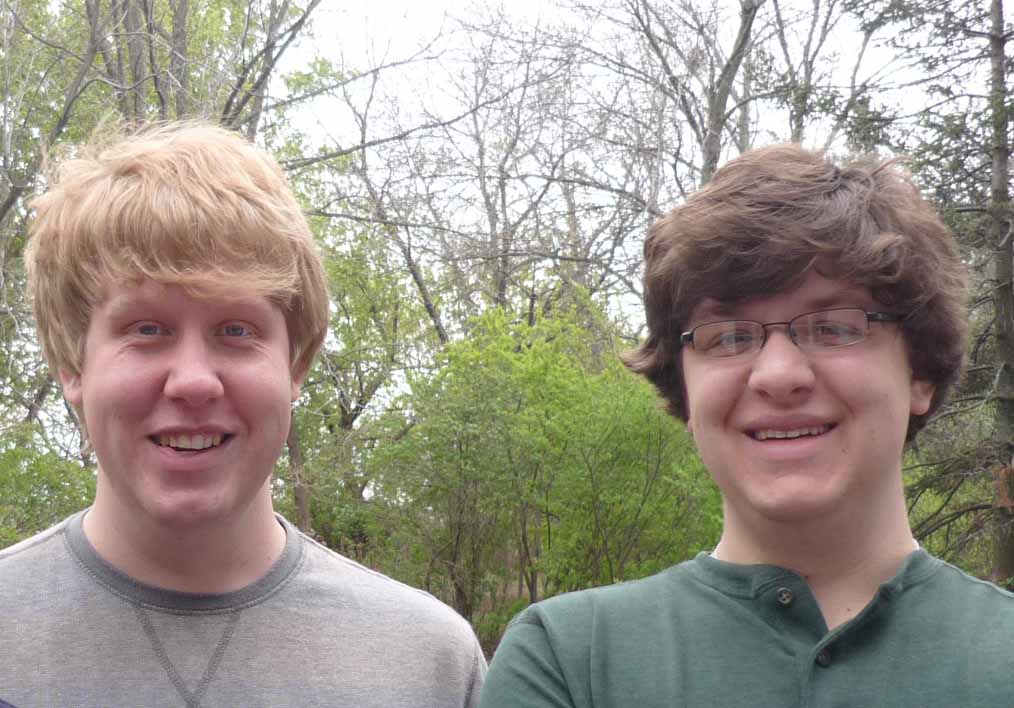
Mike &Greg

Mike, B.A. in Economics and Political Science 2011 Greg, B.A. in Psychology 2014

I enjoyed raising him and his older brother, so although I’m proud of them, I’m also a little sad to see the official end of this phase. I expect I’ll also enjoy what comes next—living in the carefree space between childrearing and grandparenting. Our time is our own. We can be spontaneous again.