Thoughts on the Urge to Purge

Loads of articles encourage retirees to declutter our possessions and purge decades of accumulation. My generation is repeatedly reminded our kids won’t want our stuff. True. They’ll want it after we’ve given it away. Or never. 

Purging sounds so virtuous.

The philosophy of decluttering or purging goes like this—discard what you don’t need. Pare down your belonging to the essentials. Ideally, give your stuff to someone who can use it. The process is also supposed to offer emotional benefits:

  • Get rid of what weighs you down—the boxes full of old files, the clothes that don’t fit, the shopping mistakes. Let go of the emotional weight of caring for all these things. The sense of responsibility and guilt are bad for you. 
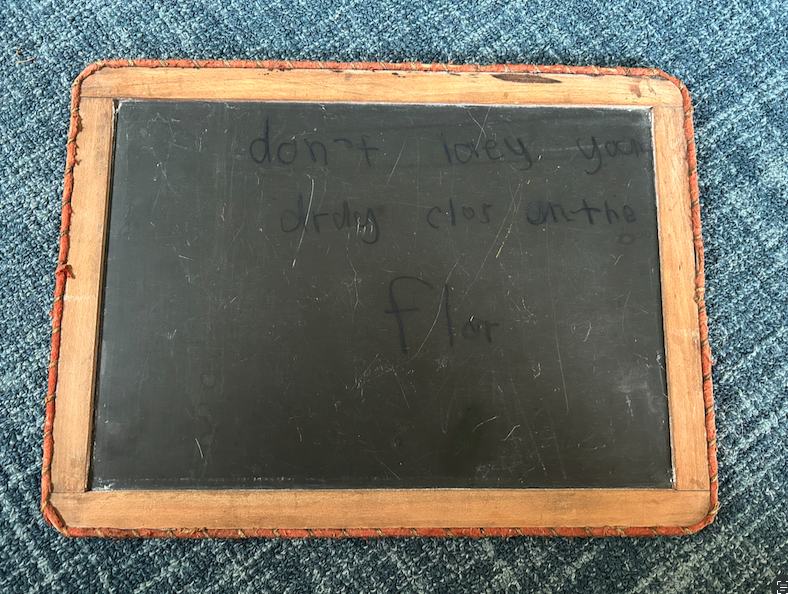
  • Think how light and refreshed you’ll feel when you have less stuff. Less to take care of. A clean slate. (Who the heck even knows what a slate is? Well OK, I do. It’s a personal chalkboard students did schoolwork on. I have one in my office closet that belonged to my grandfather. I’m not even that attached to it. Would a history museum want this artifact? Probably not, since my brother crayoned on it.)

The decisions and matchmaking are what short circuit the urge to purge. 

Neighborhood Buy Nothing groups make it easier. You feel good about the matchmaking. The groups are well suited to offloading housewares and furnishings you no longer use. When we got a king bed, someone wanted our queen size mattress and bed frame. All I had to do was snap a photo and post the items. The neighbor who wants your stuff picks it up. No more loading up the car for a trip to Goodwill and driving bags and boxes around for weeks until you do the drop-off. No more staging a tedious garage sale only to find you still have to dispose of what didn’t sell.

Local Buy Nothing groups do a brisk trade in kids’ clothing, toys and equipment. I recently acquired a second booster seat for family dinners and I often scan posts for age-appropriate toys. My granddaughters’ wardrobes are supplemented with barely-worn-before-they’re-outgrown clothes and shoes from active Buy Nothing groups. The amount and quality of free stuff is astonishing. 

People of my generation used to take things to Goodwill or similar charitable organizations. Sometimes I still do—mostly clothes. Recently, an energetic friend’s clean sweep inspired me to pack up a load of clothes and old purses I don’t use. Won’t use. I do feel a bit virtuous. 

But right now, I’d like to purge any additional demands to declutter. Unload all those reminders and the associated guilt. It’s yet another thing that would be good for me . . . that I don’t feel like doing. Besides, the slate doesn’t take up much room in my closet.

Stuff’s Happening: FoodTrain

Why is it so difficult to write about what happened in November? The month began with foreshadowing that a health issue would require treatment in a three-to-five-year window. Nine days into the month, tests shortened the timeline to available slots for more extensive surgery the next week. By the middle of November, I had had major surgery, my first time being hospitalized except for delivering babies.

There is a lot I could write about attempting to fill the freezer with food, set up auto-pay for bills, finish a grandchild’s Advent calendar and locate an adult child’s birthday gift within seven days. In retrospect some parts of preparation were successful, and some missed the mark. A hospital rookie, I packed a bag that included a hair dryer, curling iron, underwear, t-shirts, leggings and more than one book. Weak during that first shower I was very happy with clean, natural hair. Nurses didn’t want a t-shirt sleeve in the way of monitors, cuffs or iv’s. My attention span didn’t last through a comparison of humidifiers much less beginning a new novel. 

Returning home was great. Our daughter had stocked individual meals for a few days. She and our daughter-in-law made Thanksgiving dinner. My plan to fill the freezer had dropped off the earlier lists. Something much better happened: MealTrain, coordinated by friends, some from our neighborhood and some from other parts of our lives, created a predictable safe zone as we figured out how to get through each day. 

For two weeks the kindness of friends fed us one hot meal each day. Pasta, soup, quiche, chicken marsala, tacos, pork tenderloin, hot sandwiches, each supplemented with salads, vegetables, and breads. Sometimes homemade bread. Plus our friends believe in dessert. One Sunday brunch was delivered and served to our entire family, an incredible gift on many levels.

My husband received daily notices from MealTrain telling who was bringing dinner and what was planned. These wonderful friends gave generously of themselves showing up every afternoon with food and a few minutes of visiting. They saved Tom, who does not cook much, a lot of stress while making both of us feel supported and inching toward ‘normal’ as we sat at our table eating dinner. 

Stuff happens, some scary and necessary, some amazingly helpful and kind. To all involved, thank you. Take care.

On Giving

Recently, I became acquainted with a young Afghan refugee who has been resettled in the US. She’d only been in the US a few days when I met her on a bitterly cold day in February. I had no idea what she might have or need, so I brought a scarf and warm mittens, some toiletries, tea and snacks. The resettlement agency had given her appropriate winter clothes. Within a few weeks they’d found an apartment for her and given her basic furnishings.

Despite our age difference (she’s 24 and I’m in my sixties), we got on well. She had worked with the US embassy and her English is good. I’ve tutored immigrants learning English for years and am aware of some common cultural disconnects. So much of teaching English involves explaining American history and culture as well as grammar and punctuation. My intention is to be a friend, someone she can trust with questions about confusing customs.

When I mentioned meeting her, a number of women I knew immediately asked what household items she might need. Like me, they’ve accumulated a lot of stuff over the years and would be happy to give it to someone who can use it. We all have so much. We’d never miss an extra end table, coffeepot, or winter coat. I had the same impulse, but thought I’d wait to see what she wanted and needed. 

Her apartment’s furnishings seem sparse by American standards, but she was delighted by her things. She’s accustomed to sharing the kitchen with several families and told me she’s never had so many clothes. I recalibrated my instinct to offer her a bunch of stuff. Should I push my aesthetic on her? Maybe she prefers simplicity. Would the donations from my friends and me make her feel inadequate or signal that she seems poor by American standards? 

I’m aware I often overthink things. Maybe she’d love to have more for her apartment. The simple generous reaction friends have had—how can I help—is a good one. Why wouldn’t we help when we have so much? Shouldn’t we?

Yet I know the dynamic between givers and receivers can feel unbalanced. Uncomfortable for the recipient. I’ve already seen my new friend’s deep sense of hospitality. When I visited her and another Afghan family she’s friends with, they insisted on serving me a full meal. Although I wasn’t hungry, I knew it would be rude to refuse, so I ate with them. Similarly, when I gave her the handful of things culled from my closet and kitchen at our first meeting, she gave me a new pair of earrings she had, something I suspect she’d bought for herself.

I try to think how I’d feel if the roles were reversed. Would I simply be grateful, because I needed things and someone cared enough to help? Or would I feel awkward about the charity? In time would my pride be pricked so I became resentful? Trying to be sensitive, not stingy is confusing.

One Hundred Reasons to Be Thankful

For weeks I have noodled around the idea of posting a simple list of the people, places, abilities, things, conditions, blessings to bring meaning to this year’s Thanksgiving day.  An introvert with a history of over thinking added complexity to the simple list. Capturing one hundred reasons to be thankful posed a bountiful problem: Do I capture family as one listing or name everyone? The same thought rumbled around for friends, for neighbors, and friends who play multiple roles. Should individual writers be called out or tumble them together. And what about music? Does the list become trivial with additions like homemade caramels and fresh popcorn? What about specific brand call outs?

My expectations for this Thanksgiving were not very high. It is a holiday that traditionally is celebrated by all of us in the U.S. The slow slog toward a nation divided topped by the trauma of impeachment hearings had me dragging my feet while approaching the common table. Friends do their daily grateful lists, but that habit didn’t stick any better than water exercise or keeping a drawer of perfectly rolled underwear ala Marie Kondo.

The nerdy spreadsheet used to record one hundred reasons to be thankful could be filled with the names of people, pets, foods, books, music and such to flesh out section and become quite a document. My self-editor is constrained by assuming you would want to be amused or impressed if those columns were offered. Many of us have a richness of reasons to be thankful—love, family, friends, a place to call home, jobs, talents, faith, a beloved nation. And responsibility to extend another’s list. Needs extend 365 days a year.

Happy Thanksgiving.

IMG_0343

Barbie, Midge, Robin and Me

The father of my best friend Robin owned a tool business franchise which provided two young girls with opportunities to fill bins in his wonderful red truck, to bake cookies he could share with customers, and access to dozens of interesting empty boxes.

Robin attended 95thStreet School and I went to parochial school, but we had matching pencil boxes in our desks. Most kids found a source for cigar boxes, but we had decorated paper boxes not needed in his truck into unique containers with compartments for pencils, color pencils, scissors and such. We didn’t know each other’s school friends, but we shared something deeper: hours of playing with Barbie, Midge, Skipper and Ken in wonderful houses, stores, airplanes and schools constructed out of even more empty boxes.

When the weather was cold, Robin’s basement became a town for an afternoon of play. Her Barbie had a flight attendant outfit, mine had a tailored suit. We shared a plastic pseudo-Barbie car that took one to the airport and the other to an imaginary office. Neither of us knew anyone who worked in an office or flew on planes so eventually the story turned back to all the dolls sitting at little box desks with one Barbie, attired in a skirt and sweater, called teacher.

Robin had an older sister and we both had moms so we knew real women weren’t built like our Barbie crew, but we didn’t know flight attendants, nurses, doctors, brides, or girls who wore wonderful ballgowns. Our parents didn’t buy us Barbie’s plastic house or bedroom furniture, but Robin’s dad shared tape and scissors and boxes to build furniture and a variety of workshop towels to make blankets. We stood next to him in his wood working shop as he made small frames and blocks that could extend our Barbie furniture building. We learned how to sand.

Our Barbie phase lasted less than a year, a simple time when we creatively explored, built and did what kids are supposed to do. Parents helped feed our play then stepped back. And we did okay. And I wish I could say thanks to Robin’s father and all the other parents who stepped out over the years with camping trips or garden planting or an evening at the opera to expand the world beyond the girl toys of Barbie and her crew. And those who do that today as  they parent another generation of kids.

IMG_5720