Freestyle Boulevards

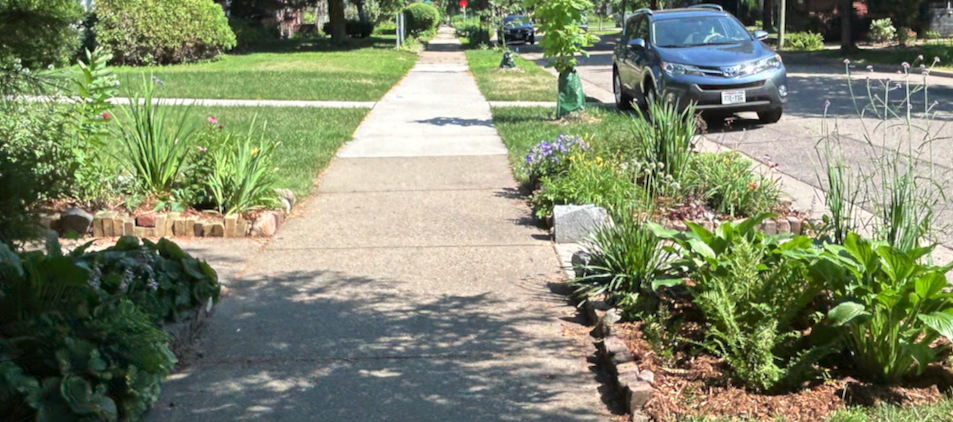
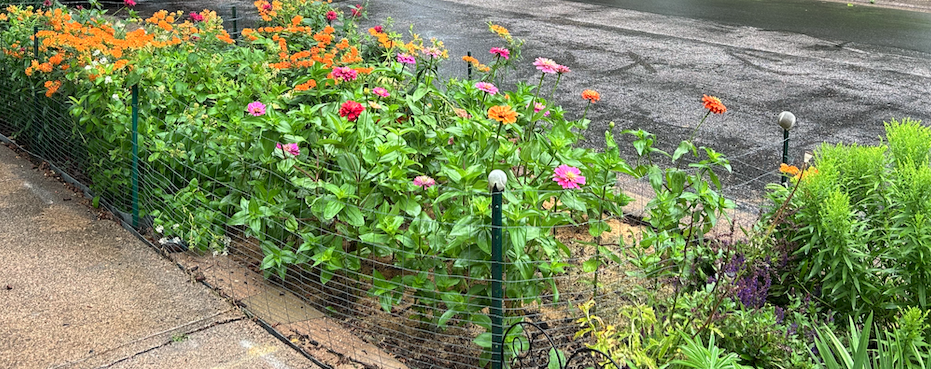
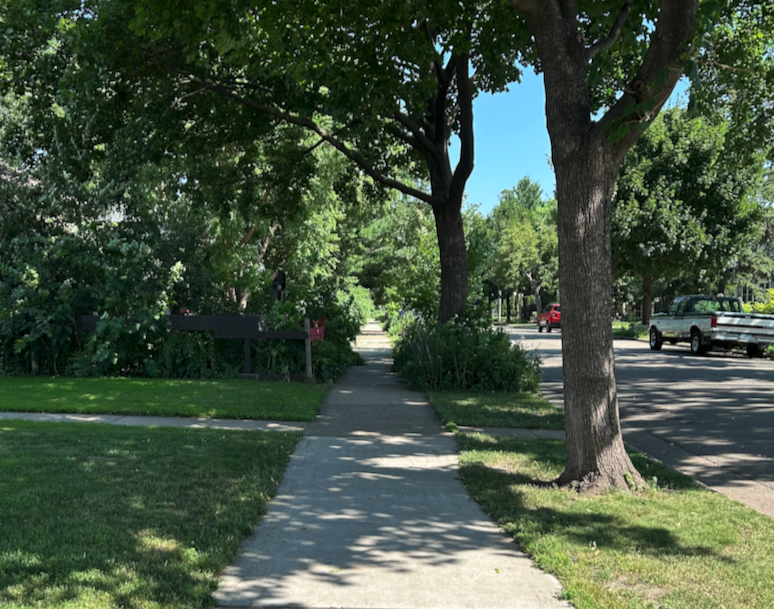
On summer mornings, I walk early. Sun filters through shade trees and the humid air is soft. A light breeze stirs as I circle the neighborhood enjoying the assortment of landscaping styles. In Minneapolis, the boulevard next to the street is often the focus for self-expression. 

Tidy mown boulevards are uncommon

With native plants, nature takes its course 

An offering of gentle inspiration

When it comes to gardens, more is more

Lost the plot—sometimes the vision gives way to busy reality

Bone box—a welcoming community

Nature put it there and Nature can take it away (because I’m not gonna)

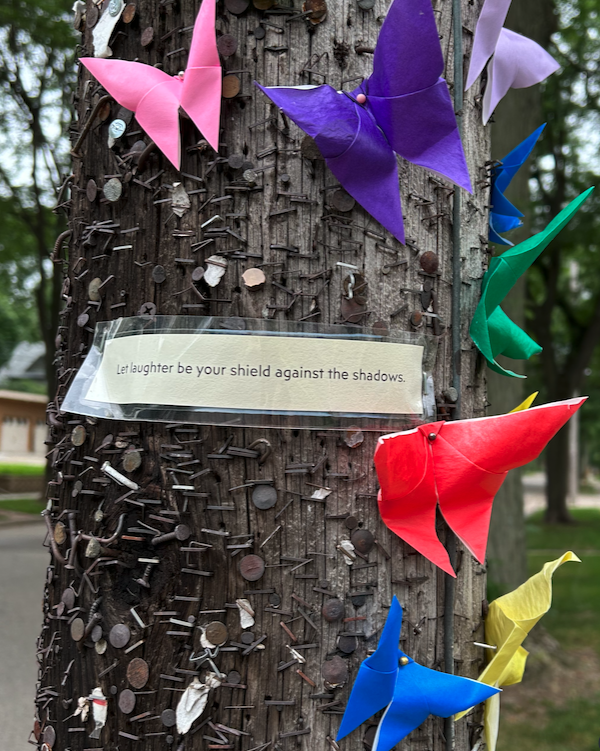
Fostering connection

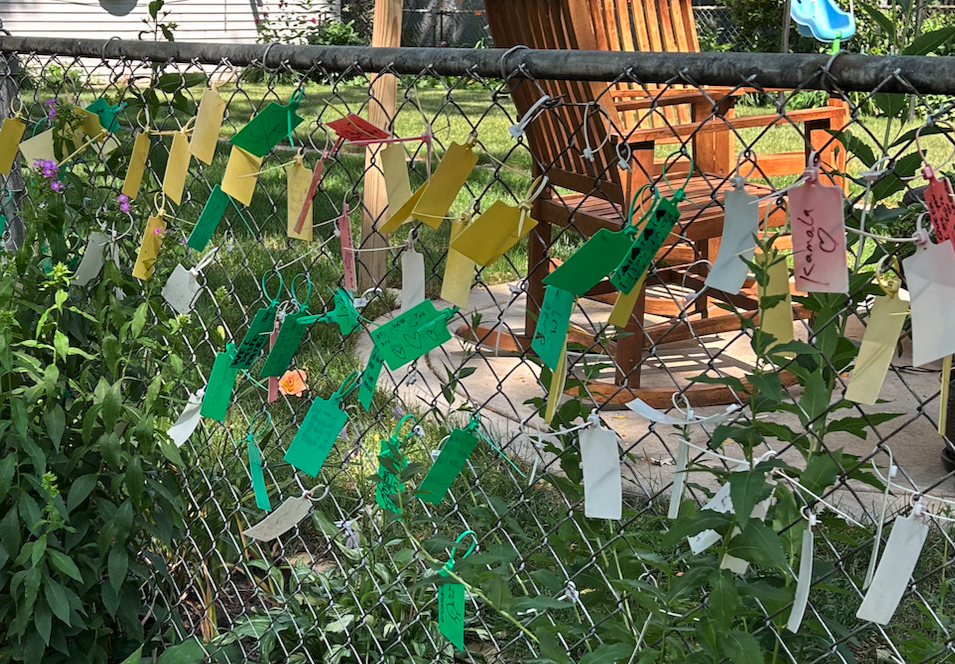
Be how you are

Wet Feet and Warm Heart

To people living in the lake-effect snow areas, Tuesday night’s seven and three-quarters inches of white stuff that landed in Door County is insignificant. Except the weather professionals predicted a dusting. Opening the door at six in the morning to send an old, thirteen-inch-tall dog with arthritis in his hind quarters required intervention by an owner still in cotton knit pajamas and slippers.

The flip side of this story is that one of the most intensely awesome sunrises distracted attention from noting the snow depth. Bare tree branches etched black lines against nature’s red, orange, yellow, saffron into beauty that could not be painted, photographed, described. Walking along the back windows of the house behind the small dog, my eyes never slipped below the horizon. 

Sunrise colors seem shorter as the solstice approaches. By the time boots were located and a snow-covered dog rescued, the sky had turned a warm pink then faded into regular daylight. Winter weather arrived surprising me with the gifts of sunrise, snow in the trees, wet pants and bare feet discovering small cold puddles where the furry one shook.

In a time of deep emotions ranging from the continued happy surprises of family to dread of the immediate political future, from satisfaction in completing a complex writing project to sadness about a relative’s illness, it is easy to not notice what is simple and beautiful. Life’s gifts and losses cannot be tabulated. A stranger’s smile might change an icky morning into a better day. 

May your holidays bring calm, happiness, and the beauty of a winter’s day even when your feet are cold or wet.

Immortalized

I don’t know the women who crocheted this lace doily and antimacassar, but I think I understand something about them.

A century ago, maybe she saw a doily pattern with a wheat motif in a magazine and made it on a lark—the same impulse that has led me to make a quilted pin cushion, add a mosaic to a small box, decorate a shirt with reverse embroidery, and so many other projects. I was curious about the process and making stuff is fun. Most of the time I’m only trying to please myself, so it doesn’t matter if my creative ventures are one-and-done. 

Whoever made the antimacassar might have been more invested. Perhaps she spent weeks one winter, creating the elaborate design, a piece she’d be proud of. She could have spread a towel across the back of a chair to keep off her husband’s macassar hair oil when he leaned back for a snooze. Instead, she made something pretty. I understand the impulse—if you’re going to see it every day, why not have something pleasing? Maybe detailed crochet was her art form, like pottery and quilting are mine. 

When I told a friend about a minor project to machine embroider some muslin towels, she said, “You’re so creative.” I balked, “There are so many people who are wildly creative and talented. I’m a dabbler.” She insisted, “Say yes. And thank you.” My friend is right about me, but sometimes it’s hard to own this urge. Easy to downplay or dismiss creativity that’s expressed everyday things. 

I squint into the future and imagine someone picking up a quilt or ceramic bowl I’ve made. She or he might find a different purpose for it—cut the quilt into placemats, hammer the bowl into bits for a mosaic, or some other project I can’t even imagine. If my things get repurposed, I won’t feel disrespected at all. They were fun to make. They pleased me. They don’t have to last or be cherished like museum pieces. Maybe like me, this future creator will wonder about the person who originated it.

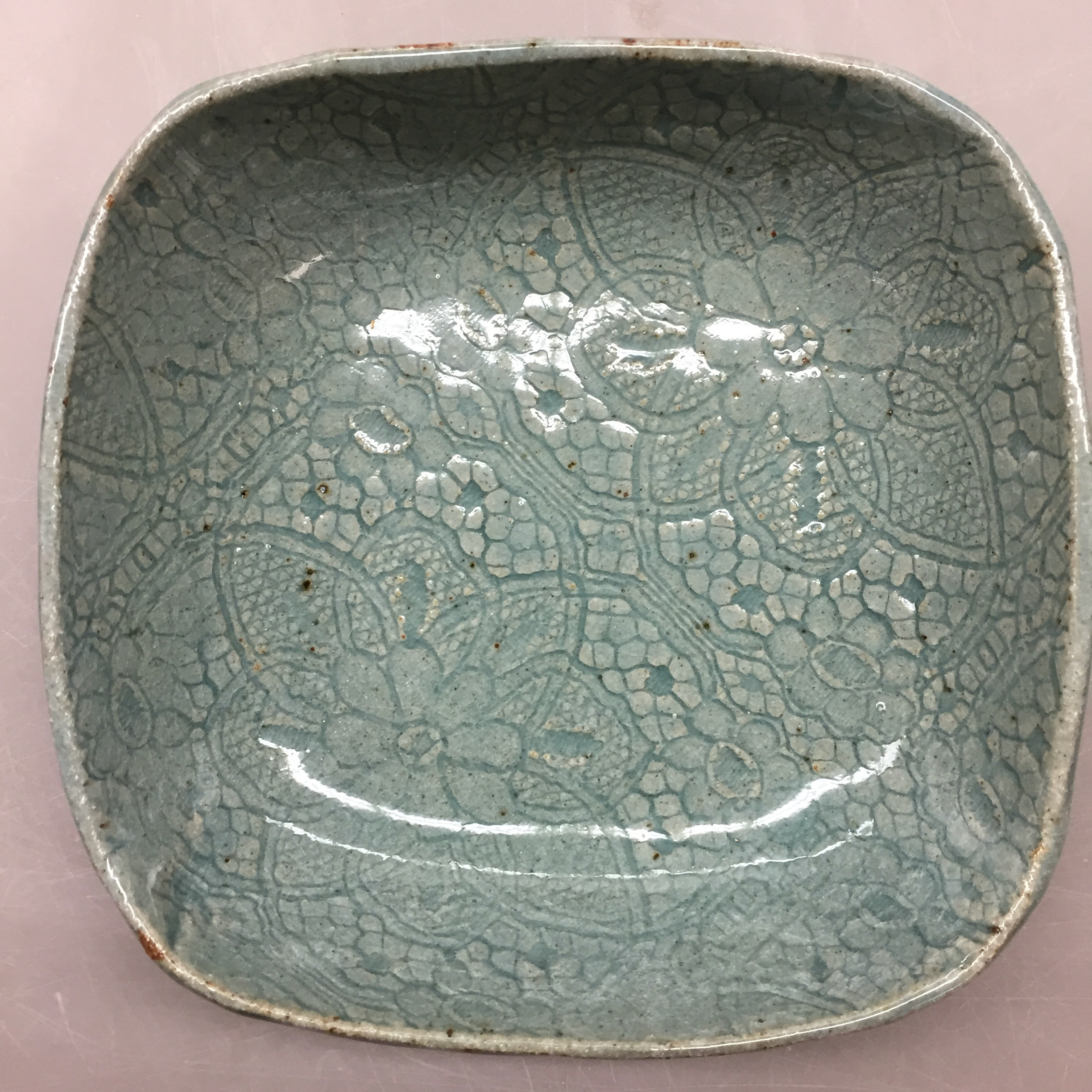
In the pottery studio, when I spread the doily and antimacassar onto clay and transfer the lacy patterns with a rolling pin, I’ll admire the craftsmanship, patience, and skill needed to make them. Those women and their work will be acknowledged and celebrated in mine. Immortalized.
A dish I made with another doily

Aspirational Clutter: Not Yet Time to Let Go

Two years ago a friend introduced me to Clutter Chronicles, a podcast that features a woman named Mary and her “unusual relationship with stuff.” Ever since, I’ve been working hard to rid myself of my clutter, as well as all sorts of other stuff I no longer need or use.

I’ve made good progress. I’ve tossed reams and reams of client files from a four-drawer, 48-inch-wide file cabinet. I’ve donated hundreds of books, a dozen bags of clothes, several sets of linens and my favorite china.

Parting with most of that stuff turned out to be easier than I thought thanks to another friend who encouraged me to stop dragging my anchor behind me and instead toss it out in front of me.

But I’ve since come to realize that there’s a category of clutter I’m still having trouble letting go of: aspirational clutter.

I’d never even heard of aspirational clutter until a third friend introduced me to Apartment Therapy, a home and décor site that defines aspirational clutter as “anything you’re keeping for a future version of yourself.”

As a lifelong goal-setter with all sorts of imagined future selves and plenty of storage space, I’ve accumulated a great deal of aspirational clutter, most of which revolves around hopes and dreams related to creative pursuits such as writing, drawing, painting, sewing and knitting, all things I used to love doing as a kid but gave up decades ago.

Some of my aspirational clutter is electronic, like the list of words I keep on my computer, words I aspire to one day not only remember the meaning of but also use in a short story. The list includes noctilucent, opsimath, sere and wheedle.

There’s also a list of clever headlines, as well as lists of books to read, movies to watch and podcasts to listen to, all in line with my aspirations to develop compelling creative content in a variety of forms.  

But what about the things that do take up physical space? A shoebox filled with recipes. A plastic bin of yarn. An untouched set of oil paints I received for my 40th birthday. A six-inch high pile of pages I’ve torn out of magazines in preparation for making collages.

Despite the fact that some of these things have sat dormant for decades, tossing or giving them away is harder than I would have imagined. And that’s exactly how my more creative future self would want it to be.

The World of Holiday Greetings Has Changed

For the last several years, a friend and I have gotten together every December to address Christmas cards and catch up over tea. She still writes at least two dozen, while my output has dwindled to less than 10.

I used to love Christmas cards. I tended to indulge in the expensive ones printed on high quality paper, the ones with artistic designs or humorous sentiments. Sometimes I bogged down with signing them and getting them to the Post Office, but I always got them out before New Year’s.

While doing business as Ellen Shriner Communications, I began handcrafting holiday cards to send to ad agency and marketing clients. Instead of dropping off clever client gifts or food treats (a common practice in the communications world), I made a charitable donation in my clients’ honor and hoped the cards would remind clients about my creative work. I also sent the cards to close family and friends.

Every year, I wandered the aisles of the now-defunct Paper Depot and let the stamps, vellums, fine cotton card stock, and gorgeous imported papers inspire me. For a month, I holed up in my office planning, writing, printing, cutting, gluing, and assembling 50-60 cards. Many years, I made several versions because I was attracted to multiple ideas, and it was fun to experiment.

The card with red ribbon involved dried flowers from my garden. For the one on the far right, I drew ornaments in watercolor. For the one in the center, I hand cut starbursts with an Exacto knife so the gold vellum would show through.

By the end of 2010, I was winding down my business and had accepted a hospital marketing job. I could have continued making the cards for family and friends, but handcrafting cards no longer gave me as much pleasure, and the world of holiday greetings had changed.

For many people, sending Christmas cards had become just one more thing on a long To Do list. Friends and family were relieved to let go of the tradition. Often the cards I received seemed to be guilt-induced (Dang! She sent me one. Now I need to reciprocate), and I didn’t want to cause that discomfort.

For me, Christmas cards had been a way to stay connected with out-of-town family or friends I rarely saw. Often the cards summed up how the year had gone, and that ritual reflection felt worthwhile.

Now a yearly missive is less important. Calling is so cheap and immediate that the most important people in my life already know what’s going on. As a writer, I’m at the keyboard most days and can dash off a quick email to friends. Social media has made it easy to stay in touch with an extended group of people.

Maybe one day I’ll rediscover the creative fun of playing with fine papers, glue, and an Exacto knife. But this year, I’ll sign a few store-bought cards and write a handful of personal notes. Of course, nothing replaces visiting in person, especially over a cup of tea!

To all of our blog readers: the WordSisters send lots of affection and appreciation for our connection. Happy Holidays!