Category: Change

  • Another Crisis

    My family moved from Luxemburg, Wisconsin, population less than 500, to Milwaukee during the summer of 1961. From a grade school with eight grades spread over six classrooms, my brother and I were enrolled in a Catholic elementary school with 150 kids in every grade. We had never seen so many kids. 

    The first year was rough on my mother who no longer had a part-time job, a bowling league, or knew the names of everyone in the parish. She didn’t even know the names of women on our block. By the summer of 1962 life could be testy in our household. My great-grandmother moved back to Luxemburg and took me with her at the start of summer. 

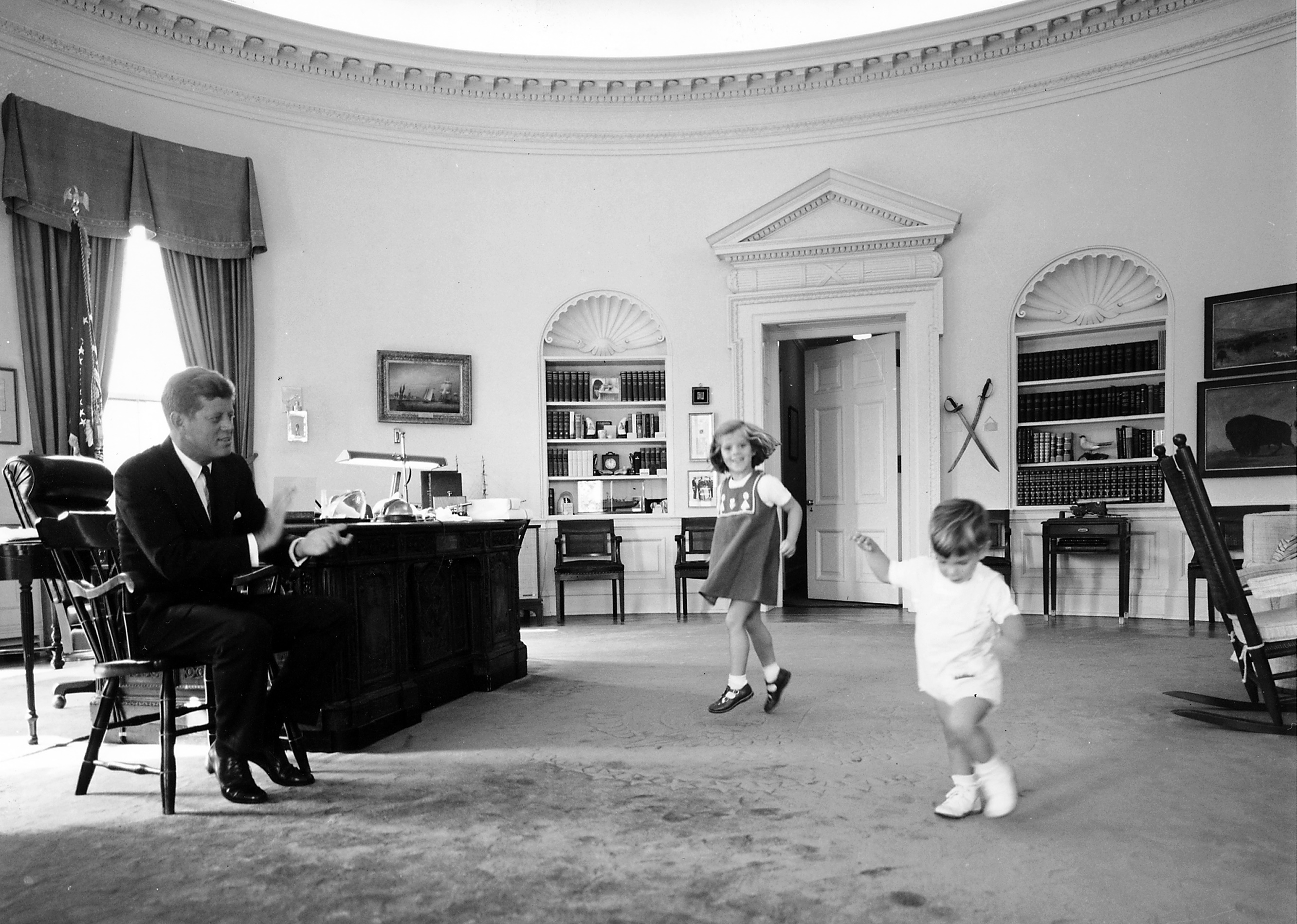
    Our second school year began with more confidence and my mother found a seasonal job. She was happier. Until October 16 when the beginning of the Cuban Missile Crisis moved the world toward danger. People were deeply afraid that Cold War was morphing into actual war with Russia, including missiles falling on the United States. Adults knew about the horror of war. Kids were directed in useless duck and cover drills, crawling under our desks with our hands over our heads.

    My mother wanted to be in our Luxemburg home with its dug-out basement, food cellar and indoor pump. Our Milwaukee ten-year-old ranch offered no place to hide. It was too late to build a bomb shelter. She emptied the clothes closet in a spare room, brought in blankets and pillows, water jugs, crackers, peanut butter and other food plus towels, tissue and a bucket. She listened to the radio constantly. We went to bed fully dressed. October 28, she woke us with orders to get into the closet. Blankets had been placed over window curtains, a rug rolled at the bottom of the door. We listened to news coverage throughout the night. The crisis was averted. Nerves remained raw for years.

    We’re back to practicing some odd form of duck and cover. And it is just as useless. The stakes are high for every citizen and much of the world.
    Square
  • Traditions Evolve

    Great Aunt Wilma was a fixture at our Thanksgiving gatherings during her latter years. She was widowed with no children, so my parents invited her to join us. 

    Elegant with her silver French twist, stylish earrings and deep brown eyes, she preferred to sit with the guys talking sports or politics (back when that was an acceptable topic). We had plenty of help and cooking wasn’t her forté, so she didn’t don an apron and join the women.

    We gathered at my sister’s home in Ohio. After years of hosting, Mom was ready to let her kids handle holiday meals. Until my parents died, our sons, my husband and I traveled from Minnesota to celebrate Thanksgiving with my extended family. My husband’s family had different Thanksgiving traditions, so we didn’t have to choose.

    For years, my husband and I have been the creators of holiday gatherings like Thanksgiving and Christmas. Days before, we’d clean the house, finalize the menu, make an epic shopping trip, check the table linens, plan the flowers, and start prepping dishes that could be made ahead, then cook and clean up on the actual holiday. As our sons got older, they and their wives also prepared key dishes. However, my husband and I were the event managers who were responsible for making the meal go smoothly. We were happy to do it.

    But family traditions evolve. When our sons married, we began sharing them with their wives’ families. Each year we’ve had conversations about which day to hold our Thanksgiving and Christmas gatherings. After a bit of trial and error, we determined that Thanksgiving dates could be flexible but Christmas was less so. 

    When grandchildren came on the horizon, my husband and I understood our traditions would change again. We are welcome and important, but as grandparents, we are stepping back to a supporting role for holiday gatherings. 

    The focus has shifted to our granddaughters’ needs. Younger babies might be content to be held during a lengthy Thanksgiving meal, but older babies are not. They get bored and want to play. Ideally, both babies should have a quiet place to nap. This year, that will be at the home of our oldest son and his wife, where both babies can be accommodated. 

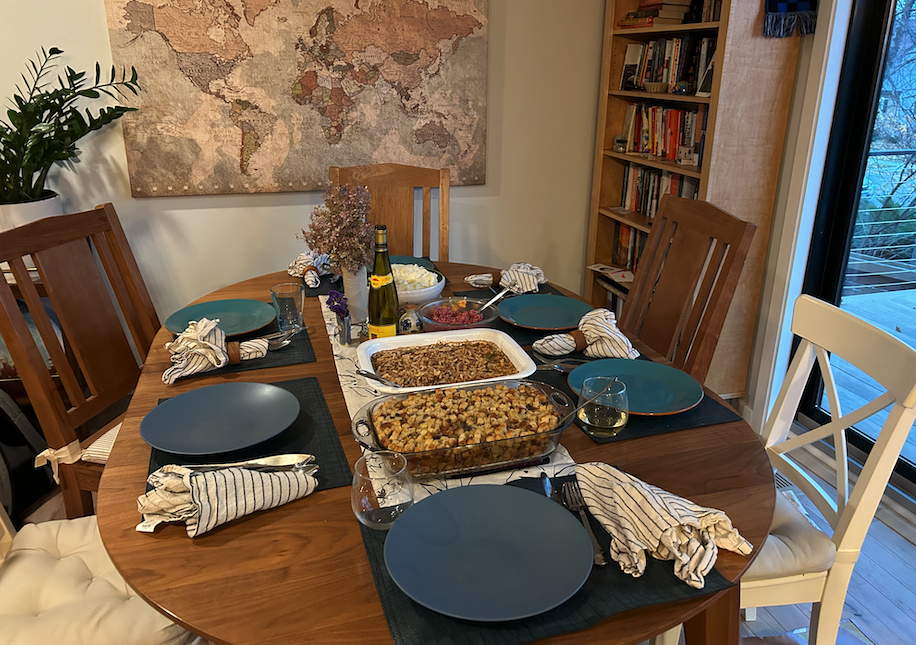
    Shortly before the hungry horde descended last Sunday

    Similar things are happening in the larger circle of my Ohio family. My sister no longer hosts a large family dinner at Thanksgiving. Now she visits two of her daughters who live in a nearby state. My brother and his wife will join friends for Thanksgiving since their children are also hours away.

    My bachelor brother, who used to help my sister and me with cooking and cleaning up at our large Thanksgiving gatherings, is now slated to become a guest at a niece or nephew’s Thanksgiving table. When we spoke of the changes, my brother and I joked that now he has become Aunt Wilma. 

  • “Why, in my day . . .”

    Growing up, I recall elders recounting tales about life before some innovation. Today, the advent of artificial intelligence (AI) is a hinge moment like so many technological advances I’ve experienced in the last 40 years. I look back on past breakthroughs with wonder and nostalgia. I’m trying to come to terms with current developments.

    1984 – Desktop Computers

    I roll my eyes when young volunteer coordinators enquire if I’m comfortable with computers. In 1984, my boss handed me boxes for an Apple IIe desktop computer and an amber monitor (orange type on a black screen) and told me to set them up so I could write marketing and training materials. 

    1989 – Internet

    Today, that old setup is quaint and humorous—a one-color monitor, 5¼ inch diskettes, a computer that didn’t connect to the Internet . . . because the World Wide Web wasn’t mainstream until 1989-90.

    When the Internet became commonplace, we used painfully slow telephone dial-up modems with their crackling static and rubber band sound. Modems meant I no longer had to courier work product files to my customers on diskettes, which had shrunk to 3½ inches. 

    1994 – 2001 – Search Engines and Websites

    In the mid-1990s, search engines like Yahoo, AOL, and Netscape came on the scene and Search Engine Optimization (SEO) helped people, products, and businesses get found. Google started in 1998. It’s hard to imagine a time before Google, when research meant visiting a brick and mortar library to use printed resources that might be checked out to someone else.

    As websites grew common, having one for my business became important. A friend and I designed and rolled out mine in 2001. Several versions followed until I retired it several years ago.

    1996 – Cell Phones 

    For me, the next technological cliff came around 1996 or 1997 when small cell phones arrived. They made calls. That’s it. If you had the patience to tap number buttons repeatedly, you could eke out texts. No camera. No Internet. No email. No music. No maps. Next, I owned a different dumb phone that opened to a qwerty keyboard. Around 2005, I acquired a fancier flip phone with a camera. Woohoo! Before long my 35mm digital camera was obsolete.

    2007 – Smartphones

    The world shifted dramatically again when the iPhone was introduced in 2007—the best of the available smartphones. Cell phones had enabled me to keep up on client calls and emails seamlessly when I was away from my home office—in other words, an early version of remote work. Staying connected with family became immensely simpler too.

    2007 – 2008 – Facebook & Twitter

    The advent of social media—Facebook and Twitter along with their many step-children—has transformed the world. How we discover, understand, and consume news. How we see ourselves and connect with or demonize others. There’s no denying social media’s far-reaching impact. Despite my mixed feelings about Facebook, it’s where a number of readers find our blogs. 

    Now – Artificial Intelligence

    Evidence of artificial intelligence is everywhere—Siri and Alexa, helpful spelling prompts in texts and emails, blank-eyed, AI-drawn models in ads, and who knows how many AI functions we are unaware of. 

    AI makes me uneasy. But I don’t want to be a Luddite, so I’ve told myself I really ought to dig in, try to understand its scope, possibilities, and implications . . . insofar as any non-AI developer can. I’ve begun experimenting with ChatGPT as a research tool (think of all the data it accesses), but it’s never going to be writing my blogs! Count on 100% Ellen, all the time.

    Five years from now, when the next technological wonder launches, who knows what we’ll be saying?