“Why, in my day . . .”

Growing up, I recall elders recounting tales about life before some innovation. Today, the advent of artificial intelligence (AI) is a hinge moment like so many technological advances I’ve experienced in the last 40 years. I look back on past breakthroughs with wonder and nostalgia. I’m trying to come to terms with current developments.

1984 – Desktop Computers

I roll my eyes when young volunteer coordinators enquire if I’m comfortable with computers. In 1984, my boss handed me boxes for an Apple IIe desktop computer and an amber monitor (orange type on a black screen) and told me to set them up so I could write marketing and training materials. 

1989 – Internet

Today, that old setup is quaint and humorous—a one-color monitor, 5¼ inch diskettes, a computer that didn’t connect to the Internet . . . because the World Wide Web wasn’t mainstream until 1989-90.

When the Internet became commonplace, we used painfully slow telephone dial-up modems with their crackling static and rubber band sound. Modems meant I no longer had to courier work product files to my customers on diskettes, which had shrunk to 3½ inches. 

1994 – 2001 – Search Engines and Websites

In the mid-1990s, search engines like Yahoo, AOL, and Netscape came on the scene and Search Engine Optimization (SEO) helped people, products, and businesses get found. Google started in 1998. It’s hard to imagine a time before Google, when research meant visiting a brick and mortar library to use printed resources that might be checked out to someone else.

As websites grew common, having one for my business became important. A friend and I designed and rolled out mine in 2001. Several versions followed until I retired it several years ago.

1996 – Cell Phones 

For me, the next technological cliff came around 1996 or 1997 when small cell phones arrived. They made calls. That’s it. If you had the patience to tap number buttons repeatedly, you could eke out texts. No camera. No Internet. No email. No music. No maps. Next, I owned a different dumb phone that opened to a qwerty keyboard. Around 2005, I acquired a fancier flip phone with a camera. Woohoo! Before long my 35mm digital camera was obsolete.

2007 – Smartphones

The world shifted dramatically again when the iPhone was introduced in 2007—the best of the available smartphones. Cell phones had enabled me to keep up on client calls and emails seamlessly when I was away from my home office—in other words, an early version of remote work. Staying connected with family became immensely simpler too.

2007 – 2008 – Facebook & Twitter

The advent of social media—Facebook and Twitter along with their many step-children—has transformed the world. How we discover, understand, and consume news. How we see ourselves and connect with or demonize others. There’s no denying social media’s far-reaching impact. Despite my mixed feelings about Facebook, it’s where a number of readers find our blogs. 

Now – Artificial Intelligence

Evidence of artificial intelligence is everywhere—Siri and Alexa, helpful spelling prompts in texts and emails, blank-eyed, AI-drawn models in ads, and who knows how many AI functions we are unaware of. 

AI makes me uneasy. But I don’t want to be a Luddite, so I’ve told myself I really ought to dig in, try to understand its scope, possibilities, and implications . . . insofar as any non-AI developer can. I’ve begun experimenting with ChatGPT as a research tool (think of all the data it accesses), but it’s never going to be writing my blogs! Count on 100% Ellen, all the time.

Five years from now, when the next technological wonder launches, who knows what we’ll be saying?
Reclaiming My Focus

Focus. It’s an ability I used to take for granted. But not anymore. For whatever reason—age, information overload, pandemic-induced anxiety—I’m just not able to concentrate the way I once did.

Is the inability to do so a warning sign of cognitive decline?

After coming across conflicting opinions online, that’s a question I plan to ask at my next physical. In the meantime, I did what I usually do when seeking answers, I found a book to read: Stolen Focus: Why You Can’t Pay Attention and How to Think Deeply Again byJohann Hari.

What I learned—that our attention is being stolen—was disturbing enough but the fact that Facebook and other social media companies have intentionally designed their sites to keep us online and coming back so they can maximize their revenue has prompted me to shy away from logging on.

Despite this, Amazon knows what I’m reading, and Alexa often knows what I’m having for dinner. Google Nest knows if I’m home, and Google Maps knows where I’m at when I’m not.

While there are some positives to this—for instance, I no longer have to look up and then print directions—I don’t like feeling that I’m being surveilled.

So I unplugged Alexa and put her in the basement, and I closed out 60+ accounts I rarely use. I also unsubscribed from dozens of e-letters.

And, after a University of Oregon study found that if we are focusing on something and get interrupted, it takes 23 minutes on average for us to get back to the same state of focus, I’ve turned off the ringer on my phone and no longer leave email open all day.

The goal: to return my focus to what I really want to be paying attention to: my family and friends and the causes I care about.

Time to Rewire My Brain

Now that hands-free cell phone use is the law for Minnesota drivers, I was faced with a choice: A) buy a new car with built-in Bluetooth technology or B) retrofit the one I have. I have no quarrel with the intent of the new law, but my mind boggles at how awkward the retrofitting is.

I have an old car.

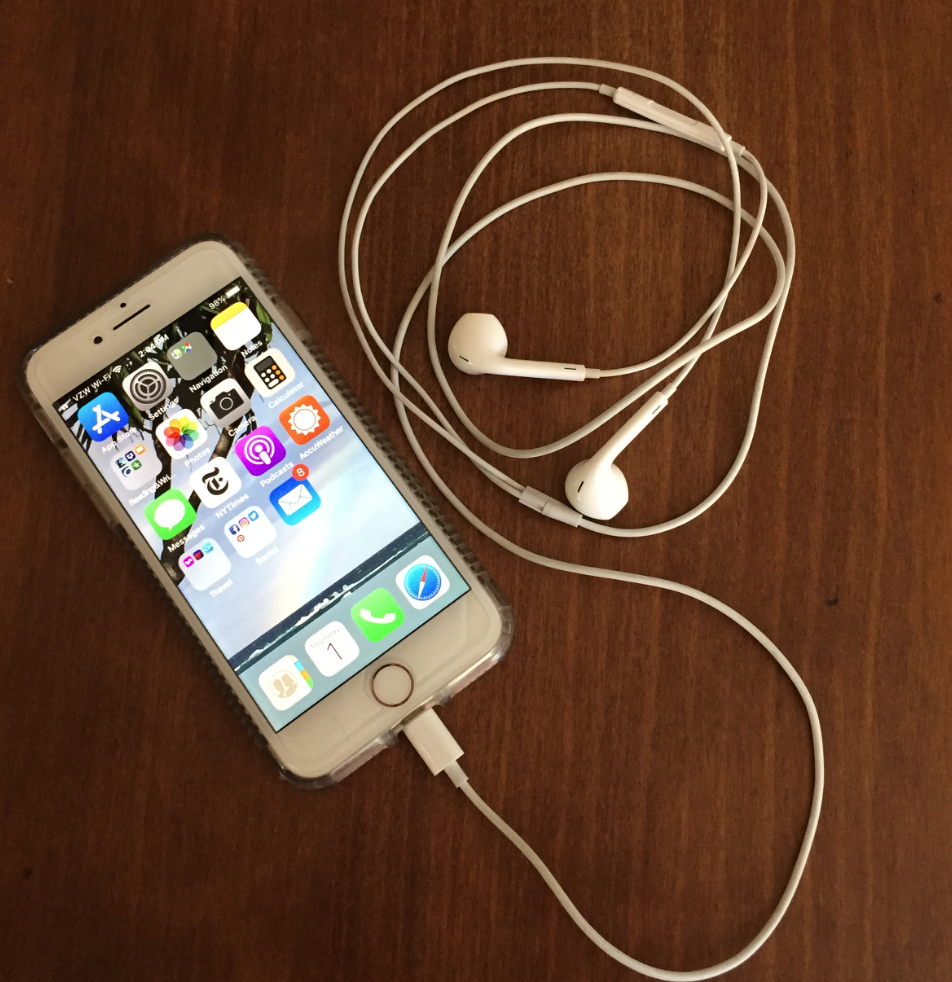
My 2011 RAV4 is a prehistoric gem with only 75,000 miles on it. Definitely pre-Bluetooth technology. Until now that wasn’t an issue, because I seldom used my cell phone while driving. When I made or received calls, I connected my phone to my old-fashioned earbuds (the kind with wires) and stuck the buds in my ears. Simple hands-free calling. Decent quality sound. Yay!

Now that’s unlawful, so I had to get a phone holder. The several articles I consulted pointed out that attaching a holder to a vent is hard in a RAV4. Besides, I don’t want to block the AC during Minnesota summers or the heat during Minnesota winters.

My best bet was a holder that attaches to the CD slot. Mmmmk. I don’t play CDs anymore. I listen to the radio, not even Sirius. Or I use the oldest iPod you’ve ever seen for music and podcasts. The Smithsonian museum probably has one in their ancient technology display. Originally, I was saving all that memory on my phone for photos, not music.

That’s only half of it. I also needed a Bluetooth speakerphone thingy to clip onto the visor.

I have an old brain.

Retrofitting the car was step one. My brain needs rewiring, too. In the olden days, cell phones were for talking, iPods were for music, and Garmin was for directions. I do realize that my iPhone 8 can do all of that—in one delightful device—but I have an unreasonable and balky reaction to being bossed around by devices even when they’re trying to help me. Until now, I hadn’t taken advantage of all that seamless wonderfulness.

Now, if I want to call while driving, I’ll need to tell Siri (Dang! I never use Siri, so I’ll have to learn that.) How long before Siri mistakes, “Call Margo S.,” for “Call Martha Stewart,” who I’m pretty sure doesn’t want to talk to me.

For music, I’ll have to reach under the cell phone holder to press radio buttons or convince my elderly iPod to talk to the Bluetooth speakerphone. (Oh wait, my beloved iPod doesn’t have Bluetooth capability, so it and the speakerphone aren’t friends. Sigh.)

It’s 2019. Time to rewire my brain and how I approach calls, music, and directions. I bought the devices and they work–sort of–but they certainly aren’t simpler.

Maybe I just should have bought a new, fully-equipped car!

Kids and Keyboards–A Dilemma

I recently read that Silicon Valley parents are concerned about how using cell phones, tablets, and computers in the classroom affects children’s development. Wait, what?!? The creators of the screens and software don’t want their children using them? The  New York Times article described how families across the country are reconsidering the role of technology in the classroom.

Whoa. I recall fundraising with the PTO so students at my sons’ school would have computers in the classroom. We wanted our kids to be ready for the world they’d be joining. When my nieces attended a Catholic high school in Ohio, they were given laptops to use with their school work.

Truth be told, even then I had misgivings about the amount of screen time my kids had. A recent conversation with neighbors, whose children grew up with mine, confirmed that I wasn’t alone. The other mothers—an artist, a human resources manager, and a psychologist—have all seen the downsides of too much screen time.

The artist was the first to mention the impact on creativity, but all of us  expressed similar concern. When consumed by screen use, children don’t have the opportunity to daydream aimlessly or use their imagination to invent games. The other mothers and I remembered that as kids, we made up goofy games that required imagination but little equipment—building a fort out of sofa cushions or raking leaves into piles that framed “rooms” in the yard.

Another effect we’ve all seen is underdeveloped social skills. While plenty of young adults are socially adept, some of the young adults we know are awkward in face-to-face conversations. They struggle when talking with people—in job interviews and when dealing with older coworkers. For some, in-person discussions are mistaken for disagreement and conflict, instead of the normal give and take of conversation. Texting and IM’ing are more comfortable. It’s easier for them to express their opinions with the distancing filter of a screen.

None of us were suggesting that children shouldn’t use computers or cell phones. Personally, I love my phone, tablet, and laptop and recognize that using technology is a vital part of modern life. However, being selective about when, where, and how much children use technology is important. Although our kids hated it, the other mothers and I limited the amount of time our kids spent using screens.

Limiting screens is an even greater challenge for today’s parents and teachers. Teachers struggle with the disruption of cell phones in the classroom. Parents now have to contend with the potential dangers of social media and the content of their children’s Internet searches. I feel fortunate my kids were older by the time social media was widespread. That was one problem I didn’t have to face.

A younger mother I know locks up her teenagers’ phones and computers at bedtime so they aren’t online or texting into the wee hours—they need their sleep, and she needs some peace of mind. If her kids’ grades slip, they lose phone privileges.

It’s disconcerting to realize that the very screens that we sought for our kids years ago could both expand their horizons and limit their potential. But just as we did, I am confident today’s parents will figure out a way to handle the challenges of technology.

Opposing Thumbs

In 1975, as I sat in Miss Bloom’s typing class, I never thought that one day I’d be typing primarily with my thumbs. I’m sure Miss Bloom, ancient even then, couldn’t have imagined a keyboard so tiny that even the end of her thumb would be too large to hit just one key.

I picture myself in her class, feet planted firmly on the floor, my skirt pulled down over my knees, fingers curled over the keys of the IBM Selectric in front of me. Four rows of eight desks neatly lined the room. The only sounds were the soft squish of Miss Bloom’s orthopedic shoes on the linoleum floor as she paced up and down the rows checking our posture, and the hum of the newly purchased typewriters in front of us. (What a marvel those electric typewriters were. How much easier than the 1928 Smith Corona I used at home.)

What were my lonely thumbs doing then? They were relegated to the space bar, waiting for the opportunity to create a void between words. Only my right thumb ever got any business, the left thumb dangled uselessly while all of the other digits pounded away at 65 words per minute.

No wonder that now my thumbs have trouble finding the letters when I answer e-mails or send my daughter a text message from my iPhone. They’re not conditioned for this kind of work. Now they’re front and center, the rulers of the written word while my fingers curl around the back of my handheld device, providing support, but little else.

Occasionally my right index finger can’t stand the pressure and it says to its friends on my left hand “Take over. I’m going in!” as it darts from behind the screen to hunt and peck for the letters, thinking itself faster than my clumsy thumbs.

But even this is unsatisfying, because my right index finger doesn’t know the keyboard any better than my thumbs. The only familiar keys are y, u, h, j, n and m. And what can you spell with only those letters? Eventually, my index finger gives up and returns to its friends behind the screen, letting the thumbs take over because they at least can work together, doubling the speed of my messaging.

Gone are the days of 65-75 words per minute. My thumbs are lucky if they can get in 20. So they’re less creative. A reply that once might have been “I’d love to join you on Saturday evening. A trip to the theatre sounds like fun,” becomes “K” or more likely a thumbs up emoji, but rarely anything longer. It’s just too slow, too cumbersome, too demoralizing to spend so much time pecking for the keys and constantly backspacing to correct mistakes.

I’d like to say my thumbs are happy, that they’re glad for the opportunity to carry the torch after all these years. But I don’t think they are. I think they miss the days of working in tandem with my fingers, resting lightly on the space bar while the fingers searched for just the right sequence of letters. I think they’re lonely out there in front by themselves. Who knows? I could ask them, but they’d probably just reply, “IDK, may b. U D cide.”


Guest blogger and WordSister Jill W. Smith is a Twin Cities’ writer. Her work has appeared in the anthologies Here in the Middle: Stories of Love, Loss, and Connection from the Ones Sandwiched in Between; A Cup of Comfort for Parents of Children with Autism; and Siblings: Our First Macrocosms, in the online journal Mothers Always Write, and occasionally on her blog, The Autism Fractal, which she co-authors with her oldest daughter.