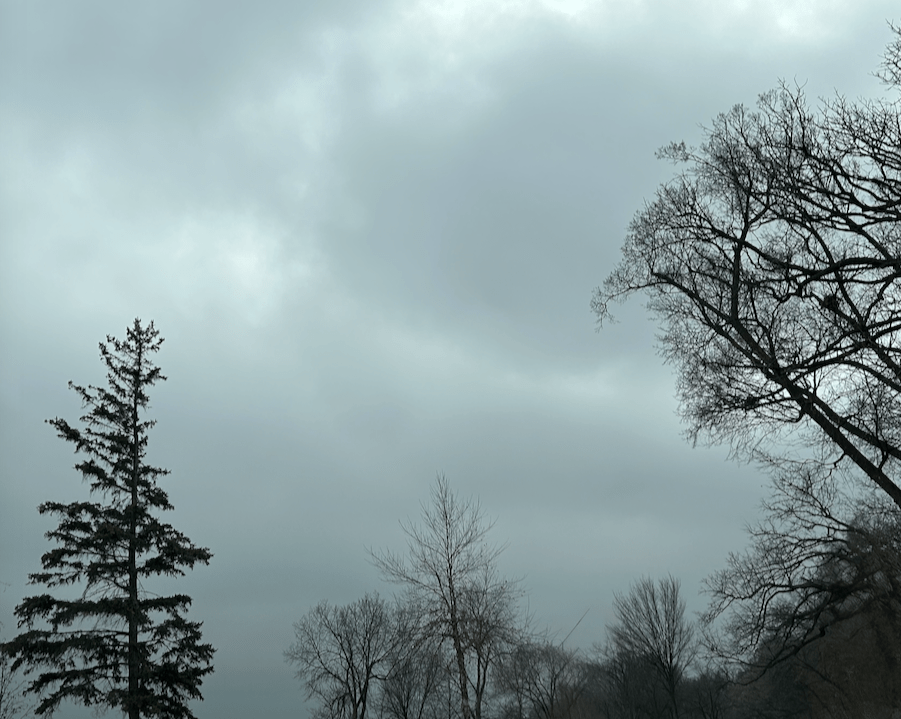
On days when November winds scour the streets and heavy gray clouds lean on the landscape, I feel Nature’s rhythms more deeply. Summer’s flowers have died and the natural world is dormant. I’m reminded that many of my elders are no longer with us. Even in my awareness of death and departures, I’m also comforted. These cycles are natural. This is how it’s meant to go.
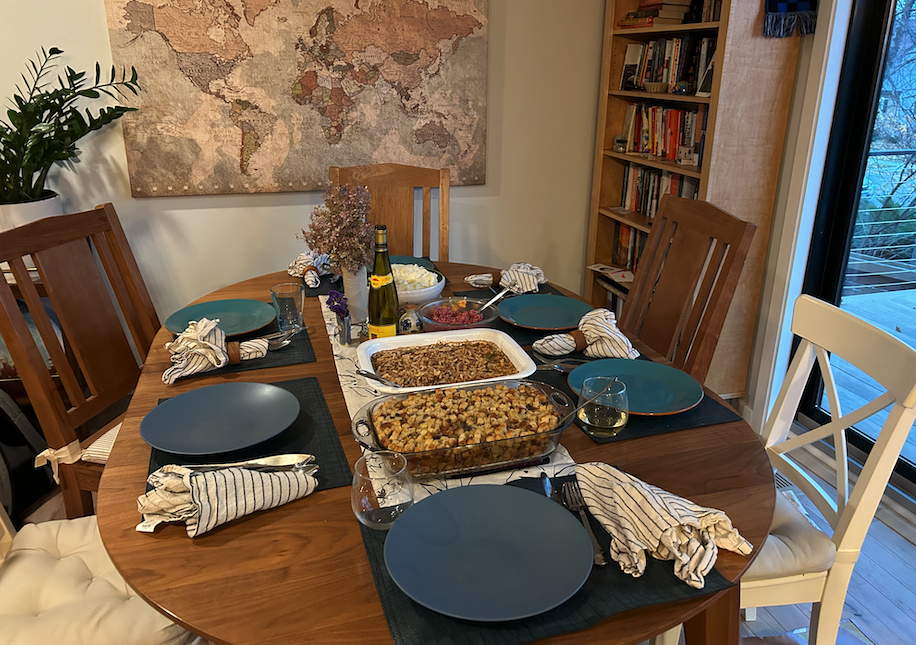
Although I’m not a farmer, the idea of gathering the harvest resonates. Instead of crops, I gather my family. At Thanksgiving, we relish the ritual and continuity of turkey. My mother’s stuffing recipe. My husband’s mashed potatoes. My pecan pie. Foods we don’t crave any other time of year. Beyond the food served is a yearning to reaffirm our ties to family and tradition. This is what we do, have done for years (Even though our customary foods have evolved. Smoked turkey is tastier than roasted. None of us miss the yams.) We give thanks for what we have and who we have in our lives.
Nature’s rhythms are also woven into the circle of my extended family. Recently, we celebrated my mother-in-law’s 100th birthday. Four generations gathered in one place. There, too, we enjoyed the ritual of eating our favorite deep-dish pizza, fresh veggies, rich desserts. We honored her along with our connection as family. We reminded ourselves of who we are and who we come from.
For the first time, all three great granddaughters were able to attend. One of my granddaughters sat in my lap clapping with delight as the group sang “Happy Birthday.” Her newly met cousin danced and serenaded Gigi (her great grandmother) at the party’s end. Later the little girls played with abandon in the center of the living room surrounded by their grandparents and great aunts and uncles—just as my sons did 30 years ago.
Our circle is warm and loving. The cycle continues.
A recent conversation with several friends who are also lapsed Catholics got me thinking about Easter’s significance in my life. Why do I still celebrate it when I no longer attend Mass?
Ties to my childhood faith remain, although they have thinned and frayed. I’m at a loss to explain why I still feel that religious tug, but I do.
Some of the symbols associated with Easter have an even stronger pull: the natural world coming back to life in spring, daffodil and tulip bulbs blooming after lying dormant for months, and eggs representing new life. The idea of yearly rebirth and renewal resonates with me.
Maintaining an Easter tradition also matters to me, because it ties my small family to past generations.
Even though much of Easter’s religious meaning has faded for me, I feel a connection to my heritage and to the natural world. This Sunday my family will gather, eat a more elaborate meal than usual, and I’ll add a bouquet of spring flowers to the table. I won’t wear special Easter clothes
but our grandchildren might—mostly because it’s fun for their mothers to buy cute outfits. My granddaughters are too young to understand the idea of gathering pretty dyed eggs, so they’ll get small toys, and only the adults will get candy eggs.
Our celebration is not all past generations would have done, but it’s right for me.
Great Aunt Wilma was a fixture at our Thanksgiving gatherings during her latter years. She was widowed with no children, so my parents invited her to join us.
Elegant with her silver French twist, stylish earrings and deep brown eyes, she preferred to sit with the guys talking sports or politics (back when that was an acceptable topic). We had plenty of help and cooking wasn’t her forté, so she didn’t don an apron and join the women.
We gathered at my sister’s home in Ohio. After years of hosting, Mom was ready to let her kids handle holiday meals. Until my parents died, our sons, my husband and I traveled from Minnesota to celebrate Thanksgiving with my extended family. My husband’s family had different Thanksgiving traditions, so we didn’t have to choose.
For years, my husband and I have been the creators of holiday gatherings like Thanksgiving and Christmas. Days before, we’d clean the house, finalize the menu, make an epic shopping trip, check the table linens, plan the flowers, and start prepping dishes that could be made ahead, then cook and clean up on the actual holiday. As our sons got older, they and their wives also prepared key dishes. However, my husband and I were the event managers who were responsible for making the meal go smoothly. We were happy to do it.
But family traditions evolve. When our sons married, we began sharing them with their wives’ families. Each year we’ve had conversations about which day to hold our Thanksgiving and Christmas gatherings. After a bit of trial and error, we determined that Thanksgiving dates could be flexible but Christmas was less so.
When grandchildren came on the horizon, my husband and I understood our traditions would change again. We are welcome and important, but as grandparents, we are stepping back to a supporting role for holiday gatherings.
The focus has shifted to our granddaughters’ needs. Younger babies might be content to be held during a lengthy Thanksgiving meal, but older babies are not. They get bored and want to play. Ideally, both babies should have a quiet place to nap. This year, that will be at the home of our oldest son and his wife, where both babies can be accommodated.
Shortly before the hungry horde descended last Sunday
Similar things are happening in the larger circle of my Ohio family. My sister no longer hosts a large family dinner at Thanksgiving. Now she visits two of her daughters who live in a nearby state. My brother and his wife will join friends for Thanksgiving since their children are also hours away.
My bachelor brother, who used to help my sister and me with cooking and cleaning up at our large Thanksgiving gatherings, is now slated to become a guest at a niece or nephew’s Thanksgiving table. When we spoke of the changes, my brother and I joked that now he has become Aunt Wilma.
The School for Adults teachers coaxed me to attend the Honors Program and General Education Diploma (GED) Graduation because I’m a volunteer tutor. I was somewhat reluctant since graduation usually means long speeches, uncomfortable seating, and potential boredom, but I’m glad I showed up. The pride of the students being honored touched me.
I followed the crowds of American-born and Spanish-speaking students and their families as they streamed in. All were dressed up—women in dresses and heels, men in fashionable clothes. In other families, the women wore special hijabs—dark colors embroidered with gold threads or embellished with gold sparkles along the cuffs. Everyone’s children wore their finery.
The place looked and sounded like a party—music played, a long table was laden with cupcakes and other sweets, and round tables were covered with pastel tablecloths ready for families to gather after the ceremony. I found a place at the back of the hall next to another tutor, a retired engineer from India who helps students with math.
My role is working one-on-one or with small groups to help adult learners improve their writing and reading comprehension. Some of the students are native English speakers who got off track and didn’t finish their high school degrees. Others are immigrants learning sufficient English so they can attend college or keep up with their children’s schoolwork. Some students have university degrees from their home countries but have to start over here with a GED. When I tutor students, I ask their goals, but I don’t ask why they dropped out of school or what their immigration status is.
I was pleased one of the GED graduates I know was a featured speaker. She’s in her early 20s and a native speaker, so her language skills are good. She didn’t need much from me–math was her nemesis. For four years she showed up, sitting quietly in the back when class met in person. During COVID, when classes and my tutoring went online, she was in and out of class, but she persisted.
Her speech was plainspoken but so heartfelt. Her pride in earning the GED, a milestone many of us take for granted, showed. Now, with the equivalent of a high school diploma, she plans to work full time to save money for college.
Another GED graduate I know is a woman from Sudan. Her written and spoken English are very good, she and was so skilled in math that she could have taught the class. I met with her once when she wanted an explanation of a writing assignment. She required a GED so she can pursue her dream of going to medical school.
A student speaker in his 30s spoke in heavily accented English about leaving Venezuela. He has a family and was established in his career, but political turbulence forced him and his family to leave. He spoke with passion about his gratitude for the opportunity America gave him. Now that he had his GED, he hopes to become an electrician and have his own business one day.
The majority of the students made level gains, meaning they advanced from basic to intermediate or from intermediate to advanced classes. Level gains merited a ribbon which students wore proudly. Their accomplishments are so hard won.
I am in awe of these students’ persistence. Their progress is slow. Many start and stop because they’ve changed jobs or don’t have daycare. Most don’t have time to do schoolwork at home. But week after week, year after year, they show up. I wonder how many of us who finished high school by 18, would work as hard to get a GED. The facts of their stories may sound ordinary, but for them, the diploma is life-changing.
So often I feel discouraged about the state of the world, but seeing the students’ pride and sheer joy in their accomplishments renewed my faith in humanity.
A big misconception about retirement is that it’s slow-paced and carefree. I’m busier than ever. Although I no longer fret about work problems, other concerns take my attention. Managing family dynamics and planning family get-togethers (like a recent baby shower) are the business of my days—where much of my mental energy goes. What matriarchs do.
‘Matriarch’ sounds grandiose, but the dictionary characterizes us as powerful older women in charge of a family, or female leaders. Respected.My definition is adjacent: we’re strong, influential older women who use our talents and love to strengthen our families, friends, or other groups. Not queens or rulers. Ordinary women. We may be grandmothers—the two roles can overlap—but women don’t have to have grandchildren to be matriarchs.
Examples come to mind readily. One friend juggles half a dozen complicated schedules to plan holiday celebrations. When her adult child fractured an arm, my friend stepped in with meals, groceries, and good cheer. Periodically, she has done daycare and shown up to care for a sick grandchild. Beyond child care and grandmothering, she mediates behind the scenes when adult children are at odds.
One woman regularly drives to another city when one of her married children needs help. She has provided relief post-surgery, offered support after a death in the family, and made getaway weekends possible for her adult children. She is wise and comforting, but above all, she shows up.
Another matriarch I know focuses on maintaining ties among friends, former students, and godchildren scattered across the country. She writes the notes, makes the calls, sends the gifts, and organizes the visits that sustain those relationships.
For years, I have organized a yearly reunion with my side of the family, fostered connections with my husband’s extended family, and coordinated gatherings with my sons and their wives. In addition to the practical details of all those events is the need to consider participants’ feelings and circumstances.
Matriarchs’ work doesn’t have to involve a crisis and it is often invisible. We operate in the background to care for and support our people: do shuttle diplomacy among various personalities, advise about jobs, and organize celebrations.
Being in the background means our efforts aren’t always obvious, but when I look around, I see plenty of matriarchs who are enriching lives within their circle of influence. There’s so much we can’t change out in the big world. Our focus is making a big difference in the smaller—but more important—world of family and friends.