
Category: Books

  • Why We Read The Books We Do

    Why We Read The Books We Do

    f306a4206f3db95e9d87a8b4aaf37eb6[1]“Guess what I’m reading,” 12-year old Crystel says.

    First, I try the vanilla genres, “Fiction, non-fiction, memoir, science fiction, fantasy?”

    She shakes her head no every time.

    What else is there?

    “Dark Romance,” she says. Her eyes light up.

    Oh, my, I think. “Books let you read anything you want,” I say, thinking of Fifty Shades of Grey, by E.L. James and wondering what she IS reading.

    I have a 1 ½ hour round trip drive to work thus my book reading has become books on tapes. Jody noticed Fifty Shades in the car. She raised her eyebrows.

    “Don’t push Play when the kids are in the car,” I said.

    Fifty Shades ended up too spicy. I returned the trilogy to the library. How much flavoring can one take? Jody’s happy if I hold her hand.

    12-year old Antonio reads Pokémon from back cover to front. “I like reading different stories about Red the Trainer,” he said.

    Recently, he’s been downloading the series onto his IPod to read.

    I’ve not read a single page of Pokémon. I don’t enjoy graphic novels. It reminds me of the funnies. In my family of 14, the funnies were prime reading material on Sunday mornings. I avoided any tussling by turning my back on the colorful newspaper that would be shredded by noon.

    I don’t read fantasy or science fiction either. Give me the real stuff. Memoir, non-fiction, and fiction based on truth.

    One evening, Antonio held up a thick book. “Look what I’m reading,” he said.

    The heftiness of the book surprised me. What could hold his interest that long?

    He laughed. “It has lots of pictures in it.” He had found Wonderstruck by Brian Selznick in his school library. Not that he went to the libary on his own volition. He needed a book for reading prep.

    “Ta dah!” I’m sure he exclaimed after perusing the pages.

    I asked if the illustrations reminded him of his own pencil drawings. “Nope,” he said. There goes that elevated thought.

    After finishing Wonderstruck he found The Invention of Hugo Cabret by the same author.

    Antonio doesn’t know (or care) that the book won the 2008 Caledcott Medal, the first novel to do so.

    With 284 pictures within the book’s 526 pages, the book depends as much on its pictures as it does on the words.

    Selznick himself has described the book as “not exactly a novel, not quite a picture book, not really a graphic novel, or a flip book or a movie, but a combination of all these things.”

    “Guess what page I’m on?” Crystel says in the car, on the couch, in her bedroom, as she makes her way through her dark romance.

    “How did you find this book?” I asked her.

    “When I was on Utube I clicked a thing on Ellen and Twilight.”

    “I learned enough about the characters that when I went to our school library and saw the series, I picked it up. They didn’t have the first book, Twilight but they had New Moon. I read a little from the middle and there were no words that I didn’t know. And this cat is so cute. I’m reading Eclipse now.”

    The four Twilight books have consecutively set records as the biggest selling novels for children.

    Even so, I’m not interested in reading the series. It’s not my genre.

    Is the lesson here that parents can model reading but not the genre?
  • Another Reason to Love Reading

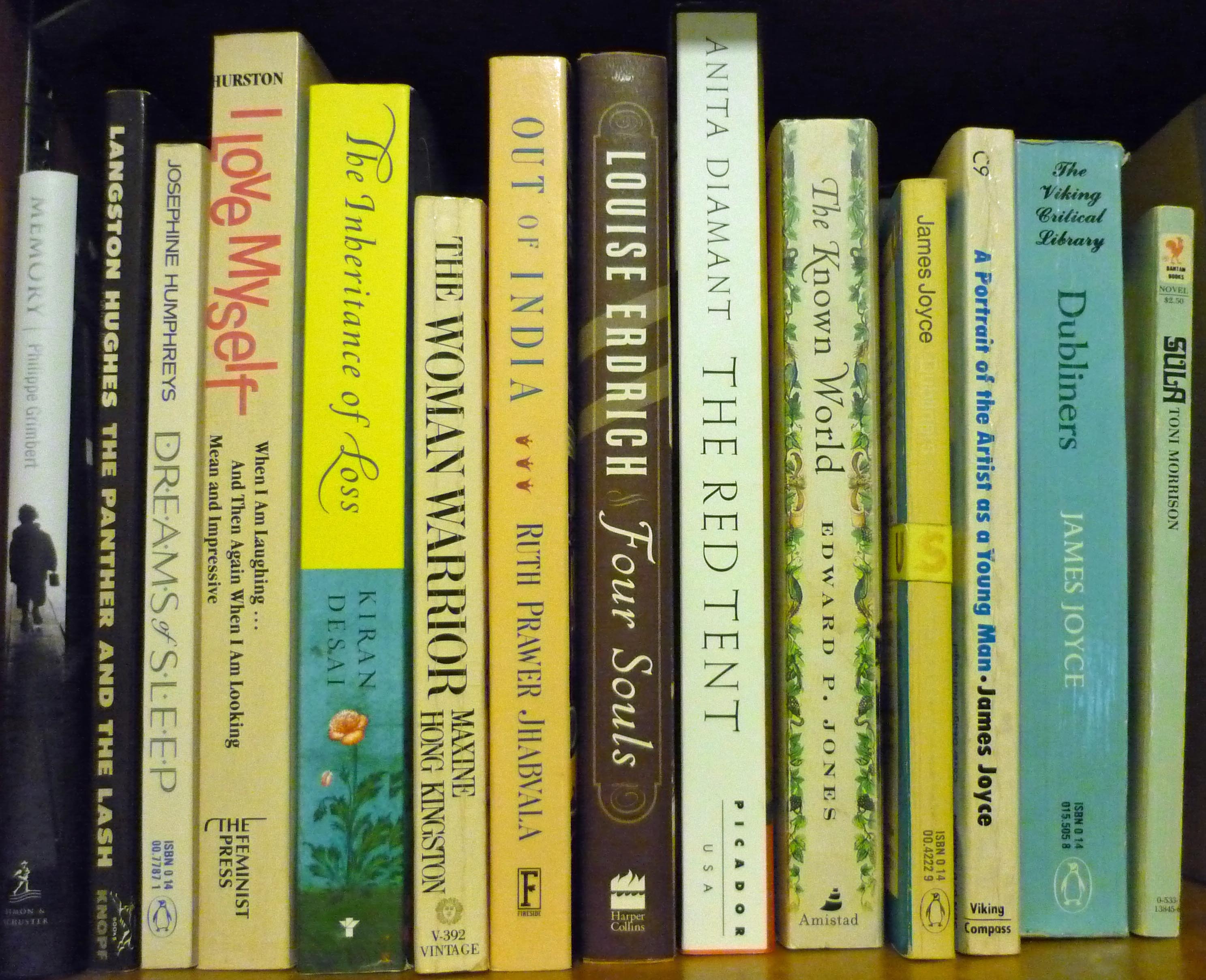
    Ever since I learned how to read, I have loved books. Through novels, I’ve traveled to medieval Europe, ancient Israel, Ireland in the early 1900’s, Appalachia in the 1930’s, New England in the mid-1800’s and many other times and places. Books have given me a glimpse into life on a Native American reservation, what it might mean to be a Chinese courtesan or a Japanese American during WWII, to grow up black in America 200 years ago or now, to live on a tea plantation in India or be a first-generation Indian American.

    P1030718

    I have long believed that reading literature has given me gifts of insight and empathy. Obviously, reading about a culture is not the same as living in it, but now there’s evidence that reading literature helps people develop empathy and the skills that psychologists call “theory of mind”—the ability to intuitively understand and predict other people’s feelings, beliefs, and intentions.

    In a recent article in the Star Tribune, Robert M. Sapolsky, a professor of neuroscience at Stanford University and the author of “A Primate’s Memoir,” describes research about how theory of the mind develops, “Subjects who read literary fiction, which for purposes of this study meant fiction that had won or been nominated for an important literary prize, performed significantly better in all those domains—exactly the type of skills associated with theory of mind—than subjects who read other things  or nothing at all.” He characterized “other things” as nonfiction magazine articles or popular fiction.

    So next time someone tries to characterize my desire to read literary novels as “not really doing anything,” I can smugly (but very empathetically) think, “I’m improving my intuitive skills and exercising my abilities to understand other people’s thoughts and experiences!”

  • Wandering in the Land of What If

    Picture taken by Christian Koehn (Fragwürdig), from Wiki Commons
    Picture taken by Christian Koehn (Fragwürdig), from Wiki Commons

    Lately, I’ve been wondering what the American appetite for post-apocalyptic stories—both movies and books—says about our culture. We are constantly bombarded with The Hunger Games, Children of Men, Book of Eli, Matrix and similar stories. And there are more on the way. I recently saw trailers for After Earth with Will and Jaden Smith and Oblivion with Tom Cruise. What attracts us to these themes?

    It Could Happen

    At first, I thought it meant that many people felt powerless and doomed—maybe we aren’t headed for irreversible damage right this minute, but it could happen in the near future. The idea that we could be nearly destroyed via nuclear holocaust, disease or asteroid isn’t so hard to imagine. Those possibilities already exist. Well OK, I can’t take destruction by asteroid seriously, but the other two aren’t farfetched. Bombing by rogue state (re: 9/11), drug-resistant tuberculosis, and the Ebola virus already exist. Today, even the flu is killing people.

    The “we’re all doomed” mindset may be part of our culture, but I don’t think that’s the main reason behind our cultural fascination with dystopias. I don’t see people flocking to see Amour, a movie about an aging couple coping with her illness and impending death—that definitely could happen, but it’s way too real and scary for a lot of people, including me.

    What If?

    Tons of movies and books like The Handmaid’s Tale, Children of Men, and On the Beach start with a speculative premise—What if the world were nearly destroyed, how would survivors behave? These stories explore human behavior as well as the strange new worlds. What If generally becomes a cautionary tale—because resources are scare or fertility is at risk, the government / a corporation/ society imposes dehumanizing restrictions on the survivors. Forced childbearing, extinction, or forced suicide are the frightening new realities. What makes the stories scary is our recognition that governments, corporations and societies can and do run amuck—it’s not so farfetched.

    Test Your Mettle

    Some of the emotional appeal of post-apocalyptic books and movies is that we identify with the heroes and imagine that if we were faced with the hardships, we’d be resilient survivors. We’d outsmart the evil government and resist being brainwashed. We’d escape. We feel more powerful than we really are.

    Well At Least My Life is Better Than That

    Or maybe it’s that by briefly immersing ourselves in the horrible world pictured in a movie or book puts the shortcomings of our own lives in perspective—at least I’m not scrounging around bombed out buildings for scraps of food or I don’t have to fight to death to save my sister . . .

    A variation on that theory is that getting caught up with a dramatic and frightening plot is a safe thrill like riding a roller coaster. Scary, but in the end, you know you’ll walk away unscathed.

    But do we walk away unscathed? Or do these movies and books thrill us but make catastrophic events seem acceptable?

    If you like this genre, do any of my theories fit you? Which ones?  If not, what draws you in?