To Louis and Octavia

An enthusiastic three-year-old ran craft materials to the kitchen table. She had a project in mind, a puzzle to build out of tongue depressors. 

I was not enthusiastic about the project which, as many projects, would lead to painting which might lead to painting herself. In fact, I was tired and working hard to be gentle as she taped sticks together. When a washcloth became necessary, I got it damp at the sink, looking at her head bent over a row of painted wooden sticks. 

The oak table where she worked on a protected area was made in 1902 when Louis Cravillion married Octavia Orde, my paternal great grandparents. How I miss my Grandma Tavy. My grandmother died following childbirth, so Octavia cared for her grandson. As a woman of the age, I am now, she cared for me. I sat on one of these chairs while she braided my hair, ate meals she cooked, or colored. My mother worked in town.

After my great-grandfather died, we had moved in with her. My parents remodeled the kitchen and dining area storing this oak table for a new Formica and metal model. Eventually an apartment was finished upstairs so she would have her own place. The table returned. Eating breakfast in my designated chair, it was possible to watch everyone come to the new post office across Main Street. Patterns were cut to make clothes, cookie dough rolled out, homework completed.

After her death, the table was refinished and set up as my parent’s game table. As they downsized, it came to be mine. Our children ate and did homework and projects on a glass surface that protected the oak. Today’s artist is one of their children. 

Stories of six generations of my family have been exchanged here. Men have returned from wars to a first home meal, baptisms and weddings celebrated, hard decisions made, children loved. Great grandma’s quiet and calm presence participated in half of its history. I see her hands now show in mine; her brown eyes look back from our mirrors. I can only hope I carry some of her wisdom to those who sit at this table, her blood mixed in their veins. I am not so tired.

Immortalized

I don’t know the women who crocheted this lace doily and antimacassar, but I think I understand something about them.

A century ago, maybe she saw a doily pattern with a wheat motif in a magazine and made it on a lark—the same impulse that has led me to make a quilted pin cushion, add a mosaic to a small box, decorate a shirt with reverse embroidery, and so many other projects. I was curious about the process and making stuff is fun. Most of the time I’m only trying to please myself, so it doesn’t matter if my creative ventures are one-and-done. 

Whoever made the antimacassar might have been more invested. Perhaps she spent weeks one winter, creating the elaborate design, a piece she’d be proud of. She could have spread a towel across the back of a chair to keep off her husband’s macassar hair oil when he leaned back for a snooze. Instead, she made something pretty. I understand the impulse—if you’re going to see it every day, why not have something pleasing? Maybe detailed crochet was her art form, like pottery and quilting are mine. 

When I told a friend about a minor project to machine embroider some muslin towels, she said, “You’re so creative.” I balked, “There are so many people who are wildly creative and talented. I’m a dabbler.” She insisted, “Say yes. And thank you.” My friend is right about me, but sometimes it’s hard to own this urge. Easy to downplay or dismiss creativity that’s expressed everyday things. 

I squint into the future and imagine someone picking up a quilt or ceramic bowl I’ve made. She or he might find a different purpose for it—cut the quilt into placemats, hammer the bowl into bits for a mosaic, or some other project I can’t even imagine. If my things get repurposed, I won’t feel disrespected at all. They were fun to make. They pleased me. They don’t have to last or be cherished like museum pieces. Maybe like me, this future creator will wonder about the person who originated it.

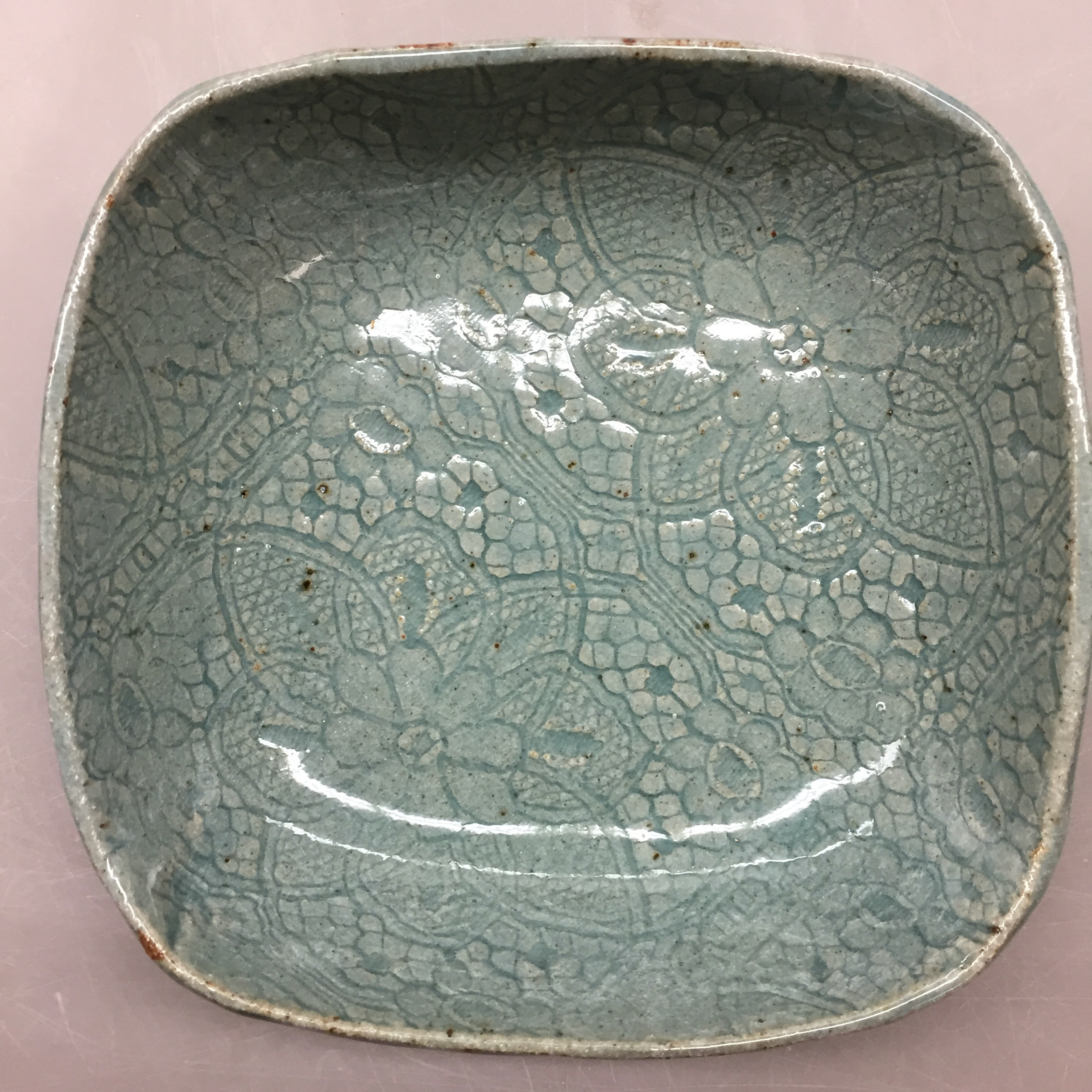
In the pottery studio, when I spread the doily and antimacassar onto clay and transfer the lacy patterns with a rolling pin, I’ll admire the craftsmanship, patience, and skill needed to make them. Those women and their work will be acknowledged and celebrated in mine. Immortalized.

A dish I made with another doily