Category: Antiques

  • The Half-Life of Family Heirlooms

    Recently, when I served dessert to women friends around my grandmother’s dining room table, we described our uneasy relationship with the objects the women of our families treasured.
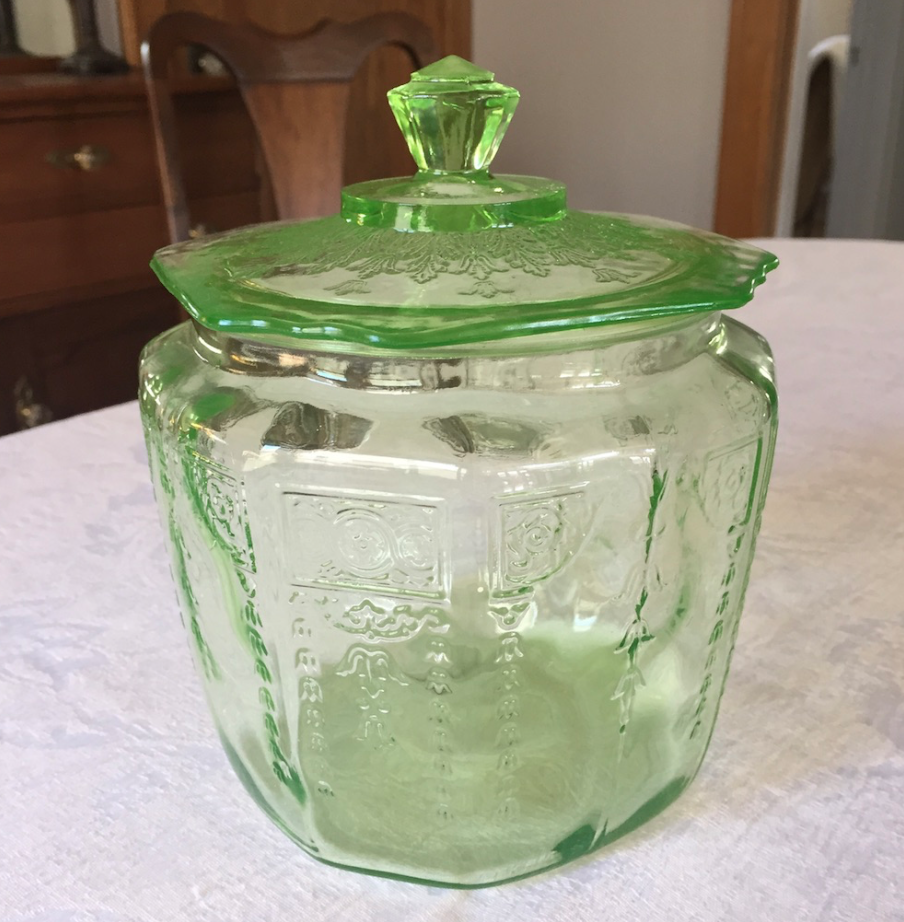
    Now when we have homemade cookies, we store them in Mimmie Shriner’s Depression glass instead of saving it for good.

    Women of the Greatest Generation, like my mother, cared about “good” china, crystal, and real silverware. They hoped to get full sets of it as wedding presents, and they cherished their mother’s and grandmother’s things. For them, the hope chest tradition was alive and well. They collected china and linens before they married and instilled that value in my Baby Boom friends and me. But our Millennial kids don’t want to fuss with handwashing goblets or ironing tablecloths. Not that I blame them. I don’t either. Nonetheless, my friends and I are distressed about what to do with the tableware and linens we’ve inherited. Let alone the quilts, furniture, and photographs.

    We were brought up to value them, but the tableware really doesn’t make much sense in our lives. Where do you keep it between holidays? Wouldn’t holiday meals be less work if all your dishes could go in the dishwasher? And yet, this stuff mattered so much to our mothers. How can we just donate it to charity? But people do—Goodwill is full of 12-piece place settings with dainty floral borders. I’ve seen Waterford crystal goblets there too.

    Articles like,No One Wants Your Stuffhave taught me to rethink my assumptions. The popularity of books like The Gentle Art of Swedish Death Cleaningand The Life-Changing Magic of Tidying Up make clear that either I can purge my stuff or my kids will.
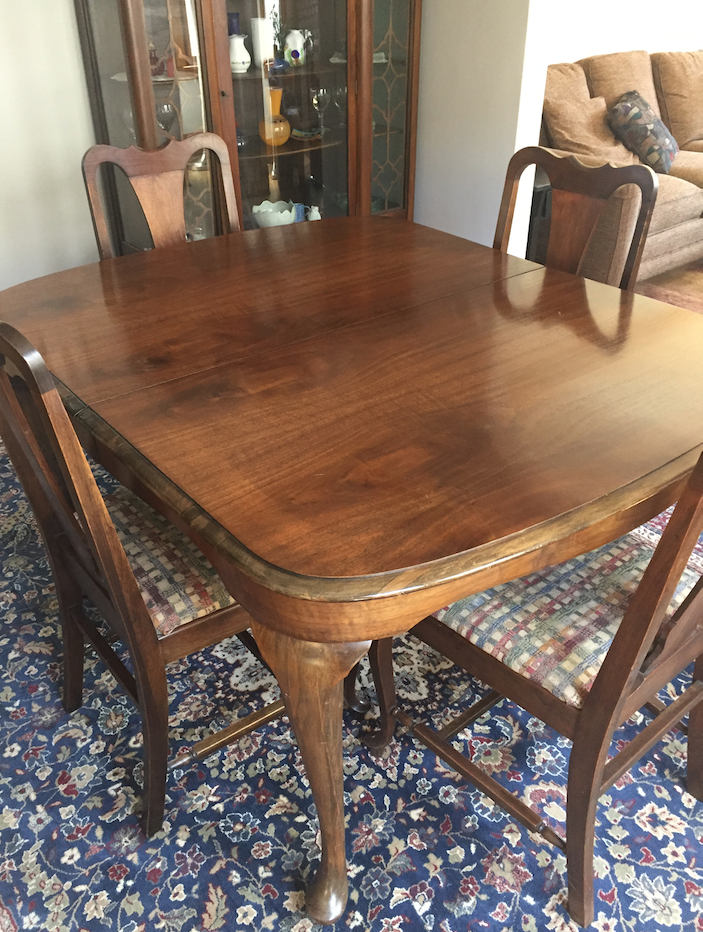
    Mimmie Shriner’s table where she served her out-of-work relatives on Sundays during the Depression

    I’m becoming reconciled to the half-life of memories. When my siblings, first cousins, and I—the last people to remember Mimmie Shriner or Grandma Pleitz—are gone, my grandmothers will become “ancestors” instead of the vivid people they are in my head. Mimmie’s dining room table will just be an antique table, and Grandma Pleitz’s crystal goblets will just be wine glasses. Their significance is in my memories; my sons and any future daughters-in-law don’t have those associations—they never knew my grandmothers.

    Many evenings, I sip wine from one of Grandma Pleitz’s eight goblets.

    Yet the objects are a visible reminder of past generations—hardworking, loving women who wanted pretty things in their lives. How can I honor the memory of these women without feeling burdened by their stuff? One way I’ve chosen is to use the good crystal and china even if it isn’t a holiday. When it chips or breaks, I throw it out. That way my grandmothers come to mind and are more present in my life. If their tablecloths get shrunk or stained—so be it. At least they got used and enjoyed. Likewise, I honor my grandmothers by keeping a few things I really like so I can look at them often. Finally, I remind myself that heritage doesn’t reside in the objects alone. It’s also passed down through our family’s recipes, traditions, stories, and values.
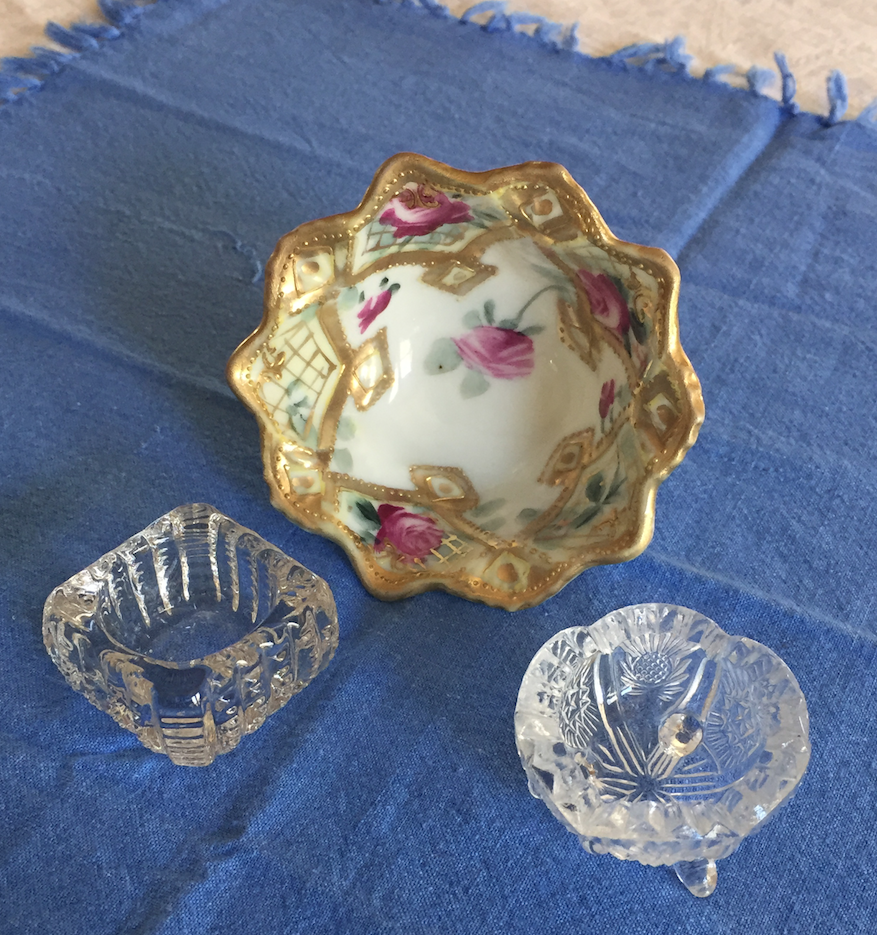
    Mimmie put hairpins in this small handpainted dish. I never put salt Grandma Pletiz’s salt cellars, but I still like them.

    I accept that my sons and future daughters-in-law may not care about my stuff—whether inherited or chosen during 30+ years of marriage. If they do, they will have different memories than mine. I hope they only keep what they care about.
  • Why I’m Done Deferring Joy

    Recently, I’ve decided that I’m done “saving it for good.” Nothing’s too good to use. Nothing’s too good to wear. 

    Mimmie's lemonade set
    Mimmie’s lemonade set

    When Mimmie (my father’s mother) died, I received her handpainted Nipon lemonade set. She’d promised it to me because I’d admired it for years. I also received Grandma’s (my mother’s mother) crystal goblets after Grandma died. I am pleased to own both sets—they are part of my heritage and they remind me of women I love. For 30 years, I’ve “saved them for good,” dusting them but rarely using them.

    I also have dresses, blouses, and a suit I’ve saved for good, which means I rarely wear them. Too often, the clothes are too small or out of style before I need them again. I wind up giving them away—which is OK, maybe someone else can use them—but why didn’t I use them?

    I don’t know whether or not “saving it for good” is a generational phenomenon. As a Baby Boomer whose parents experienced the Great Depression, I was taught that it was important to hang on to and care for the things you had, because somebody worked hard to get them, and you might not to be able to replace them if they got ruined. But somewhere along the line that practical impulse got subverted.

    My special things began to assume too much importance—they had to be protected in glass breakfronts, handwashed and dried, and only admired occasionally. That’s the impulse I’m rejecting. My sons never knew my grandmothers, so the meaning and memories go when I go. If the lemonade cups get chipped, so be it. They are meant to be used and enjoyed, not wind up in an estate sale. I will think of Mimmie and Grandma more often if I use their things regularly than if the items stay in my cupboard.

    Grandma's goblets
    Grandma’s goblets

    I’m also rejecting the idea of deferring joy—that there’s some bigger better moment in the future—some truly important occasion when I should dress up or use crystal. That’s akin to waiting until retirement to travel and then having a heart attack or some other debilitating illness and not being able to go.

    Instead, I’m choosing to live in the moment more—I’m not saving for a rainy day or waiting for the right time. Well, OK, I’m still saving money because, if heredity is any guide, I’m going to live a long time. But I’m spending more joy right now.

    So I’ll use Mimmie’s cups to drink iced tea and sip cabernet from Grandma’s goblets. And when I show up at work in a dress or suit, my coworkers can wonder if I have a job interview, but you’ll know the real story!

    Do you save anything for good? How do you seize the day and spend more joy right now?