Category: Antiques

  • Peach Seed Mystery

    I have very few memories of the man I knew as my grandfather (Mimmie, my great aunt and Pa, my great uncle raised my father). Pa was a white-haired smiling presence during our weekly visits to Mimmie and Pa’s duplex. He was a quiet man, but many 77-year-olds would struggle to find something to say to a 5-year-old. During one conversation, I recall him teasing me about having “strawberry blonde hair.” I was sure he was mistaken. I had “yellow” hair. 

    He also fed squirrels on their wide front porch. Pa would make a clicking sound similar to a tsk to call them, and the squirrels would take shelled walnuts from his open palm. Apparently, he was unaware or unconcerned about squirrel bites or rabies. He taught me to make the clicking sound but told me never to feed the squirrels without him. He’d gotten in trouble with Mimmie when a squirrel slipped into the house and climbed the drapes. After that he was more careful.

    I’m not sure how I came to have his peach seed monkey—whether he gave it to me because I liked it or if it came to me after he died when I was 8. It’s a peach pit carved in the shape of a monkey and it has tiny red eyes. As a girl I was sure they were rubies, my birthstone. That peach seed monkey was forgotten in a drawer of keepsakes until recently, when I read The Peach Seed by Anita Gail Jones (a novel I recommend). 

    Before the novel, I didn’t know carving peach pits was a thing. I used to assume Pa carved it, but now I speculate about its origin. Born in 1882, he’d lived through WWI, the Great Depression, and WWII by the time I knew him. Was the peach seed monkey a bit of tramp art he bought during the Great Depression to help somebody who needed a handout? Did he pick it up as a novelty at a county fair? Did a friend show him a peach seed monkey and Pa decided to carve one? He might have.

    Pa liked making things. He was a firefighter stationed in a neighborhood that had few fires. To pass the time during slow shifts, he made a small burgundy afghan using a technique that was a cross between weaving and braiding. Mimmie, and later, my mother used the afghan when they took naps.

    I’m left with this odd artifact, scattered memories, and a lot of questions. I keep it in my office along with other mementoes that bring to mind my parents and grandparents. 

    I still prefer to believe the monkey’s eyes are rubies.

  • Immortalized

    I don’t know the women who crocheted this lace doily and antimacassar, but I think I understand something about them.

    A century ago, maybe she saw a doily pattern with a wheat motif in a magazine and made it on a lark—the same impulse that has led me to make a quilted pin cushion, add a mosaic to a small box, decorate a shirt with reverse embroidery, and so many other projects. I was curious about the process and making stuff is fun. Most of the time I’m only trying to please myself, so it doesn’t matter if my creative ventures are one-and-done. 

    Whoever made the antimacassar might have been more invested. Perhaps she spent weeks one winter, creating the elaborate design, a piece she’d be proud of. She could have spread a towel across the back of a chair to keep off her husband’s macassar hair oil when he leaned back for a snooze. Instead, she made something pretty. I understand the impulse—if you’re going to see it every day, why not have something pleasing? Maybe detailed crochet was her art form, like pottery and quilting are mine. 

    When I told a friend about a minor project to machine embroider some muslin towels, she said, “You’re so creative.” I balked, “There are so many people who are wildly creative and talented. I’m a dabbler.” She insisted, “Say yes. And thank you.” My friend is right about me, but sometimes it’s hard to own this urge. Easy to downplay or dismiss creativity that’s expressed everyday things. 

    I squint into the future and imagine someone picking up a quilt or ceramic bowl I’ve made. She or he might find a different purpose for it—cut the quilt into placemats, hammer the bowl into bits for a mosaic, or some other project I can’t even imagine. If my things get repurposed, I won’t feel disrespected at all. They were fun to make. They pleased me. They don’t have to last or be cherished like museum pieces. Maybe like me, this future creator will wonder about the person who originated it.

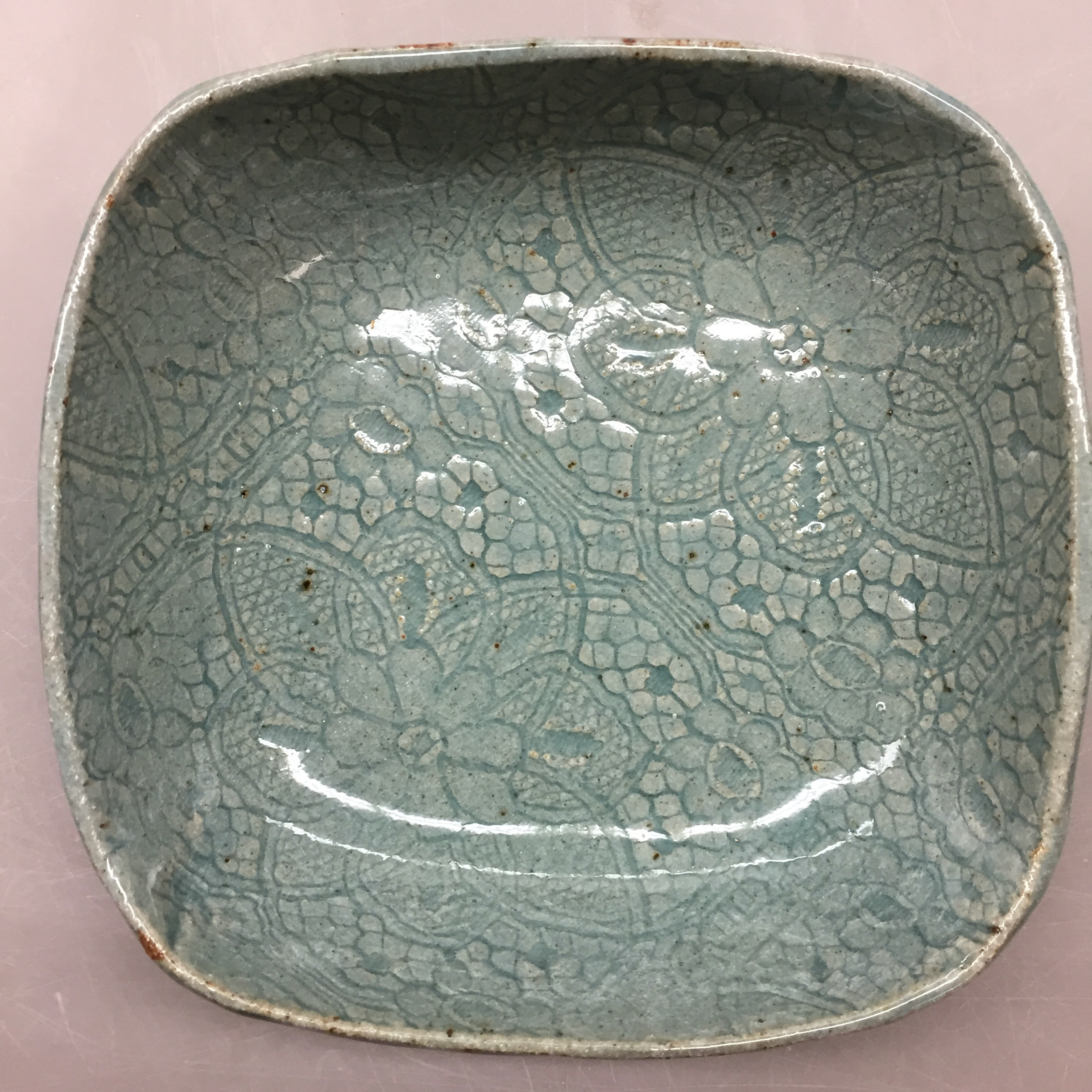
    In the pottery studio, when I spread the doily and antimacassar onto clay and transfer the lacy patterns with a rolling pin, I’ll admire the craftsmanship, patience, and skill needed to make them. Those women and their work will be acknowledged and celebrated in mine. Immortalized.

    A dish I made with another doily
  • Artifacts

    I’m at an odd intersection. The familiar objects from my childhood look like history to the rest of the world.

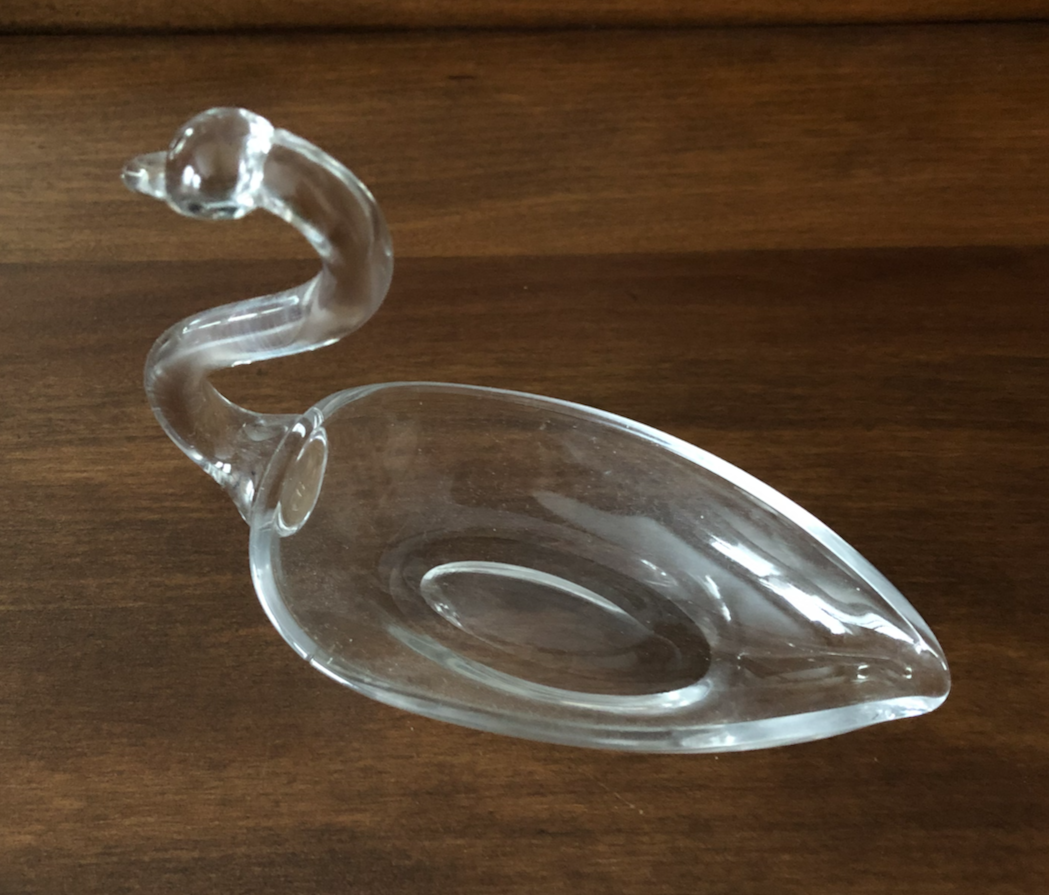
    In the Before times when I casually shopped, I’d spot artifacts from my childhood at antique stores. Huh?!? Toys like Barbies and transistor radios, kitchen items like Pyrex bowl sets and milk glass spice jars, decorations like ashtrays and the glass swan currently on my buffet are . . . old enough to be collectible. Antiques. 

    More startling was the realization that the purpose of those childhood objects will soon be obscure. Who fills decorative jars with spices anymore? When I was growing up, most homes had several ashtrays. Now they’re rare. 

    I value antiques from my grandmothers like Depression glass decanters, silver trays, cut glass salt cellars, aprons, and dresser scarves (what I prefer to think of as ‘true’ antiques). Their quaintness and the memories they call up appeal to me, but I rarely use them because they are so high maintenance. If I want younger family members to appreciate those antiques, I’d have to explain their purpose and tell stories about people they’ve never met. 

    Bringing the objects and the people who used them to life is hard, but here goes.

    Last week I made a pecan pie from scratch using my grandmother’s old wooden rolling pin. Although I never made pie with her, she was the one who liked to bake, so I feel that connection when I use it. I floured an old embroidered linen towel and rolled out the crust on it, which brought to mind one of my grandmother Mimmie’s housekeeping tips.

    She was from an era when women were expected to embroider towels, pillowcases, and dresser scarves (pretty cloths that covered up a lot of a dresser top to protect the wood—a lot of energy went into protecting furniture in her day). She or one of her sisters embroidered the towel which also had to be starched and ironed so it would look nice while hanging in the kitchen. 

    As a girl, I wondered how I was supposed to use such a fancy towel. Mimmie showed me her secret: dry your hands on the part that doesn’t show—the part that hangs closest to the wall on the towel rack. That way the pretty ironed front would stay nice for a few days. No surprise that I use terrycloth towels in my kitchen!

    Beyond the ‘antiques’ in my life is the realization that my lived experiences are also the stuff of history, but that’s a story for a different day! 

    What’s the oldest thing in your house? Does anyone besides you know what to do with it or why it matters?