Category: American Culture

  • I Never Wanted Anything Bad Enough to Camp Overnight for It, But . . .

    I Never Wanted Anything Bad Enough to Camp Overnight for It, But . . .

    Antonio had me at, “You can blog about it.”

    I studied him, then upped the ante, “With photos … of you?”

    To convince a twelve-year-old boy to pose for photos at any time is challenging.

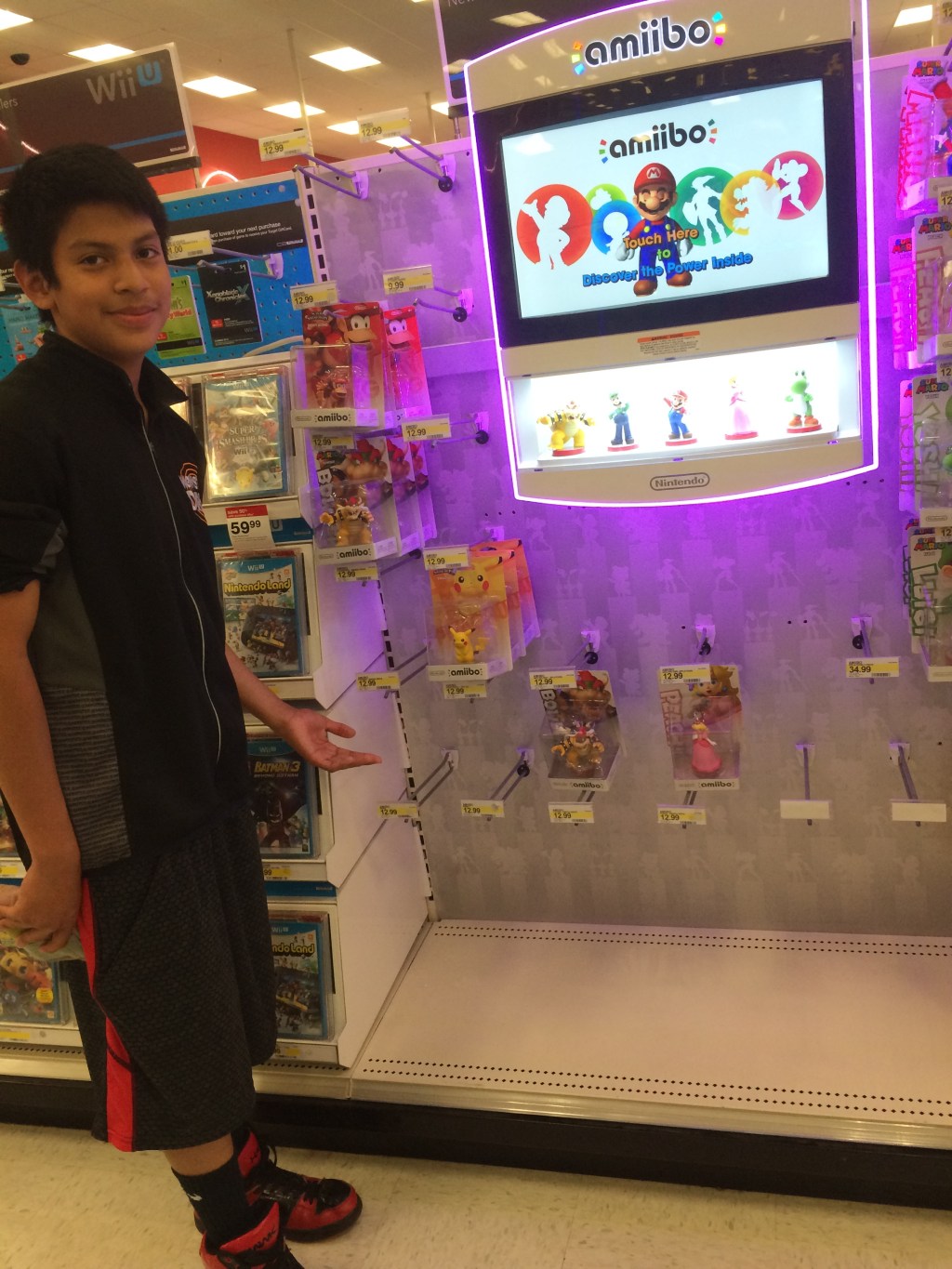
    Antonio pointing to an empty display of Amiibos
    Antonio pointing to an empty display of Amiibos during our ‘dry’ run.

    He nodded.

    That is how I came to be standing in a line at Target on a Friday morning before the store opened.

    Amiibos would be released at 8 am. It was Antonio’s goal to get three of them before they were sold out. But, he had school. Since I had the day off from work, I would be a perfect stand-in.

    The night before the big release, Antonio insisted that we take a practice run. I needed to know the most direct route to the sales counter.

    He would have preferred that I camp overnight outside the store doors. He even offered that he and Crystel would join me. He surmised that the both of them could bring their bikes and leave me first in line when it came time for them to bike to school.

    I actually thought about it. It would be a new and shared experience. But, then again, I thought I should save that opportunity for something other than a fairy-type Pokemon. Concert tickets or ….. I don’t know …. I’ve never wanted anything bad enough to camp overnight for it.

    What we would do for our kids. Antonio certainly wanted these Amiibos. His goal was to collect every one. He has 17.

    I’m not a collector. I’m a purger. It took me awhile to understand that my children were different from me. There were times that I cringed realizing — a little too late — that they were collecting the very items I was purging. The items were already down the road at ARC or the school store or the garbage can.
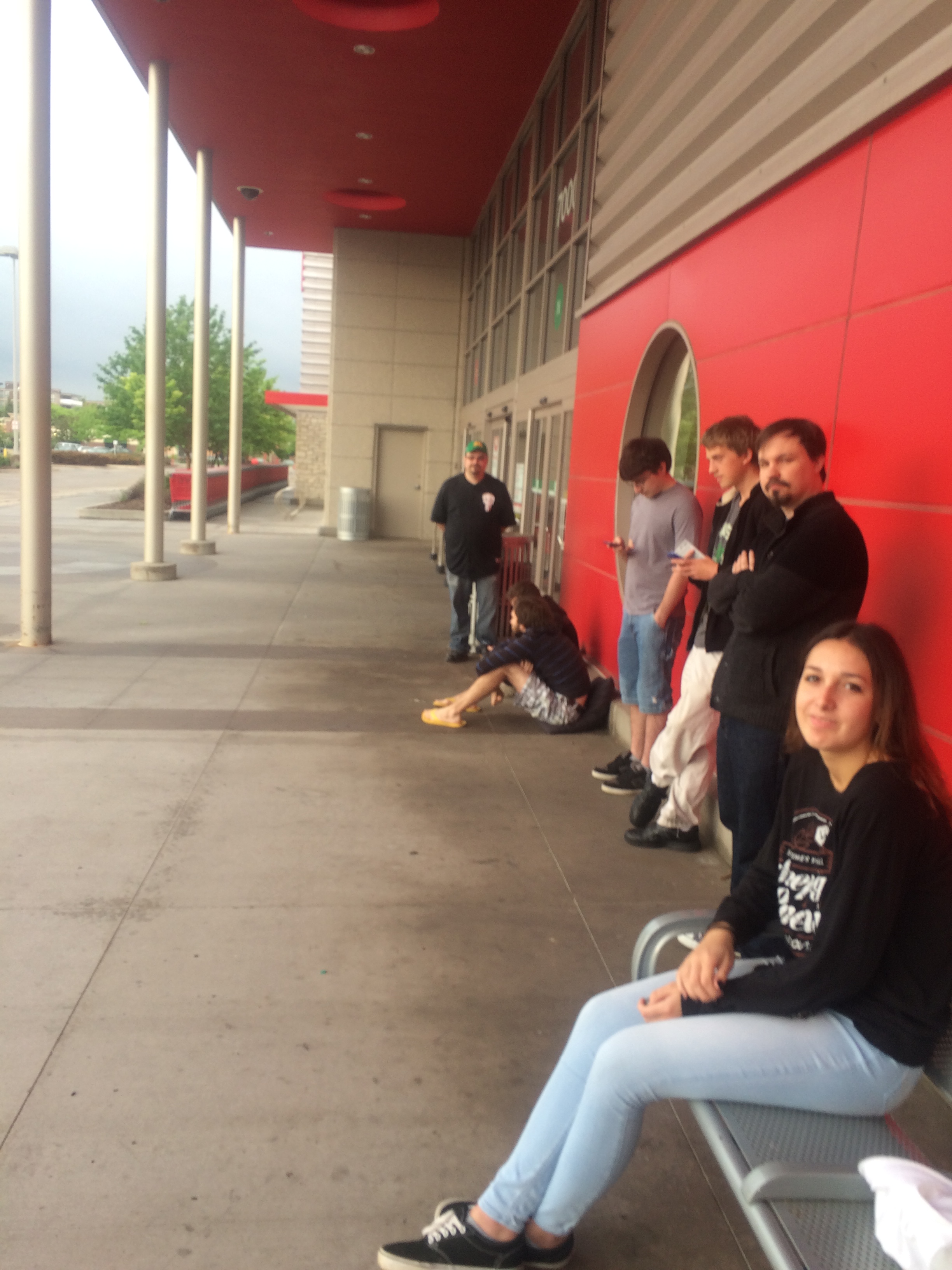
    IMG_6301That Friday, after dropping Antonio and Crystel off at school I headed over to Target. I was number 8 in line. I looked down the line at my 7 peeps.

    A text message interrupted my thoughts.

    Antonio wanted to know if I was in line, how many were in front of me, and if they were kids.

    All men in their twenties except a young lady sitting next to me, I text back.

    I set down my phone and asked her why she was there. “My brother,” she said. Adding, “He owes me.”

    I stood up. “Hey, I’m writing a blog,” I said, loud enough for everyone to hear. “Do you mind if I take your picture?” A thumbs up, a nod of the head, a grunt. “Anyone mind?” I questioned again. No answer, which was my answer.

    At 8 am when the doors opened, I was surprised at the calm.

    My peeps walked single file. No cutting in line. The first guy determined the pace. Three clerks were at the counter waiting for us. Amiibos were stacked behind them. By the time it was my turn, two amiibos were already sold out.
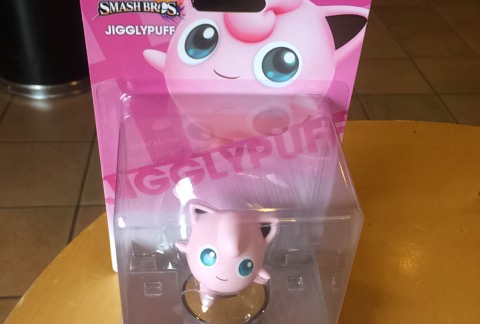
    IMG_6307I can only tell you that I got a Jigglypuff.

    Antonio will learn if I scored any others on his birthday in July.

    Not knowing until then will torment him. I love doing that to an almost 13-year old.


  • Anachronisms (Or 3 Reasons Why I Love My Electronic Devices)

    My youngest son and I were talking about eating alone in restaurants, when I flashed back to life before cell phones, tablets, GPS and Internet connectivity. He’s a nice guy, so he didn’t tease me about my “Why in my day, Sonny, we used to . . .” moment. Electronic devices have profoundly changed the outcome of several awkward or frustrating experiences.

    Eating Alone

    While traveling for business in the late 1980’s, I faced a dilemma that no longer exists: how to eat alone in a restaurant without looking weird or attracting unwanted attention.

    Articles for career women advised bringing a book and reading at dinner. That way you wouldn’t feel stupid, and you wouldn’t attract sleazy guys trying to pick you up. Or you could order room service and avoid the whole issue.

    I usually preferred a good meal with a glass of wine to a dry turkey sandwich in my room, so I learned to carry a book. Wait staffs’ reactions and service varied from dismissive to sympathetic. To boost my confidence and convey that I had a right to be there, I was pleasant but a bit aloof. While waiting for my order I sipped my wine and read. Usually that worked, but sometimes I didn’t have the energy for the performance.

    Now I can take my smartphone or tablet and catch up on email, check Facebook, read online, or write and be legitimately busy and content. I don’t have to worry that I look pathetic or vulnerable.

    Missing Connections

    Before cell phones, bad luck could ruin a rendezvous. Imagine this: you’re in Chicago on business. You have a free afternoon before your flight and want to see a college friend. You agree to meet by the lions in front of the Art Institute at 1:00. By 1:15, you’re checking your watch and wondering. At 1:35, you’re frustrated and uncertain. Stay? Go? What’s going on?!?

    Screen Shot 2015-05-27 at 10.47.28 PM

    There was no way for your friend to call or text to say, “Missed my train. Can I meet you inside by the Chagall window at 2:00 instead?” You could go inside alone but she’d have no idea where to find you. Or you could leave, angry and disappointed. Either way, you would have missed each other. The afternoon of laughs and reminiscing couldn’t be salvaged.

    Getting Lost

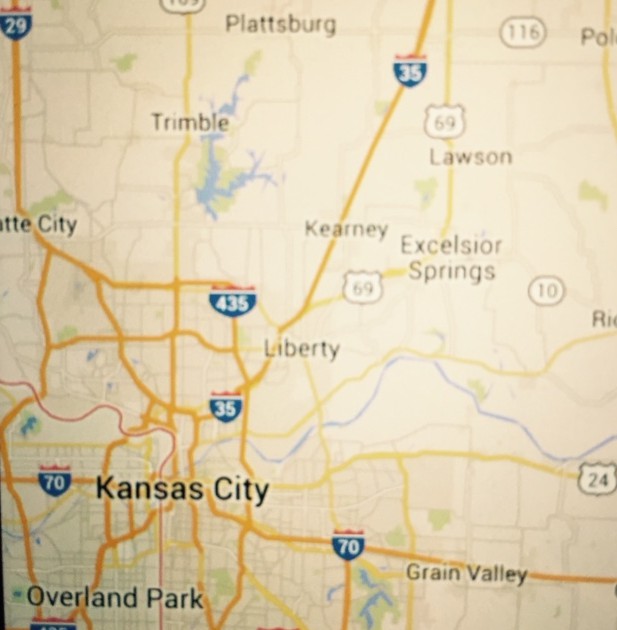
    MissouriFor years, I’ve driven cross-country for family visits to Ohio or vacations in Virginia, Texas, and Montana. I also think nothing of driving to a distant suburb to meet friends for dinner. Usually I navigate these trips successfully . . . as long as I have a map or Garmin for GPS.

    Occasionally, though, I’ve gotten spectacularly lost. Driving 30 miles out my way near Green Bay, Wisconsin. Circling Eden Prairie, Minnesota for 40 minutes (and Eden Prairie isn’t that big). Hubris accounted for these mishaps. I thought I knew where I was going, so I didn’t bring a map.

    Back in the day, the only solution was to stop and ask for directions. I had to hope the person was reliable and not a knucklehead who’d send me the wrong way, because he forgot to mention three important turns.

    If there’s no cell phone signal (rural Montana and Wisconsin come to mind), I can be just as lost as in the old days. Google maps and GPS have definitely reduced the likelihood that I’ll get lost during a road trip, but sometimes they are wrong or incomplete. Just in case, I still carry a paper map and keep my cell phone charged up.

    How about you? What difficult situation has become a thing of the past because of your electronic devices?

  • Naming Rights

    Naming Rights

    The ring I wear on my left hand honors my marriage. My maiden name—the name I’ve had all of my life—honors who I am as an individual.

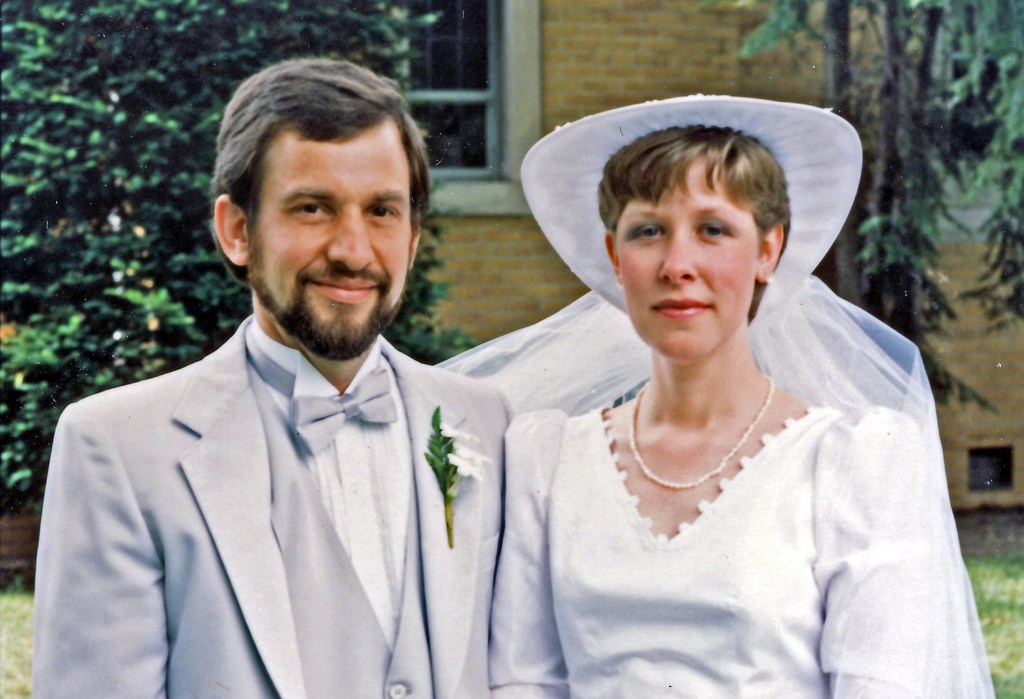
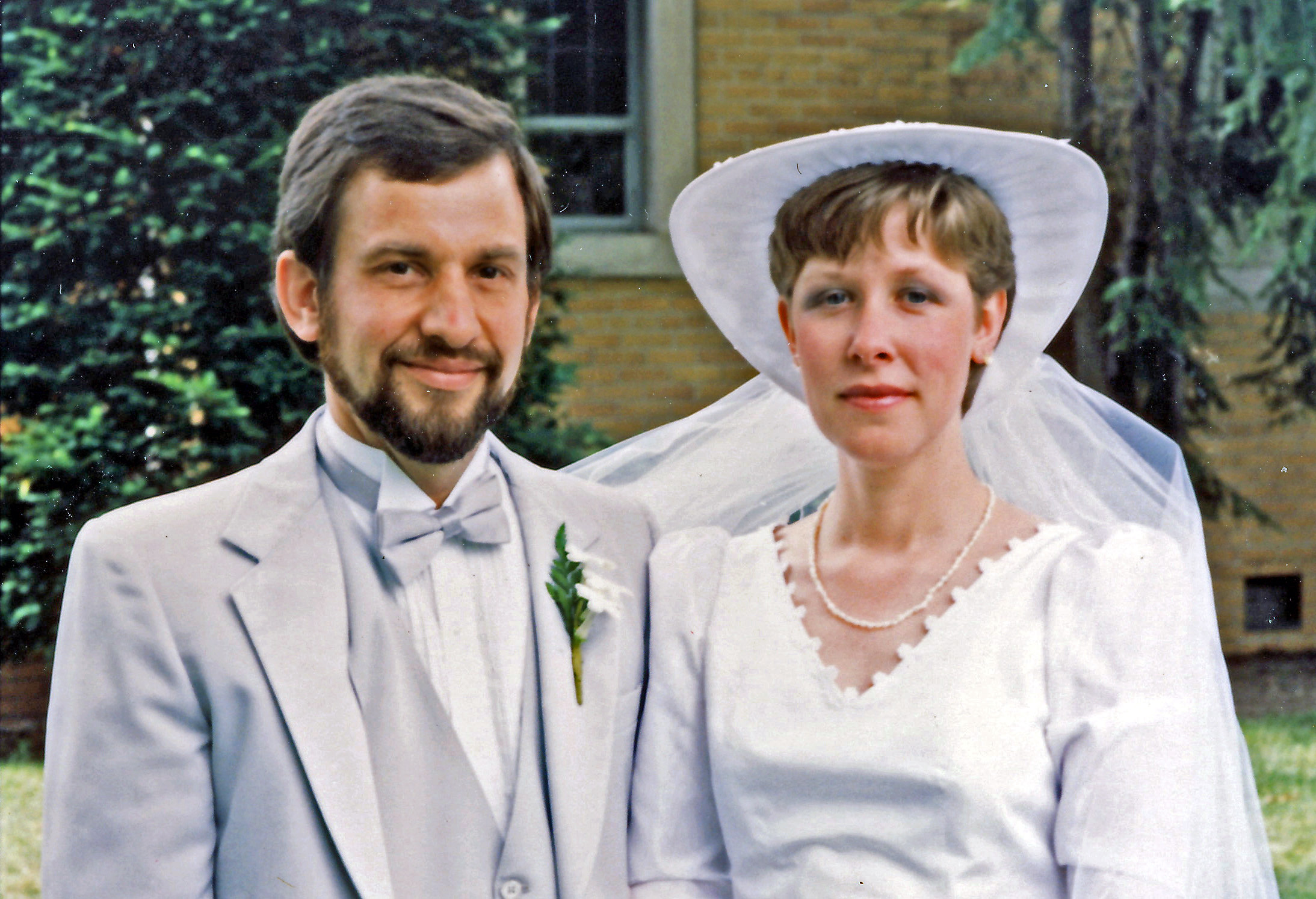
    J&E1985bWhen I married 30 years ago, this was an important and controversial distinction. Like many people, my parents worried that I would offend my in-laws and that our future children would encounter problems because my husband and I have two different last names.

    Nonetheless, we felt strongly about this decision. He’d keep his name and I’d keep mine. For practical reasons, we didn’t choose to hyphenate. Shriner-Sakowski is just too much name!

    Without meaning to, I did offend my in-laws, but they came to accept our decision. Our sons tell me that my different last name hasn’t been an issue for them. Perhaps some of their teachers or coaches assumed that my husband and I were divorced, but divorce is so commonplace that no one commented. I chose not to be offended when people called me Mrs. Sakowski. I knew who they meant and that they were trying to be polite. Often I pre-empted the discussion about names by introducing myself as “Greg’s Mom” or “Mike’s Mom.” That was all the teacher or coach wanted to know—my relationship to the kid in question. These days, I rarely have to explain the name difference.

    So it came as a surprise that using a maiden name has been resurrected as an issue. Recently, a friend recounted a conversation she overheard at a coffee shop. A young couple was talking with their minister about their wedding ceremony and the minister said, “Some ultra feminists don’t even take their husband’s last names.” Huh? I can easily list half a dozen women I know who kept their maiden names. It’s not that radical.

    Equally surprising was my recent experience with two different lawyers (one was settling my aunt’s estate and the other was handling my mother’s estate). Each assumed that I was Ellen Sakowski or Ellen Shriner-Sakowski. With my aunt’s lawyer, I explained several times that my real legal name is Ellen Shriner. Finally, I had to state unequivocally that I had never changed my name, and I wouldn’t be able to cash an inheritance check made out to either of those imaginary women.

    But then I recalled that four young professional women I know who’ve recently married all took their husband’s names. I was surprised and remain curious. Is the gesture that was so important to me when I married irrelevant now? Does it no longer feel necessary to make that distinction? Are women’s independence and equality a given for those young women? I hope so, but I’m skeptical.

    Despite my skepticism, I’m not trying to take anything away from women who choose their husband’s name. As a feminist, I believe women have the right to handle their names however they like: keeping their maiden names, using their maiden name as a middle name, or taking their husband’s name. I would never prescribe what a woman should call herself. Naming is a very personal decision.

    I think of one friend who was glad to shed her father’s name when she married. They had a difficult relationship and taking her husband’s name was a way of distancing herself from her father and asserting her new grown-up identity. Changing her name was a mark of independence.

    Another friend, who survived a childhood fraught with sexual abuse, invented a whole new name to mark the break from her family and her hard-won emotional health.

    What really matters is whether the choice of name is based purely on personal preference rather than perceived societal expectations. As a feminist, I just hope that women today feel much more free to choose the name that pleases them than I felt 30 years ago.