Category: Aging parents

  • In the Company of Mothers

    “You are such a good mom.” Ah, I leaned in, these words meaning more to me than my friend could know.

    I had been talking about the latest challenges with my young teen, where everything felt new, unfamiliar, and uncomfortable. I took a minute to let the words sink in. It was the kind of thing my mom used to tell me.

    My mom and I talked frequently when my baby was a baby, me needing to hear the calm of her voice, steadied by years of mothering. She seemed to meet with ease all the challenges of raising four kids close in age. Or at least that’s the way it seemed to me.

    By the time I became a mother, my mom had been a grandparent to nine already, the oldest in college and the youngest just into the double digits. I was late to the game and met motherhood with a fair amount of hand-wringing. Those early days were especially fraught-filled. Was my baby sleeping enough? Eating enough? Hitting all the right growth markers? There was so much to worry about.

    My mom didn’t always know how anxious I was, but I would call her just to hear her voice. In my postpartum funk, I couldn’t tell her I was scared and lonely—I don’t know why—but I might instead give her a mundane update of how the day was going with my infant, hoping she could intuit my struggles. I was afraid of my own fear and questioned everything I did.

    As my child grew, my mom was a steady source of reassurance and always wanted to know what my little one was up to. I would tell her some tale of my busy toddler, then preschooler, then elementary student. The stories were mostly amusing, but sometimes I was exasperated or uncertain. “You’re doing a good job, Brenda,” she would say. I’d always think, “Really?” It never felt that way. But she knew what I needed to hear.

    ~

    I miss that. My mom is no longer here to comfort or commiserate, to offer hope for parenting through the teen years. She passed away right before the pandemic and right as my child was entering the tween years. Now I find myself among the many motherless daughters out there, feeling my way along. While I know that I am lucky to have had my mom for as long as I did, I still miss her and her unconditional support. And I really want to know how she made it through parenting four kids from infancy to adulthood—especially through the teen years.
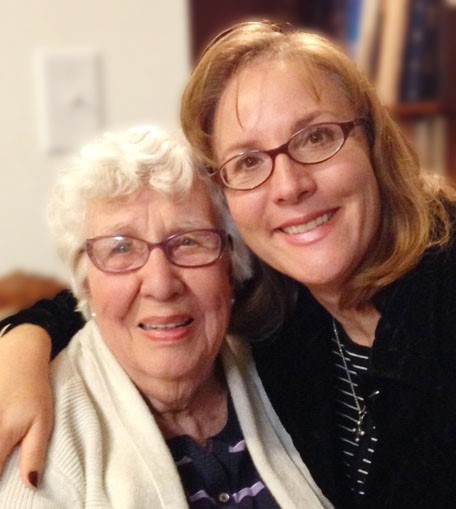
    The author and her mom Lois.

    She used to say that she had a lot of help, especially from my dad when we were all younger. And that having a lot kids close together was just what people were doing at the time. Now she would probably tell me she did the best she could and that she was far from perfect. And that she was also buoyed by a loose network of family, friends, neighbors, and others.

    ~

    I wonder now what she would say about the precocious child who has turned into a strong and independent teenager. I imagine telling her of the latest tale and hearing her say, “Oh, Brenda,” lowering her voice on the “Oh” to add to the sense that she knew it was hard. Or maybe she’d shake her head and murmur words of commiseration. My child is much like one of my siblings, whose teenage years were punctuated by frequent conflict with my parents. Would my mom tell me she could understand the challenges of parenting an iron-willed but sensitive child? Or would she think of herself as a teenager, wishing that she had been nicer to her own mother? I never imagined my mom as a teenager but only as my mom and was surprised when she told me she regretted clashing with her own mom when she was young.

    So perhaps this tells me that we never quite get it right and despite the anxiety, the self-doubt, the struggles, and even the loneliness, we are making it through.

    My mother leaned on her own sisters, neighbors, friends, colleagues, and I am, too. I am banking on the collective wisdom of this vast community of mothers I am part of. They look like the friend who laughs with me and the one who offers a listening ear or a word of advice and then the one who just tells me I’m doing a good job.

  • Walking to Nowhere

    My father walked forty-five minutes a day. Whatever the weather, whatever kind of workday he had had, he headed out to do his exercise. Quintuple bypass surgery in the days when your chest was sawed open, scared him into obeying his doctor’s instructions. Walk or wake up one more time with tubes coming out of unexpected parts of your body. 

    He didn’t have walking shoes, special clothes, a pedometer, sunscreen, tunes playing in his ears. Just good leather shoes, a hat, and a watch to keep him honest. He didn’t drive anywhere to change up the scenery. He just walked. For decades.

    After a career of office work that meant little time on my feet and lots on my seat, I’ve joined the crowds walking daily to nowhere. I put some time in on asphalt streets and concrete walkways and some on a simple treadmill. I don’t know if special shoes are any better than his thick soled leather tie models. An athletic tracker on my wrist provides feedback that is nice about my heartbeat and steps. Podcasts fill my mind while I wander about. 

    This is how many people in non-physical jobs today fight weight gain, arthritis, general aches, aging. It’s what we substitute for not using our bodies the way they are meant to be used. We walk around neighborhoods, on lake or park pathways, with our dog, maybe with another person. We feel good about piling up our miles and wearing down our shoes.

    I’m behind for the day and kind of crabby about putting aside writing projects with due dates in order to do my steps. Curse the pandemic, I miss playing with my granddaughter, machines at the gym, sweating through a dance class and swimming. On the other hand, I’m alive and walking my way to vaccine and herd immunity and the opportunities to get back into an active community. Thanks for the lesson on resiliency, Dad.

  • In Memory

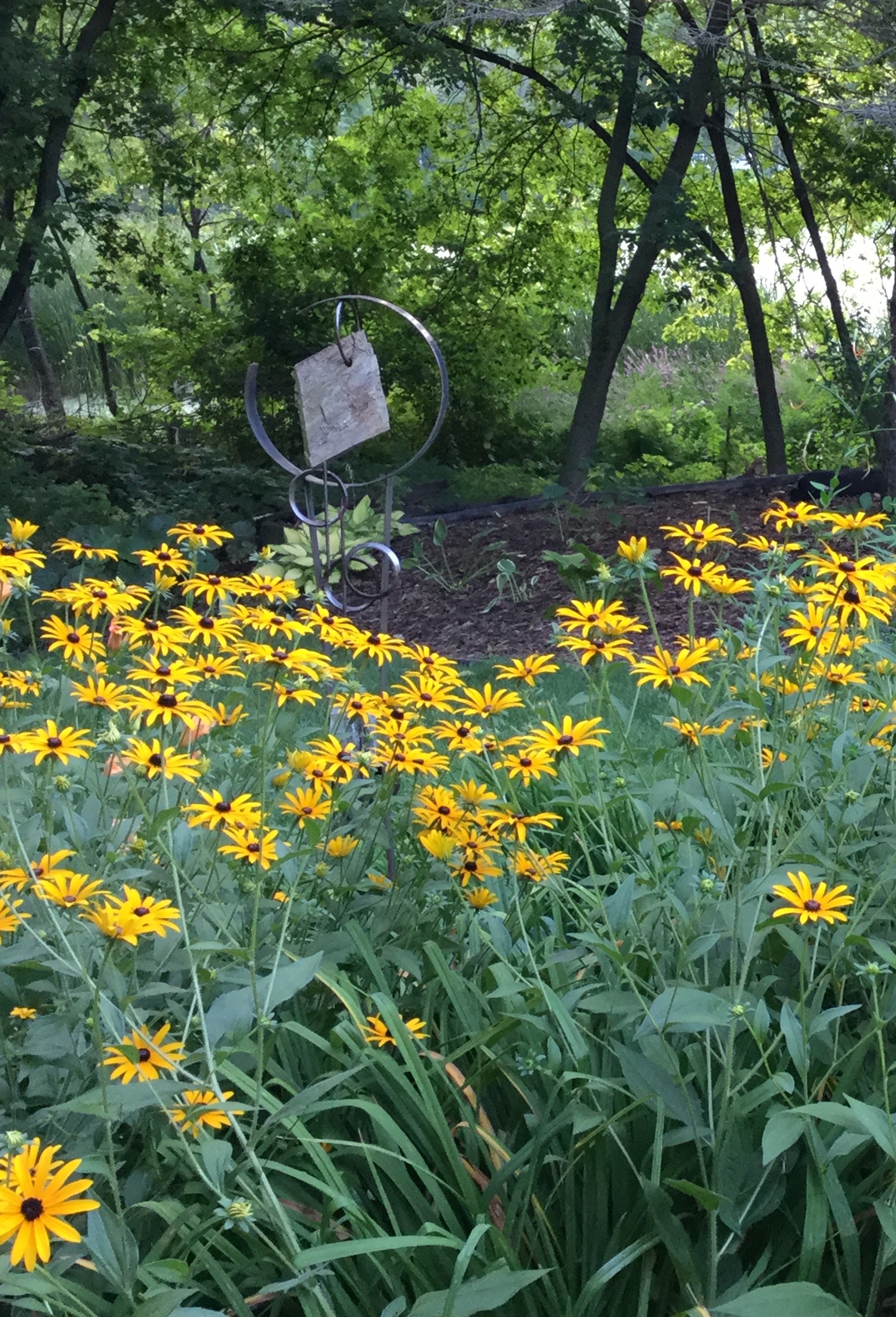
    Door County, WI: Sunsets are earlier. Black-eyed Susan dominates gardens as hydrangea fade. Squirrels fearlessly dart across sidewalks, decks and paths to grab early acorns. Field mice and chipmunks are in the same race for food stores.

    Trees are beginning to change. Yellowing leaves increase in numbers each day. Kids still run on beaches and play wherever a swing set is not closed. Young people gather with cases of beer, many without masks. More cautious folks crowd outdoor dining places. Multi-generational families wander about as if it were August 1, not September 1. COVID has changed the normal rhythms of summer while Mother Nature delivers heat and humidity where houses didn’t need air conditioning ten years earlier. Lake Michigan pushes beyond its all-time high water mark, devouring docks and houses’ front yards.

    When it already feels as if the stars are out of synch, COVID has taken the fathers of three friends or relatives. Three members of the Greatest Generation, living in three different states, in congregate facilities for three very different reasons. Friends and family called them Jim, Dom, and Marlin. They had eleven adult children among them plus almost four dozen grandchildren or great-grandchildren. Two were veterans and one farmed his entire life. Family photos show them joking with great, tall grandsons, sitting with the newest grandbaby resting on an arm, in wheelchairs by Christmas trees. These were men who loved and were loved.

    Thanks to COVID, they died comforted by staff members as their families were mostly kept away. In the heat of August, sons and daughters mourned the once strong fathers who built businesses, walked fields, fixed tractors, painted houses, taught them to throw a ball, sang next to them in church, made the final journey of life without endangering family.

    The Greatest Generation is disappearing as COVID ignites within our communities. They fought for our country’s freedom, raised families, built the cars and houses and machines of the 20th century USA, fed the world. In turn COVID has left us unable to protect them, not even gather for proper farewells.

    As summer sneaks away, as our elderly pass in the settings meant to keep them safe, as our days of small social gatherings and playing games outdoors with our grandchildren are numbered, COVID is like the spreading black-eyed Susan which left unchecked threatens to obliterate the beauty of other blooms.

    In honor of James Armstrong, Dominic St. Peter, and Marlin Hunt. With sympathy to their families and to all who have lost loved ones to this pandemic. Friends, please help friends stay healthy and strong.

    Black-eyed Susan