Category: Adventure

  • Going to the Dogs: On being a Decoy

    OLYMPUS DIGITAL CAMERAI’ve done some crazy stuff before but volunteering as a decoy for police dogs ranks close to the top. At first, as with most new adventures the idea of being a decoy was thrilling. I was very aware of the nearing day, checking my calendar, reading the email over and over, making sure that I had the right time and the proper clothing. Long sleeve shirt, pants, boots.

    My impetus for being a decoy was simply that I had never done it before and it sounded exciting. How often are you given the opportunity to be dog bait? Exactly. Within a minute of seeing the text asking for volunteers I responded with a firm, “Yes”. Apparently, no one else had this strong feeling because I was the only volunteer from our police reserve unit.

    Sometimes when you really want something and you also don’t really want the same thing it doesn’t happen. I half expected this training event to be cancelled.

    It wasn’t.

    And sometimes you try to imagine what this new adventure will look like.

    Visions of running across a field of flowers with a dog, maybe a Labrador, bounding after me and then taking a gentle leap pulling me to the ground was my image.

    Ignorance is bliss fits right in here.

    Reality was a vacant building, darkness, and me lying on a floor in the corner of an empty room with a sheet of black plastic covering me.

    There would be numerous police dogs with a K-9 police officer attempting to locate me, one by one. When does numerous become many? Let’s say when the count is over five. There would be many police dogs, each with their own K-9 police officer taking turns locating me one by one.

    Aloneness is being in a dark vacant building waiting for a dog to attack. You know it’s coming. You’re warned, “Come out or I’ll send my dog in after you. You WILL get bit.” In case you didn’t hear it the first time you’re warned again. “You WILL get bit. Come out NOW.”

    But and this is a big BUT, the role of a decoy is not to come out. The role of a decoy is to be still in the dark, under the tarp, until the dog latches onto you.

    This leaves you time to think. And, you think, I know I’m going to get bit. Some place on my body. Maybe it will be my arm or my leg, could be my back or my shoulder.

    I wasn’t too worried. I was suited up in a bite suit with a helmet on.

    The advertisement for the Ultra Kimono Training Bite Suit says that high back and chest bites can be taken with confidence.

    I can’t say that I was confident but I wasn’t too scared. I was squished in the corner like the Michelen man facing the wall. I felt as protected as one can feel when a police dog is on the prowl and you are the target.

    Lying under the tarp, breathing shallow, I didn’t stir.

    I heard the dog entering the room. It wasn’t the tap, tap of his nails that I heard first but his heavy, rapid breathing. He came closer. The dog barked a “He’s here boss!” which sounds like 2 or 3 loud snaps. The animal began moving the plastic around with his paws trying to find me with the K-9 police officer urging him on. “Get him! Get a piece of him! Find him!”

    I didn’t move.

    The dog latched onto my helmet and started pulling me out of the plastic. I played the next part perfectly, “Get your dog off me! Get your dog off me!” I screamed. “Get em off!”

    With every dog attack my fear increased exponentially. Each police dog didn’t just want a piece of me they wanted my head. “He’s got my helmet! He’s got my helmet! He’s pulling it off! Get your dog off me!”

    After one attack I took my helmet off. “Is that blood?” I asked looking down at the droplets on the floor. I felt the top of my head which felt tender but didn’t come away bloody. “Oh, that’s from the dog,” I said. It was the dog’s saliva I was seeing on the floor.

    By this time, I was scared like one should be when being attacked by a police dog. Almost all the dogs went for my head no matter how they tried to position me on the floor. The bite suit was so thick and big that I couldn’t get my sleeve up to hold my helmet on and I was sure that the dogs were going to pop me like a cork. A K-9 police officer even tried to expose my back side so the dogs would go for it. Nada. They wanted Beth’s head.

    I acted as a decoy in two other scenarios with multiple police dogs – standing in a corner down a long, long corridor and standing in a corner with a tarp over me. This time the dogs went for my leg. I learned that you shake your leg rapidly after the dog latches on so it doesn’t re-bite you. This is important to know if you’re a bad guy.

    Having become aware of my vulnerability as a human being I started to question my soundness of mind. In-between dogs I had plenty of time to think about that. I thought maybe I wouldn’t need to do this activity again. Perhaps being a decoy one time was enough.

    And, when I had the opportunity to call it a night, I sat down as quick as I could to get that bite suit off and hustled out of the building.

    But, a day has gone by. And I think I just might do it again. You don’t often get the opportunity to feel that afraid and test your mettle. I have learned from this experience. Don’t go prone. Volunteer for the standing position.
  • Our Canoe Trip, by Antonio di Grazia

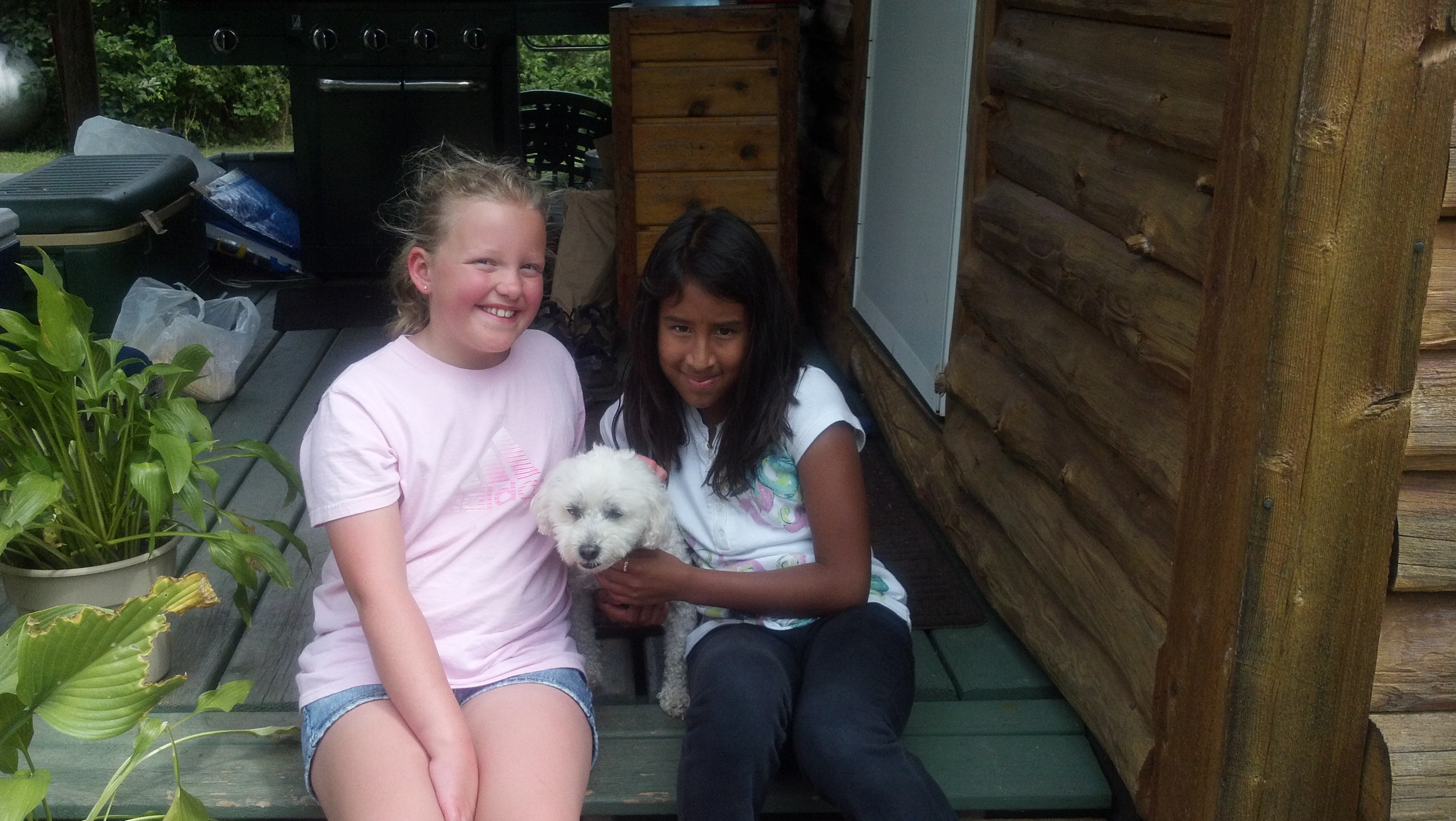
    Sarah, Maggie, Crystel before the canoe trip
    Sarah, Maggie, and Crystel before the canoe trip

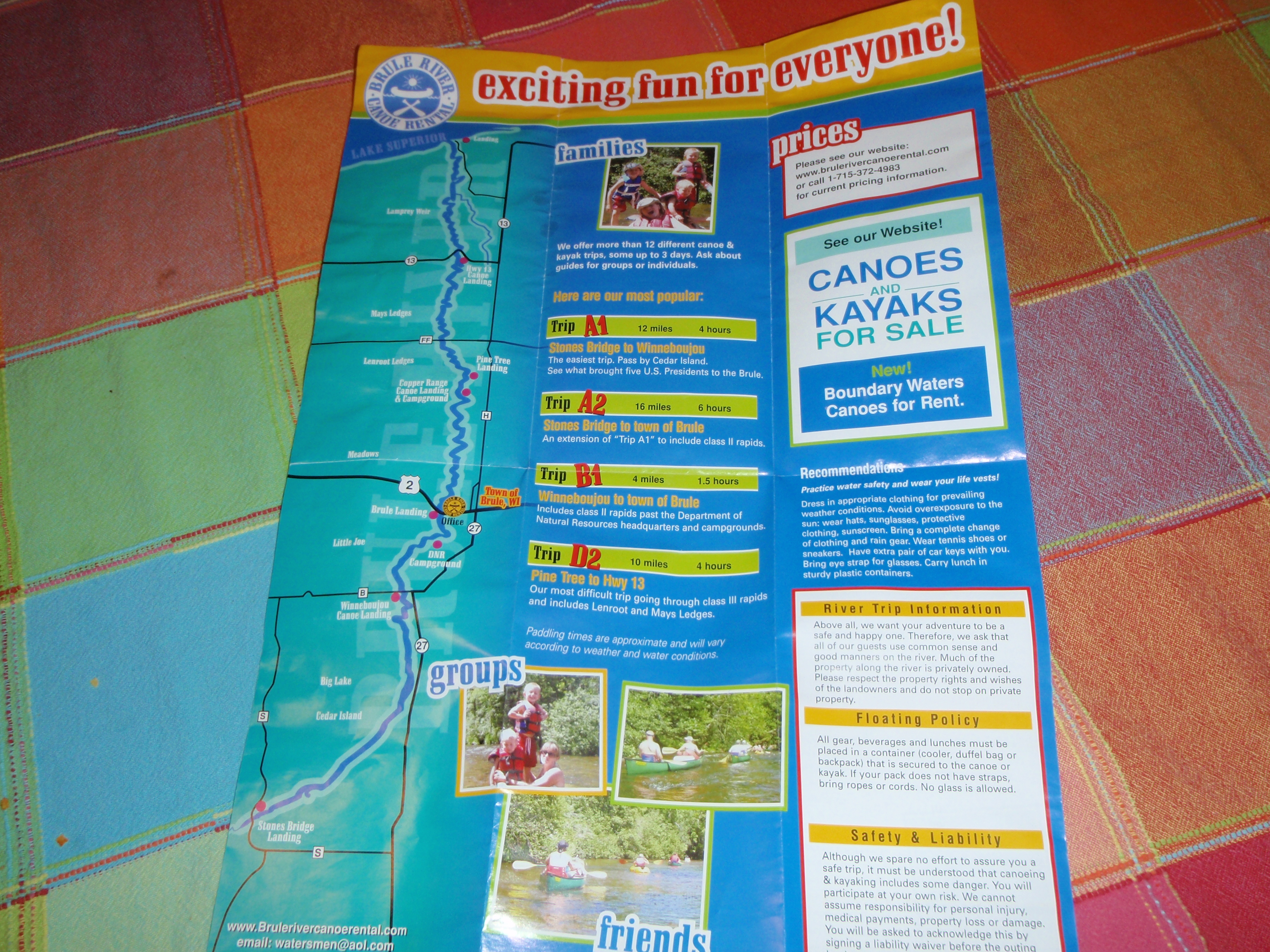
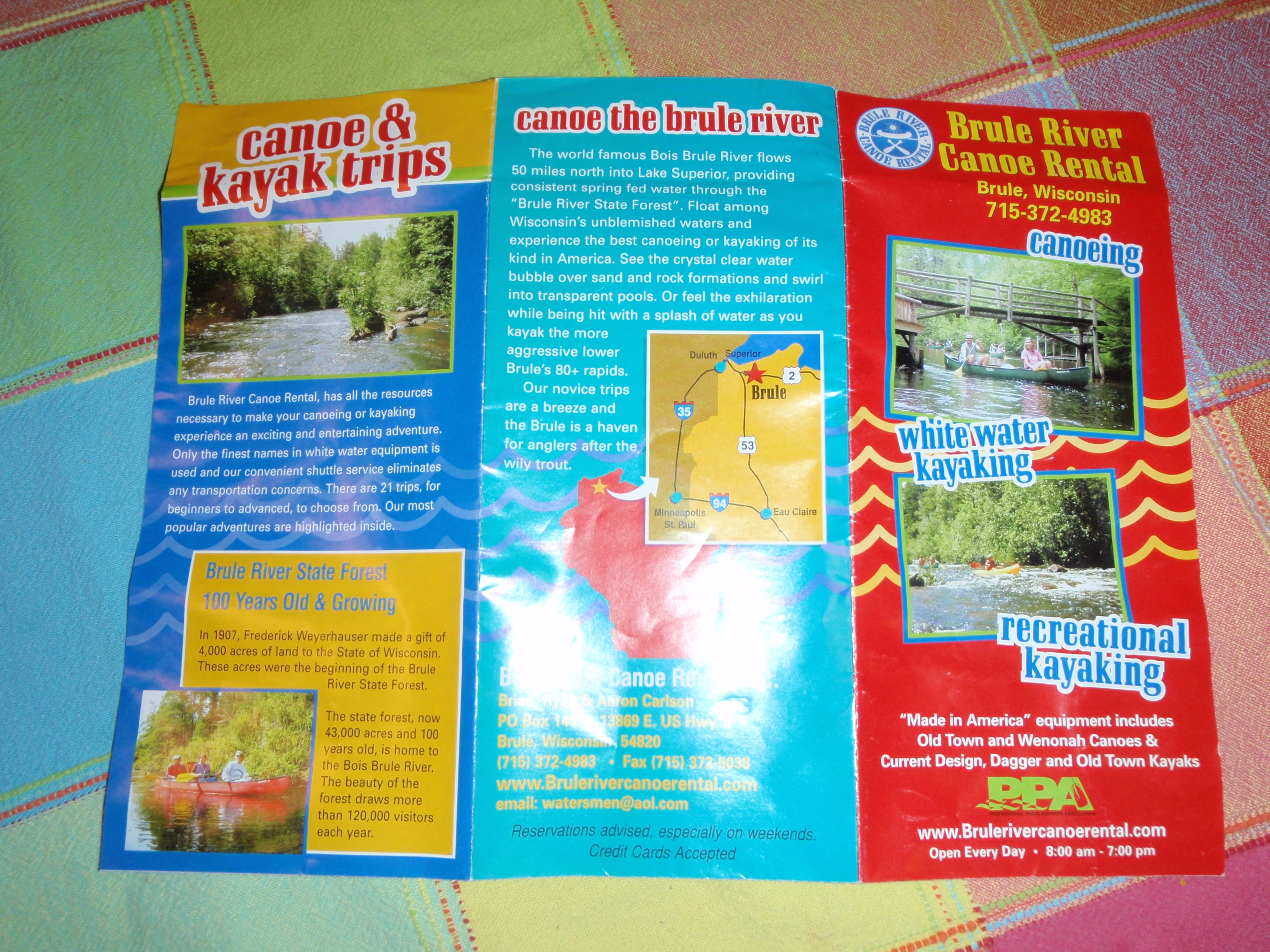
    Antonio is our guest blogger this week. He wrote the following story last summer about our canoe trip down the Brule River. Before you get his rendition I need to provide you with the idyllic setting: two canoes, two moms, two dogs, two ten-year-olds, a ten-year old friend, a sunny afternoon, and calm waters. We set into the Brule River at Stone Bridge, billed as the easiest trip. I pictured a 4 hour float.

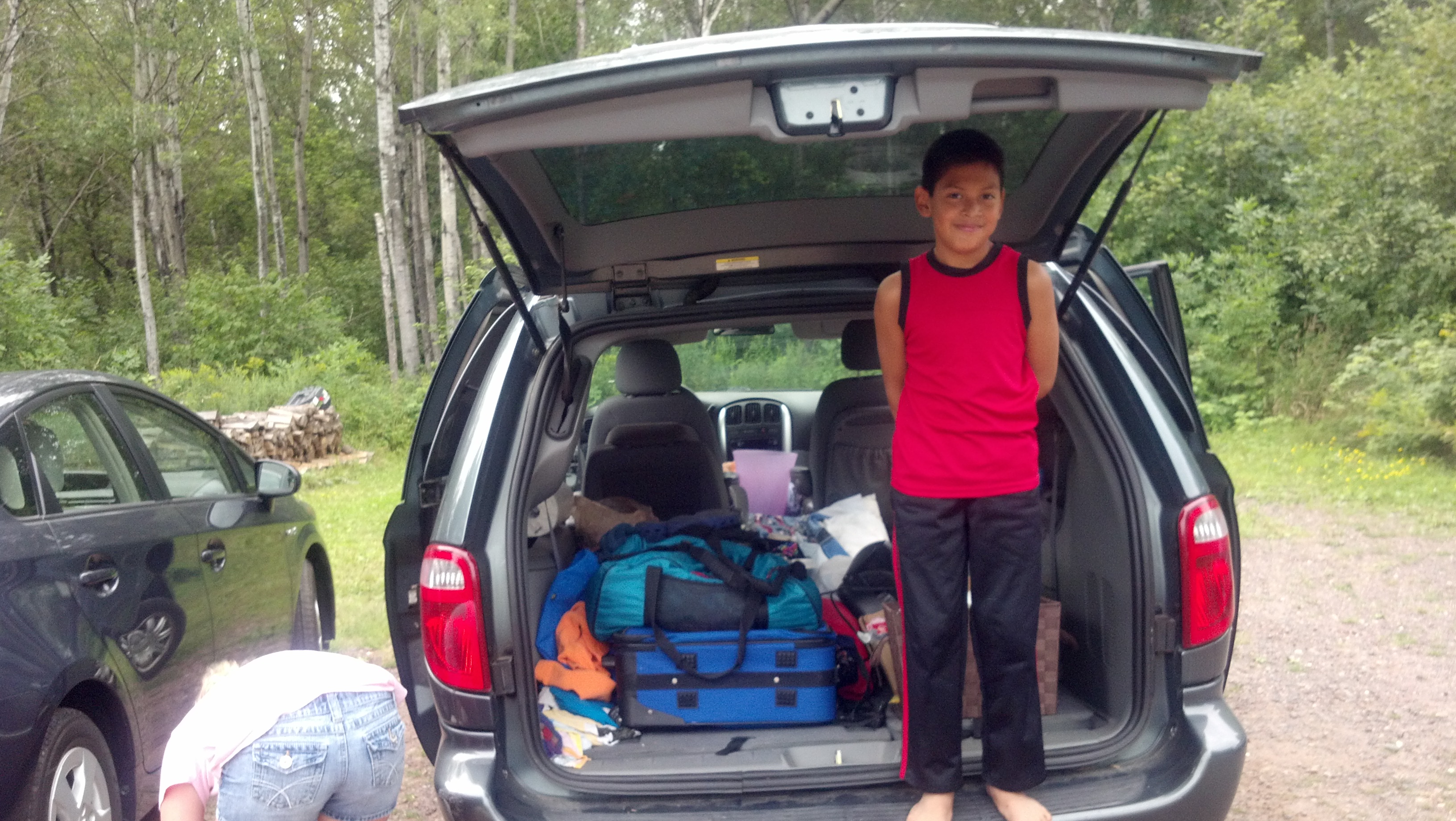
    Antonio before the canoe trip
    Antonio before the canoe trip

    The world-famous Bois Brule River flows 50 miles north into Lake Superior.

    The water wasn’t even knee-deep, and within a half hour I had taken off my life jacket, which I generally NEVER do. Antonio, who was paddling in the front of the canoe, soon asked if he could remove his. At this point, the water was ankle-deep and the calm waters had turned still. Supposedly, a person can drown in a cup of water, but the risks seemed low, so I said, “Yes.”

    OLYMPUS DIGITAL CAMERAThere are a few problems with this. One, you should never canoe with a dog, who is more interested in the other canoe, the other mom, the other two children, and the other dog. Two, you should never let Beth be the rear person because she confuses the canoe with a bike. Biking down a hill, I will often coast and not continue to pedal. I treat the canoe like a bike when I am in rapids. I quit paddling. The law of going fast says, “Stop doing what you are doing and you will slow down.”

    Antonio said, “I think I’ll put my life jacket on” when we got close to a rapid. Taking his lead, I put mine on also.

    OLYMPUS DIGITAL CAMERAI paddled into the rapid. Then quit. Just quit. I probably even lifted my paddle out of the water. In an instant our canoe went from traveling straight to going sideways, and the front end torpedoed into tree roots and soil. Swamped, water rushed into our canoe, taking everything not tied down, down river. “Antonio, get out!” He toppled out of the front end, digging his way with his feet and hands up the steep bank. I grabbed the dog, stumbled through the rapids. “Give me, Bandit,” Antonio hollered. I handed Bandit up to him. “Grab that tree, Mom,” he said. I reached for the branch and heaved myself up.

    Earlier, Antonio impressed me when he felt unsafe and put on his life jacket. Now he was leading us through the brambles.

    But this story isn’t ready for a rosy ending. Beth still has to swamp another canoe. Lose her shoes in muck. Discuss with Antonio the merits of waiting to be saved or walking from your last known spot into the unknown and talk about why people will help you even though you aren’t paying them.

    Once we are back in our rescued canoe, Antonio paddles for hours without stopping to reach the landing.

    In the meantime, Jody is calling 911 and listing us as missing persons.

    But that’s Antonio’s story:

    story 003We started to paddle. The dog had its head on the edge of the canoe. There where we had to turn quick, me and Mom got stuck in some rocks. Crystel, Sarah and Mama Jody got stuck in a branch. We had Bandit and they had Maggie in their canoe. We went in little rapids. It sped us up through the river. We got to a big rapids and we hit a tree and our canoe got filled with water, so Bandit was cold. We got everything wet. We lost our paddle. Some nice people helped us. There were two children and three persons and two fishermen. They went for our canoe. We had to wait for 1 ½ hours. We paddled back to where they were. We went through more rapids. We reached where there were no more rapids. We passed it and there was another rapid and it was done. Then we saw four eagles. We had 1 ½ hours to go. We passed boat houses. We went through another rapid. We were there. We got out of the canoe. I ran up. Mom Beth walked up there. I see where Mom Jody is. I told them Mom Beth was coming. They got there 20 minutes earlier. They called 911. Bandit was wet and cold.

    I’ve heard that a person may drown in a cup of water. Still, I like to think of a cup of water as being half full. That’s why I can find meaning in swamping my child and us being listed as missing persons. I witnessed Antonio’s strength during a time of peril. That evening, instead of joining another family out for a nice dinner, we sat on our beds in our tiny, tiny, motel room just to be close.

    Bandit and Maggie
    Bandit and Maggie
  • What A Day We Had with the Indigenous Mayans of Lake Atitlan

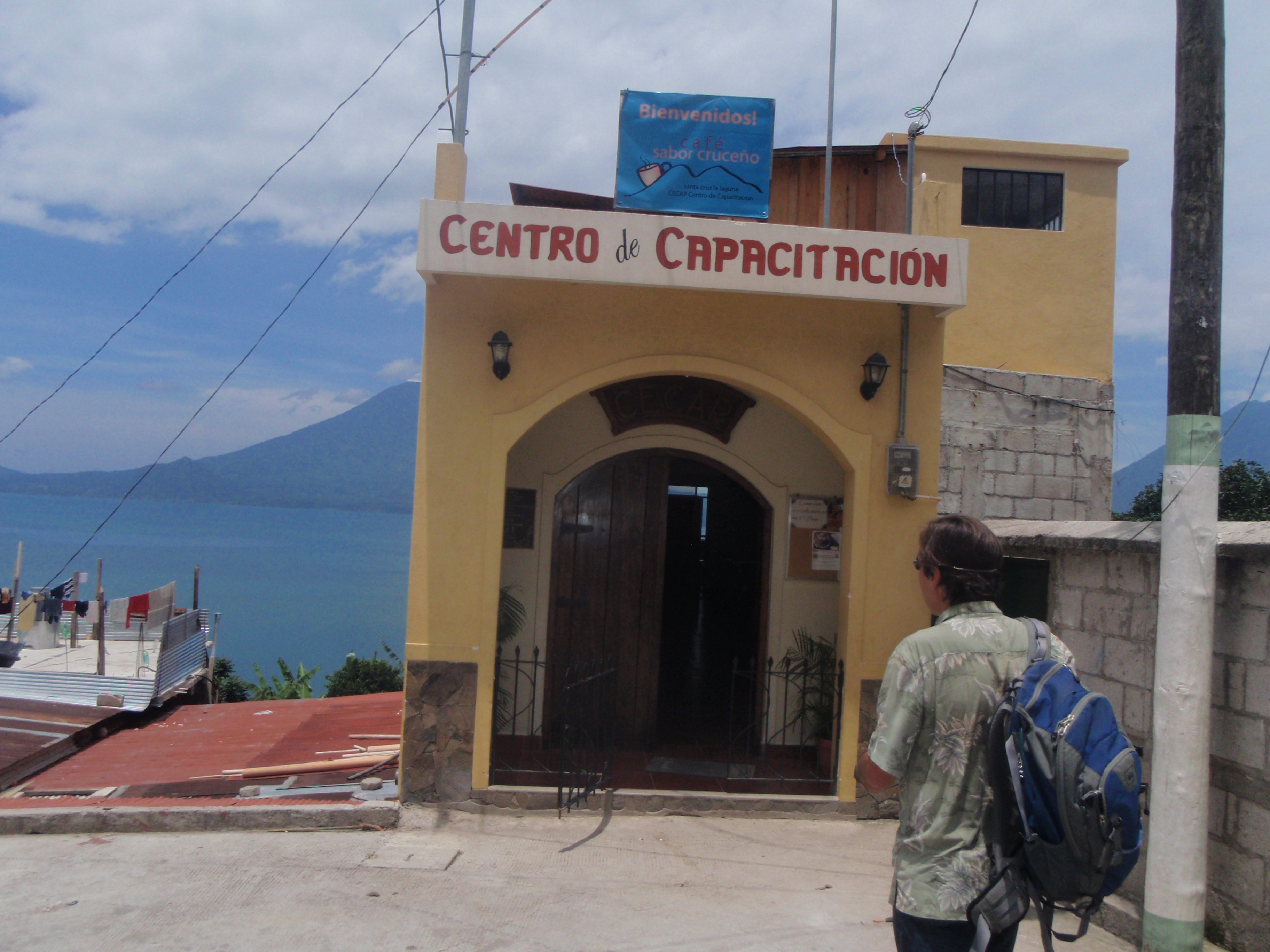
    CECAP Training Center and Cafe Sabor Cruzeno

    I walked into Cafe Sabor Cruzeno in Santa Cruz la Laguna, Lake Atitlan with trepidation. Not because it was recently opened. Not because it wasn’t yet rated on Trip Advisor or that it was a student-run café. And not because it was part of an NGO, Non-Government Organization.

    Café Sabor Cruzeno was the result of the CECAP (Centro de Capacitacion) Culinary Arts program of Amigos de Santa Cruz foundation. The goal of the program is to train young people for successful employment in the restaurant and tourist business.

    No, it was because I had my doubts that the culinary arts program would be successful with Antonio. I had a suitcase of dried pasta betting on it. Some people might pack extra clothes and shoes to match each outfit. I was more concerned that we have a food supply tucked away. When we traveled to Guatemala in 2010 I had forgotten to pack Crystel’s swimsuit. She ended up swimming in her Hello Kitty pajamas. But, I didn’t forget emergency rations for my son.

    View from Café Sabor Cruzeno

    Antonio is a healthy ten-year-old. He will eat a salad. Just don’t make a pyramid out of the raw vegetables. Instead, imagine a horizontal sundial and align the fixings uniformly around his plate. No dressing wanted or required. When Antonio and Crystel were in highchairs Jody and I would put food on each tray and what one toddler didn’t eat the other would. Being low maintenance, Crystel’s sundial can be any shape: cylindrical, conical, or vertical with a dab of ranch dressing. She’s satisfied with a ham sandwich. Antonio came to us waving a chicken leg in the air. He has never eaten a sandwich in his life. But give him a Sweet Hawaiian bun in one hand and a slice of salami in the other and he will happily eat them separately.

    Our table waiting for us

    We cater to Antonio and Crystel because we can, though sometimes I remind him that he was born in Guatemala.  Tamales made of corn and filled with beans are eaten with nearly every meal.

    Lee Beal, our guide, originally from Texas, has lived around the world over the years, with Colorado being his home base. His wife, Elaine, and he have been full-time residents of Santa Cruz for the past 5 years. The couple came to Guatemala looking for a simpler and more fulfilling life and found it on Lake Atitlan. Lee originally started working with Amigos de Santa Cruz foundation and now serves on the board of directors. As he learned more about the people of Santa Cruz he realized there was a need for jobs creation. A part of this is now being fulfilled through the CECAP vocational training center.

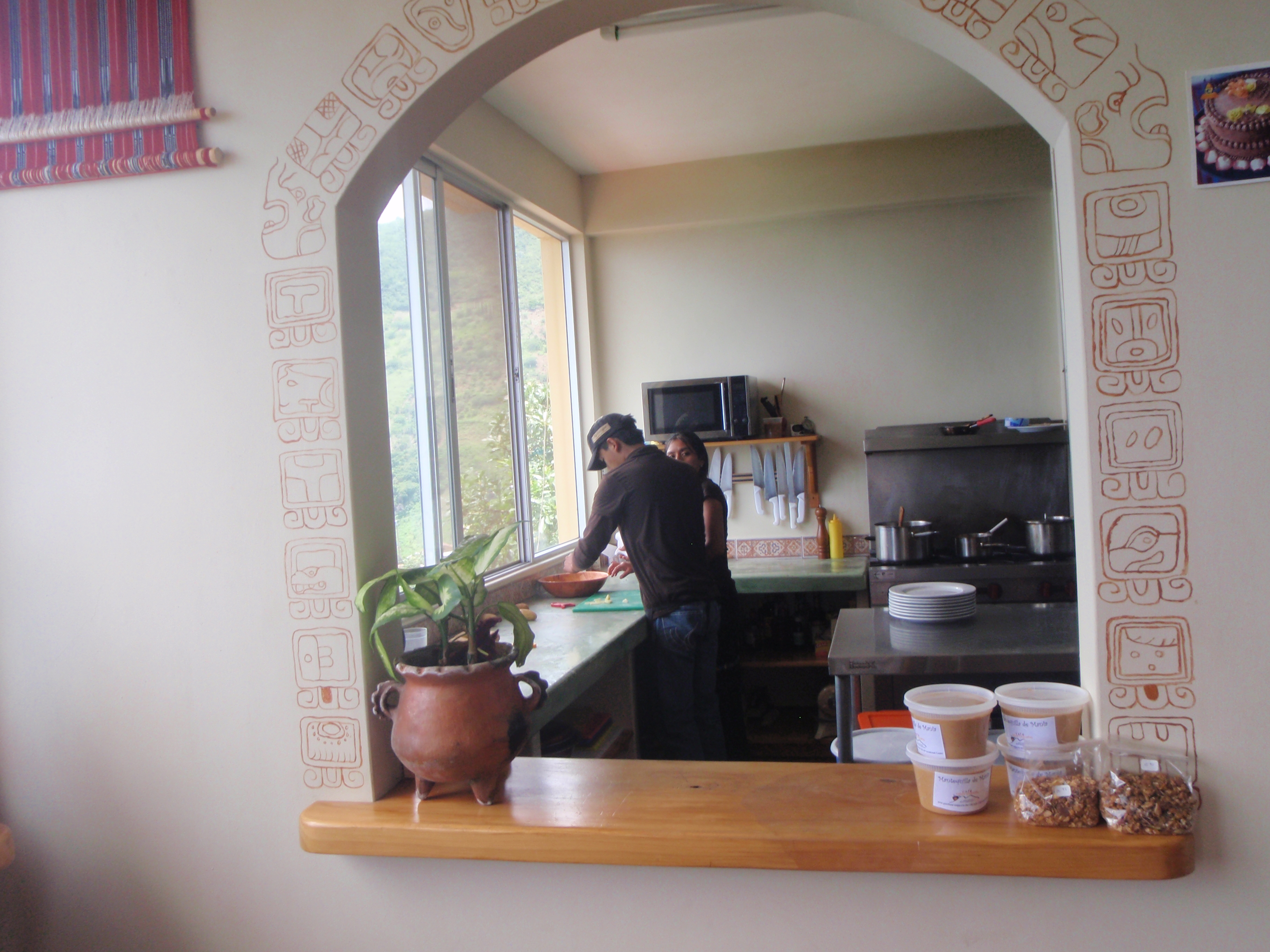
    The kitchen

    Walking into the restaurant, I was surprised how open, clean and fresh it was. I felt as if we were on top of a mountain and we were. Two graduates of the culinary arts program were busy in the kitchen completing our authentic Guatemalan meal. They would also be serving us.

    I don’t out Antonio unless I have too. Usually I just take him aside and remind him that we have food at home and simply be polite and say, “No thank you” if he doesn’t like what’s served. No funny noises or grotesque looks necessary.

    After snapping a picture of our seating area, I took a deep breath and sat down. We had our choice of freshly made cold tea, several sauces, mashed potatoes, and a mixture of glazed vegetables and chicken with pulique sauce. At first glance, there wasn’t anything that I thought Antonio would try. Pulique is a common dish of the Guatemalan highlands. It is often served at holidays, anniversaries, and yearly fairs. Alex, our Guatemalan guide, explained how special it was that our chef had made the pulique for us. (Lee has been employing local guides trained through INGUAT. His goal is to create well-paying jobs that fit with the Mayan culture.)

    Antonio with Alex paying our bill

    The pulique sauce was mild, gentle, and creamy. I watched Antonio as he scraped a bit of it off his chicken.He tried a bite, finished his chicken, and asked for more.

    Antonio had proven that CECAP’s culinary arts program was headed for success.

    The café is located in the vocational center which houses carpentry, welding, computer education, sewing and weaving. The training center was buzzing with students sewing on Singer sewing machines and students welding on the rooftop.

    What makes CECAP unique is that it has always been a community-driven vision and not a government project. Amigos is helping CECAP become self-sufficient.

    Singer sewing machines. Girls and boys sewing.

    Touring the vocational education center, watching students sew and weld, and dining at the café were some of the many highlights of our trip. We were getting a glimpse into the future of Santa Cruz la Laguna. Santa Cruz is one of the 45 poorest townships in all of Guatemala with illiteracy and malnutrition among the highest in the country. Amigos believes that education is the key to breaking the cycle of poverty for the indigenous people of Guatemala. Their primary focus has been on education both at the primary and secondary level. We were fortunate to see it at work.

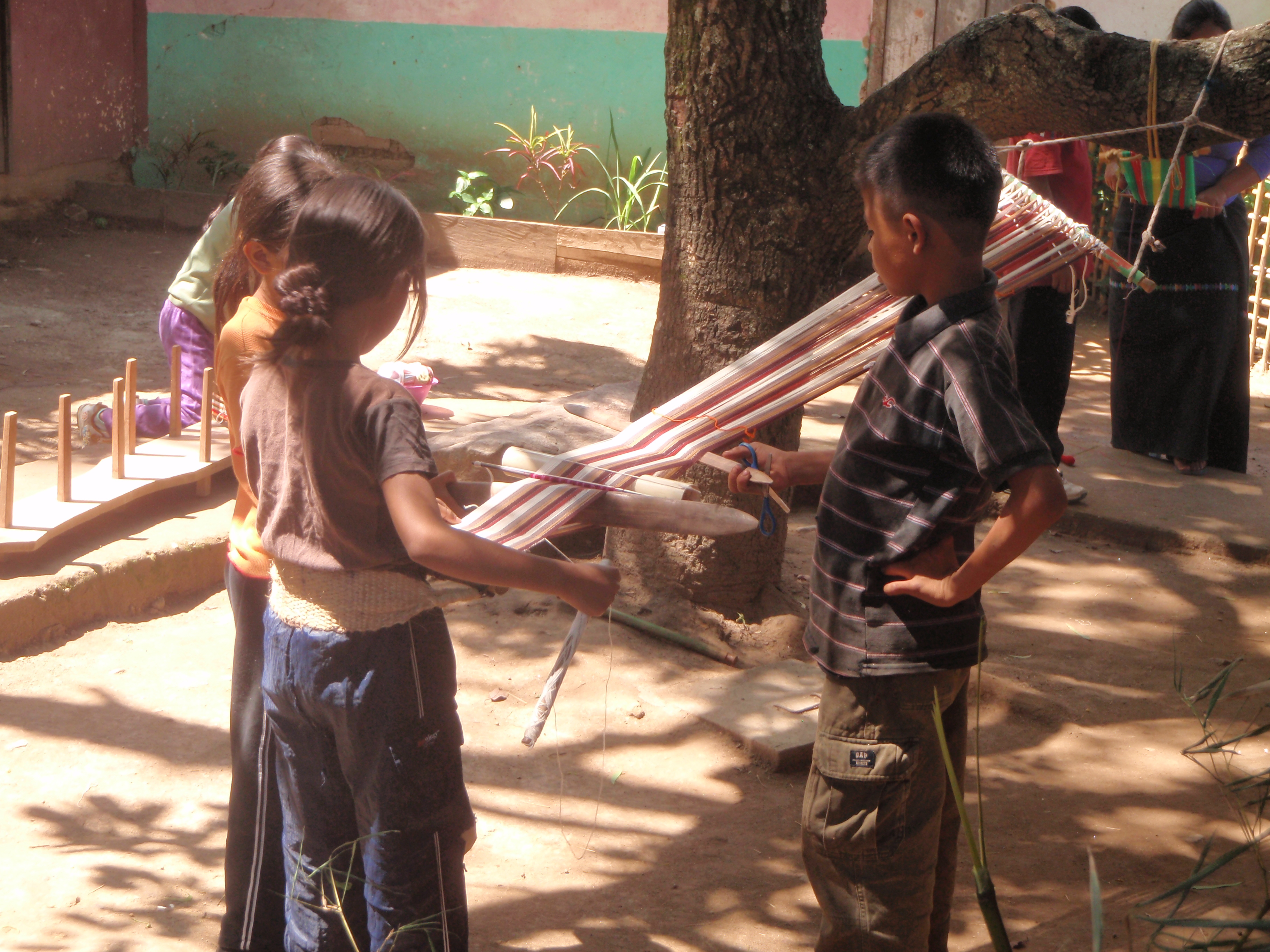
    Before we left Minnesota, Crystel had told us that she wanted to learn how to weave while in Guatemala. Lee contacted a local Guatemalan and set up a time for us to meet with her in her home. Both Antonio and Crystel quickly became engaged in learning to weave. They returned to her home several afternoons to complete their projects.

    While Antonio and Crystel were weaving, Lee took Jody and me on a tour of the town church and also to Casa Milagro. Casa Milagro (since 1992) is an NGO that supports widows and children. Thilda Zorn, founder and manager of the project, focuses on providing an environment for creativity, joy, and freedom. Jody and I purchased handicrafts that the children had made.

    Casa Milagro – children learning to weave

    By the time Jody and I returned to our children, Antonio had left with Alex and Zach to play soccer in the village square, and Crystel was making fast friends with the girl of the house.

    Antonio rushed in breathless and excited. He was poking fun at Alex and Zach, “Those kids were smaller than me,” he laughed. “We lost 10-7. It cost us 3 quetzales (50 cents).” Apparently, there was a side bet and the local children came away the winners. “Alex, they blew right by you,” Antonio added. “And, Zach he couldn’t stop anything.”

    Antonio and Crystel learning to weave

    Antonio and Crystel were being changed. And, it had nothing to do with their parents and everything to do with their parents. We had brought them here – to their birth country to have an opportunity to connect with other Guatemalans.

    The boy who wouldn’t look at the kids in the square the first night was now facing off with them in a soccer match and for a short time he had two older Guatemalans, Alex and Zach, that could brother him.


    Antonio’s bud’s – Zach and Alex
    Crystel’s new friend

    This very fine day would finish in a hot tub and swimming pool in the next village, El Jaibalito. A ten-minute launch from Los Elementos.