Author: Ellen Shriner

  • Paying It Forward . . . And Back

    Blue weavingThis past October, my 92-year-old mother and my Aunt Corinne, her 88-year-old sister, both needed to be moved. Mom was moving from the house in Ohio where she’d lived for more than 30 years to a seniors’ apartment. After breaking several vertebrae, Aunt Corinne has been in a rehab center for months. It’s unlikely she’ll be able to return to her costly assisted living apartment, so her belongings had to be packed up and put in storage.

    Each move involved some emotional upheaval. And there was the usual packing process—coordinating with the movers, wrapping precious items in bubble wrap, and figuring out what to do with quasi-useful stuff (Is this worth keeping? Will she ever use this again?).

    Since both moves had to happen within a week of each other, my siblings and I divided up the work. I organized Mom’s move from her house while my sister and brothers emptied out Aunt Corinne’s apartment.

    We’re hardly unique. Many middle-aged people are called on to help elders, often while still raising children. We feel the pull of threads woven when we were still children—unaware of how we mattered to our family.

    When my siblings and I were kids, Aunt Corinne and Uncle Bob were fun to visit. He owned a vending machine business, and they always gave my sister, two brothers and me candy, pop, and snacks from the supplies stored in the basement. Although they didn’t have children, they knew what kids liked, and they always remembered our birthdays with nice gifts. Thank goodness they had a poodle to play with, because we quickly grew bored and squirmy when the grownups talked in the living room. Aunt Corinne had a beautiful flower garden but never fussed if the ball or the dog got into it. So when poor health got the best of Aunt Corinne, we stepped in to help.

    Similarly, my husband, his sisters, and brother began helping their uncle manage his affairs this year. He is fiercely independent, never married, generous to a fault, and blind since he was 40. He finally agreed to move into a nursing home after his last fall and hospital stay. At 92, he has Parkinson’s, cancer and a failing memory—too many issues for him to continue going it alone. When my husband was a teen, his uncle gave him a job in the cafeteria he managed. Since they have that history, he was better able to accept my husband’s suggestion that living alone was no longer a good idea.

    From the vantage point of middle age, I can now see how we weave each generation into the sturdy cloth we call family.

    A nephew on my husband’s side of the family recently got married. He’s a chef, so preparing wonderful food for the wedding was his gift to the guests. Unfortunately, at the last minute, some of the people he had counted on to help weren’t able to come. So his parents, grandmother, my husband and I, along with a handful of others, helped him and his fiancée pull together the many details of the wedding. We cooked, washed up, ran errands, and made decorations. The main entrée was a whole pig that needed to roast all night and most of the day. Our sons agreed to monitor the roasting pig during the middle of the night. That way, their cousin was able to grab a few hours of sleep the night before he got married. His parents rested easier, too.

    Through their willingness to help, our sons deepened their relationships with their aunt, uncle, cousin and his bride. John and I reinforced our ties with our nephew and new niece.

    But more than that, our help affirmed how families pay it forward . . . and back. Giving and receiving are the warp and weft that create the enduring fabric of family.

  • Where Are You Most Creative?

    Some writers may be able to write anywhere—but I’m not one of them. I have a few key requirements:

    I need to be assured that I’ll be left alone for a while.  If the house is full of family who might pop in at any time with a question or request, I have trouble focusing on the scene in my head that I’m already struggling to envision. I’m easily distracted and soon I’ll wonder about whatever I was asked—if they’re going to Target, will they remember to buy milk? Equally distracting is the peevishness I’m likely to feel—really? Can’t I even be left alone for an hour? That’s why writing before everyone is awake often works or writing when my husband is the only one in the house.

    The place doesn’t need to be perfectly quiet, but I can’t listen to music.  It’s too interesting and soon I can’t hear the words inside my head. Ambient noise is OK, though. The dull roar of a coffee shop is fine. The sound of my husband practicing guitar doesn’t bother me. People laughing or kids squabbling in the distance barely register.

    Physical comfort matters. If I feel a chilly draft or sweat trickles down my back, I’ll lose concentration. Similarly, if my chair is uncomfortable, a niggling twinge will gradually become an insistent backache. At that point, I’m done.

    But aside from these basic features, some places simply have a better vibe than others. Some times it’s history. If I’ve written well and easily one place, I’m apt to go back to it. And usually there’s some appealing quality of light—bright daylight that energizes and cheers me or cozy lamplight surrounds and comforts me.

    I’ve returned again and again to these places:

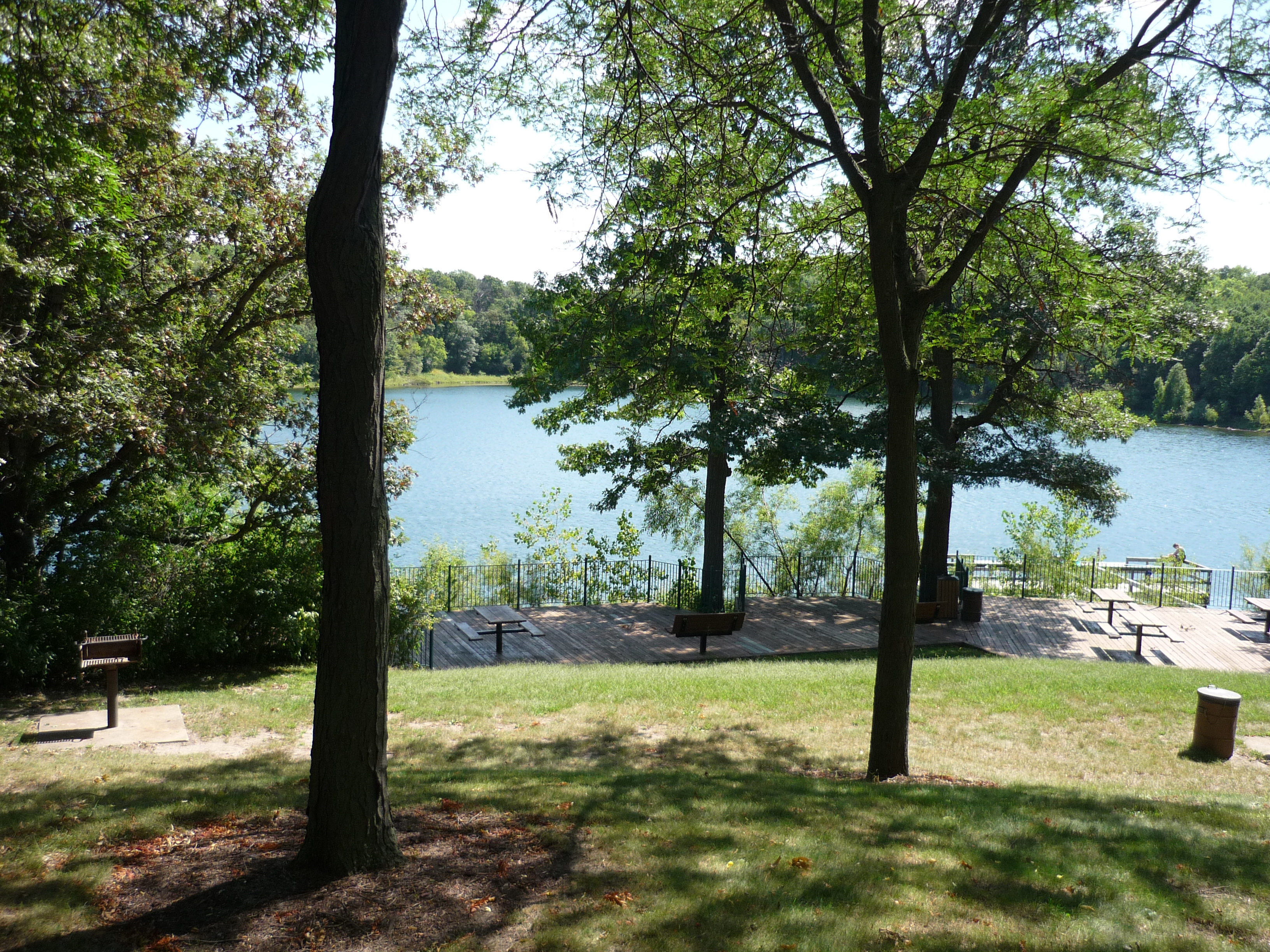
    P1030545Lebanon Hills Park, 15 minutes from home – Halfway down the hill overlooking the lake, I set up the lawn chair that lives in my trunk during the warm months. I bring my laptop, a bottle of iced tea and a snack, and I’m set for a few hours. When I need to stare into space, the lake shimmers before me. Sunlight filters through the trees, and periodically as partial shade turns into full sun, I slide my chair out of the sun. I’ve written and revised large chunks of my memoir here.

    My bright back porch in warm weather and my sunny family room in cold months.

    Most coffee shops  . . . as long as I won’t run into anyone I know!

    Where does the muse find you?

  • Leaving Elmview

    As I do the messy tiring work of moving my Mom from her 3-bedroom home to a senior apartment, what is surprising to me is that I am so dry-eyed. But this isn’t the house I grew up in. It’s the smaller, all-on-one-floor place my parents bought when they retired at  52 (!!!—so envious) after my siblings and I had all moved out.

    After more than 30 years of being houseguest here, I have these memories:

    Wide awake at 5:38 a.m.
    Wide awake at 5:38 a.m.

    Lying awake in this guest bedroom. Up too early. Up too late. Anxious. In 1979, this unfamiliar room still felt like a refuge from Minnesota, where I was homesick and overwhelmed in my first year of teaching. In the summer of 1982, I spent several weeks here after my Minnesota teaching job ended and before my Missouri teaching job started. I was heartsick, missing a guy who was no good for me. I felt trapped and scared. I didn’t want the Missouri teaching job, but it was tenure-track and I needed a job. I schemed and schemed but couldn’t come up with any alternative, except unemployment and living with my parents until I found work. I didn’t know I would meet my husband in Missouri. In 2011, I could barely sleep after my Dad died. Grief wound me up and I made lists for the funeral, sent emails, and worked on the eulogy my husband would give because none of the rest of us could do it. Today, I again sit in this bed with my laptop propped on a pillow. It’s 5:38 a.m., and I’m up for the day. Soon enough I’ll get up and resume packing.

    I have good memories of this house, too.  The sunny dining room where I have spent so many mornings with Dad and Mom, drinking coffee and reading The Blade. Placemats and breakfast crumbs scattered. Dad and I (the morning people) were up before Mom, and often we had some of our best talks then. Every morning when Mom wandered in sleepy and a little dazed, Dad gave her a big hug and kiss, and then patted her rear, a ritual that made them both laugh. Mom and I still take our time over coffee every morning.

    Coffee with Mom and Margo
    Coffee with Mom and Margo

    The dining room was the scene of many spaghetti and meatball dinners made especially for my sons and husband. When we visited in the summer, Dad grilled steak/hamburgs/pork chops to go with the sweet corn and tomatoes. When we ate here, my guys had to remember to pause to say grace before eating, something we are lax about at home. For years, my guys peeled 10 lbs. of potatoes on newspapers spread over the dining room table, so there’d be enough mashed potatoes at Thanksgiving dinner at my sister’s. On birthdays, the table stretched to accommodate 10, 15 or more as the birthday person blew out candles and cut and passed cake.

    During visits, my sons slept on sleeping bags in the small warm office—one guy with his head under the behemoth of a desk Dad made (his first attempt at furniture). The other guy slept wedged near the closet door. Both guys slept surrounded by their Gameboys/iPods/cell phones/laptops (their electronic toys evolved over the years). One wall of the room is filled with shelves where Mom stored board (I’m bored) games, dolls and toys for when grandkids visited. Though the space was crowded, especially lately, now that my boys are men, they didn’t seem to mind. Or maybe they did, but they didn’t complain.

    Countless times during visits, one of us heard a tap on the door of the only bathroom and someone said, “I really need to get in there. Are you almost done?” desperation clear in their voice.

    porchSome of my favorite memories are of sitting on the screened porch in my nightie on summer mornings while the air was still cool and fresh, drinking coffee and reading. I also loved eating dinner with the sun filtering through the blinds, while an occasional breeze lifted and resettled them. After dinner, Dad would sit in his black rocker while the rest of us sat in miscellaneous lawn chairs, drinking wine and talking as the heat gradually left the day and crickets began their evening song.