Author: Ellen Shriner

  • When did cell phones become a cure-all for awkwardness and boredom?

    I sat in the classroom feeling awkward. The students were on break—some of them chatting in Chinese or Spanish, a relief for them after the rigors of learning English. Others were stretching their legs. I had 10 minutes until class resumed and I was once again a tutor.

    I reached for my cell phone and began checking emails. Not that I was expecting anything important, and indeed, none of the emails required my urgent attention. But I looked busy. Important, even.  Anybody looking at me might have thought I had vital emails that must be attended to NOW.texting
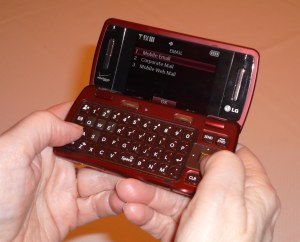
    When did cell phones become a cure-all for awkwardness and boredom? Why did I succumb to the feeling that I have to be connected and productive at all times?

    Before I became addicted to my electronic devices, I could amuse myself if I had a spare 10 minutes. Instead of isolating myself from interactions by fiddling with my phone, I might have wandered around and talked with someone. Maybe not my students. They’d be polite, but sometimes they need a break from “Teacher,” as they call me. But I probably would have found someone from another class.

    Or if I wasn’t in the mood to talk, I might have gone for a walk. I could have quietly thought my own thoughts without needing to look busy. I might have sat in the atrium people-watching. The clothes, faces and manners of the new Americans who are learning English tell a story—something the writer in me finds interesting.

    Before cell phones became so widespread, I would have thought it was fine to spend time doing nothing much. If I really really wanted to be productive, I could have planned dinner and made a grocery list.

    But none of those options occurred to me, because without meaning to, I have learned to engage with my device instead of with people. And I’m not alone in this behavior. A recent study of college students in 10 countries found that they “literally didn’t know what to do with themselves” when they had to live without their smartphones and other electronic media for 24 hours. And Arianna Huffington acknowledged this issue when she issued her challenge to unplug for seven days.

    With my cell phone handy, I don’t have to risk the slight discomfort of exchanging pleasantries with people I don’t know. I can talk with people who are far away, but I’m less likely to connect with the people close at hand.

    My phone rewards me with a sense of purpose—fake busyness in this case—but it helps me pass an awkward or boring moment. And it’s always there. Somehow I’ve let myself get sucked into feeling that because I can be connected, I must be connected. Really? Why? I didn’t need to know right that minute that my online order had shipped or that a blogger I like had posted something new.

    Don’t get me wrong–I’m not getting rid of my cell phone any time soon. Cell phones have vastly improved many kinds of communication. But I do want to restore my ability to cope with boredom and discomfort without resorting to my phone. I do want to be more mindful of the ways cell phones can isolate people instead of connecting them.
  • The Gift of Nothing at All

    I am blessed to have a number close women friends. Any one of them can make me feel great about my new haircut, laugh their butts off with me over the stupidest little thing, let me rant about my job/parents/kids/house/you name it, and offer wise advice if I want it or simply listen if I don’t. I trust them with my secrets, and I count on these friends when times are tough. You know who you are, and I love you.

    But I don’t want to buy you presents even though you deserve them—loads of them.

    Why? Gift-giving anxiety. Go ahead—roll your eyes. It’s stupid, I know.

    It starts off innocently enough. I see cute a little tchotchke—maybe it’s a 4-inch tall robot that makes me smile and I think, that would make (name of close friend goes here) laugh. So I buy it to give at Christmas or your birthday. Sometimes I covet a lovely item—maybe a small oval box covered in marbled Florentine paper, but I stop myself because I already have a number of pretty little boxes. But one of my besties would love this too, so I buy it. And that’s how the gift exchange among girlfriends begins.

    Screen Shot 2013-12-09 at 8.09.38 PM

    At first, it’s fun. I’ve received many wonderful, inspired gifts. I love them because you thought to give them and because I enjoy the things themselves. I’ve tried to return the favor. Over the years, I’ve given scented candles, deluxe lotions and soaps, cool earrings, whimsical artwork, Christmas ornaments, good books, pretty scarves, food treats—whatever little luxury I think you’ll enjoy.

    But after several years of gift exchanges, I’ve exhausted my good ideas for small treasures. Gift-giving anxiety creeps in. Didn’t I buy you earrings last time? How many scented candles does a person need? Will this red scarf go with any of your clothes? I want to do something nice for you, but what? Soon I am haunting gift shops and boutiques in search of the perfect cool thing for you. And then the missteps begin. I get a book you’ve already read. Coffee hurts your stomach, so that special coffee and mug—well, maybe you can give it to somebody else.

    If you didn’t matter so much to me, this wouldn’t be so hard.

    Eventually, we are both struggling. Finally, one of us says let’s call off the gift exchange. We are both relieved.

    We agree to go out instead and do what we love most: talk, laugh, advise, comfort. That’s the best gift—time with you.

  • Mom’ s Closet: Treasures and Surprises

    While helping move Mom last month, I unearthed a number of artifacts from bygone eras—hers and mine.

    P1030680How can you not love polka dots? They’re whimsical. Cheerful. And in the 1960s when Mom carried this clutch bag and wore these gloves to church, they were a stylish accent to her navy blue spring coat . . . and perhaps a reminder that she hadn’t always had four kids, dinners to cook, and laundry to do.

    P1030674If you’re not a Baby Boomer, you probably don’t recognize this item. I didn’t recognize it either because math has never been my forté, but it’s my slide rule (look closely—you can see my name on it). Before pocket calculators were invented, we used them for logarithms and trigonometry—skills that I’ve completely forgotten after high school.

    When the Apollo 13 space module malfunctioned, Mission Control engineers used slide rules in the calculations needed to get astronauts back to earth. Slide rules! One of the best-known Mission Control engineers was Gene Kranz, the flight director whose famous line in the Apollo 13 movie was, “Failure is not an option.” When Mom and I were talking about slide rules and the near disaster of Apollo 13, Mom mentions in an offhand way, “Yeah, I went to high school with Gene Kranz.” What? Why hadn’t she ever mentioned that before?

    hankyMom knows I collect and use handkerchiefs for my watery eyes, so she offered me this one from my grandma. Mom never carried hankies. Instead she keeps Kleenex in her pocket. If she doesn’t have a pocket, she tucks a Kleenex up her sleeve or in her waistband—something you have to be at least 80 years old to do.

    I love old hankies. Before Kimberly-Clark marketed Kleenex in 1924, people relied on handkerchiefs—elegant linen ones for good and simpler cotton ones for everyday. But even after Kleenex became commonplace, the humble hanky remained popular, especially among little old ladies. They were an accessory carried for show, not hygienic use—something that could be embroidered or bordered in lace—a little bit of pretty in a workaday world.

    This Thanksgiving, I hope you’re blessed with the treasure of fond memories and stories shared with family over a second cup of coffee and piece of pie.