Author: Ellen Shriner

  • Middle Age Is The Richest Time

    When my husband said, “Middle age is the richest time,” I thought, “No way.” Too often, middle age feels like loss—of youth, of a sense of possibility, of elders I love.

    No denying, those really are jowls, and since I’m not inclined to have plastic surgery, they’re here to stay. Lovely.

    The big 6-0 isn’t that far off and I meant to have accomplished more—published more for sure.

    My 92-year-old Mom is slipping a lot faster. Her short-term memory has gone on strike, so we have the same conversations again and again. “Are you coming for the baby shower? No Mom, I can’t.  I’ll be in Arizona that weekend,” and the next day, “Are you coming to the baby shower? No, Mom . . . ” At 90, she managed her household and finances. Now her kids take care of that. To be expected, but still. I miss her smart competent self.

    As Dad, who died three years ago would say, “Aging isn’t for the faint of heart.” No kidding.

    So I had to know why my husband, who isn’t prone to positive affirmations or yippee-skippiness of any sort, would say middle age is the richest time.

    Screen Shot 2014-01-22 at 9.39.44 PM“Because at middle age, you can see forward and you can see back. We can vividly recall the experiences our kids are having and we can see how it we’ll be in 30 years.” Hmmm, maybe.

    As each of our sons approached their senior year in college, leaving college for the so-called “real world” looked scary to them. My 22-year-old self was panicky, “Whoa, I gotta get serious. I gotta get a plan. But I don’t have a clue.”

    When each son moved to his first apartment, I recalled how much fun it was to make a place my own.  Like mine, their places were furnished with a combination of hand-me-downs and the discount store shower curtain and towels they chose for themselves.

    When they talk about their girlfriends, I remember the low hum of excitement I felt when I was going out with someone new. I know what a milestone it is to realize that even though I had a fight with the guy I was dating, we worked through it and we were still together.

    So from the vantage point of middle age, I think, “Yes, it is a rich time. I’ve experienced so many things. I know so much more about life. My guys will figure it out too as they get older.”

    Then the glow of that wisdom and those fine memories fades a little. I think of Mom again and dread her loss and the loss of my own capabilities as I age. I tell my husband, “I look at Mom and I’m afraid I’ll be just like her. I forget stuff now!” He wisely says, “Yeah, but your 90’s are a lo o n n ng way off. Don’t waste today worrying about what may or may not happen tomorrow.”

    So I pull back from the brink. This man, this life. I am rich.

    How do you view middle age? If you’re not there yet, what do you expect?  If you’re already middle-aged, what’s it look like?

  • Another Reason to Love Reading

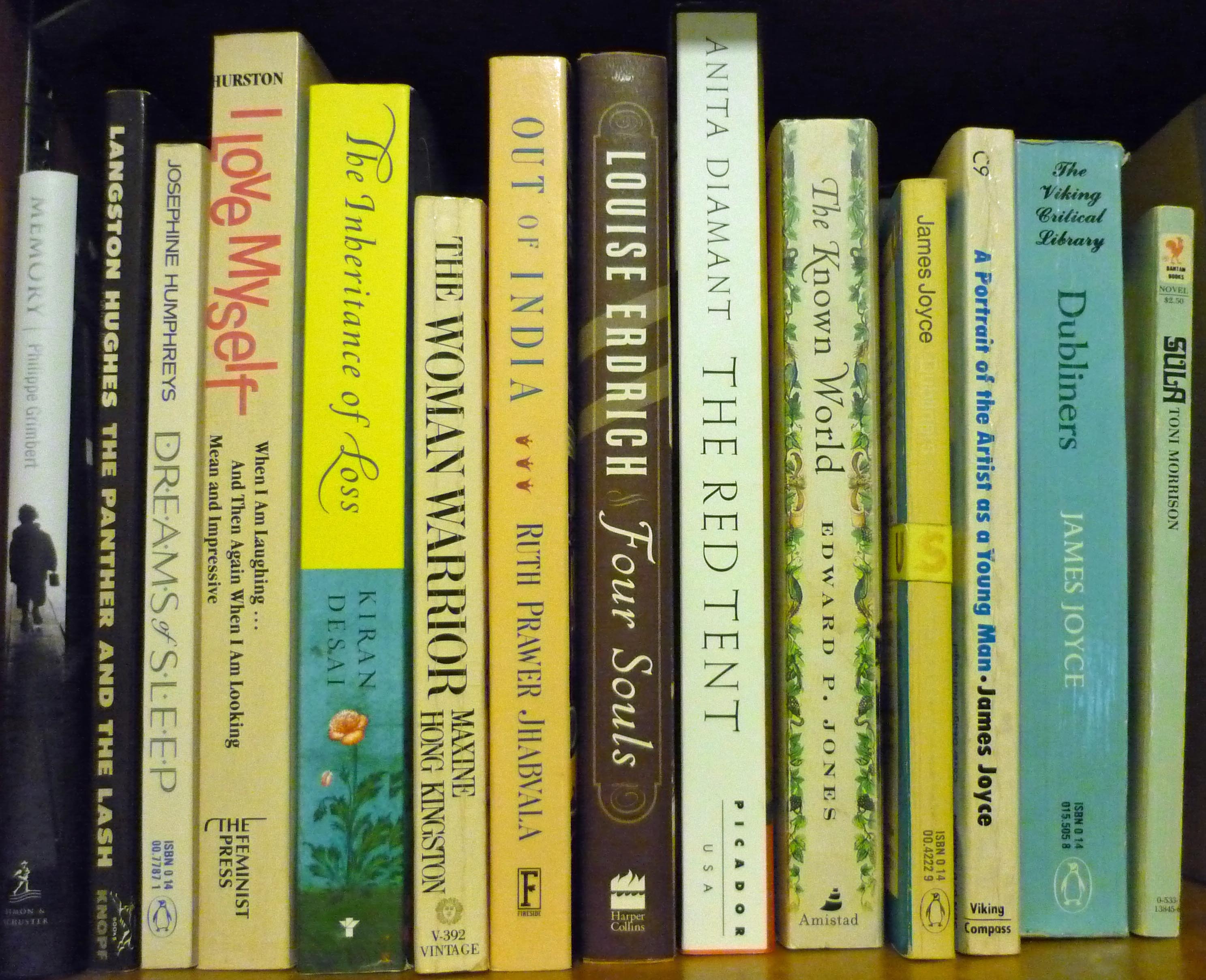
    Ever since I learned how to read, I have loved books. Through novels, I’ve traveled to medieval Europe, ancient Israel, Ireland in the early 1900’s, Appalachia in the 1930’s, New England in the mid-1800’s and many other times and places. Books have given me a glimpse into life on a Native American reservation, what it might mean to be a Chinese courtesan or a Japanese American during WWII, to grow up black in America 200 years ago or now, to live on a tea plantation in India or be a first-generation Indian American.

    P1030718

    I have long believed that reading literature has given me gifts of insight and empathy. Obviously, reading about a culture is not the same as living in it, but now there’s evidence that reading literature helps people develop empathy and the skills that psychologists call “theory of mind”—the ability to intuitively understand and predict other people’s feelings, beliefs, and intentions.

    In a recent article in the Star Tribune, Robert M. Sapolsky, a professor of neuroscience at Stanford University and the author of “A Primate’s Memoir,” describes research about how theory of the mind develops, “Subjects who read literary fiction, which for purposes of this study meant fiction that had won or been nominated for an important literary prize, performed significantly better in all those domains—exactly the type of skills associated with theory of mind—than subjects who read other things  or nothing at all.” He characterized “other things” as nonfiction magazine articles or popular fiction.

    So next time someone tries to characterize my desire to read literary novels as “not really doing anything,” I can smugly (but very empathetically) think, “I’m improving my intuitive skills and exercising my abilities to understand other people’s thoughts and experiences!”

  • Comfort and Joy in a Twinkling

    What is it about Christmas lights that create joy? I love sitting in my darkened house with only the glow of twinkling lights from the tree and the holiday village. Those tiny colored lights make my ordinary family room feel magical. Wonder creeps in and I feel as contented and hopeful as I did during childhood holidays.

    ChristmasPorchLights

    Too often, darkness encroaches this time of year. In the morning, when I get ready for work, daylight is still an hour away. After work, I’m uneasy as I walk the dark block to my car. Streetlights throw faint circles of light and I hurry from one to another. Melancholy eddies around me when the days are so short.

    Some residual instinct insists that we should not live and work in the dark. That must be why cultures across the world use light (Yule logs, Hanukkah candles, or strings of tiny lights) to dispel the discomfort of short dark days.

    P1030704For me, these pinpricks of gold, red, green, blue and white light have the power to transform the dark from something unsettling into something mesmerizing.

    The WordSisters wish you holidays that are merry and bright!