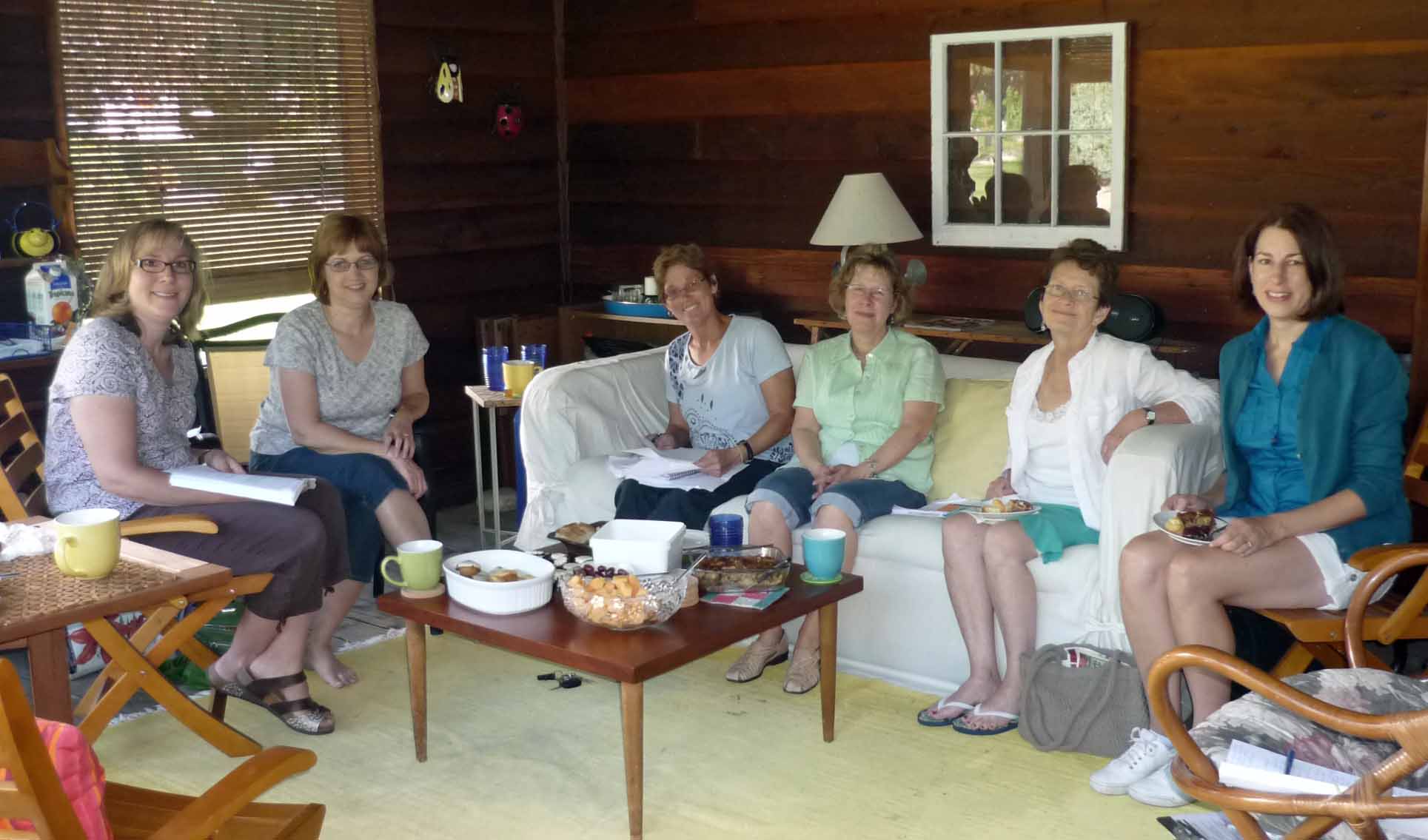
Our writers group is missing and remembering our founder Lisa this month by . . . what else? . . . sharing stories. Rosemary, Brenda, Jill, Elizabeth and I have added our remembrances to Jean’s
Ellen
The stepladder teetered a little, jiggled by my efforts to scrape the excess paint from Lisa’s storm windows. The sun heated my neck but a light breeze lifted my hair and cooled my sweaty head. The day was one of those glorious September days that appear in calendars but are rare in real life. In the narrow garden behind my ladder, yellow chrysanthemums—a traditional fall flower—competed with top-heavy tomatoes—summer’s best.
About ten of Lisa’s friends were positioned around her one-story twinplex to get her windows ready for winter. In assembly-line fashion, we scraped old paint, recaulked, repainted, or razored off dried paint.
The project was classic Lisa. When her stomach cancer returned and chemo left her too weak to handle household projects, Lisa allowed her network of friends to help. She was always uncomfortable with asking for help, but recognized that it was necessary. Lisa struggled to believe our assurances that we wanted to help—but we did, because there was so little else we could do in face of her relapse.
Someone sent out an email to about 30 friends and close to a dozen people responded. Because so many people were involved, the work went quickly and no one had to devote more than an afternoon to the effort. Many of the helpers didn’t know each other, since we were drawn from Lisa’s large network of friends—I knew Lisa from the writing group she started a dozen years ago. Several people were former coworkers, one was a former beau, two were from her QiGong class, another person knew Lisa from her church’s social justice committee, and so on.
I’ve never known anyone with such a wide circle of good friends. Long-divorced (but still friends with her former husband and his new wife), Lisa had a remarkable capacity for making and keeping friends—we became her family.
* * *
 Rosemary
Lisa. Writing group member. Friend.
Lisa was in the process of dying for many years. When her stomach cancer returned after a long absence I kept a short, but distinct distance, not wanting to experience another loss. But at some point during the last year or two of her life, I consciously decided to join her ever-growing group of supporters and personal pals. I was very lucky.
In doing so I gained a thoughtful, emotionally evolved companion for movie excursions, photography exhibits, group dinners, poetry readings and QiGong. I met many of her friends from other spheres and interests. We also spent some time alone together – buying and bringing to her home a bookshelf, and getting a frame for her favorite piece of art.
I was going through a tough period myself with anxiety and depression. Lisa sat with me when I could not tolerate being alone. She and I walked a small neighborhood labyrinth together one fall afternoon. I brought her into my circle of friends where for an evening or two she did not have to think about dying or be known only for that. She could escape cancer.
Lisa taught me a few things about dying. Not one to be sentimental about it, there was mostly a calmness, a practicality in her attitude. She didn’t stop living: Qigong every Wednesday morning with a breakfast group afterwards, trips to Northern Minnesota cabins for outdoor experiences, times set aside to play with her grandchildren. Most of all, she showed me how she took care of herself. Resting when she needed to. Talking when she could. Hauling her meds and apparatuses with her. She planned parties, decorated her house, and made a chapbook. Writing memoir, reading poetry and editing till the end.
Lisa. Friend. Writing group member. Teacher.
* * *
Brenda
There are few things that I make time for outside of work and family. One of these things is my writer’s group. I have Lisa to thank for that.
Many years ago, after completing my graduate degree in writing, I was looking for a place where I could continue to nurture my love for words and improve my ability to put them together. I saw a tiny ad in the Loft Literary Center newsletter that said a nonfiction writing group was looking for members. Hoping I could become a part of a new writing community, I answered the ad. And now, eight years later, this group has become an essential part of my creative life. I have Lisa to thank for that.
Lisa was the one who started this group years before that little ad appeared. I got to know Lisa through her essays and poems. Whether penning an essay about life as a child in the ’50s or a poem about birds sweeping through the sky, Lisa showed me that words have power, that words can communicate with beauty and grace, the ephemeral experiences of our daily existence.
I loved reading Lisa’s words, but the truth is, she was always a little hard on herself about her writing. She chided herself for not writing more and more seriously, yet in her last bit of life, she documented her experience with cancer on her Caring Bridge site in posts that were honest, funny, heartfelt, self-deprecating, and totally Lisa. She published a chapbook of poems so lovely they often left me in stunned silence. She hosted her own reading to celebrate her writing and her life.
At one point, Lisa was worried about how much she could still contribute to the group, so she tried to quit. We didn’t let her. We weren’t quite ready to say goodbye and knew she wasn’t either.
By now, we have said goodbye but I still think of Lisa when we gather on Saturday mornings, talking about words, sharing our lives, and helping each other with more than just our writing. And I thank Lisa for that.
* * *
Jill
What Lisa Taught Me About Dying Living
As members of the same writing group, I knew Lisa primarily through her beautiful poems and her CaringBridge entries about her slow death from stomach cancer. We were acquaintances, not close friends.
When her cancer started to win its years-long duel, Lisa’s family and friends rallied to her aid. As part of her circle, I received the email requests to help with household projects that Lisa could no longer manage. Later, I was invited to use the online calendar another friend had created so that Lisa’s many friends could schedule their visits and not overwhelm her family.
I opened the calendar, but never put my name in one of the slots, never drove to her son’s home to see her in her final days. I felt I would be an intruder in that intimate landscape. But I also felt guilty for not joining the rest of our group in supporting Lisa and her family.
The last time I saw Lisa, she was in the hospital, a few months before she died. I visited during my lunch break from the adjoining hospital where I work. I entered the room to find her sitting in bed, smiling. I tried to apologize for not taking part in the house-repair projects, or stopping by to see her sooner. She brushed me off. “Oh, don’t worry about that. You have a busy life,” she said. “I have lots of people to help me. Tell me about your writing.”
And in that moment, I learned that it was OK to be a different kind of friend to different people. I didn’t need to run errands for Lisa, or drive her to appointments, or offer to clean her house, the way I had for my best friend years earlier as she lost her own battle with cancer. Lisa had other people in her life for that. I had done for Lisa what I was capable of doing. Hosting our writing group at my home for a marathon submission party for her work. Being in the audience at the beautiful reading she hosted as a celebration of her writing and life.
So during my last visit with Lisa, we talked about writing, the thing that connected us. She encouraged me to keep working on my novel. I told her how much her thoughtful criticism of my work had helped me over the years. But what had inspired me most, I shared, was her constant presence at our table, even when her health was at its worst.
Lisa had reserved time and energy for us. We had given back to her in our own ways. As it should be. Lisa taught me that we don’t have to be all things to all people. But we can give of ourselves what we’re capable of giving. We can come to the table with open hearts.
* * *
Elizabeth
“Lisa’s on a trip.” When I first met Lisa, she was a palpable part of the writing group although she wasn’t physically present. The group talked about her as if they were placing pushpins on a map, keeping track of her whereabouts. At every meeting, they described another trip that Lisa was on, another location, in another part of the world.
When I finally did meet her, I took stock of her diminutive form. Wondered how so much spirit and energy could be packed into such a little person. She was not ever to be dismissed, to be gone around, or not taken into account.
And when she gave you feedback on your writing, you felt good because she had read your work and prepared a thoughtful response.
It made me feel special when she was talking to me.
Even now, I know she’s just on a trip. I feel her during our gatherings. She is still present in our thoughts and in our conversations.
She is taken into account.


