Author: Ellen Shriner

  • I Never Used To Be A Quitter

    But in the last two months I’ve fired three of the books I was reading: The Signature of All Things by Elizabeth Gilbert, The Invention of Wings by Sue Monk Kidd, and The Empathy Exams by Leslie Jamison.

    I LOVE to read and I consume several books every month—mostly novels, memoirs, and essay collections. It stands to reason that occasionally I’ll pick up a dud. But three in a row? What’s going on?

    Why I Set Aside Those Books

    IMG_0385Each book was favorably reviewed and the subject matter sounded interesting. I expected to like the books and looked forward to reading them.

    At first, I read with enthusiasm, but I stopped enjoying myself about 80 percent of the way through The Signature of All Things. I made it through only 60 percent of The Invention of Wings and about 20 percent of The Empathy Exams.

    Reading historical fiction and learning about unfamiliar cultures usually appeals to me. For a while, I enjoyed those aspects in all three books. Soon, however, the level of detail each author incorporated stopped being fascinating and turned tedious. I just don’t want to know that much about moss (Gilbert), the infighting among abolitionists (Monk Kidd), or peculiar subcultures (Jamison).

    I enjoy character-driven stories. Each of the book’s main character (and the narrator in the memoir-based essays in The Empathy Exams) is unusual and had the potential to be interesting. While I was curious about the main characters, each had a quality that was fundamentally off-putting. I stopped wanting to spend time with those people.

    Is It Me? Is It Them? Does It Matter?

    1. Life is too short. I’m not going to waste time on books I don’t enjoy. There are too many good, satisfying books I could be reading instead.

    2. I no longer care why a book doesn’t meet my expectations—it’s still fired. I used to assume that if a book was disappointing, that the failing was probably mine instead of the author’s—perhaps I wasn’t intellectual or sophisticated enough.

    However, in the last decade I’ve read too many mediocre books, so I no longer blame myself. Too often I’ve thought, “Wow! How did that get published?” The publishing industry has been changing rapidly in the last decade, and publishers are risk-averse. If one book is successful they try to clone it (e.g., vampire novels). Other times publishers invest in concept books in which the premise is interesting but the writing isn’t strong (e.g., The Hunger Games). Plenty of good books are still being published, but finding them has gotten harder, especially when only a handful are featured in reviews and blogs.

    3. I need to rely on reviewers less. Or I need to find reviewers whose taste is more similar to mine. I read reviews of the three books mentioned earlier, and yet, I was disappointed.

    I’ve learned to dig into Amazon and Goodreads’ reviews, but I disregard their suggested reading lists. Just because I read XYZ, doesn’t mean I want to read another book with the exact same subject matter.

    I take the reviews in the New York Times Review of Books and Washington Post with a grain of salt (or a whole box?) Their critics are often captivated by the literary experiments some authors engage in. The book may be a clever exercise but if it fails at telling a good story, I’m disappointed.

    Reading is too important to give up, but I do wish I had a better way to choose books. How do you discover the gems? Do you ever fire the books you’re reading books? Why?

  • Naming Rights

    Naming Rights

    The ring I wear on my left hand honors my marriage. My maiden name—the name I’ve had all of my life—honors who I am as an individual.

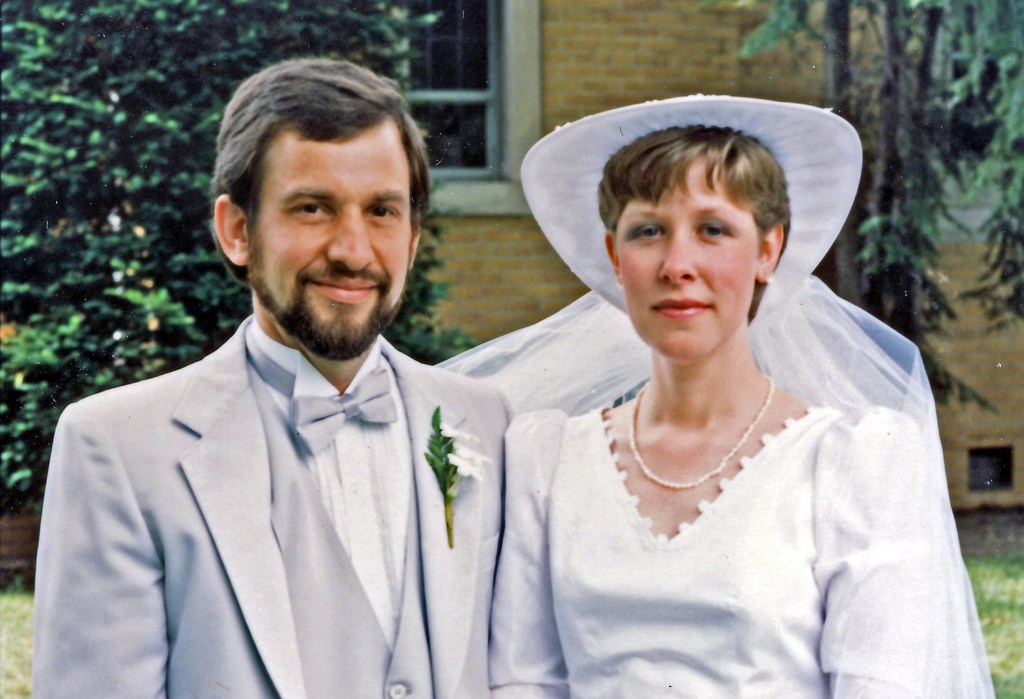
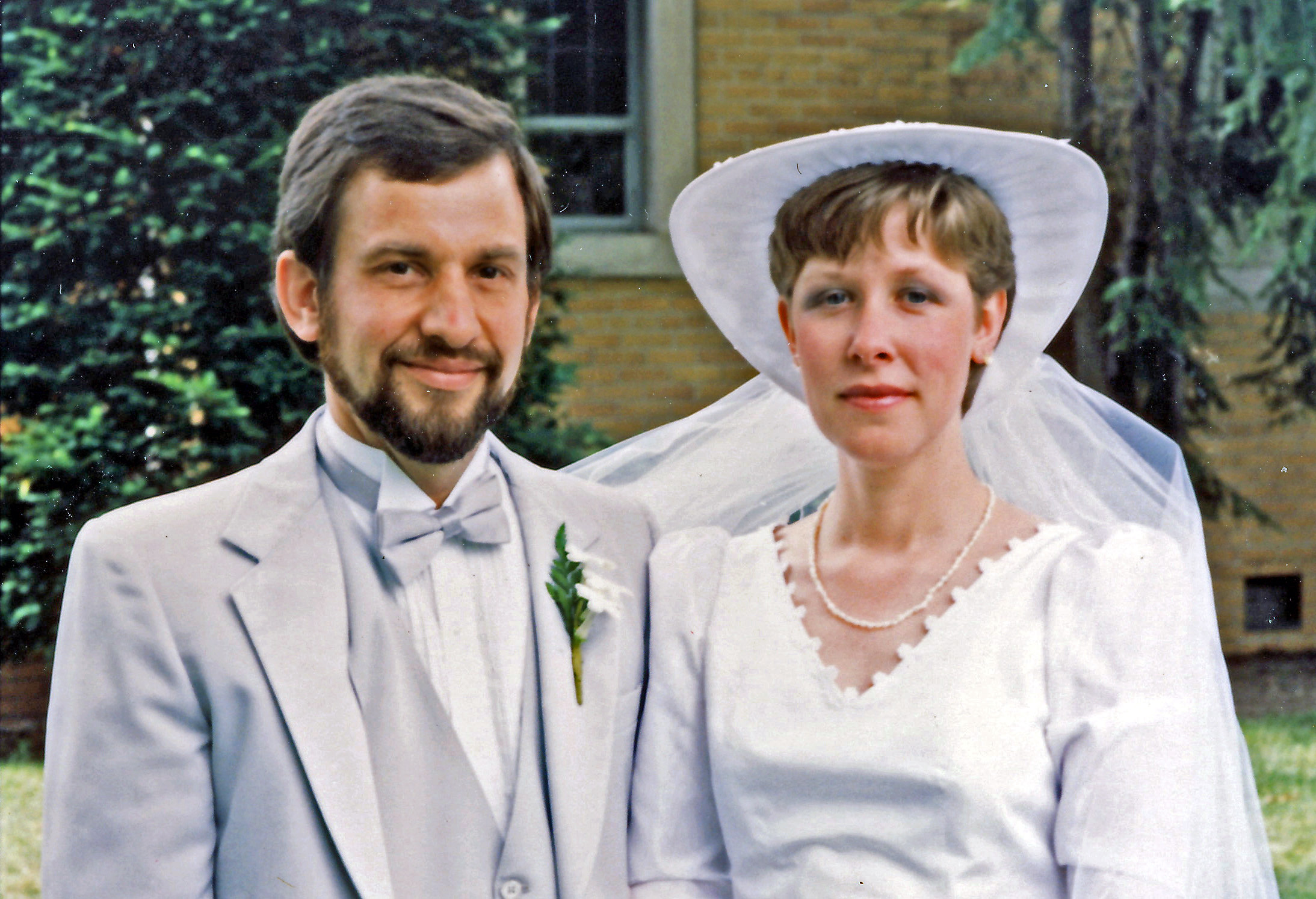
    J&E1985bWhen I married 30 years ago, this was an important and controversial distinction. Like many people, my parents worried that I would offend my in-laws and that our future children would encounter problems because my husband and I have two different last names.

    Nonetheless, we felt strongly about this decision. He’d keep his name and I’d keep mine. For practical reasons, we didn’t choose to hyphenate. Shriner-Sakowski is just too much name!

    Without meaning to, I did offend my in-laws, but they came to accept our decision. Our sons tell me that my different last name hasn’t been an issue for them. Perhaps some of their teachers or coaches assumed that my husband and I were divorced, but divorce is so commonplace that no one commented. I chose not to be offended when people called me Mrs. Sakowski. I knew who they meant and that they were trying to be polite. Often I pre-empted the discussion about names by introducing myself as “Greg’s Mom” or “Mike’s Mom.” That was all the teacher or coach wanted to know—my relationship to the kid in question. These days, I rarely have to explain the name difference.

    So it came as a surprise that using a maiden name has been resurrected as an issue. Recently, a friend recounted a conversation she overheard at a coffee shop. A young couple was talking with their minister about their wedding ceremony and the minister said, “Some ultra feminists don’t even take their husband’s last names.” Huh? I can easily list half a dozen women I know who kept their maiden names. It’s not that radical.

    Equally surprising was my recent experience with two different lawyers (one was settling my aunt’s estate and the other was handling my mother’s estate). Each assumed that I was Ellen Sakowski or Ellen Shriner-Sakowski. With my aunt’s lawyer, I explained several times that my real legal name is Ellen Shriner. Finally, I had to state unequivocally that I had never changed my name, and I wouldn’t be able to cash an inheritance check made out to either of those imaginary women.

    But then I recalled that four young professional women I know who’ve recently married all took their husband’s names. I was surprised and remain curious. Is the gesture that was so important to me when I married irrelevant now? Does it no longer feel necessary to make that distinction? Are women’s independence and equality a given for those young women? I hope so, but I’m skeptical.

    Despite my skepticism, I’m not trying to take anything away from women who choose their husband’s name. As a feminist, I believe women have the right to handle their names however they like: keeping their maiden names, using their maiden name as a middle name, or taking their husband’s name. I would never prescribe what a woman should call herself. Naming is a very personal decision.

    I think of one friend who was glad to shed her father’s name when she married. They had a difficult relationship and taking her husband’s name was a way of distancing herself from her father and asserting her new grown-up identity. Changing her name was a mark of independence.

    Another friend, who survived a childhood fraught with sexual abuse, invented a whole new name to mark the break from her family and her hard-won emotional health.

    What really matters is whether the choice of name is based purely on personal preference rather than perceived societal expectations. As a feminist, I just hope that women today feel much more free to choose the name that pleases them than I felt 30 years ago.

  • Writing Retreat Report: 3 Benefits You Won’t Get at Home

    Writing Retreat Report: 3 Benefits You Won’t Get at Home

    Last weekend, the writers’ group I’m a part of experimented with a do-it-yourself writers’ retreat. We all thought it was a success and even discovered an unexpected benefit.

    1. Accomplishment

    No surprise. This is one of the main reasons you go on a writers’ retreat. There’s nothing else you’re supposed to be doing. No job, errands, household chores, or running kids around. Just write, think, or daydream—whatever feeds the muse.

    I wrote two essays and a new query letter in this room with a view
    I wrote two essays and a new query letter in this room with a view

    Each of us accomplished more than we normally would. Several of us drafted essays. Others focused on planning—reviewing what they already had written and seeing the possibilities for new work. Some concentrated on researching possible publications and sending queries. Everyone felt the time away helped their writing and creative process.

    2. Inspiration

    Getting away from your usual surroundings, even for a few days, is very freeing. When you leave the To Do lists behind, you mind clears and there’s room for big ideas. Inspiration bubbles to the surface more readily.Grounds

    3. Affirmation

    Writers could probably get a lot accomplished and maybe even be inspired if they rented a cabin or house-sat for a vacationing friend. But by staying at a bonafide writers’ retreat, you get more. Hundreds of other writers or artists sat where you sat and considered their creative work important enough to invest in.

    The retreat center itself is dedicated to fostering your work. At the Anderson House, the setting includes floor to ceiling bookcases filled with literature instead of the ripped up mystery stories like you’d find at a rental cabin. Each bedroom has a journal full of entries by previous writers and artists who are wishing you well. You feel you’re part of a larger tradition.

    ParkingIf the retreat center thinks I’m an artist, I must be!