My youngest son and I were talking about eating alone in restaurants, when I flashed back to life before cell phones, tablets, GPS and Internet connectivity. He’s a nice guy, so he didn’t tease me about my “Why in my day, Sonny, we used to . . .” moment. Electronic devices have profoundly changed the outcome of several awkward or frustrating experiences.
Eating Alone
While traveling for business in the late 1980’s, I faced a dilemma that no longer exists: how to eat alone in a restaurant without looking weird or attracting unwanted attention.
Articles for career women advised bringing a book and reading at dinner. That way you wouldn’t feel stupid, and you wouldn’t attract sleazy guys trying to pick you up. Or you could order room service and avoid the whole issue.
I usually preferred a good meal with a glass of wine to a dry turkey sandwich in my room, so I learned to carry a book. Wait staffs’ reactions and service varied from dismissive to sympathetic. To boost my confidence and convey that I had a right to be there, I was pleasant but a bit aloof. While waiting for my order I sipped my wine and read. Usually that worked, but sometimes I didn’t have the energy for the performance.
Now I can take my smartphone or tablet and catch up on email, check Facebook, read online, or write and be legitimately busy and content. I don’t have to worry that I look pathetic or vulnerable.
Missing Connections
Before cell phones, bad luck could ruin a rendezvous. Imagine this: you’re in Chicago on business. You have a free afternoon before your flight and want to see a college friend. You agree to meet by the lions in front of the Art Institute at 1:00. By 1:15, you’re checking your watch and wondering. At 1:35, you’re frustrated and uncertain. Stay? Go? What’s going on?!?

There was no way for your friend to call or text to say, “Missed my train. Can I meet you inside by the Chagall window at 2:00 instead?” You could go inside alone but she’d have no idea where to find you. Or you could leave, angry and disappointed. Either way, you would have missed each other. The afternoon of laughs and reminiscing couldn’t be salvaged.
Getting Lost
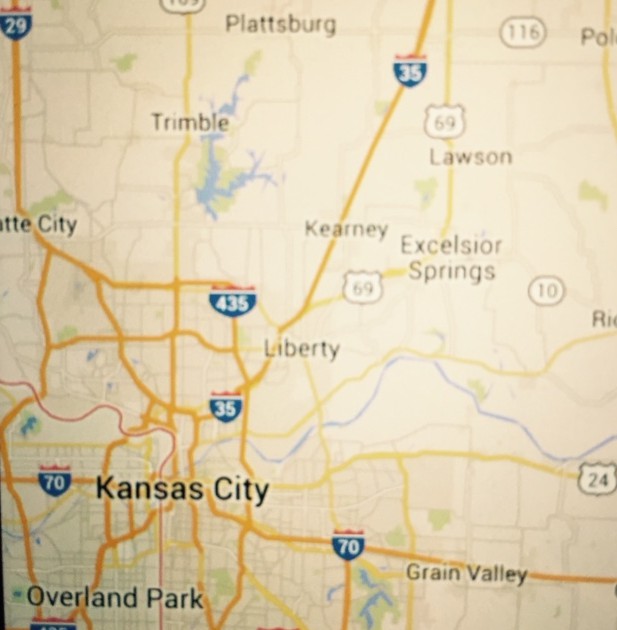 For years, I’ve driven cross-country for family visits to Ohio or vacations in Virginia, Texas, and Montana. I also think nothing of driving to a distant suburb to meet friends for dinner. Usually I navigate these trips successfully . . . as long as I have a map or Garmin for GPS.
Occasionally, though, I’ve gotten spectacularly lost. Driving 30 miles out my way near Green Bay, Wisconsin. Circling Eden Prairie, Minnesota for 40 minutes (and Eden Prairie isn’t that big). Hubris accounted for these mishaps. I thought I knew where I was going, so I didn’t bring a map.
Back in the day, the only solution was to stop and ask for directions. I had to hope the person was reliable and not a knucklehead who’d send me the wrong way, because he forgot to mention three important turns.
If there’s no cell phone signal (rural Montana and Wisconsin come to mind), I can be just as lost as in the old days. Google maps and GPS have definitely reduced the likelihood that I’ll get lost during a road trip, but sometimes they are wrong or incomplete. Just in case, I still carry a paper map and keep my cell phone charged up.
How about you? What difficult situation has become a thing of the past because of your electronic devices?

