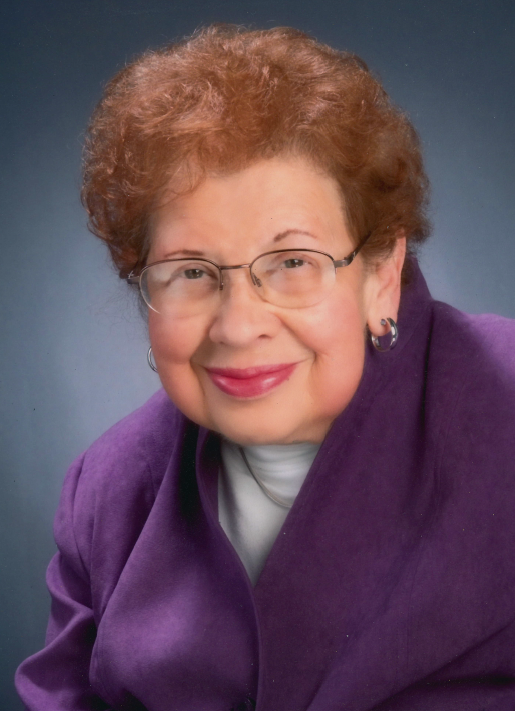
Author: Ellen Shriner

  • The Nature of Being an Aunt

    As a child, I didn’t think deeply about my aunts and uncles. They were a kindly presence at family gatherings, people who smiled at me, asked me about school, sent birthday cards, and gave me first communion and graduation gifts.

    I recently saw my 10-year-old grand nephew. If pressed, he might recall that we had fun exploring a nearby creek and that I gave him Halloween candy, but I wouldn’t expect him to know more about me than that. I didn’t know much about my aunts and uncles when I was 10 years old either.

    When I was a child, all I knew about Aunt Corinne was that she didn’t have children of her own, but she was fond of her nieces and nephews. She and Uncle Bob always gave us treats when we visited—cookies or candy from the stock Uncle Bob used in his vending machine business.

    When I became a mother, I suddenly got it—I saw how much my brothers and sister cared about my children and in turn how much I cared about theirs. The connections between us are strong.

    Aunts and uncles are part of a whole circle of people standing behind a child. We’re interested our nieces and nephews’ activities. We know this one is a sprinter, that one is good at hockey, another one loves theater. We’re concerned about their problems—this one got laid off or that one is going through a breakup. We’re pleased about their accomplishments—this one won a prize at school and that one is getting promoted at work.

    When things are going well, we’re more in the background, but if something happened to one of our siblings, we’d come forward to help out.

    Aunt CorinneI gained new appreciation for my aunts and uncles, especially Aunt Corinne, who would have been 90 on her birthday a few weeks ago. As an adult, I understood more about her life. She had systems for running her household and was meticulous about details. For example, her address book was always up to date and she kept her coupons in an organizer. She worked full-time as an office manager. I can imagine her as an organized and competent worker. She was also a sympathetic listener and seems like the sort of person who would have brought baked treats for her coworkers.

    I’m glad I got to know her well enough to discover what we had in common—she liked NPR and cared about politics. She was funloving and always willing to go out to lunch, to a show, or to travel. She was as particular about coffee as I am. If it’s warmed over, we would rather skip it. Only when I was middle-aged, was I able to talk to her woman to woman. Then I could ask about her health or we could share insights and concerns about family members.

    Because I live hours away from my nieces and nephews and don’t see them often, they don’t know me very well. They would probably be surprised at how much I know about them. But I’m observant. And your parents talk about you! My nieces and nephews may never know how much love and support their aunts and uncles have invested in them, but being a secret supporter is a pleasure. If our relationships deepen as we get older, that will be a gift, too.

    Who knows? Maybe twenty years from now at some family gathering, my grand nephew and I will discuss politics or the books we’re reading!

  • 5 Procrastination Tips Writers Can Really Get Behind With

    1. Read the newspaper thoroughly while eating breakfast. Beside the news, be sure to read the book reviews and the funnies. It’s important to know who’s being published and by whom. And the funnies help you keep your perspective.
    2. Those dishes aren’t doing themselves. Before tackling revisions, better get the dishes out of the way. That food will be congealed and disgusting later.
    3. Don’t be antisocial. It’s been days since you’ve scrolled (and trolled) through Facebook and Twitter. How will you ever build an author’s platform if you don’t keep up?
    4. Pay a few bills. If you leave them, they might get lost among the stacks of How-to Write-More-Effectively books you haven’t finished.
    5. 15 minutes isn’t enough time to do anything. Better to start fresh tomorrow. Whoa! Where’d the time go?

    Do you have any tips for how to be a better procrastinator?

  • Will Our Grandchildren Even Need Bookcases?

    How much longer will bookcases be prized as places where knowledge and inspiration reside? For hundreds of years people have built everything from simple pine shelves to the finest mahogany and oak bookcases to house their treasured books. But ebooks are replacing paper books. Instead of paging through a book, more of us turn to the Internet for information and open iPads or Kindles for the stories we love. I began pondering this cultural shift when I emptied my bookcases before moving to a smaller home last year.

    P1040180

    Deciding what to discard was difficult. I love my books. No, really. I love my books. When I picked up each one, I felt a tug of recognition and pleasure that quickly turned into a pang of sadness. As the afternoon wore on, I was knee-deep in books and accumulated nostalgia.

    My books represented my intellectual history, and therefore, my own history. The philosophy textbooks and literary classics came from my undergraduate days. During graduate school I added feminist poetry, stories, essays, and novels. Because they were scarce in the late 1970s, my friends and I shared them like contraband. The ideas I found in those pages challenged me to reconsider many of my beliefs.

    Some of my books are novels by authors I just love (Lois-Ann Yamanaka, Tim O’Brien, Alice Munro, Toni Morrison, Simon Mawer, Aravind Adiga—I could go on and on). Their stories transported me to other times and cultures and enriched me with insights that I wouldn’t have had any other way. How could I let go of these old friends?

    P1030795

    At least a dozen of the books are by authors I know personally. Pamela Gemin. Cynthia Kraack. George Rabasa. Sherry Roberts. The anthologies that published my essays are also stored there.

    Essay collections by Marion Winik, Ellen Goodman, Barbara Kingsolver, Bailey White and others mark my ongoing effort to learn the craft of writing personal essays.

    I have shelves of books on writing—from the grammar handbook I used in my first teaching job to books about the craft of writing memoir. I have books about how to get published and how to promote a book. P1040205

    After a while, discarding the physical books became easier. I thought about how long it had been since I opened some of them and realized they meant something once, but no longer. I reminded myself that if I needed to reread a certain Wilfred Owen poem, I could find it online.

    I needed to let go of the intellectual fantasy that one day a visiting friend would look at my books and say, “So what do you think of Kant’s The Prolegomena to Any Future Metaphysics?” or ask “How has Adrienne Rich’s On Lies, Secrets and Silence? influenced you?” When friends visit, we hang out in the kitchen—no one but family ever sees my office. And really? I know who I am and what ideas formed me—without these emblems to remind me.

    Besides, there are plenty of books that I love but don’t own. Long ago I realized that I couldn’t possibly own every book I wanted to read. Many of my favorite books belong to the public library or to friends.

    These days, I keep many of my books on my iPad—my own personal and very portable bookcase. So many books in such a small space! I can take them anywhere. I never have to be without a good book.

    At Christmas, when I received hardcover books from my sons I was surprised—I assumed they would give me e-books. I’m delighted with their gifts, but I was startled to realize that my paradigm has shifted.

    Today, I have one foot in the paper world and one foot in the digital world. I’ve pared down my collection of books, and it makes me happy to think of someone else enjoying the ones I gave away. There still are plenty of books I’m not prepared to part with. But going forward, I will have fewer paper books. My future grandchildren may view paper books and wooden bookcases as quaint artifacts and that’s OK.

    I’ve come to realize that what I really love are stories and ideas. They can reside on the page or on the screen.