Author: Ellen Shriner

  • Resisting Assumptions

    The last time I gave blood, a tech named Dakota took care of me. When she introduced herself, I didn’t expect we’d have much in common. She was in her 20’s and had full sleeves of tattoos and several facial piercings, while I look like the middle-aged, mom-ish person I am. However, she surprised me.

    She made a real effort to talk to me, which I appreciated because giving a pint of blood takes about half an hour and you’re tethered to a gurney the whole time. You can stare into space, listen to music and daydream or play with your phone, which is what I was doing when she tried for a second time to start a conversation. I apologized and set my phone aside. She sympathized and said she’d recently read an article about how involvement with cell phones can put a damper on actual conversations. Her comments sounded like something I would say, not something I expected of someone her age. It was a minor moment, but it reminded me how difficult it is to resist making assumptions.

    Making assumptions is natural and necessary.

    Every day we receive such an onslaught of information—online, at work, and during casual personal encounters at a coffee shop, gas station, or wherever—that our brains simplify and categorize it. We have to. Otherwise, we’d be paralyzed by making sense of the input. The downside of this tendency is stereotyping.

    It’s a wonder people ever make genuine connections! And yet, I’m committed to trying.

    Resisting stereotypes about age, race, gender, politics and so forth, takes a lot of energy. The situation is made doubly difficult because whomever I’m encountering has his or her own set of biases to overcome. But in a culture that’s rife with hateful stereotypes, I’m trying harder to see each person I meet as the individual she or he is.

    At its most basic level, my efforts consist of looking strangers in the eyes and smiling. Just seeing them and looking friendly. Some people don’t return my smile, but a lot of them do. It occurs to me that I may look like a smiling idiot—a dotty lady on the loose—but I’m willing to take the risk.
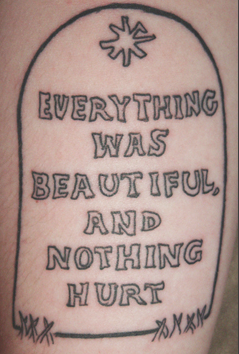
    In Dakota, I found an interesting woman who wants to be a nurse, while I’ve worked for hospitals off and on throughout my career. We’d both lived in Morris, Minnesota, although decades apart. As she described what her tattoos meant to her, it was clear her body is her canvas. I mentioned an ironic tattoo I like that’s in the shape of a tombstone and reads, “Everything was beautiful, and nothing hurt,” a quote from Kurt Vonnegut’s Slaughterhouse Five. Turns out we both like Vonnegut.

    Next time I have a chance to make a casual acquaintance, I’ll try to be the one who initiates conversation.

  • Steering Out of the Doldrums

    For the last two weeks, I’ve struggled with the late winter doldrums. I’m ready for spring, but Winter. Just. Won’t. Go. In sailing usage, “doldrums” refer to a low-pressure area around the equator where the winds disappear and sailing vessels could be trapped for days or weeks. That sums up my feeling: I’m becalmed, waiting for spring’s energy to blow my life back on course.

    I’ve been listless and had trouble mustering enthusiasm for new projects. Consequently, I’ve elevated my knack for wasting time to new heights (that should probably be “new lows”)—

    • Sleeping longer than normal (my body resists getting up in the dark again)
    • Reading mysteries (my go-to escapist read) instead of more challenging literature
    • Researching facial moisturizers (Seriously?!? That might deserve half an hour of my time, not the two hours I actually gave it.)

    This is familiar territory, so I go easy on myself when I recognize the pattern. In fact, that’s part of the cure—recognizing and accepting that I’m in the doldrums.

    Dissatisfaction and restlessness prod me to analyze where my time actually goes (this is pretty geeky, but it works for me). At first, I neutrally list how I’ve spent my time recently.

    That brings to mind a few things I ought to do (wash the kitchen floor, clean the bathrooms). I cross out those—they’re definitely not mood-lifters!

    Soon, my mind shifts from chores to daydreaming about what would be fun to do. A fresh little breeze of possibilities stirs. I begin a new list.

    For years, I’ve recalibrated my priorities by regularly asking myself: Am I living the life I want to lead? How can I tinker with my free time or refocus my efforts to be sure my work and family commitments are satisfying?

    I’m taking a new tack and moving forward again.

  • The Secret Life of Jewelry

    Every morning, I indulge in a small ritual—choosing what jewelry to wear. What I reach for depends on my mood and what clothes I’m wearing. It’s an expression of my taste. But I’m also choosing talismans. The pieces I wear don’t offer magical protection, exactly, but they do offer a tiny bit of power—to keep people close to me.

    Many of the earrings, rings, and necklaces I have were gifts. Slipping them on reminds me that I’m loved. Or if I wear something that belonged to my mother, grandmothers or aunts, I am drawing on memories of them to give me strength.

    I’m not alone in assigning secret meanings to my jewelry.

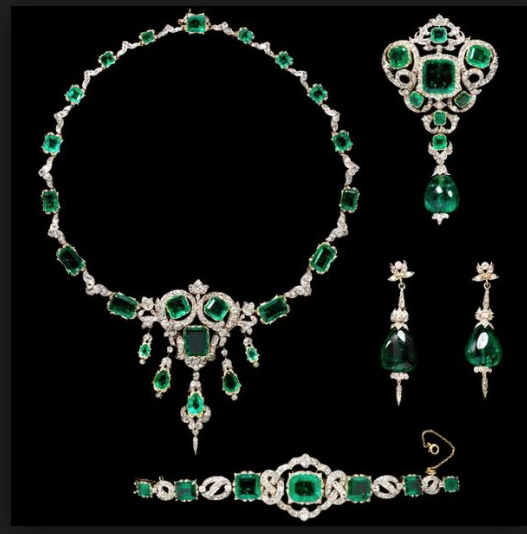
    When I visited the Victoria & Albert Museum’s Jewelry exhibit in London last fall, I learned that since ancient times, whether jewelry was made from bones and shells or wrought from gold and precious gems, it has had meanings that go beyond adornment and self-expression.

    Seringapatam Jewels at the Victoria and Albert Museum in England.

    Often the additional meanings are obvious—to show status and wealth (crown jewels), to express love and affection (wedding bands), as a sign of faith (the cross for Christians and the Star of David for Jews). Jewelry is also worn for protection or in remembrance.

    The ancients thought certain stones and gems protected the wearer from illness and evil spirits. For example, rubies are supposed to confer health, strength and fearlessness. I didn’t know that when I chose a wedding band with rubies in it. I just liked rubies—I wasn’t hoping to feel more powerful.

    Wearing jewelry as keepsakes is the meaning I most relate to.

    After my mother died, I began to wear her wedding band on a chain as a way to keep her close. Not every day, but more intentionally, when I specifically want to think of her.

    The opal ring my husband gave me, when I was depressed about turning 60, reminds me of his enduring love and how well he understands me.

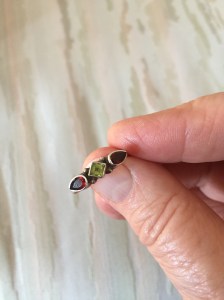
    An inexpensive craft fair ring with chips of peridot and garnet in it reminds me of my father and a sunny day when I visited Dad and Mom in Florida. Their health was still good and we were carefree.

    The oval garnet ring my sister gave me when I became a mother brings to mind our strong bond.

    garnet

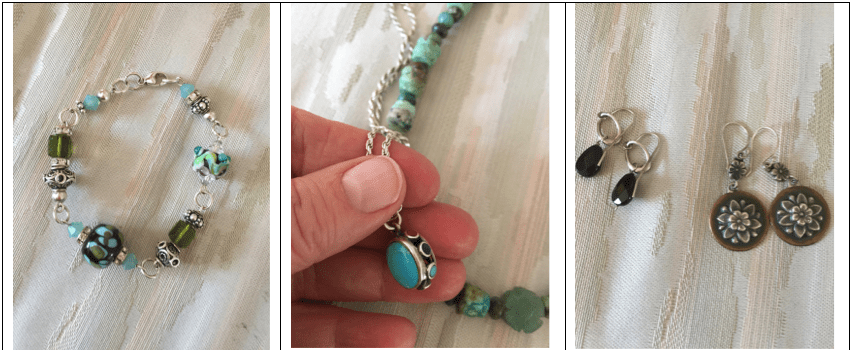
    So many of the pieces I love and wear often—the bracelet my sister-in-law made for me, the necklaces a friend has sent me over the years, and the earrings my sons have given me—remind me of some of the special people in my life. Wearing these gifts is a secret source of joy.

    3 gifts