Author: Ellen Shriner

  • The World of Holiday Greetings Has Changed

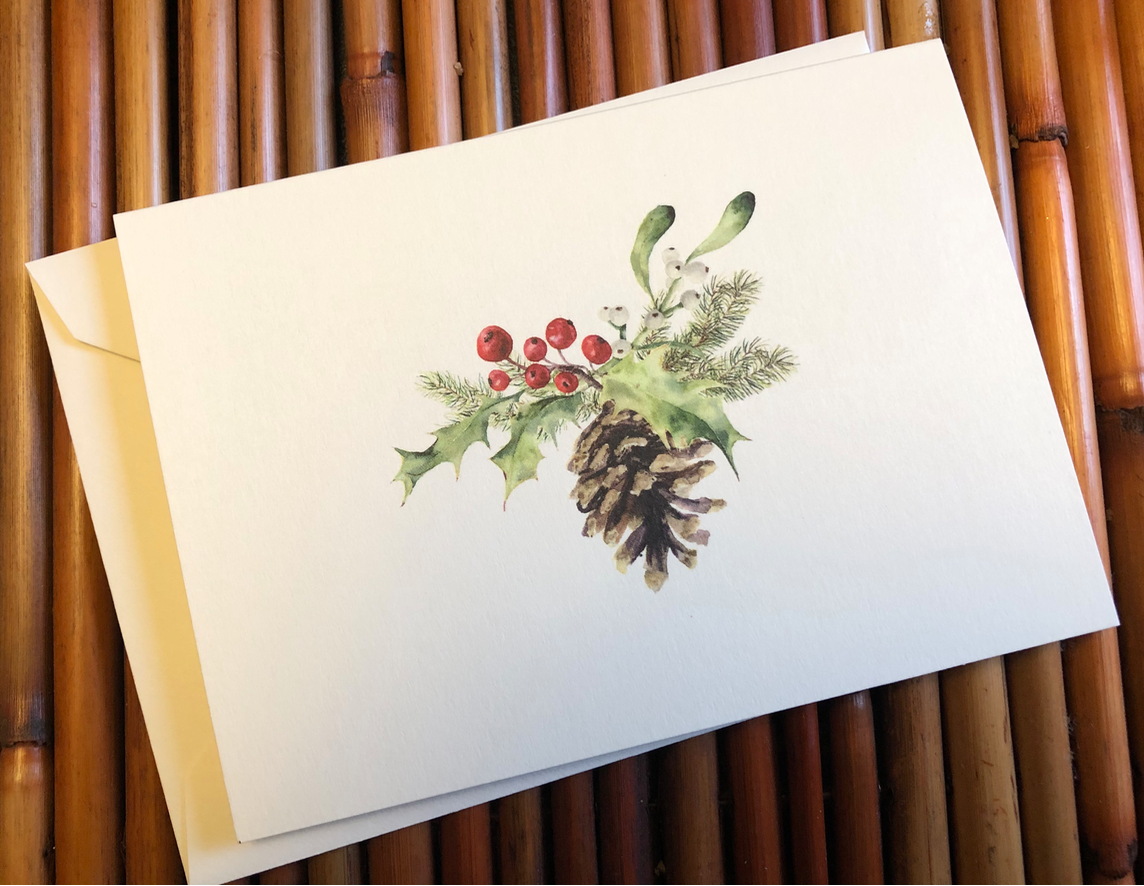
    For the last several years, a friend and I have gotten together every December to address Christmas cards and catch up over tea. She still writes at least two dozen, while my output has dwindled to less than 10.

    I used to love Christmas cards. I tended to indulge in the expensive ones printed on high quality paper, the ones with artistic designs or humorous sentiments. Sometimes I bogged down with signing them and getting them to the Post Office, but I always got them out before New Year’s.

    While doing business as Ellen Shriner Communications, I began handcrafting holiday cards to send to ad agency and marketing clients. Instead of dropping off clever client gifts or food treats (a common practice in the communications world), I made a charitable donation in my clients’ honor and hoped the cards would remind clients about my creative work. I also sent the cards to close family and friends.

    Every year, I wandered the aisles of the now-defunct Paper Depot and let the stamps, vellums, fine cotton card stock, and gorgeous imported papers inspire me. For a month, I holed up in my office planning, writing, printing, cutting, gluing, and assembling 50-60 cards. Many years, I made several versions because I was attracted to multiple ideas, and it was fun to experiment.

    The card with red ribbon involved dried flowers from my garden. For the one on the far right, I drew ornaments in watercolor. For the one in the center, I hand cut starbursts with an Exacto knife so the gold vellum would show through.

    By the end of 2010, I was winding down my business and had accepted a hospital marketing job. I could have continued making the cards for family and friends, but handcrafting cards no longer gave me as much pleasure, and the world of holiday greetings had changed.

    For many people, sending Christmas cards had become just one more thing on a long To Do list. Friends and family were relieved to let go of the tradition. Often the cards I received seemed to be guilt-induced (Dang! She sent me one. Now I need to reciprocate), and I didn’t want to cause that discomfort.

    For me, Christmas cards had been a way to stay connected with out-of-town family or friends I rarely saw. Often the cards summed up how the year had gone, and that ritual reflection felt worthwhile.

    Now a yearly missive is less important. Calling is so cheap and immediate that the most important people in my life already know what’s going on. As a writer, I’m at the keyboard most days and can dash off a quick email to friends. Social media has made it easy to stay in touch with an extended group of people.

    Maybe one day I’ll rediscover the creative fun of playing with fine papers, glue, and an Exacto knife. But this year, I’ll sign a few store-bought cards and write a handful of personal notes. Of course, nothing replaces visiting in person, especially over a cup of tea!

    To all of our blog readers: the WordSisters send lots of affection and appreciation for our connection. Happy Holidays!

  • For the lady in the pink rain bonnet

    I noticed you on a sunny, fiercely windy day outside of a Caribou coffee shop. In addition to your warm coat, you wore a plastic rain bonnet, which was covered with pink chiffon and tied under your chin. Under it, your white hair looked freshly styled, and the bonnet protected your hairdo from being blown to pieces. You had to be at least 85—rain bonnets like that were popular in my mother’s era, and she would be 98 if she were still alive.

    My immediate reaction was, “Aww, how sweet!” Then I thought, “Wait a minute. I’d hate it if young people looked at me indulgently and thought, “Aww, isn’t she cute with her matching jewelry and sensible shoes!” while I was going about my ordinary day being my badass, 65-year-old self. So, I decided to spare her the stereotype that diminishes and infantilizes even though it’s kindly meant. I don’t know anything about her. She’d probably a badass, too.

    While I was placing my order, she came in and looked around. She seemed uncertain and quickly returned to her car, which was parked near where I sat stirring my tea and waiting for my friend.

    Later she came back in and sat at a table. “Uh oh,” I thought, “I wonder if she realizes that this isn’t the kind of place there they come over and wait on you?” I could imagine my mom being confused about how Caribou works. A few minutes later, two middle-aged guys with leather-covered notebooks joined the woman.

    I told my friend why I was distracted. We watched the three of them for a minute.

    “I hope they’re not scamming her,” my friend said, reading my mind.

    “Maybe they’re just selling her car insurance. But why two guys?” I asked.

    The lady didn’t look worried or out of it. She was probably perfectly capable of making her own decisions about whatever they were selling. I turned away, thinking, “It’s none of my business. I have an overactive imagination—the downside of being a writer.”

    My friend and I resumed talking about her daughter’s upcoming wedding and my Thanksgiving travel plans.

    Why did this stranger capture my imagination? She brought to mind how unsure my smart, confident mother became in her final years. The woman with the pink rain bonnet also made me contemplate how vulnerable I might be when I’m in my late 80’s or early 90’s.

    I wish I felt certain the lady in the pink rain bonnet was OK.

  • Letting Go of What No Longer Serves Me

    In the fall, I often attempt to bring a flowering garden plant indoors. I can’t quite let go of the joy of abundant, bright blooms. This rarely works. Nonetheless, I brought in a small fuchsia this year. I will fuss over it—move it to a sunny spot, water and fertilize it, but in a few weeks, it will be half-dead and I’ll throw it out. Letting go of summer is hard, but this gradual goodbye makes it easier.

    In similar fashion, I age my correspondence. Mail piles up unread for a few days. Or a week. Or two. Then I realize I’m really not going to donate to all of those people. My email inbox is full of emails with links to newsletters or articles that sound interesting, like something I want to read. Except . . .  not right now. After a week, I feel guilty (or is it, more realistic?) Then weeding out my mail and email is easy.

    There are also the shoes I’ve stored because I might wear those flats again. Or the yoga pants that never fit but I thought I might fix.

    A meditation I recently read described fall as a time of weeding out and letting go. Trees drop their leaves, fields are bare, and people turn inward as it gets colder. But to me, fall is a time of abundance, harvest, and storing up. The conflicting ideas puzzled me until I thought about how discarding is easier when I allow a little time to pass.

    Then I can let go of what no longer serves me, just as the meditation suggests. That’s how I’ve reconciled the paradox of abundance and paring back.