Author: Ellen Shriner

  • Three Summertime Favorites

    This summer’s smoky air has forced me to confront the many effects of climate change. While I shop for an electric or hybrid vehicle, I’m consciously turning away from my anxious dismay to remind myself of three favorite summertime experiences.

    Fireflies at the University of Minnesota Arboretum 

    Walking the hardwood paths and wildflower fields at dusk, when the grounds are usually closed, was magical. The air was warm and still. The land exhaled. At first, we saw a spark of light here and there in the shadows. As dusk deepened to near dark, small clouds of fireflies shimmered in meadows and swamps. Flashed On. Off. On. Off. A silent conversation. A symphony of light.

    ShrinerFest 

    In a week, my extended family will gather for a weekend in Chicago we call ShrinerFest. I continue to be delighted and surprised my siblings, their far-flung children, spouses or beaus, and grandchildren love this get-together. We’re all so different—from introverted scientists to outgoing sales managers—and hold a range of political and religious views. But we sidestep all that and just enjoy catching up, eating, laughing, eating, teasing. One young niece even illustrated a book about ShrinerFest for a school project.

    Drinking wine on my small porch in the evening

    We sit in the glowing circle of lamplight. I stretch out on the loveseat reading a novel while my husband reads tomorrow’s news today. The dozens of birds inhabiting our blue spruce are silent. City buses trundling by interrupt the KBEM jazz or blues on the radio. Now and then we hear the cry of a small animal—a rabbit? Chipmunk? I’m not enough of a naturalist to know. The ceiling fan stirs humid air that’s cooled to comfortable by 10 o’clock. The neighborhood quiets. We sip and read.

  • Unmasking

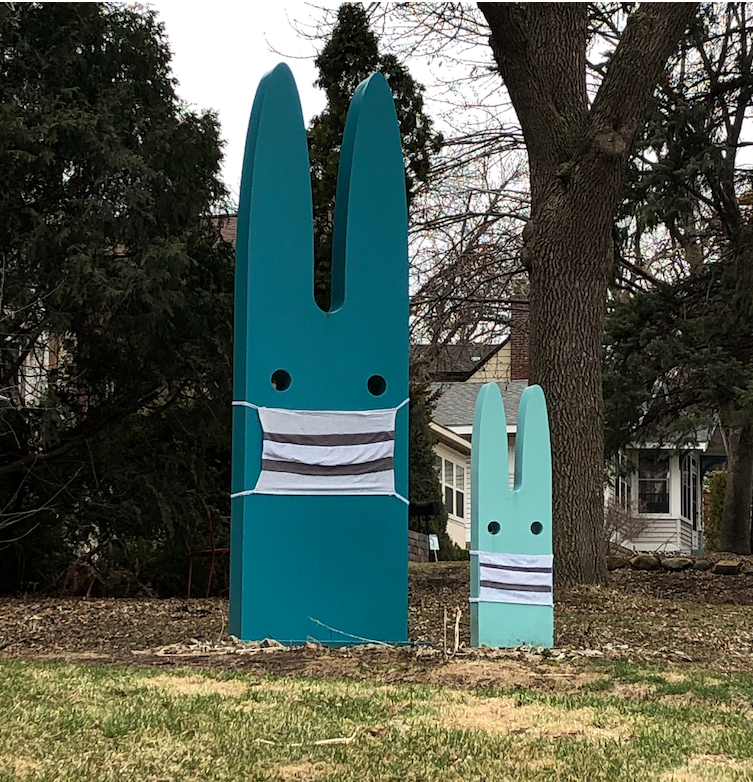
    In May, I stopped wearing my KN95 mask. The last time I’d worn masks in earnest was in April at the airport, in museums, and on public transportation in Amsterdam. I was definitely a minority, but I didn’t mind. My goal was to avoid COVID while we vacationed in Europe. For three years I wore or carried a mask with me. Now discontinuing masks feels odd. COVID was a harsh teacher and the early days of the pandemic are still vivid.

    Like everyone else, I’d heard healthcare and other frontline workers didn’t have enough PPE. Even cloth masks would help. The whole mask-making enterprise felt ludicrous and desperate. I struggled to understand: the government had no coherent plan for a pandemic? We were on our own for protection? The world seemed out of control. Anything could happen.

    A Facebook friend, who’s a physician and quilter, posted a mask pattern and later I found another design online. I had lots of quilt fabric remnants and was willing to sew masks if it would help.

    When Abbott Northwestern Hospital put out a call for homemade masks, I sewed floral fabrics women might like and abstract patterns men wouldn’t mind. I flannel-lined a few for softness before I realized they would be hot.

    On a dark wintery day, the streets and hospital parking lot were eerie and empty when I delivered the masks. I texted the contact and rolled down the passenger window as instructed. A hospital employee took the bagful and thanked me profusely.

    My sister (a respiratory therapist in a respiratory pandemic) asked for some. My homemade masks were a talisman that made her feel loved. At first, she wore a cloth mask over her one and only N95. She was expected to store the N95 in a brown paper bag so she could re-use it. Later she gave the extra cloth masks to her Ohio hospital’s Housekeeping staff, who didn’t have any protection.

    I sent some to my son and future daughter-in-law, a medical resident who treated COVID patients in a Bay area ICU. She had an N95, but she could wear cloth masks away from work.

    My sister suggested I give some to younger relatives who worked at a psychiatric hospital in Illinois. Although the local hospital and my sister had appreciated the homemade masks, I felt self-conscious about sending them. I worried the masks would be cringeworthy (Crazy Aunt Ellen made us these useless masks and she expects us to wear them?) but my relatives were gracious—they understood the sentiment.

    Masking began with a jolt of fear, but unmasking happened gradually. I’d grown accustomed to eating out. My interactions in stores, clinics, and the pottery studio were even more distanced. The CDC’s decision to call off the emergency didn’t really figure into my thoughts. I’d concluded my risk was manageable although COVID is still out there. One day I’ll get it, but I probably won’t be seriously ill and die. Long COVID concerns me, but three years after the pandemic began, that fear no longer haunts my days. 

    A KN95 mask is in my purse, but I think I’ll be OK without it. 

  • The Fierce Urge to Tell Our Stories

    Anne Frank was a vivacious teenager and a keen observer of human nature. She wrote well and her diary often includes deft characterizations of schoolmates, family, and the other people in hiding with her family. When I recently reread her famous diary in preparation for visiting her family’s hiding place in Amsterdam, I was impressed by her lively mind.

    Initially, she wrote to sort out her feelings—the same impulse that has prompted me to keep a journal off and on since I was a teenager. Putting my feelings into words helps me understand them. Airing out something on the page calms me and enables me to move on. 

    At first, Anne Frank meant her diary to be private. When she was 15, she heard a radio broadcast about a Dutch official who wanted to collect war stories and experiences, so she edited her diary in hopes it might be published one day. Unlike Anne Frank, I don’t want my journals shared with others. They’re histories of cranky confusion, and without context, they would likely distress family or friends once I’m gone and can’t explain.

    After her family went into hiding, her diary also served as a record of how they lived—what their space looked like, what their meals were, and what their daily schedule was. As the war intensified, she recorded bombing raids and news updates.

    Shortly after I finished the Anne Frank book, my sister asked me to refresh her memory about our great great grandmother—Katherine O’Tanney Feeley who emigrated from Ireland in the late 1800’s. To answer, I searched handwritten notes from my mother and father—a story here, a date and detail there. Some of the notes are sketchy and incomplete, but I decided I would make sense of them in a Word document so others in my family will have a record.

    Anne Frank’s story has touched millions all over the world in the decades since she wrote it. I have no such expectation for the family record I’m assembling. All I have are snippets of stories, not much to go on. Perhaps a few family members will have a mild interest. Hearing about people you never knew (even if they’re related to you) can be boring. 

    I’m fascinated by the urge to write journals and record family histories. Beyond that is the widespread wish to share the content of our days on social media or like I’m doing with this blog. People across all eras and cultures have felt this fierce need to tell our stories and understand who we are and who we came from. Sometimes we’re saying, “Here’s what happened.” Other times the wish to share is a way of saying, “I’m here. I matter.”

    Anne Frank could not have imagined how much her story would matter or how many readers would be touched by her words.

    Although my intentions and hopes for my writing differ from Anne Frank’s, I feel a kinship with that young woman born almost a century ago.